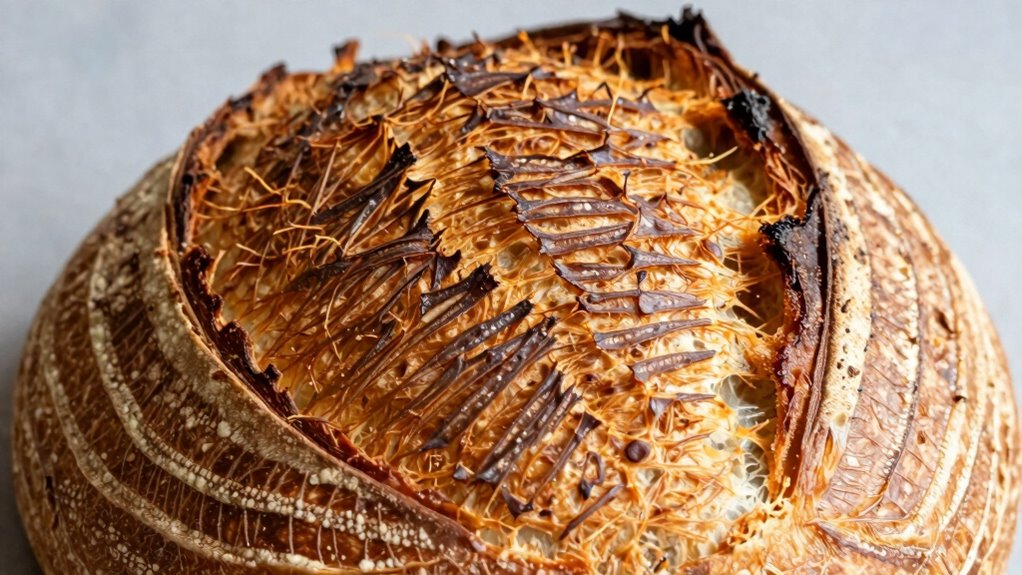

Scoring on sourdough bread creates weak spots that guide gas to escape and control the way the crust expands. It helps direct the bread’s upward rise, forming the distinctive “ear” during baking. Proper scoring guarantees the dough expands smoothly without tearing unpredictably, giving you a clean, attractive crust. The depth and angle of your cuts matter, affecting how well the ear develops. Keep exploring to understand how technique and fermentation work together for perfect results.
Key Takeaways
- Scoring creates weak points that guide controlled expansion during baking, forming the characteristic “ear.”
- Proper scoring directs gas escape, preventing uncontrolled tearing and ensuring a clean, crisp crust ridge.
- The depth and angle of cuts influence how the dough expands upward, affecting the ear’s size and shape.
- Sharp blades ensure clean cuts, which promote even expansion and a more defined “ear.”
- Successful scoring, combined with proper fermentation and oven conditions, results in a prominent, well-formed sourdough ear.
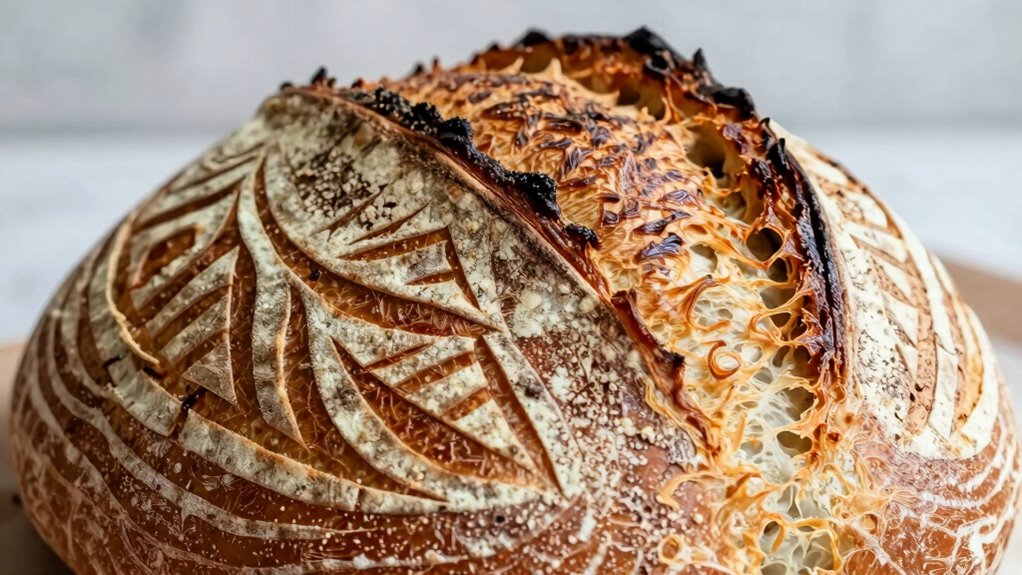
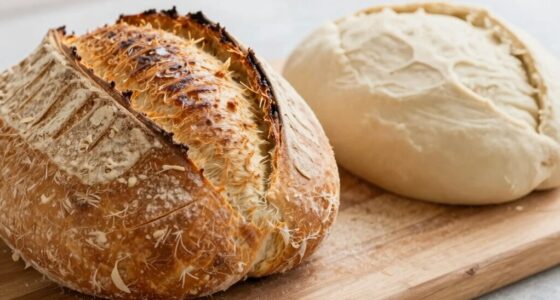
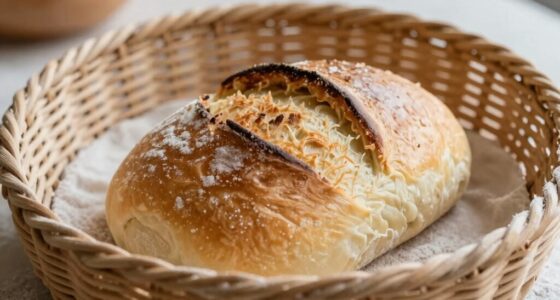
Have you ever wondered what causes a sourdough ear to form on your loaf? That crispy, bubbly ridge that lifts off the crust is the result of a combination of factors involving the fermentation process and the baking techniques you use. During fermentation, the dough develops gluten structure and creates gas bubbles that give the bread its rise. When you score the dough—making deliberate cuts on its surface—you’re directing how this gas escapes during baking. Proper scoring allows the dough to expand in a controlled way, which influences the formation of the sourdough ear.
A sourdough ear forms through proper scoring, fermentation, and oven techniques, creating a beautiful, crispy crust ridge.
The fermentation process is essential here because it determines the dough’s elasticity and strength. As the wild yeast and bacteria work together during fermentation, they produce carbon dioxide that gets trapped within the gluten network. When you score the dough, you create weak points in the crust, guiding how the gas escapes and how the loaf expands. If you don’t score deeply enough or at the right time, the dough might tear unpredictably or not expand properly, resulting in a less pronounced ear. Conversely, well-executed scoring provides a clean opening for the gases and directs the expansion upwards, forming that characteristic crust ridge.
Your baking techniques play a critical role in developing the sourdough ear. Using a sharp blade for scoring ensures a clean cut that facilitates even expansion. Timing is also essential—if you score too early, the dough might deflate; too late, and the crust becomes too hard to score effectively. The temperature of your oven and the use of steam influence how the crust sets and how much the dough can expand. Higher heat and steam help the loaf rise rapidly in the oven’s initial moments, encouraging a vigorous expansion that enhances the ear’s formation. Additionally, the dough’s hydration level impacts how flexible the surface is, affecting how easily it can be scored and how well the ear develops. Proper fermentation is crucial because it influences the dough’s gluten development and gas retention, which are vital for a good ear. Understanding the fermentation process and how it affects dough elasticity can help bakers fine-tune their techniques for optimal results. Recognizing the importance of dough hydration can also make a noticeable difference in how well the ear will form.
In essence, the sourdough ear is a visual indicator of successful fermentation and precise baking techniques. It shows that you’ve managed to balance dough strength, gas retention, and oven conditions. When you understand how the fermentation process shapes gluten development and how scoring guides expansion, you can better control the bread’s final appearance. Mastering these elements allows you to craft loaves with beautifully pronounced ears—an impressive sign of your skill and the bread’s quality. The key is paying attention to each step, from fermentation to scoring to baking, ensuring each detail works together to create that perfect, crusty crown.

"SAINT GERMAIN Premium Hand Crafted Bread Lame for Dough Scoring Knife, Lame Bread Tool for Sourdough Bread Slashing with 10 Blades Included with Replacement with Authentic Leather Protector Cover"
PREMIUM QUALITY: Premium hand crafted wood handle with stainless steel stick to attach replaceable blades. Built to last.
As an affiliate, we earn on qualifying purchases.
As an affiliate, we earn on qualifying purchases.
Frequently Asked Questions
Can You Score Sourdough Without Making a Cut?
Yes, you can score sourdough without making a cut, but it’s less common. Alternative shaping techniques, like folding or shaping the dough differently, can influence the crust’s appearance and the fermentation impact on oven spring. Scoring helps control how the bread expands, but skipping it may lead to uneven expansion or a less appealing crust. If you avoid scoring, focus on proper shaping and fermentation to achieve good oven spring and texture.
Does Scoring Affect the Bread’s Flavor?
Scoring doesn’t directly influence the bread’s flavor, but it’s like the opening act in a performance—setting the stage for what’s to come. By guiding the expansion during the fermentation process and controlling the baking temperature, scoring helps shape the crust and crumb. Proper scoring guarantees even oven spring, which can subtly impact flavor development, making your sourdough more delightful without changing its core taste.
What Tools Are Best for Scoring Sourdough?
You should use a sharp razor blade or a lame for scoring sourdough, as these tools create clean, precise cuts that help develop artistic patterns and enhance scoring techniques. The sharpness allows you to make quick, confident incisions, which encourage proper oven spring and beautiful crust. A lame, often a wooden or plastic handle with a replaceable blade, offers control for intricate designs, making your bread visually appealing and professionally crafted.
How Does Scoring Influence the Bread’s Texture?
Scoring acts like a roadmap for your bread’s expansion, guiding how the crust develops and influencing its texture. When you score, you’re creating pathways that control the oven spring, allowing the gluten structure to stretch without tearing. This results in a crust that’s beautifully crisp and tender inside. Proper scoring helps develop the crust’s texture, giving your sourdough that perfect balance of chewy exterior and airy crumb.
Can You Over-Score Sourdough?
You can over-score your sourdough if you cut too deeply, which may negatively impact the fermentation process and how the bread expands during baking. Excessive scoring can cause the crust to tear unevenly, leading to an irregular “ear.” To avoid this, keep your cuts shallow and consistent, and make certain your baking temperature is appropriate. Proper scoring helps control oven spring without compromising the bread’s structure or texture.
"SAINT GERMAIN Premium Hand Crafted Bread Lame for Dough Scoring Knife, Lame Bread Tool for Sourdough Bread Slashing with 10 Blades Included with Replacement with Authentic Leather Protector Cover"
PREMIUM QUALITY: Premium hand crafted wood handle with stainless steel stick to attach replaceable blades. Built to last.
As an affiliate, we earn on qualifying purchases.
As an affiliate, we earn on qualifying purchases.
Conclusion
Now that you know what a sourdough “ear” is and how scoring shapes it, you’re ready to give your loaf that professional touch. Think of scoring as the artist’s brushstroke, carving beauty and character into your bread’s surface. With patience and practice, your loaves will develop stunning “ears” that rise proudly — turning your baking into a delicious masterpiece. So, embrace the art of scoring, and let your sourdough tell its story with every crack and crease!

CUNSENR Bread Lame Blades Refill – Stainless Steel Scoring Blades for Perfect Bread Art, Suitable for Slicing and Scoring Sourdough, Baguettes, and More (20 Blades)
BREAD LAME BLADES: Replacement blades for bread lame tools, perfect for scoring dough. High-precision razor blades for clean…
As an affiliate, we earn on qualifying purchases.
As an affiliate, we earn on qualifying purchases.

JACYAO'S Bread Scoring Tool Kit, Bread Lame and Dough Scissors Made From Food Grade Stainless Steel, Sourdough Scoring Tool Kit with 100 Inches Cotton Twine, 10 Razor Blades and Metal Storage Box
Professional Bread Scoring Tool Kit: The kit has 5 surprising tools for bakers, including a bread lame made…
As an affiliate, we earn on qualifying purchases.
As an affiliate, we earn on qualifying purchases.