
To keep your bread fresh and preserve that tasty crust, store artisan loaves in a paper bag at room temperature. For sliced bread, use a cloth bag to avoid softening the crust. Always slice only what you need to keep the loaf moist. Avoid refrigerating in humid areas; instead, opt for a cool, dry place. Monitoring for mold or staleness guarantees your bread stays enjoyable. There’s more to know about proper storage techniques for peak freshness.

Get kitchen gear delivered free with Prime
- Fast, free delivery on millions of items
- Prime Video, Amazon Music and more included
- Member-only deals all year
Key Takeaways
- Store artisan loaves in a paper bag at room temperature to maintain crust integrity and prevent rubberiness.
- Use a cloth bag for sliced bread to allow air circulation and avoid a soft crust.
- Freeze bread tightly wrapped in plastic wrap or aluminum foil to preserve both crust and inner texture.
- Slice bread only when ready to eat to maintain moisture and prevent quicker staleness.
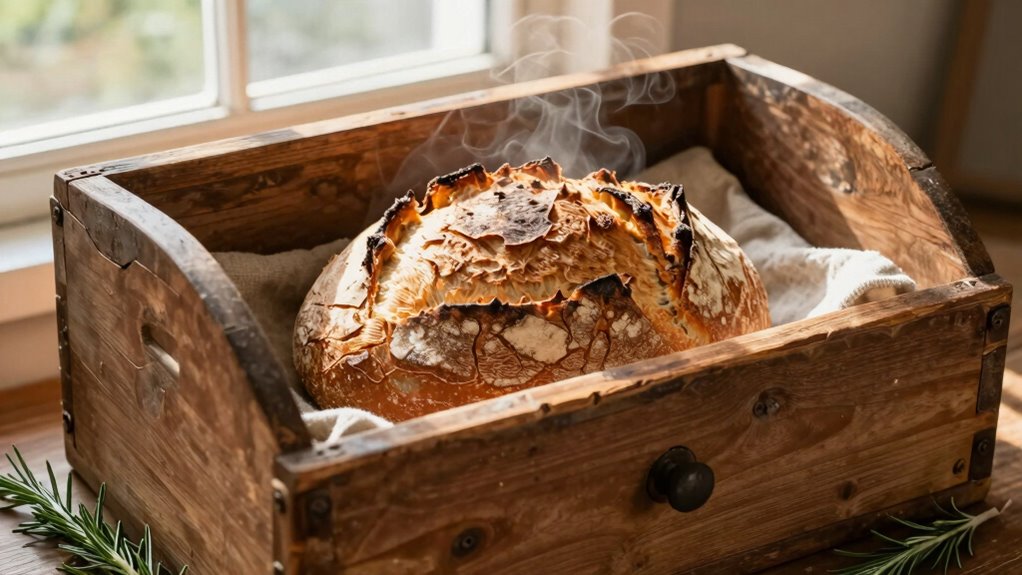
- Keep bread in a cool, dry place, using a bread box to protect it from sunlight and air while allowing ventilation.

When it comes to storing bread, knowing the right techniques can keep your loaf fresh longer. You’ve probably noticed that bread can quickly lose its appeal, turning stale or soggy within days. To maintain bread freshness and guarantee that crust preservation remains a priority, you need to be strategic about how you store your loaf.
First, consider the type of bread you’re dealing with. Artisan loaves, with their hearty crusts, often benefit from being stored in a paper bag at room temperature. This method allows the crust to breathe, preventing it from becoming rubbery. If you’ve got sliced bread, a plastic bag might seem convenient, but it can trap moisture and lead to a soft crust. Instead, opt for a cloth bag, allowing just enough air circulation to maintain that desirable crunch.
If you’re planning to keep the bread for an extended period, freezing is a great option. Wrap your loaf tightly in plastic wrap or aluminum foil, and then place it in a freezer bag. This method preserves both the crust and the inner texture. When you’re ready to enjoy it, just take out the portion you need and let it thaw at room temperature. If you prefer, you can even pop it in the oven for a few minutes to restore that fresh-baked feel. Proper freezing techniques can make all the difference in maintaining bread quality. Additionally, using the correct storage environment helps prevent moisture buildup and staling. Proper storage environments also help mitigate the effects of humidity on bread preservation.
Another critical factor is how you slice your bread. If you slice it too early, it can dry out faster. Wait until you’re ready to eat it, or slice only what you need, leaving the rest whole. This approach helps maintain the integrity of the crust and the moisture within the loaf.
Humidity plays a significant role as well. If you live in a particularly humid environment, avoid storing your bread in the refrigerator, as that can lead to staleness. Instead, find a cool, dry place in your kitchen. A bread box can be an excellent solution, keeping your loaf safe from direct sunlight and air while allowing for some ventilation. Additionally, understanding how humidity affects bread preservation can help you choose the best storage environment.
Lastly, always check your bread for signs of mold or staleness. If you notice any, it’s best to discard it to avoid compromising your health. By following these tips and being mindful of your storage methods, you’ll enjoy delicious, crusty bread that’s as fresh as the day you bought it. So, embrace these techniques and savor every bite!
As an affiliate, we earn on qualifying purchases.
Frequently Asked Questions
Can I Freeze Bread Without Losing Its Crust?
Yes, you can freeze bread without losing its crust! To guarantee crust preservation, use effective freezing techniques. Wrap your bread tightly in plastic wrap or aluminum foil, then place it in a freezer bag to prevent freezer burn. When you’re ready to enjoy it, thaw the bread at room temperature or toast it directly from the freezer. This way, you’ll maintain that delicious crust while enjoying fresh-tasting bread whenever you want!
How Long Does Bread Stay Fresh in Storage?
Bread typically stays fresh for about 3 to 7 days, depending on the type. To maximize freshness, you should follow some bread freshness tips. Store your bread in a cool, dry place, away from direct sunlight. Using a breadbox or a paper bag helps maintain ideal storage conditions. If you want to keep it longer, consider freezing it, but remember to wrap it tightly to prevent freezer burn and moisture loss.
Is It Better to Store Bread in a Bag or Box?
It’s generally better to store bread in a box rather than a bag. A box made of wood or cardboard allows for better air circulation, helping to prevent moisture build-up. If you use a bag, opt for a breathable material like cotton to avoid sogginess. However, if you want to keep your bread crusty, avoid plastic bags, as they trap moisture. Choose the right storage to keep your bread fresh and delicious!
Should I Refrigerate Bread to Keep It Fresh?
Refrigerating bread? Sure, if you want to turn your fresh loaf into a stale rock! Instead, focus on bread freshness tips like keeping it in a cool, dark place, ideally in a bread box or paper bag. These ideal storage conditions let your bread breathe while maintaining its delightful crust. Remember, your bread deserves better than the fridge—give it the cozy home it needs to stay soft and tasty!
Can I Use a Cloth to Wrap My Bread?
Yes, you can use a cloth to wrap your bread. A breathable cloth helps maintain bread freshness while allowing some moisture to escape, which prevents mold. It also aids in crust preservation, keeping it from becoming too soft. Just make sure the cloth is clean and dry. If you notice the bread getting too stale, consider switching to a paper bag for a bit more protection while still allowing airflow.
cloth bread bag for sliced bread
As an affiliate, we earn on qualifying purchases.
As an affiliate, we earn on qualifying purchases.
Conclusion
To keep your bread’s crust intact and delightful, treat it with care. Embrace a breathable bag or a cozy bread box, allowing it to breathe while staying snug. Avoid the chilly embrace of the fridge, where freshness fades. Instead, let your loaf bask at room temperature, cradled in its protective layer. With these gentle steps, you’ll savor every bite, relishing that perfect crunch without losing its charming personality. Enjoy your delicious journey with each slice!
bread storage box with ventilation
As an affiliate, we earn on qualifying purchases.
As an affiliate, we earn on qualifying purchases.
As an affiliate, we earn on qualifying purchases.
Halloween Picks
halloween
As an affiliate, we earn on qualifying purchases.