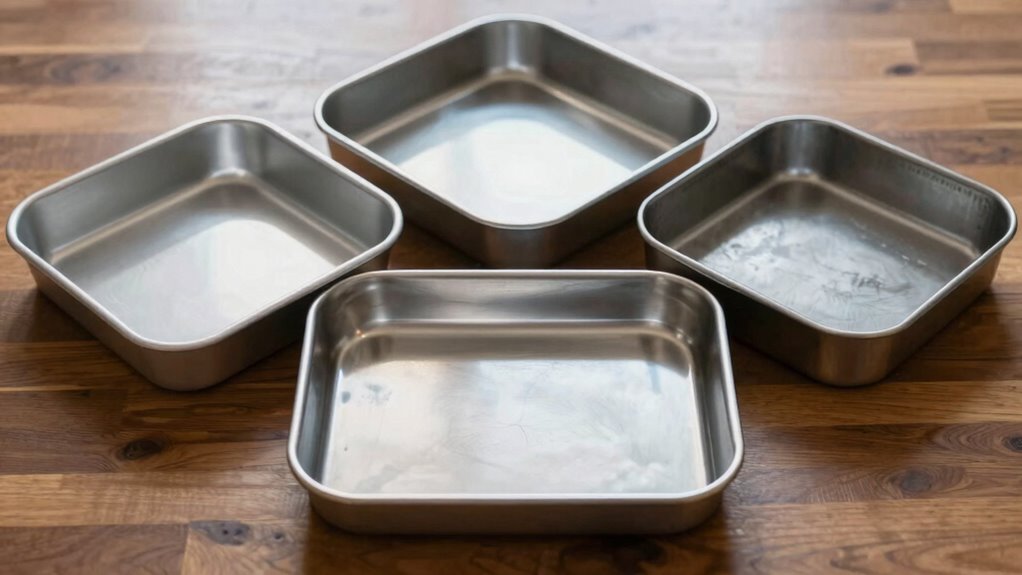

When choosing sheet pan materials, you’ve got aluminum, steel, and stainless steel to evaluate. Aluminum pans are lightweight and heat up quickly, perfect for baking cookies or roasting veggies. Steel pans are heavier and sturdier, ideal for high-heat cooking without warping. Stainless steel is durable but needs careful handling to prevent sticking. Each material has its advantages and disadvantages, so think about what you cook most. You’ll find more details to help with your decision.

Get kitchen gear delivered free with Prime
- Fast, free delivery on millions of items
- Prime Video, Amazon Music and more included
- Member-only deals all year
Key Takeaways
- Aluminum sheet pans are lightweight, affordable, and offer excellent heat conductivity, ideal for even cooking.
- Steel sheet pans are sturdier, durable, and withstand high temperatures, making them suitable for broiling and high-heat baking.
- Stainless steel pans are robust but lack non-stick properties, requiring careful food preparation to prevent sticking.
- Aluminum pans with non-stick coatings simplify cleanup, while steel pans have limited non-stick options.
- Proper heat distribution is crucial; aluminum heats evenly, while steel conducts heat less efficiently, impacting cooking results.
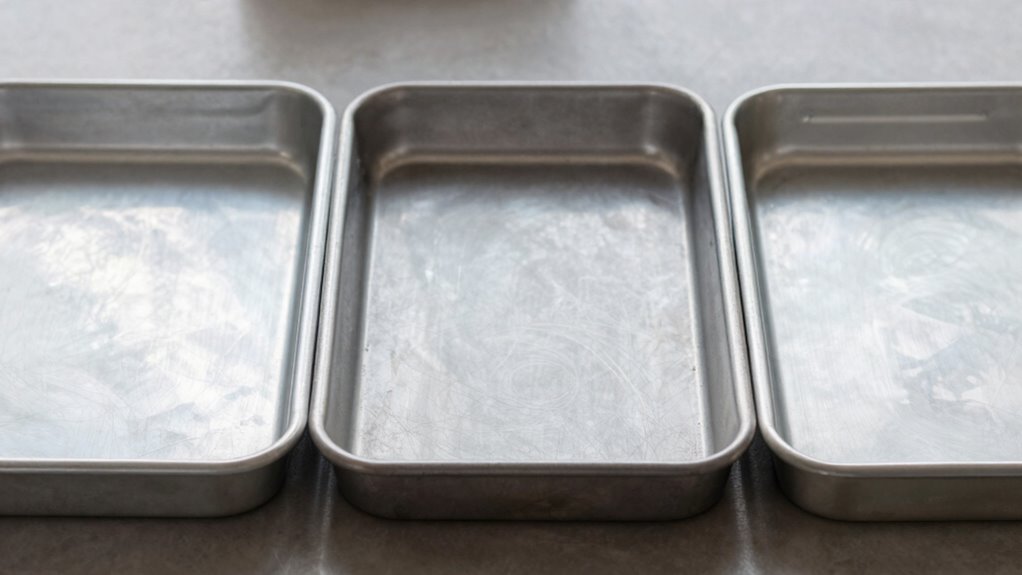
When it comes to cooking, the right sheet pan can make all the difference in your kitchen. Choosing between aluminum, steel, and stainless steel options might feel overwhelming, but understanding their unique characteristics can help you make the best decision for your culinary needs. Each material has its pros and cons, especially when it comes to heat conductivity and non-stick coatings.
Aluminum sheet pans are popular for a reason. They’re lightweight, affordable, and boast excellent heat conductivity, which means your food cooks evenly. This feature is particularly beneficial when you’re roasting vegetables or baking cookies, as you’ll likely achieve that perfect golden-brown finish. However, aluminum pans can react with acidic foods, so if you’re planning to cook dishes with tomatoes or citrus, you might want to take into account other materials or look for anodized options, which offer a protective layer. If you love the idea of a non-stick surface, many aluminum pans come with non-stick coatings that make cleanup a breeze.
On the other hand, steel sheet pans are often sturdier and more durable than aluminum. They can withstand higher temperatures without warping, making them ideal for broiling or high-heat baking. While steel doesn’t conduct heat as efficiently as aluminum, it still performs well for most cooking tasks. You might find that non-stick coatings are less common on steel pans, but they do exist. If you opt for a stainless steel pan, remember that it won’t have the same non-stick properties, so you’ll need to be more mindful of how you prepare your food to prevent sticking. Additionally, steel pans can sometimes be heavier to handle, but their robustness makes them a long-term investment. Proper care and maintenance can extend their lifespan and keep them in top condition. Being aware of heat distribution is crucial to prevent hotspots and uneven cooking when using steel pans. Using the right techniques, such as preheating and proper cleaning, can help optimize their performance.
As an affiliate, we earn on qualifying purchases.
Frequently Asked Questions
Can I Use Metal Utensils on Sheet Pans?
You can use metal utensils on sheet pans, but be cautious about potential risks. Metal utensils might scratch or damage the surface, especially if your pan’s non-stick coating is delicate. If you want to maintain your sheet pan’s durability, consider using silicone or wooden utensils instead. This will help prevent wear and tear, ensuring your pans last longer and perform better for all your cooking needs.
How Do I Clean Aluminum Sheet Pans?
Cleaning aluminum sheet pans is like polishing a diamond; with the right techniques, they’ll shine like new. Start by soaking the pan in warm, soapy water for a bit. Use a non-abrasive sponge to scrub away any stuck-on food. For tougher stains, a paste of baking soda and water works wonders. Rinse well and dry immediately to prevent water spots. Regular maintenance keeps your pans gleaming and ready for your next culinary adventure!
Are Non-Stick Coatings Safe for Baking?
Yes, non-stick coatings are generally safe for baking, as long as you follow proper usage guidelines. Look for high-quality options that offer coating durability, since cheaper versions may wear off over time. Avoid using metal utensils that can scratch the surface, and keep your oven temperature within recommended limits to prevent the release of harmful fumes. Always check for any specific safety information from the manufacturer to guarantee your non-stick bakeware is safe for your needs.
Do Sheet Pans Warp in the Oven?
Yes, sheet pans can warp in the oven, especially if they’re made from thinner materials. Imagine cooking on a trampoline; the heat’s uneven, and the surface bends under pressure. In a durability comparison, aluminum pans tend to warp more easily than steel ones due to their heat distribution. If you’re serious about baking, investing in heavier, high-quality pans can help maintain their shape through repeated use, ensuring better results in your cooking.
What’s the Best Way to Store Sheet Pans?
To store sheet pans effectively, prioritize vertical storage for better organization. Stack them vertically in a cabinet or use a dedicated rack to keep them accessible and minimize scratches. If you’re short on space, consider using dividers or a rolling cart. This way, you’ll enhance sheet pan organization and make it easy to grab the one you need while keeping your kitchen tidy. Don’t forget to clean them before storing!
As an affiliate, we earn on qualifying purchases.
Conclusion
In choosing the right sheet pan, remember that aluminum is lightweight and heats up quickly, while steel offers durability, and stainless steel resists rust. Did you know that aluminum pans can last up to 3 times longer than their non-stick counterparts? So, whether you’re roasting veggies or baking cookies, pick a material that fits your cooking style. By understanding these options, you’ll enhance your culinary adventures and guarantee delicious results every time!
As an affiliate, we earn on qualifying purchases.
As an affiliate, we earn on qualifying purchases.
Halloween Picks
halloween
As an affiliate, we earn on qualifying purchases.