
Relying only on the clock to tell when your dough is ready can lead to inconsistent results because fermentation is affected by factors like temperature, humidity, and yeast type, not just time. Visual cues and feel are much more reliable for knowing if your dough is properly proofed. Ignoring these signs could mean under- or overproofing, affecting flavor and texture. Keep exploring to discover how understanding these clues can make your baking more consistent and delicious.

Get kitchen gear delivered free with Prime
- Fast, free delivery on millions of items
- Prime Video, Amazon Music and more included
- Member-only deals all year
Key Takeaways
- Relying solely on time ignores environmental factors that influence fermentation and dough development.
- Visual and tactile cues, like size and resilience, are more accurate indicators of dough readiness.
- Oven temperature accuracy affects baking results more than timing alone.
- Fermentation quality depends on variables like temperature and humidity, not just elapsed time.
- Mastering sensory signs and oven calibration ensures consistent, optimal baking outcomes.
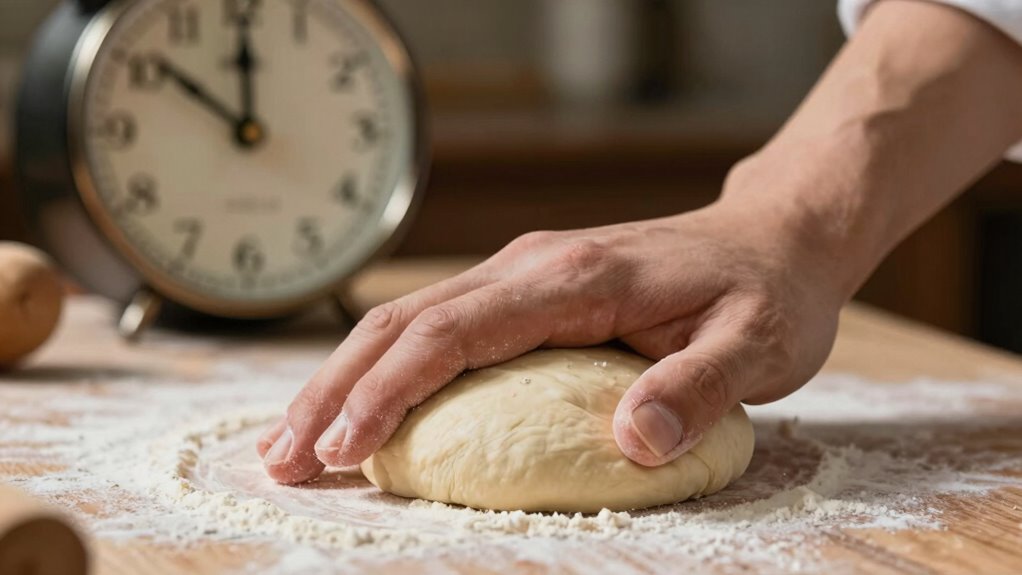
If you’re baking bread, understanding the timing of your dough is essential to achieving perfect results. Many bakers rely on the clock to tell them when their dough is ready, but the truth is, the clock can be a deceptive tool. The real key lies in mastering fermentation secrets and paying close attention to your oven accuracy. The timing on a recipe might say one hour, but your dough’s readiness isn’t dictated by time alone. Fermentation depends on factors like temperature, humidity, and the specific yeast or starter you use. If you ignore these variables, you risk underproofing or overproofing, which can ruin your loaf.
Timing alone doesn’t determine dough readiness; focus on fermentation cues like size, texture, and bounce for perfect bread.
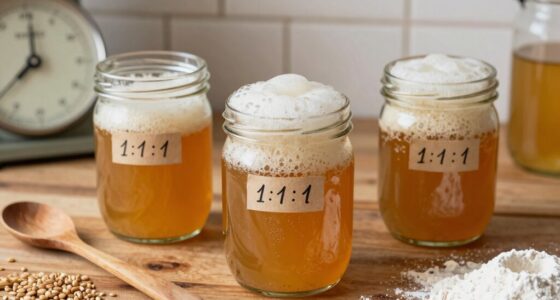
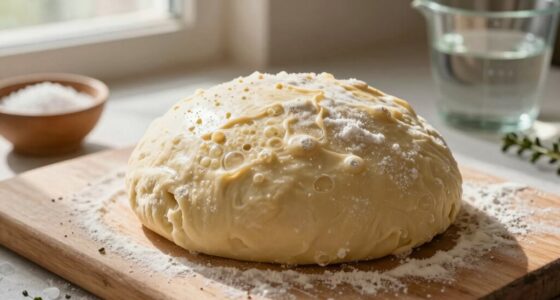
The clock can be misleading because it doesn’t factor in the subtle cues your dough gives you. Instead of blindly following a timer, you should learn to recognize signs of proper fermentation. For example, a well-proofed dough should have roughly doubled in size, feel soft yet resilient, and show a slight bounce when gently pressed. These are clues that tell you your fermentation secrets are working, regardless of what the clock says. Relying solely on time can lead to underdeveloped flavors or a dense crumb, especially if your environment is cooler or warmer than usual. That’s why understanding your dough’s behavior is more reliable than just sticking to a schedule. Recognizing these cues can be enhanced by understanding the science behind fermentation, which involves more than just watching the clock.
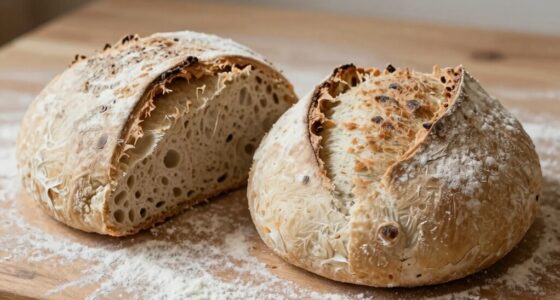
Another critical aspect is oven accuracy. Many bakers overlook how important precise oven temperature control is during baking. A miscalibrated oven can mean the difference between a golden crust and a dough that remains pale or overbakes. Knowing your oven’s true temperature allows you to time your bake correctly and achieve consistent results. Investing in an oven thermometer can help you fine-tune your oven’s accuracy, ensuring that your baked goods reach their peak at the right moment. When your oven hits the right temperature, and your dough shows visual cues of readiness, you can confidently remove it, knowing it’s perfectly timed—not just timed by the clock. Additionally, understanding oven calibration can help prevent common baking mistakes caused by temperature inaccuracies.
In addition, understanding the science behind fermentation, including factors like temperature and humidity, can significantly improve your baking outcomes. When your oven hits the right temperature, and your dough shows visual cues of readiness, you can confidently remove it, knowing it’s perfectly timed—not just timed by the clock.
In the end, the secret to avoiding the dough timing trap is to trust your senses and understand the science behind fermentation and oven accuracy. The clock is just a rough guide; your intuition and observation are what truly determine success. By paying attention to your dough’s behavior and ensuring your oven is calibrated, you’ll produce bread with better texture, flavor, and appearance—regardless of the time. Master these fermentation secrets and oven precision, and you’ll break free from the trap of timing myths and elevate your baking to new heights.
As an affiliate, we earn on qualifying purchases.
Frequently Asked Questions
How Does the Dough Timing Trap Affect Professional Bakers?
You might fall into the dough timing trap, which messes with your timing decisions. Fermentation delays can cause you to wait too long, leading to overproofing risks. Conversely, rushing the process might result in underdeveloped flavor and poor texture. This trap makes it hard to judge when your dough is perfectly proofed, so you may end up over or under-proofing, impacting your final baked goods’ quality.
Can Digital Timers Help Avoid the Dough Timing Trap?
Think of a digital timer as your lighthouse in a foggy sea, guiding you with digital precision and reliable timing. Yes, digital timers help you avoid the dough timing trap by providing consistent, accurate measurements. Their reliability guarantees you don’t rely on guesswork or misleading cues, so your dough develops perfectly every time. With a good digital timer, you’ll steer clear of timing pitfalls and achieve bakery-quality results effortlessly.
What Common Mistakes Lead to Misjudging Dough Readiness?
You often misjudge dough readiness due to ignoring fermentation speed and ingredient variability. Relying solely on time can be misleading, as yeast activity varies with temperature and ingredient freshness. You might also overlook visual cues like bubbles or surface tension, thinking the dough’s done too early or late. To avoid this, pay close attention to how your dough looks and feels, adjusting your timing based on fermentation progress rather than just the clock.
How Does Ambient Temperature Influence Dough Timing?
Ambient temperature greatly influences dough timing by causing temperature fluctuations that can speed up or slow down fermentation. Warmer environments accelerate yeast activity, making dough rise faster, while cooler temperatures slow it down. Humidity impact also plays a role, as high humidity can make dough softer and affect proofing times. To get accurate results, monitor your kitchen’s temperature and humidity, and adjust proofing times accordingly to avoid over- or under-proofing.
Are There Specific Types of Dough More Prone to Timing Errors?
You’ll find that high-hydration doughs and those with added fats are more prone to timing errors. These doughs rely heavily on gluten development and yeast activity, which can be unpredictable. In fact, improper timing can reduce gluten strength by 30%, affecting texture. So, if you’re working with delicate, enriched, or highly hydrated doughs, stay attentive to signs of readiness, rather than just the clock.
As an affiliate, we earn on qualifying purchases.
Conclusion
So, next time your dough seems to be taking forever, remember—don’t let the clock fool you. It’s a trickster, whispering that time is your enemy when really, patience is your best friend. Trust your senses, not just the ticking hand, and you’ll find that perfect rise is more about feeling than timing. After all, in the dance of dough, sometimes the slowest steps lead to the most beautiful results.
As an affiliate, we earn on qualifying purchases.
As an affiliate, we earn on qualifying purchases.
Fall Picks
fall essentials
As an affiliate, we earn on qualifying purchases.