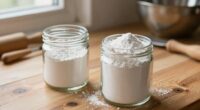
To keep dough from sticking in your banneton, dust it generously with rice flour before adding your dough. This creates a non-stick barrier that helps your bread slide out easily after proofing. You can also use a cotton or linen liner for extra protection, dusting it with rice flour as well. Just remember to monitor your dough’s hydration and proofing time for the best results. There’s more to discover about improving your baking techniques!

Get kitchen gear delivered free with Prime
- Fast, free delivery on millions of items
- Prime Video, Amazon Music and more included
- Member-only deals all year
Key Takeaways
- Use rice flour to dust your banneton, creating a non-stick barrier that prevents dough from sticking during proofing.
- Consider adding a cotton or linen liner to your banneton, dusted with rice flour for extra protection against sticking.
- Adjust your dough’s hydration levels to suit the type of dough you are working with, reducing stickiness.
- Clean your banneton after each use with a soft brush, avoiding water to maintain its integrity and non-stick properties.
- Store your banneton in a dry, well-ventilated area to prevent moisture buildup that can contribute to sticking.
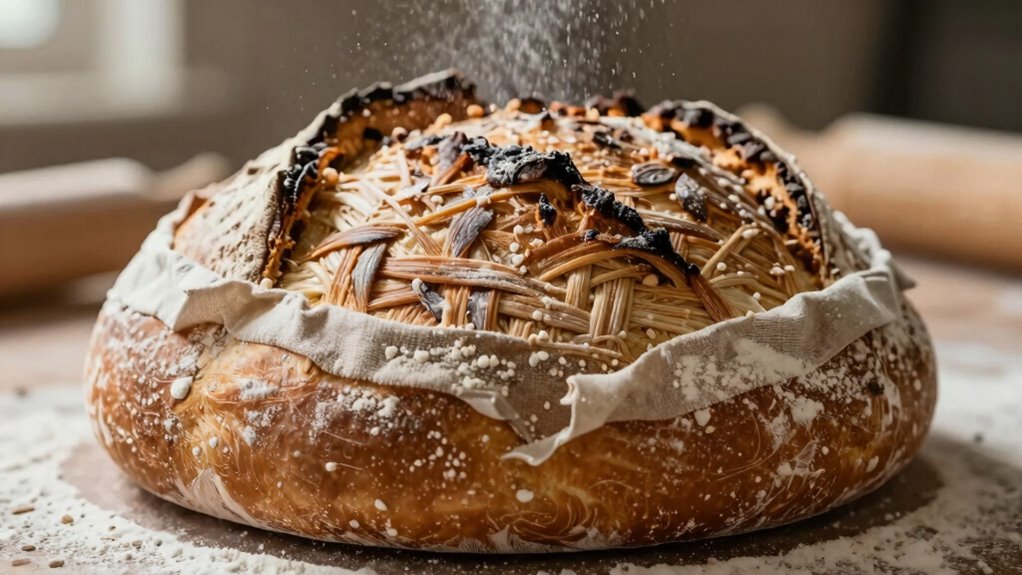
If you’ve ever pulled your dough from a banneton only to find it stuck, you know the frustration. That beautiful loaf you envisioned turns into a torn mess, and it can be disheartening. But don’t worry—there are effective strategies to prevent your dough from clinging to the banneton. One of the best tricks involves using rice flour, along with a few key techniques to improve your banneton maintenance and dough preparation.
Rice flour is your secret weapon. Unlike all-purpose flour, it has a lower moisture content, which means it doesn’t create that sticky, gooey mess that can cling to your banneton. When you’re dusting your banneton, sprinkle a generous amount of rice flour to create a non-stick barrier. This helps your dough slide out easily after proofing, allowing for a smoother shift from banneton to baking surface. Additionally, choosing the right banneton material can also impact how much your dough sticks. Using the correct material can greatly influence how well your dough releases.
Rice flour creates a non-stick barrier for your banneton, ensuring your dough slides out effortlessly after proofing.
Now, let’s talk about banneton maintenance. After each use, make sure to clean your banneton properly. If you notice any dough remnants, brush them out gently with a soft brush. Avoid soaking it in water, as that can damage the material. Instead, let it air dry completely before storing. This helps maintain its shape and prevents mold growth, ensuring it’s always ready for your next baking adventure. Proper banneton care is essential for longevity and performance. Additionally, storing your banneton in a dry, well-ventilated area can help preserve its condition over time.
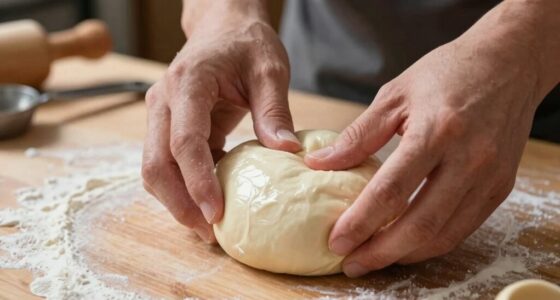
When it comes to dough preparation, consider the hydration level of your dough. Higher hydration doughs can be trickier and more prone to sticking. Adjust your recipe if necessary, or use a liner inside your banneton. Liner fabrics are often made from cotton or linen and can be dusted with rice flour for added protection. This way, you get the benefits of a banneton while minimizing the risk of sticking. Proper dough handling techniques can also help reduce adhesion issues.
Proofing techniques also play an essential role. Allow your dough enough time to rise but keep an eye on the clock. Over-proofing can lead to a sticky situation, making it harder for the dough to maintain its structure. If you’re unsure, do the poke test: gently poke the dough, and if it springs back slowly, it’s ready for the next step. Proper proofing techniques can greatly improve your baking outcomes and reduce sticking issues. Remember, the environment in which you proof your dough, such as temperature and humidity, can also influence sticking. Creating an optimal proofing environment can help achieve better results and prevent dough from becoming overly sticky.
Products Worth Considering

Breville Bambino Espresso Machine, Brushed Stainless Steel

Cuisinart SM-50R 5.5-Quart Stand Mixer, Ruby Red

Cuisinart PerfecTemp Electric Kettle, 1.7 L, 1500 W, 6 Temperature Settings
As an affiliate, we earn on qualifying purchases.
Frequently Asked Questions
What Types of Bread Are Best for Using Bannetons?
If you’re looking to use bannetons, sourdough is one of the best choices. Its unique benefits, like enhanced flavor and texture, shine when using artisan techniques. The structure of sourdough allows it to hold its shape well, making it perfect for this type of proofing. You can also experiment with other artisanal breads like ciabatta or pain de campagne, but sourdough truly stands out for its depth and rustic charm.
How Often Should I Replace My Banneton Liner?
You should replace your banneton liner every few months, depending on usage. For effective banneton maintenance tips, keep an eye on wear and tear. If you notice fraying or staining, it’s time for a new one. Popular liner material options include cotton and linen, which are breathable and help prevent sticking. Regularly washing your liners can extend their life, but don’t hesitate to replace them when they start to deteriorate.
Can I Wash My Banneton in the Dishwasher?
No, you shouldn’t wash your banneton in the dishwasher. Instead, stick to simple banneton maintenance tips like shaking out excess flour and wiping it with a damp cloth. For deeper cleaning, use a soft brush to remove stuck particles, and let it air dry completely. Remember, avoiding harsh methods preserves your banneton’s shape and longevity. Following these banneton cleaning methods will keep it in great condition for all your baking adventures!
What Is the Ideal Humidity for Proofing Dough?
The ideal humidity for proofing dough is around 75-80%. This level helps maintain the right moisture balance, allowing your dough to rise properly. If the humidity’s too low, your dough might dry out, affecting its texture and leading to a denser loaf. Conversely, overly high humidity can create a sticky mess. Keeping an eye on humidity effects is essential for achieving that perfect, airy crumb in your bread.
How Do I Store My Banneton When Not in Use?
To store your banneton when it’s not in use, make sure it’s clean and completely dry. You wouldn’t want leftover moisture affecting your dough preservation! Place it in a breathable bag or a cardboard box to keep dust away, while allowing airflow. Avoid plastic, as it can trap moisture. When you’re ready to bake again, simply dust it with flour, and you’re set for your next dough adventure!
Conclusion
In the world of baking, your banneton is like a wise old friend, guiding your dough to rise beautifully. If it clings like a stubborn shadow, remember the magic of rice flour and liners. Just as a gentle breeze frees a kite to soar, these simple fixes will liberate your loaf. Embrace this dance of flour and fabric, and watch your bread blossom, transforming kitchen trials into triumphs, one glorious loaf at a time.