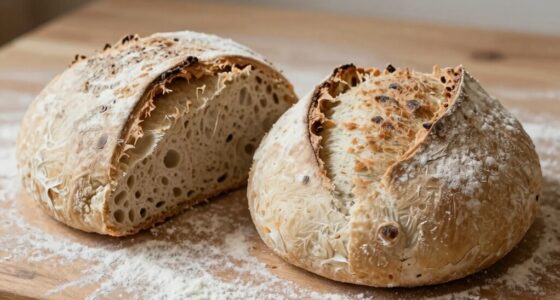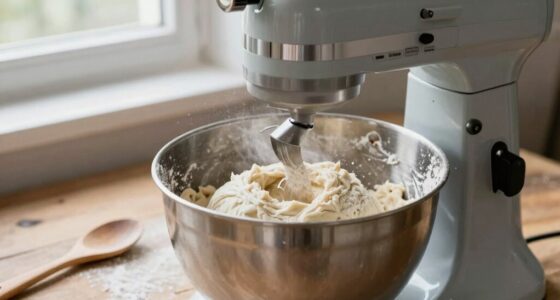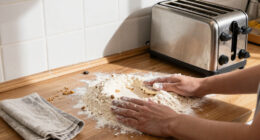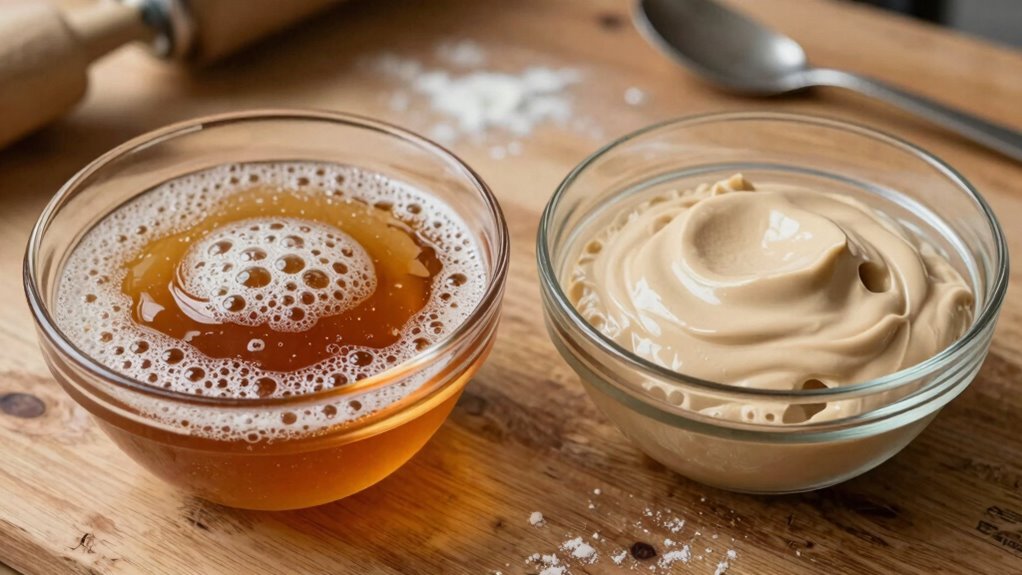

Poolish and biga are both preferments that boost bread flavor and improve dough handling, but they differ in hydration and fermentation time. Poolish is a wetter mixture with equal parts flour and water, fermenting quickly for a soft, airy crumb. Biga is firmer, with less water, and ferments longer for deeper flavors. Using either can give your bread more complex taste and texture. Keep exploring to discover how these tools can elevate your baking skills further.

Get kitchen gear delivered free with Prime
- Fast, free delivery on millions of items
- Prime Video, Amazon Music and more included
- Member-only deals all year
Key Takeaways
- Poolish is a wet, sticky mixture with equal parts flour and water, while Biga is a drier, firmer preferment.
- Both enhance flavor, dough strength, and fermentation control but differ in hydration and fermentation time.
- Poolish promotes vigorous fermentation with high hydration; Biga develops deeper flavors with longer, slower fermentation.
- Using preferments allows for better flavor complexity, improved dough extensibility, and more consistent results.
- Preparing preferments in advance offers flexibility, better control, and elevates overall bread quality.

Have you ever wondered how professional bakers achieve those perfectly airy and flavorful bread loaves? The secret often lies in their use of preferments like poolish and biga. These are not just old baking tricks but powerful tools that influence fermentation techniques and flavor development. When you incorporate a preferment into your dough, you’re essentially giving your bread a head start. This pre-dough ferments overnight or for several hours, which allows natural yeasts and bacteria to work their magic. The result is a more complex flavor profile and improved dough strength.
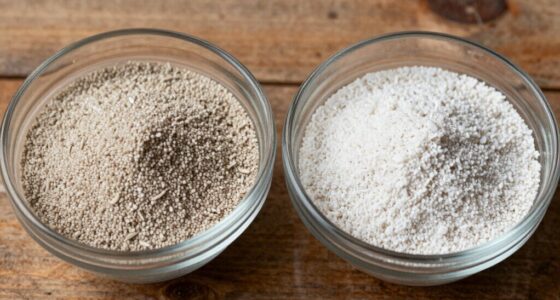
With poolish, you’re working with a wet, sticky mixture of flour and water, usually in equal parts, with a small amount of yeast. This high hydration environment encourages vigorous fermentation, which enhances flavor development and creates a more open crumb. Biga, on the other hand, is typically drier and firmer, with less water relative to flour, but still packed with active yeast. Its firmer texture allows for longer fermentation times, which develop deeper, more nuanced flavors. Both preferments serve different purposes but share the goal of elevating your bread’s taste and texture.
As you experiment with these preferments, you’ll notice how they transform your baking process. Incorporating a poolish or biga improves fermentation techniques by giving the yeast more time to work slowly and steadily, producing more complex organic acids and aromas. This slow fermentation not only heightens flavor development but also enhances dough extensibility, making shaping easier and resulting in a more uniform rise in the oven. When you master these techniques, you’ll find your bread gains a depth of flavor and a lightness that’s hard to achieve with direct mixing alone. Additionally, understanding the fermentation process helps you better control fermentation, leading to more consistent and satisfying baking results. Developing a proper fermentation schedule can further optimize your baking outcomes.
Using preferments like poolish and biga also helps build consistency in your baking. Since they allow you to control fermentation stages more precisely, you can fine-tune your bread’s flavor and texture with each batch. This control over fermentation techniques ensures your loaves develop rich, complex flavors while maintaining a desirable airy crumb. Plus, the ability to adjust fermentation conditions can be crucial for achieving the perfect bake, especially in varying environmental conditions. The process can be adapted to fit your schedule—prepare the preferment the night before or a few hours prior, and your dough will be ready to shape and bake with a superior flavor profile. Moreover, mastering the fermentation environment can make a significant difference in achieving optimal results.
In the end, understanding and applying these preferments isn’t just about improving your bread; it’s about mastering fermentation techniques that bring out the best in your baking. With poolish and biga, you’ll unlock new levels of flavor development, creating loaves that are both delicious and visually appealing.
As an affiliate, we earn on qualifying purchases.
Frequently Asked Questions
How Do Preferments Affect the Flavor of Bread?
Preferments profoundly enhance the flavor of bread through the fermentation process, allowing natural enzymes to develop complex, tangy notes. As you incorporate preferments like poolish or biga, you initiate a slow fermentation that deepens the bread’s flavor, adding subtle acidity and richness. This process also improves texture and crust, making your bread more flavorful and aromatic, giving you a richer, more satisfying baking experience.
Can Poolish and Biga Be Used Together in One Recipe?
Think of combining poolish and biga as blending two musical notes to create a richer harmony. Yes, you can use both in one recipe for flavor enhancement and texture development. The poolish adds moisture and a subtle tang, while the biga contributes structure and complexity. Using both preferments can give your bread a deeper flavor profile and improved crumb, making your loaf truly stand out.
What Types of Flour Are Best for Making Preferments?
You should use high-quality bread flour or unbleached all-purpose flour for making preferments, as they provide the necessary gluten structure. These flours work well with alternative fermentation methods, promoting flavor and texture development. Using strong bread flour can enhance gluten development techniques, resulting in a better rise and chewiness. Whole grain flours can also be used, but they may require longer fermentation times to achieve the most favorable gluten formation.
How Long Can You Store Prepared Poolish or Biga?
You can store prepared poolish or biga in the refrigerator for up to 12-16 hours, depending on the fermentation duration you want. Use proper storage techniques, like keeping it in an airtight container to prevent spoilage or drying out. If you need to store it longer, consider freezing it for a few weeks, but note that extended storage may affect fermentation quality and flavor development.
Do Preferments Alter Baking Times or Oven Temperatures?
Yes, preferments like poolish and biga can alter baking times and oven temperatures. Their fermentation duration impacts dough development, often resulting in a quicker rise and richer flavor. Higher dough hydration levels can make the dough more elastic, affecting its baking behavior. Adjust your baking time and temperature based on how long you’ve fermented the preferment and the dough’s hydration, ensuring the bread bakes thoroughly and achieves the desired crust.
professional bread making starter culture
As an affiliate, we earn on qualifying purchases.
As an affiliate, we earn on qualifying purchases.
Conclusion
Now that you understand the differences, think of poolish and biga as two tools in your baking toolkit—each with its own strengths. Imagine a loaf with a bubbly, open crumb from a poolish, versus a denser, flavorful bite from a biga. Once you see how each preferment transforms your dough, you’ll confidently choose the right one for your desired bread. So, don’t be intimidated—try them out and enjoy the delicious results!
artisan bread dough fermentation tools
As an affiliate, we earn on qualifying purchases.
As an affiliate, we earn on qualifying purchases.
As an affiliate, we earn on qualifying purchases.
Halloween Picks
halloween
As an affiliate, we earn on qualifying purchases.