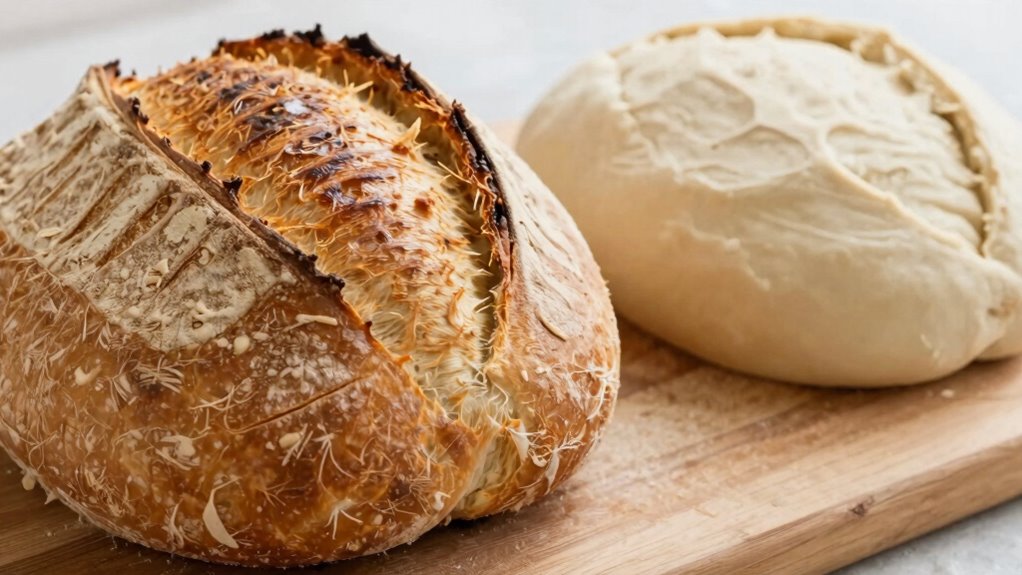
Bread splits on the side mainly due to scoring and proper proofing. When you score the dough, you’re creating controlled weaknesses that help it expand evenly while baking. If you don’t score, your loaf might turn out flat. On the other hand, proofing guarantees the dough develops enough gas bubbles. Too little or too much proofing can weaken the structure, affecting the split. Mastering these techniques will enhance your bread-making skills, and there’s more to explore on this topic.

Get kitchen gear delivered free — and shop member deals
- Fast, free delivery on millions of items
- Access to Prime Big Deal Days deals on October 6–7
- Prime Video, Amazon Music and more included
Key Takeaways
- Bread splits on the side due to scoring, which creates controlled weaknesses for expansion during baking.
- Proper proofing develops gas bubbles; insufficient proofing can result in flat loaves without side splits.
- Over-proofing weakens dough structure, preventing proper expansion and desirable splits.
- Balance in dough elasticity is crucial; overly elastic dough may resist expansion, affecting split formation.
- Mastering scoring and proofing techniques is essential for achieving the charming ear formations in artisan bread.
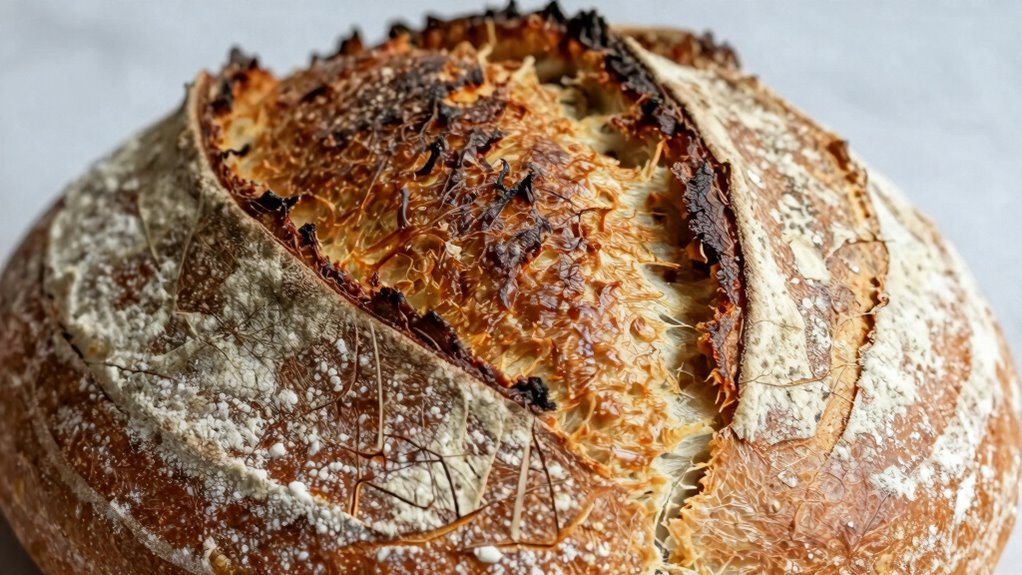
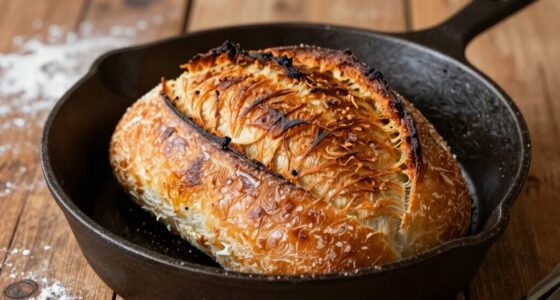
When you pull a fresh loaf from the oven, you might notice those charming splits on the side, and you may wonder why they happen. These splits, or “ear” formations, are a delightful aspect of artisan bread, but they also hint at the science behind crust formation and dough elasticity. Understanding these concepts can help you craft the perfect loaf every time.
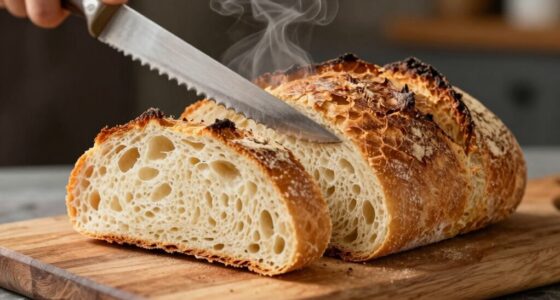
The splits occur due to a combination of how you prepare your dough and how it behaves in the oven. When you score the dough before baking, you fundamentally create a controlled weakness in the crust. This allows the bread to expand as it bakes, giving the loaf its characteristic shape and texture. If you skip this step, the dough may not rise evenly, resulting in less appealing splits or, worse, a flat loaf. So, don’t forget to grab your sharp knife or lame and create those deliberate cuts just before you slide the dough into the heat.
Scoring your dough creates controlled weaknesses, allowing for even expansion and those delightful splits in your artisan loaf.
On the other hand, dough elasticity plays an important role in how your bread behaves during baking. When you knead your dough, you develop gluten, which contributes to its elasticity. This elasticity is vital for trapping gases produced by yeast during fermentation. If your dough is too elastic, it might resist expansion, leading to uneven crust formation and undesirable splits. Conversely, if it’s not elastic enough, it may collapse under the heat, leading to a flat result. Striking the right balance is key. Additionally, proper dough elasticity can influence how well your bread maintains its structure during baking.
Proofing also greatly affects how your bread bakes. If you under-proof, your dough won’t have developed sufficient gas bubbles, making it less likely to expand properly in the oven. On the flip side, over-proofing can weaken the dough structure, causing it to collapse. Finding that sweet spot is essential for achieving the desired crust and crumb structure.
bread lame for scoring artisan bread
As an affiliate, we earn on qualifying purchases.
As an affiliate, we earn on qualifying purchases.
Frequently Asked Questions
What Types of Bread Benefit Most From Scoring?
Artisan loaves, like baguettes and sourdough, benefit most from scoring. This technique enhances crust texture by allowing steam to escape, preventing the dough from bursting unpredictably. With high dough hydration, scoring helps control the rise and directs it where you want. You’ll achieve a beautiful ear and a more appealing appearance. So, remember to score those loaves before baking; it’s key to revealing their full potential!
How Does Humidity Affect Bread Proofing?
Humidity levels play an essential role in bread proofing, don’t they? High humidity can enhance yeast activity, leading to faster fermentation timing. This often results in a softer dough texture, but too much moisture can weaken the surface tension, causing the bread to spread instead of rise. Conversely, low humidity may slow fermentation, making it important to adjust ambient temperature and hydration levels for ideal results during proofing.
Can I Score Bread After It’s Baked?
You can’t score baked bread effectively. Once it’s baked, the crust hardens, making it tough to achieve a clean cut. However, if you want to enhance the appearance or flavor, you can use scoring techniques on your dough before baking. This allows the bread to expand beautifully and develop a crust that’s both crispy and appealing. So, stick to scoring before baking for the best results!
What Tools Are Best for Scoring Bread?
For scoring bread, a bread lame is your best tool. It’s designed for precision and gives you that perfect, clean cut. When you use it, focus on a swift, confident motion to achieve your desired scoring technique. You can also use a sharp knife if you’re in a pinch, but a lame will definitely elevate your bread-baking game. Remember, the right tool makes all the difference in your baking results!
How Does Gluten Development Influence Bread Splitting?
When you think of bread, picture a dancer in a perfect pirouette. Gluten development is essential here; it creates a strong gluten structure that gives your dough elasticity. If the gluten isn’t developed enough, your loaf might split unexpectedly. On the flip side, over-developing can lead to rigidity, preventing an even rise. So, pay attention to your kneading time and hydration; they’re key to achieving that beautiful, even crust you desire!
bread proofing basket proofing cloth
As an affiliate, we earn on qualifying purchases.
As an affiliate, we earn on qualifying purchases.
Conclusion
In the world of bread-making, the side-splitting drama often mirrors the trials of life itself. Just as a well-timed decision can lead to success, scoring your dough before baking can guide its rise, preventing those unwanted splits. Remember, like a hero in a classic tale, you’ve got the power to shape the outcome. Embrace the art of proofing and scoring, and watch your bread transform into a masterpiece, rising to the occasion with grace.
As an affiliate, we earn on qualifying purchases.
As an affiliate, we earn on qualifying purchases.
Fall Picks
fall essentials
As an affiliate, we earn on qualifying purchases.