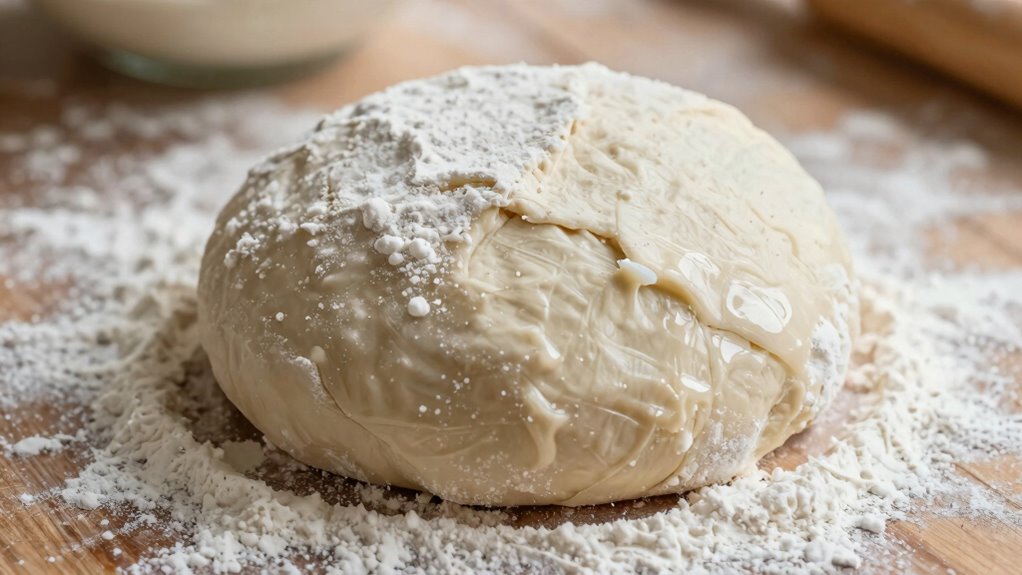

Your dough feels different daily because flour’s water absorption varies with factors like freshness, protein content, and batch. When your flour is newer or has higher protein, it absorbs more water, making the dough feel different. Humidity and how you measure hydration also play a role. By understanding these factors, you can better adjust your dough’s consistency. Keep exploring, and you’ll discover how to master these subtle changes for perfect baking every time.

Get kitchen gear delivered free with Prime
- Fast, free delivery on millions of items
- Prime Video, Amazon Music and more included
- Member-only deals all year
Key Takeaways
- Flour’s moisture content and freshness vary daily, affecting water absorption and dough feel.
- Protein content and grind size influence how much water flour can absorb each day.
- Environmental conditions like humidity and temperature impact dough hydration and texture.
- Dough feel reflects hydration adjustments needed, which can change with flour batch variations.
- Monitoring dough texture guides precise hydration for consistent baking results daily.
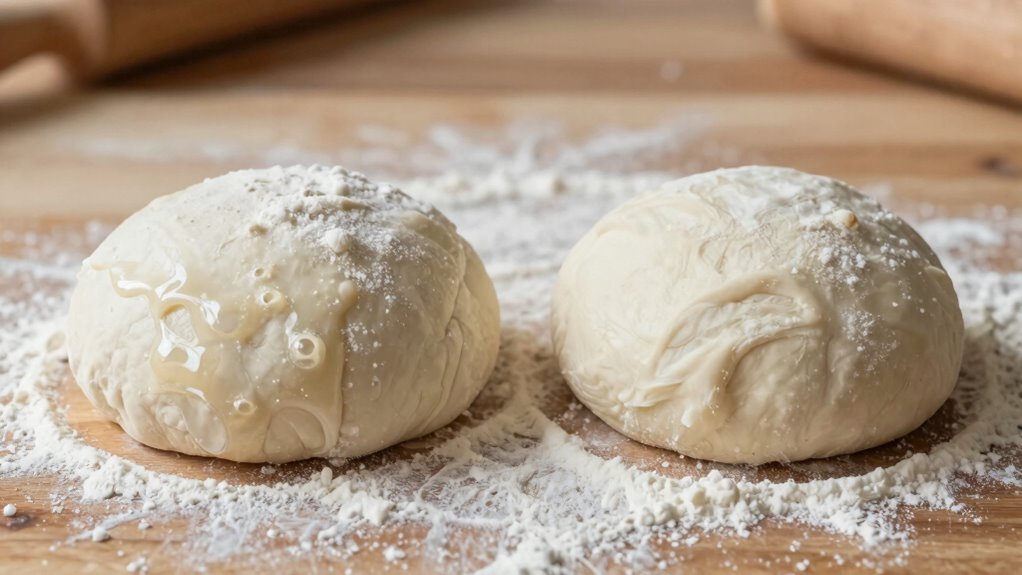
Understanding the flour hydration rule is crucial for bakers aiming to perfect their dough. This rule emphasizes that the amount of water you add to your flour profoundly influences how the dough behaves, feels, and ultimately bakes. Even when you’re using the same recipe, your dough may feel different each time, and that’s because water absorption varies based on several factors. Recognizing how hydration impacts gluten development is key to controlling your dough’s texture and structure. When you add water, it interacts with the proteins in the flour, primarily glutenin and gliadin, which combine to form gluten. Proper hydration allows these proteins to bond and create a strong, elastic network that gives your dough its stretch and resilience. If the dough isn’t hydrated enough, gluten development will be incomplete, resulting in a dense, tough loaf. Conversely, too much water can weaken this network, making the dough sticky and hard to handle.
Water absorption is not a fixed trait, even for the same type of flour. It depends on the flour’s protein content, grind size, and age. Freshly milled flour, for example, often absorbs more water than older flour because it retains more of its natural moisture. Similarly, high-protein flours, like bread flour, tend to absorb more water than low-protein varieties, such as cake flour. This variability means that you can’t rely solely on a set hydration percentage; you need to pay close attention to how your dough feels and behaves. As you experiment, you’ll notice that some flours require slightly more or less water to achieve the ideal dough consistency. This is why understanding water absorption helps you adapt your hydration levels to different batches. Additionally, understanding flour characteristics helps you fine-tune your hydration for optimal gluten development. Being aware of flour moisture content can also aid in predicting how much water your dough will need. Moreover, observing the dough’s feel and texture provides immediate feedback on whether your hydration level is appropriate, allowing for quick adjustments during mixing.
The feel of your dough, whether sticky, tacky, or firm, offers clues about its hydration status. A properly hydrated dough should be cohesive, elastic, and slightly tacky but not overly sticky. When you gauge the dough’s texture, you’re fundamentally testing whether enough water has been absorbed to promote ideal gluten development. If it’s too dry, you’ll see tearing or difficulty stretching the dough. If it’s too wet, it will be overly sticky and hard to shape. Adjusting hydration based on these observations ensures consistent results, even if the flour’s water absorption rate varies. Paying close attention to these visual cues can help you make more precise adjustments on the fly. Mastering the hydration rule means understanding that water and flour interact dynamically, shaping the gluten network and influencing how your dough feels and performs. With practice, you’ll learn to fine-tune hydration levels, ensuring your bread turns out perfect every time. Additionally, paying attention to the protein content of your flour can guide your hydration adjustments for better results.
As an affiliate, we earn on qualifying purchases.
Frequently Asked Questions
How Does Humidity Affect Dough Hydration?
Humidity effects directly influence dough hydration, making your dough feel different each day. When humidity is high, the air adds moisture, so you might need less water to achieve the desired dough consistency. Conversely, dry air pulls moisture from your dough, making it stiffer and less elastic. Adjusting water content based on humidity helps maintain ideal dough elasticity, ensuring consistent results and better bread texture every time you bake.
Can Flour Brand Change Hydration Needs?
Yes, the flour brand can change your dough’s hydration needs. Different brands have varying flour protein levels, which influence gluten development and how much water the flour absorbs. Higher protein flours absorb more water, requiring increased hydration, while lower protein flours need less. So, when switching brands, you should adjust your water amount accordingly to guarantee proper gluten development and achieve the desired dough texture.
Does Altitude Impact Hydration Levels?
Altitude effects can markedly impact your dough’s hydration levels. At higher altitudes, the air is drier, and the boiling point drops, causing moisture to evaporate faster. This results in less dough elasticity if you don’t adjust hydration. You might need to increase water slightly to maintain the right consistency. Understanding these factors helps you craft dough with ideal elasticity, no matter the altitude, ensuring perfect baking results every time.
How Do I Adjust for Different Flour Types?
When adjusting for different flour types, you should consider how their protein content affects gluten development and hydration needs. Store your flour properly to maintain freshness, which influences water absorption. Higher-protein flours, like bread flour, need more water for ideal gluten development, while softer flours require less. Always start with a standard hydration and tweak based on dough feel, observing how it develops and adjusting water accordingly.
Is Hydration Different for Sourdough Versus Yeast Dough?
Think of sourdough and yeast doughs as different musical instruments—you need different tuning. Hydration levels vary because fermentation effects influence how much water the dough absorbs and develops flavor. Sourdough usually requires higher hydration for better fermentation effects and richer flavor development, while yeast doughs often need less. Adjust hydration based on these factors to achieve the perfect texture, flavor, and fermentation balance for each type.
As an affiliate, we earn on qualifying purchases.
Conclusion
Understanding the flour hydration rule helps you grasp why your dough feels different every day. Since flours can vary in moisture content by up to 15%, your dough’s texture and hydration need adjusting accordingly. This small change can substantially impact your baking success, with studies showing that even a 2% difference in hydration can alter bread volume and crumb structure. Embrace these variations, and you’ll become more intuitive, crafting perfect loaves no matter the day.
As an affiliate, we earn on qualifying purchases.
As an affiliate, we earn on qualifying purchases.
Fall Picks
fall essentials
As an affiliate, we earn on qualifying purchases.