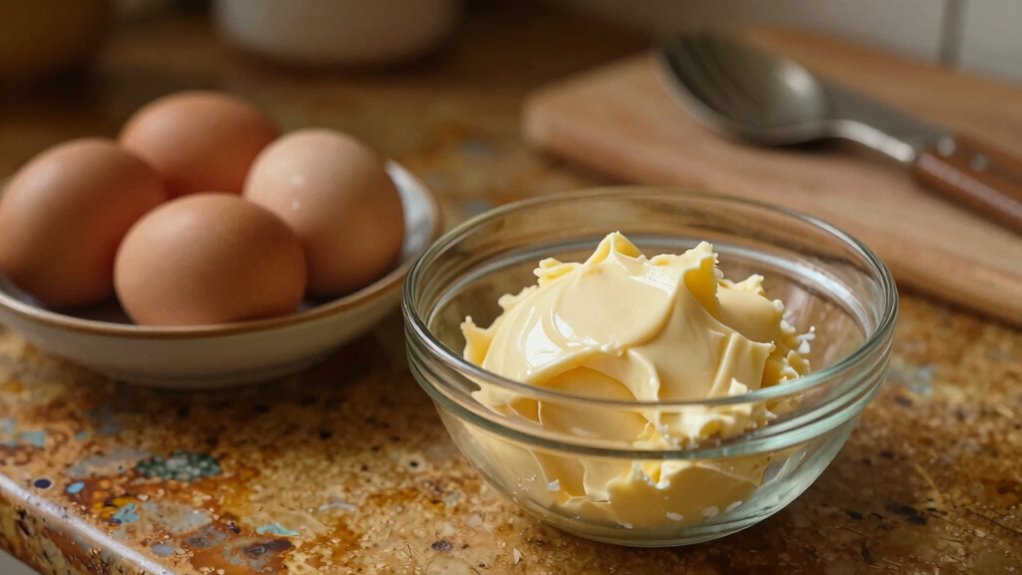

“Room temperature” is a vague term that really means your butter and eggs should be soft enough to blend smoothly, around 68-72°F, but environmental factors can change that. Cold butter stays firm, making it hard to work with, while warm butter gets greasy. Cold eggs don’t mix well and can cause batter issues, but warm eggs blend better and help with rising. Knowing what “room temperature” actually entails helps you bake more consistently—stick around to learn the details.

Get kitchen gear delivered free with Prime
- Fast, free delivery on millions of items
- Prime Video, Amazon Music and more included
- Member-only deals all year
Key Takeaways
- “Room temperature” varies depending on environment, affecting ingredient consistency and baking outcomes.
- Butter’s softness at room temperature depends on ambient heat, influencing mixing and final texture.
- Eggs should be near 68-72°F for optimal mixing; colder eggs can cause batter issues.
- Ingredient temperature impacts chemical reactions and rise, making precise temperature control key for consistent results.
- Understanding actual conditions helps bakers adjust techniques for better texture, rise, and overall success.
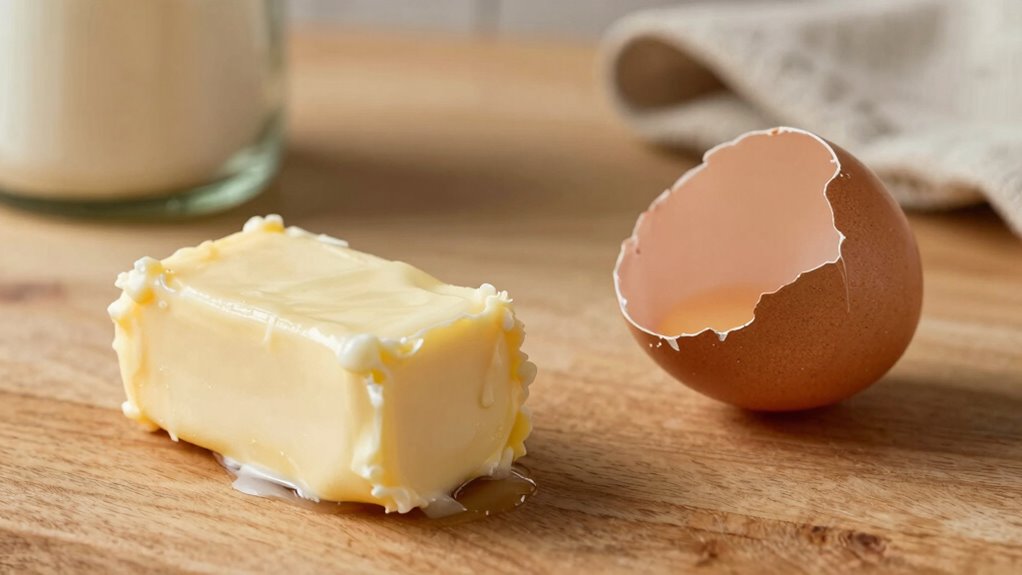
Have you ever been told that a certain kind of candle or battery works “at room temperature,” only to find that it doesn’t perform as expected? It’s a frustrating experience that reveals how vague the phrase “room temperature” really is. When it comes to cooking or baking, this phrase can be equally misleading. You might assume that “room temperature” means a standard, comfortable temperature—somewhere around 68 to 72 degrees Fahrenheit—yet in reality, it varies a lot depending on your environment. This can impact your ingredients in subtle but significant ways, especially when working with butter and eggs.
Take butter, for example. The idea of “butter at room temperature” often suggests a soft, spreadable consistency, perfect for baking or spreading. But if your room is cooler or warmer than the standard range, your butter’s consistency can change dramatically. Cold butter stays firm and difficult to work with, making it hard to cream properly or spread smoothly. On the other hand, if it’s too warm, butter becomes overly soft or even greasy, affecting how it incorporates into recipes. When a recipe calls for butter at room temperature, it’s usually aiming for a specific butter consistency that allows it to blend seamlessly, ensuring a smooth batter or dough. Misjudging this can lead to baked goods that are dense, greasy, or unevenly textured.
Eggs are another ingredient affected by temperature ambiguities. When a recipe specifies “eggs at room temperature,” it’s often to optimize egg absorption into a batter. Cold eggs don’t mix as well—they may cause the batter to seize or not blend smoothly. Room temperature eggs, on the other hand, absorb into flour and sugar more readily, creating a uniform mixture that traps air effectively. This results in lighter, fluffier baked goods. If you ignore the recommended egg temperature, you risk ending up with dense cakes or muffins that don’t rise properly. Additionally, understanding ingredient temperature can help you achieve more consistent baking results, especially since temperature affects the chemical reactions that occur during baking. Recognizing the impact of ambient conditions on ingredient behavior can help bakers adapt and improve their techniques. Being aware of these factors can also prevent unexpected results and improve overall baking success.
As an affiliate, we earn on qualifying purchases.
Frequently Asked Questions
Why Do Recipes Specify “Room Temperature” for Ingredients?
You need to bring ingredients to room temperature so they blend smoothly, ensuring consistent ingredient texture and proper mixing. When ingredients like butter and eggs aren’t at the right temperature, they can cause batter inconsistencies or improper leavening. This also helps with temperature calibration, allowing your baked goods to rise evenly and develop the right structure. Overall, room temperature ingredients create better control over your recipe’s outcome.
How Can I Tell if Butter or Eggs Are Truly at Room Temperature?
You can tell if butter or eggs are truly at room temperature by feeling their consistency; they should be soft, pliable, and slightly warm to the touch, not cold or hard. Achieving temperature consistency guarantees ingredient adaptation, making mixing easier and baked goods smoother. If they leave a slight indent when pressed, you’re good to go. If not, let them sit out a few minutes until they reach that ideal, adaptable state.
Does “Room Temperature” Vary by Climate or Season?
Yes, room temperature varies by climate influence and seasonal variations. In warmer climates or summer, room temperature might be higher, around 75-80°F, while in cooler climates or winter, it could be as low as 60-65°F. You should modify your butter and eggs accordingly, letting them sit out longer in colder seasons and shorter during warmer periods. Always check their softness or temperature before baking to ensure proper consistency.
Are There Health Risks in Using Cold Ingredients Instead?
Using cold ingredients isn’t inherently risky if you guarantee ingredient freshness and proper storage techniques. Cold eggs or butter can slow bacterial growth, making them safe to use. However, cold ingredients may affect texture and mixing, so let them warm slightly if needed. Always check for signs of spoilage, like off smells or discoloration, and store ingredients correctly to maintain quality and safety.
How Long Does It Take for Butter and Eggs to Reach Room Temperature?
It takes about 30 minutes for butter and eggs to reach the right ingredient temperature for baking consistency. To speed up the process, you can cut butter into smaller pieces or soak eggs in warm water for a few minutes. Ensuring your ingredients are at room temperature helps create a smoother batter, improves texture, and results in better baked goods. Keep an eye on the clock to avoid overheating.
As an affiliate, we earn on qualifying purchases.
Conclusion
So, the next time a recipe calls for “room temperature” butter or eggs, remember it’s less about a precise degree and more about comfort. Think of it as inviting your ingredients to a cozy gathering rather than a strict temperature party. By understanding this simple trick, you can turn cooking into a smoother, more confident dance. Don’t let the temperature label freeze your progress—trust your senses and let your kitchen be your guide.
As an affiliate, we earn on qualifying purchases.
As an affiliate, we earn on qualifying purchases.
Fall Picks
fall essentials
As an affiliate, we earn on qualifying purchases.