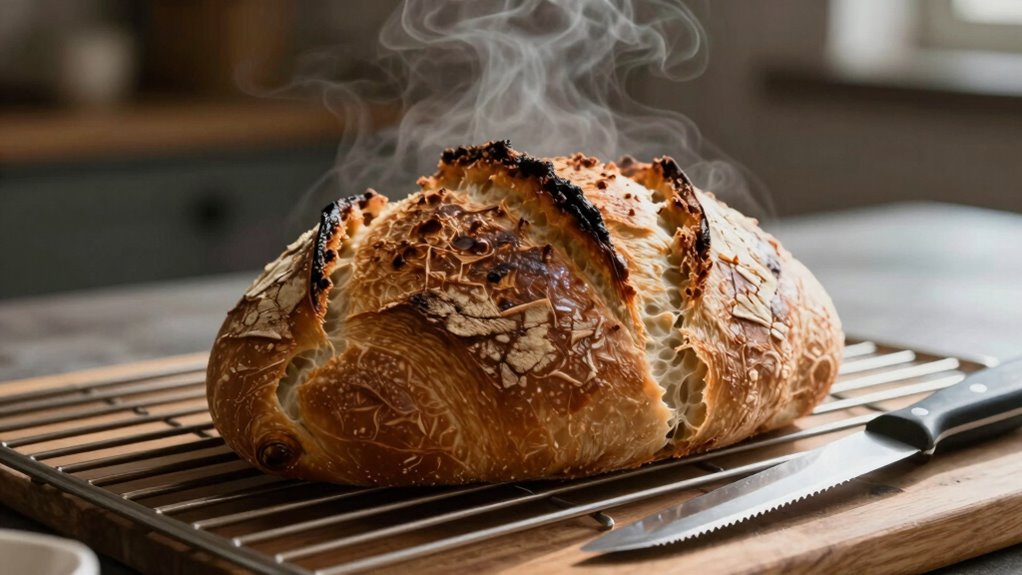

When you bake bread, cooling it properly is essential. If you slice too soon, you risk losing the crust’s integrity and the loaf’s overall flavor. The steam inside needs time to escape, allowing the bread to stabilize and develop that perfect texture. Ideal cooling time is 30 to 60 minutes, so patience pays off. You’ll enjoy a better bite and a well-shaped loaf. Stick around for tips on maximizing your bread’s potential.

Get kitchen gear delivered free with Prime
- Fast, free delivery on millions of items
- Prime Video, Amazon Music and more included
- Member-only deals all year
Key Takeaways
- Cutting bread too soon compromises its crust integrity, leading to a less enjoyable texture.
- Premature slicing releases steam, resulting in a soggy crust and diminished flavor.
- Proper cooling allows starches to crystallize, enhancing the bread’s structure and chewiness.
- A cooling time of 30 to 60 minutes maximizes moisture retention and sets the interior crumb.
- Waiting improves the overall eating experience, yielding better flavor and slicing quality.
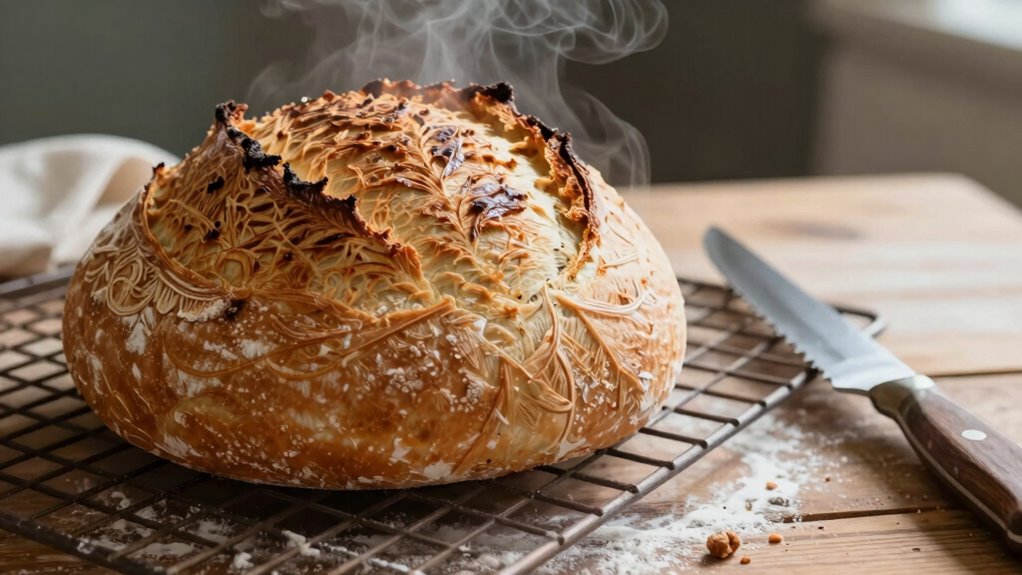
When you pull a freshly baked loaf from the oven, it’s tempting to slice into it right away, but waiting is essential. The cooling period isn’t just about letting the bread sit; it’s vital for achieving the ideal texture and flavor. You might think that once it’s out of the oven, it’s ready to eat, but there’s a science behind cooling that directly impacts your loaf’s crust formation and moisture retention.
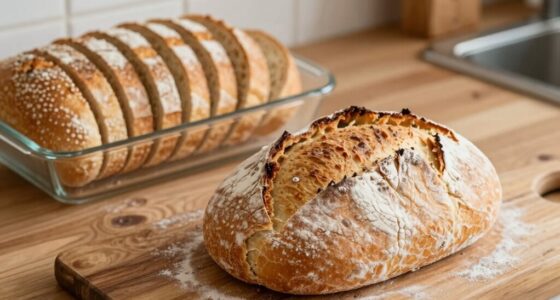
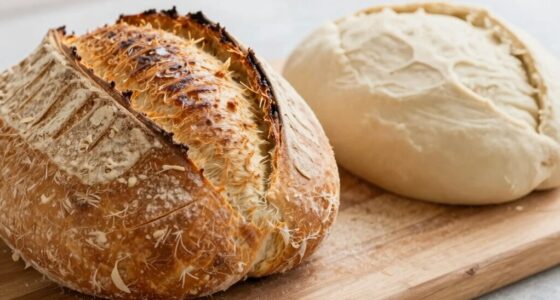
As bread cools, the steam inside begins to escape. If you cut into the loaf too soon, this steam leaves rapidly, causing the crust to become soggy. A well-formed crust acts as a protective barrier, locking in moisture and maintaining the bread’s integrity. If you slice it prematurely, you risk losing that crisp, golden crust that you’ve worked so hard to achieve. Instead, give your bread time to develop its crust fully. The texture you experience during your first bite will depend on this significant cooling phase.
As bread cools, steam escapes; cutting too soon risks a soggy crust, diminishing the texture you’ve carefully crafted.
During cooling, the bread also undergoes a process called retrogradation, where the starches begin to crystallize. This process helps stabilize the structure, ensuring that your bread maintains its softness while still providing that satisfying chew. If you can resist the urge to slice, you’ll end up with a loaf that holds its shape and has a delightful texture. Remember, the longer you wait, the better the flavor and the overall experience.
You might wonder how long you should actually wait. Ideally, let your bread cool for at least 30 to 60 minutes. This gives it a chance to finish cooking internally and allows for maximum moisture retention. The interior crumb will set up nicely, making each slice a joy to pull apart. If you’re worried about the wait, think of it this way: that extra patience will reward you with a loaf that’s not just good, but extraordinary.
As an affiliate, we earn on qualifying purchases.
Frequently Asked Questions
Can I Speed up the Cooling Process With Ice Packs?
Yes, you can speed up the cooling process with ice packs. Place the ice packs underneath the cooling rack where your bread rests, ensuring the airflow isn’t blocked. This ice pack placement enhances cooling efficiency, helping your bread cool faster without compromising its texture. Just be careful not to let moisture from the ice packs seep into the bread. With this method, you’ll enjoy perfectly cooled bread in no time!
Does Bread Type Affect Cooling Time?
Absolutely, bread type affects cooling time! For instance, denser breads like sourdough can take up to 30% longer to cool than lighter options like white bread. This difference comes from crust formation, which locks in moisture. The flour type also plays a role; high-gluten flours yield denser loaves, requiring more time. So, if you’re baking, remember that denser breads need patience for ideal texture and flavor, ensuring you enjoy every bite!
What Happens if I Slice Bread Too Early?
If you slice bread too early, you risk losing its freshness and ideal texture. The steam trapped inside hasn’t had time to escape, making the crust soggy and the crumb gummy. To avoid this, use proper slicing techniques, allowing the bread to cool completely first. That way, you’ll enjoy a perfect crust and a soft, airy interior. Waiting a bit longer guarantees your bread’s at its best when you finally cut into it.
How Does Humidity Impact Bread Cooling?
Humidity levels greatly impact how your bread cools. In a humid environment, the extra moisture can affect crust formation, making it softer and less crisp. If there’s too much moisture retention during cooling, your bread might end up gummy. Conversely, in a dry baking environment, the crust can harden quickly, leading to a better texture. So, keep an eye on humidity to guarantee your bread cools perfectly and maintains its ideal characteristics.
Can Cooling Racks Make a Difference in Texture?
Yes, cooling racks can definitely make a difference in texture. By using a cooling rack, you allow air to circulate around the bread, which helps moisture escape and prevents sogginess. This enhances flavor development as the bread cools evenly. If you skip this cooling technique, you might end up with a dense, gummy texture. So, for the best results, always let your bread cool completely on a rack before slicing.
As an affiliate, we earn on qualifying purchases.
Conclusion
So, next time you bake a loaf, remember to let it cool before you grab a knife. Cutting into warm bread is like throwing caution to the wind—it’ll ruin that perfect texture you worked hard for. Allowing the bread to rest not only enhances its flavor but also gives you that satisfying crust and soft interior. Patience really is a virtue in the kitchen, and waiting just a bit longer will pay off big time!
As an affiliate, we earn on qualifying purchases.
As an affiliate, we earn on qualifying purchases.
Halloween Picks
halloween
As an affiliate, we earn on qualifying purchases.