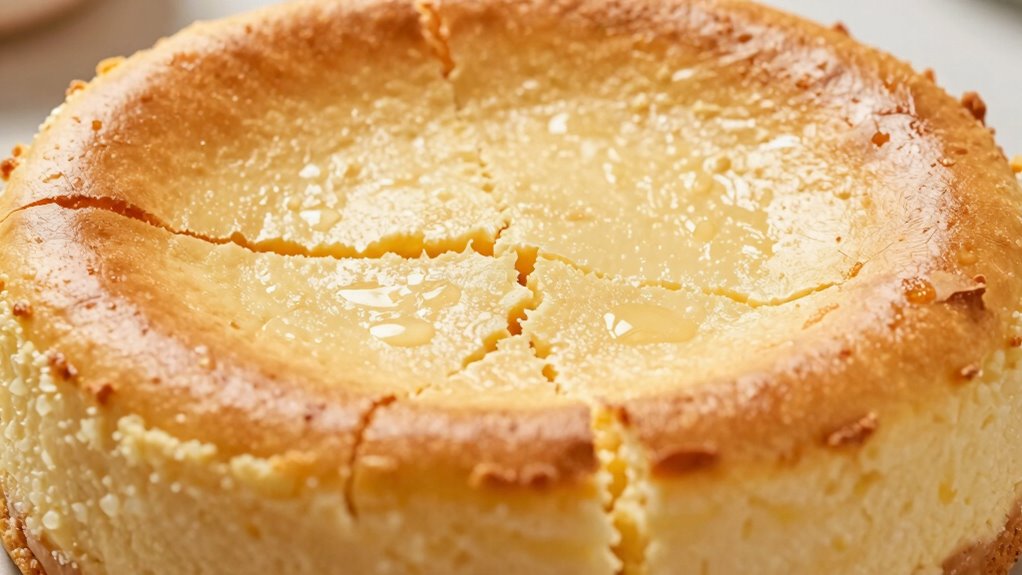
Cheesecakes crack mainly because of uneven heat and moisture imbalance during baking. If the oven runs too hot or the temperature isn’t steady, the outer edges cook faster and lift or crack as the center struggles to set properly. Dry conditions or opening the oven early can cause sudden cooling, leading to cracks. Maintaining consistent heat, moisture, and gentle handling helps prevent this. If you want to understand how moisture and heat interact to cause cracks, keep exploring more.

Get kitchen gear delivered free — and shop member deals
- Fast, free delivery on millions of items
- Access to Prime Big Deal Days deals on October 6–7
- Prime Video, Amazon Music and more included
Key Takeaways
- Excessive oven heat causes rapid expansion and contraction, leading to surface cracks.
- Insufficient moisture in the baking environment results in a dry surface prone to cracking.
- Overmixing introduces air bubbles that expand during baking, increasing crack risk.
- Sudden temperature drops during cooling cause the batter to contract quickly, creating cracks.
- Uneven heat distribution and high baking temperatures cause the outer edges to set faster than the center.

If you’ve ever attempted to bake a cheesecake only to find it cracks upon cooling, you’re not alone. Many bakers face this frustrating issue, often wondering what went wrong. The main culprits are usually related to baking temperature and ingredient substitutions. Understanding how heat and moisture affect the delicate structure of your cheesecake can help you avoid cracks and achieve that smooth, creamy top you’re aiming for.
When you bake a cheesecake at too high a temperature, the outer edges cook faster than the center. This causes the cake to puff up and then sink as it cools, creating cracks. To prevent this, you should aim for a gentle, consistent baking temperature—usually around 325°F (160°C). Using an oven thermometer can help guarantee your oven maintains the right heat, preventing overheating. Also, consider using a water bath, which adds moisture and distributes heat evenly, reducing the risk of cracks caused by rapid temperature changes.
Moisture plays a vital role in maintaining the cheesecake’s smooth surface. When the oven is too dry or the baking temperature is uneven, the cake’s surface can crack as it contracts during cooling. To keep moisture levels balanced, you might want to cover your cheesecake loosely with foil during baking or place a pan of water in the oven. This method maintains humidity and creates a gentler baking environment, helping the cheesecake set evenly. Maintaining consistent baking conditions can significantly improve your results. Additionally, ensuring your oven’s temperature is stable can help prevent uneven baking and cracking.
Ingredient substitutions can also influence the final outcome. For example, using low-fat cream cheese or substituting sour cream with yogurt can alter the texture and stability of your cheesecake. These changes might make the batter more prone to cracking because they affect the cake’s ability to set properly. If you need to make substitutions, try to choose ingredients with similar moisture content and fat levels to assure the integrity of your batter.
Furthermore, overmixing the batter can incorporate excess air, which expands during baking and causes cracks. Mix just until the ingredients are combined. Also, avoid opening the oven door during the first half of baking, as sudden temperature drops can cause the cake to crack. Once out of the oven, let your cheesecake cool gradually—speeding this process with sudden temperature shifts increases the chance of cracks forming. Ensuring the batter consistency is correct and handling the cake carefully can make a big difference in preventing cracks.
As an affiliate, we earn on qualifying purchases.
Frequently Asked Questions
Can Overmixing the Batter Cause Cheesecake Cracks?
Yes, overmixing the batter can cause cheesecake cracks. When you overmix, you break down ingredient stability, introducing excess air and creating a lighter, less stable batter. This can lead to uneven rising and cracking during baking. To avoid this, use gentle mixing techniques, combining ingredients just until smooth. Proper mixing helps maintain ingredient stability, resulting in a creamier texture and a crack-free cheesecake.
Does Using a Water Bath Prevent Cracks?
Think of a water bath as a gentle cradle for your cheesecake, preventing cracks by providing even heat. Using baking techniques like this helps control temperature fluctuations and moisture loss. So, yes, a water bath does prevent cracks, especially if you’re experimenting with ingredient substitutions that affect moisture or density. It’s a simple trick that keeps your cheesecake smooth and crack-free, no matter what tweaks you make to the recipe.
How Does Oven Temperature Affect Cracking?
Your oven temperature directly impacts cracking by affecting baking time and ingredient stability. If it’s too high, the cheesecake bakes too quickly, causing the surface to crack as the interior expands rapidly. A lower, consistent temperature allows even baking, reducing stress on ingredients and preventing cracks. Monitoring oven temperature guarantees your cheesecake bakes evenly, maintains ingredient stability, and results in a smooth, crack-free surface.
Should Cheesecake Be Cooled Gradually to Avoid Cracks?
Think of cooling your cheesecake as gently guiding a delicate butterfly to rest. Yes, you should cool it gradually to prevent cracks. Using proper cooling techniques helps maintain moisture and reduces stress on the structure, which can cause cracks. Rapid cooling can affect crust effects and lead to fissures. So, give your cheesecake time to relax, ensuring a smooth surface and a beautifully creamy texture.
Can Using Low-Fat Ingredients Increase Cracking Risk?
Using low-fat ingredients can increase your cheesecake’s cracking risk because lower fat content affects its moisture and structure. When you substitute full-fat ingredients with low-fat ones, it can cause the batter to be less stable and more prone to shrinking or cracking during baking. To avoid this, you might need to adjust baking time or add a bit more moisture, ensuring your cheesecake stays smooth and crack-free.
As an affiliate, we earn on qualifying purchases.
Conclusion
So, next time your cheesecake cracks, remember—you’re not just dealing with a dessert, you’re facing the mighty forces of moisture and heat! These invisible villains can turn your smooth, creamy masterpiece into a jagged masterpiece faster than you can say “baked.” But don’t worry—armed with this knowledge, you can conquer those cracks and create a perfectly flawless cheesecake that’ll make everyone gasp in awe. Now go, bake like a hero!
baking oven with even heat distribution
As an affiliate, we earn on qualifying purchases.
As an affiliate, we earn on qualifying purchases.
moisture retaining foil for baking
As an affiliate, we earn on qualifying purchases.
As an affiliate, we earn on qualifying purchases.
Fall Picks
fall essentials
As an affiliate, we earn on qualifying purchases.
![A Visual Guide To Europe’s Most Popular Olive Oil Varieties, From Koroneiki To Picual [MAP]](https://areokitchen.com/wp-content/uploads/2026/10/a-visual-guide-to-europe-s-most-popular-olive-oil-varieties-from-koroneiki-to-pi-featured-260x140.jpg)