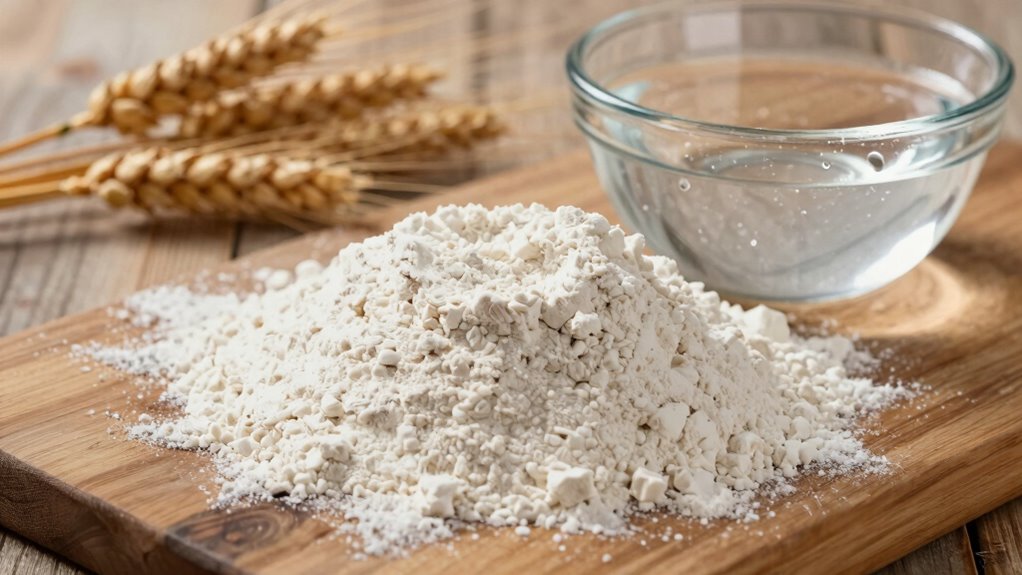

Home-milled flour absorbs more water than store-bought flour because it’s fresher and retains higher moisture content. This makes your dough stickier and more pliable, enhancing hydration during mixing. The bran particles in home-milled flour act like sponges, soaking up moisture, which improves dough elasticity. You might notice that you need to adjust your liquid ingredients for the perfect consistency. Understanding this can transform your baking experience, so stick around to explore more about home milling!

Get kitchen gear delivered free with Prime
- Fast, free delivery on millions of items
- Prime Video, Amazon Music and more included
- Member-only deals all year
Key Takeaways
- Home-milled flour’s freshness leads to higher water absorption compared to store-bought flour.
- Bran particles in home-milled flour act like sponges, soaking up moisture effectively.
- Increased moisture content enhances dough elasticity and pliability during mixing.
- Stickier dough from home-milled flour contributes to better hydration and texture.
- Adjustments in liquid ingredients are often necessary to achieve optimal dough consistency.
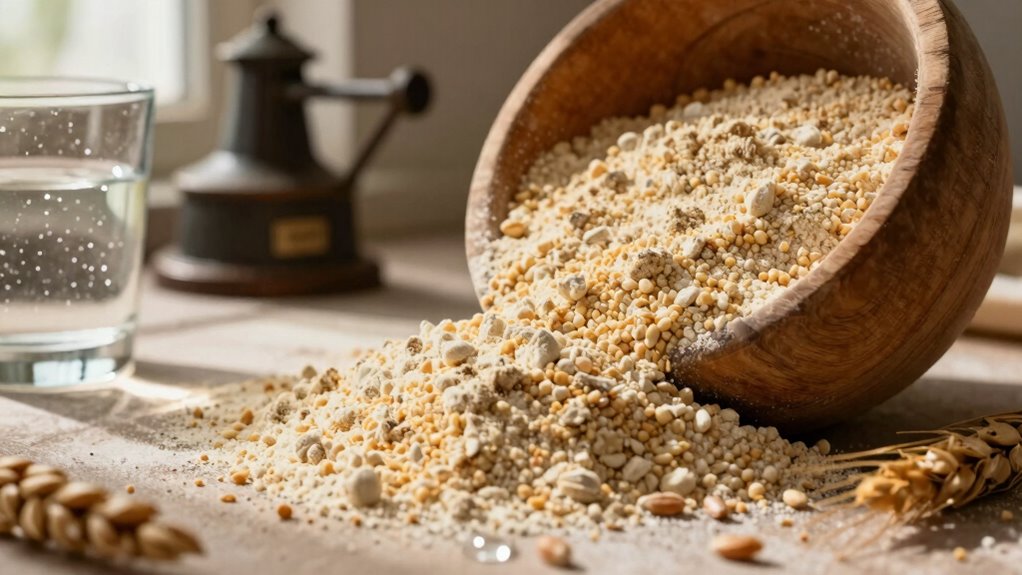
When you decide to mill your own flour at home, you’re not just enhancing the flavor of your baked goods—you’re also gaining control over the ingredients. This decision can greatly affect your recipes, especially regarding water absorption. Home-milled flour absorbs more water than store-bought flour, and understanding why can help you achieve the perfect dough consistency and texture in your baking.
One reason home-milled flour absorbs more water is its freshness. When you grind grains at home, you’re preserving the natural oils and nutrients that can degrade over time in pre-packaged flour. Freshly milled flour retains a higher moisture content, which means it can hold onto water better. This quality directly influences the flour texture, making it more adaptable in various recipes. You’ll notice that your dough may feel stickier or more pliable, allowing for better hydration during mixing.
Home-milled flour’s freshness enhances moisture retention, resulting in stickier, more adaptable dough for your baking adventures.
Additionally, the nutritional benefits of home-milled flour can’t be overlooked. Commercially processed flours often remove the bran and germ, reducing fiber, vitamins, and minerals. When you mill your own flour, you keep these essential components intact, enhancing both the nutritional profile and the water absorption properties. The bran particles in whole grain flour act like tiny sponges, soaking up moisture and contributing to a final product that’s not only tastier but also healthier. This nutrient retention is a key advantage of home milling. Moreover, the presence of intact bran and germ particles increases the water absorption capacity of the flour, making it crucial to adjust your recipes accordingly. You might also notice that the higher moisture content impacts the dough’s elasticity and handling characteristics.
You’ll find that when you adjust your recipes to account for this increased water absorption, your baked goods will benefit greatly. For instance, if you’re making bread, you might need to increase the liquid ingredients slightly to achieve the right dough consistency. This adjustment can lead to a loaf that’s not only fluffier but also packed with nutrients. The result? A delicious, wholesome bread that’s full of flavor.
Moreover, experimenting with different grains can also enhance your baking experience. Each type of grain has unique properties that affect water absorption, flavor, and texture. By milling your flour, you can tailor your baking to your preferences while exploring diverse grains like spelt, rye, or even ancient varieties. This versatility allows you to create baked goods that stand out, both in taste and nutrition. Freshness and nutrient retention are key factors in the water absorption capacity of home-milled flours.
As an affiliate, we earn on qualifying purchases.
Frequently Asked Questions
How Does Home-Milled Flour Compare to Store-Bought Flour in Taste?
Home-milled flour usually offers a richer taste profile compared to store-bought flour. You’ll notice a greater flavor depth in your baked goods, as it retains more natural oils and nutrients from the grain. This freshness enhances the overall taste, making your bread, pastries, or pasta more vibrant and aromatic. If you’re after unique flavors and a more wholesome experience, home-milled flour is definitely worth trying in your recipes.
Can I Use Any Grain for Home Milling?
Yes, you can use a variety of grains for home milling! When you select grains, consider their flavor and texture; options like wheat, rye, and oats work well. Each grain requires different milling techniques, so adjust your settings accordingly. Experimenting with different grains can enhance your baking experience, giving you unique flavors and textures. Just remember to store your milled flour properly to maintain its freshness and quality!
How Long Does Home-Milled Flour Stay Fresh?
Home-milled flour stays fresh for about one to two weeks when stored properly. Freshness factors like moisture and air exposure can greatly affect its shelf life. To keep it at its best, store the flour in an airtight container in a cool, dark place. You might also consider refrigerating or freezing it for longer storage. With these storage tips, you’ll guarantee your home-milled flour remains flavorful and effective for all your baking needs.
What Equipment Do I Need for Home Milling?
To start home milling, you’ll need a grain mill, which can be either electric or manual. Choose a mill that suits your preferred milling techniques, like stone or steel grinding. You’ll also want to select high-quality grains, such as wheat or rye, for the best results. Don’t forget to have storage containers ready for your freshly milled flour. With the right equipment, you’ll enjoy fresh, flavorful flour in no time!
Does Home-Milled Flour Require Different Baking Techniques?
Yes, home-milled flour does require different baking techniques. You’ll need to make baking adjustments to account for its unique hydration levels. Since this flour absorbs more moisture, you might find that increasing the liquid in your recipes is necessary. Start by adding a little extra water and observe how the dough feels. Experimentation will help you achieve the best texture and flavor in your baked goods using home-milled flour.
As an affiliate, we earn on qualifying purchases.
Conclusion
So, you’ve gone through the trouble of milling your own flour, thinking it’d make your baking life simpler. Ironically, this fresh flour actually loves to soak up more water than store-bought. Who knew that your homemade creation would turn your dough into a sponge? Embrace this quirk—adjust your recipes, and you’ll find that your baked goods can be even more delightful. After all, with a little extra water, your home-milled flour might just become your secret weapon in the kitchen!
As an affiliate, we earn on qualifying purchases.
As an affiliate, we earn on qualifying purchases.
Halloween Picks
halloween
As an affiliate, we earn on qualifying purchases.