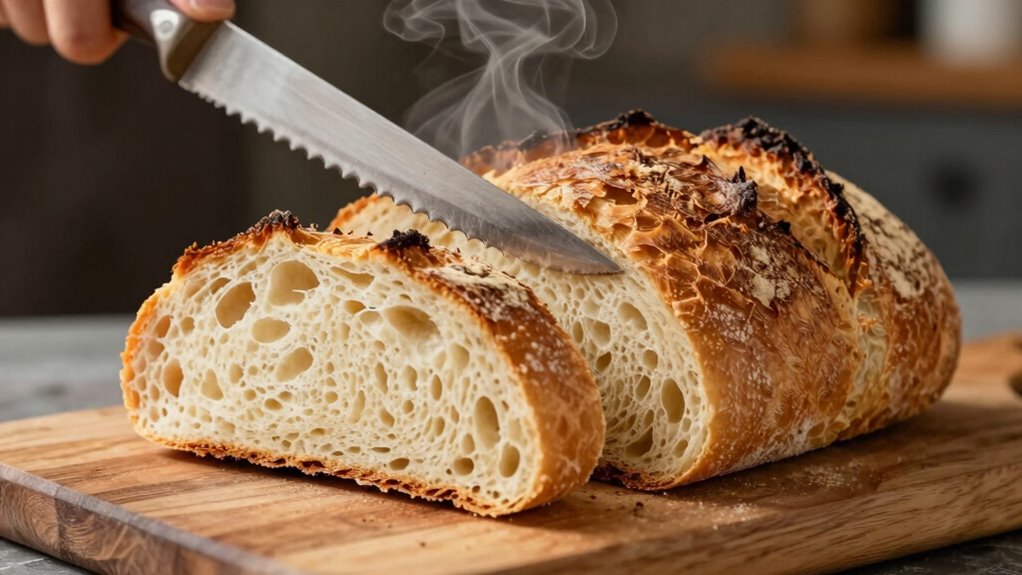
To prevent gumminess, you should slice your bread only after it has fully cooled for at least 30 minutes to an hour. Cutting into warm bread releases steam and moisture, which can make the crumb sticky and difficult to handle. By giving it time to set, you’ll enjoy cleaner slices and maintain its soft, fresh texture. Keep going to discover more tips on handling bread perfectly and keeping it delicious longer.

Get kitchen gear delivered free with Prime
- Fast, free delivery on millions of items
- Prime Video, Amazon Music and more included
- Member-only deals all year
Key Takeaways
- Wait at least 30 minutes to 1 hour after baking before slicing bread.
- Allow bread to cool completely to prevent steam and moisture release during cutting.
- Cooling helps the interior set, resulting in cleaner, easier slices.
- Slicing warm bread causes smearing and increases gumminess on cut surfaces.
- Proper cooling preserves texture, flavor, and extends freshness by preventing sogginess.
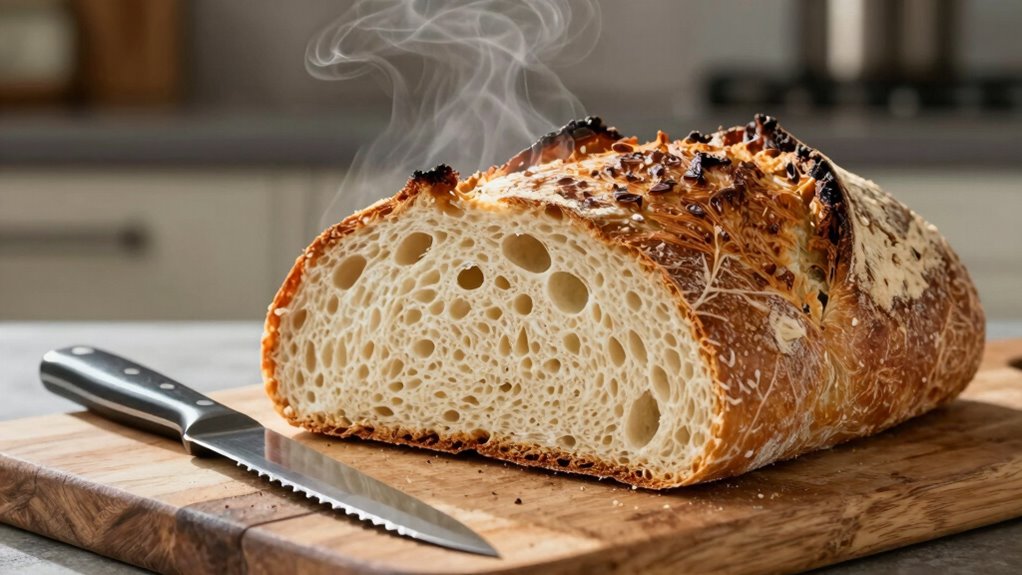
Knowing when to slice bread can make a big difference in preserving its freshness and texture. The way you handle bread right after baking or purchasing can determine whether it stays soft and flavorful or turns dry and stale quickly. Proper bread storage is vital for maintaining its quality, and knowing the right time to slice ensures you maximize freshness preservation. If you slice bread too early, exposed surfaces can dry out faster, diminishing its soft texture and flavor. On the other hand, waiting too long to cut into it can make tearing or slicing more difficult, especially if the loaf is still warm or freshly baked. So, timing is everything.
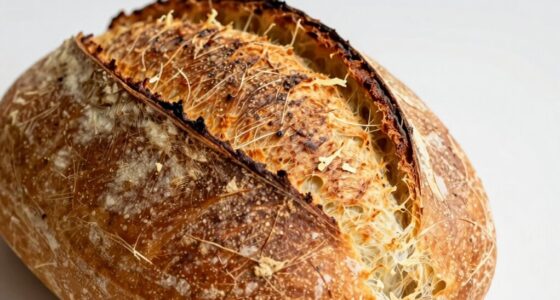
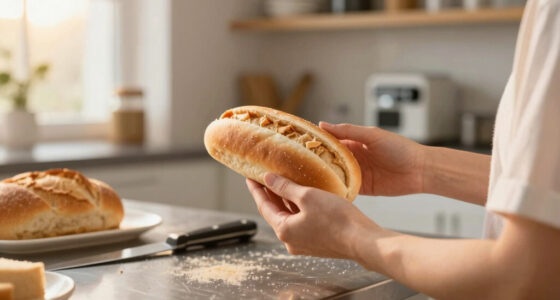
The key is to resist the urge to slice into the bread as soon as you bring it home or take it out of the oven. Freshly baked bread needs time to cool so the interior can set properly. When bread is hot or even warm, slicing can cause smearing and result in a gummy or doughy texture. This is because the starches haven’t yet firmed up, and the moisture content is still high. Cutting into it prematurely releases steam and moisture, which then condenses on the cut surfaces, increasing the risk of gumminess. To avoid this, you should wait at least 30 minutes to an hour after baking before slicing. This cooling period allows the bread to firm up, making slicing cleaner and easier, with less mess and better preservation of its soft crumb. Additionally, understanding the cooling process can help you determine the perfect timing for slicing. Waiting for the right cooling period also helps prevent the formation of condensation that can lead to sogginess. Allowing the bread to cool naturally also helps preserve the texture, ensuring it stays tender and delightful. Proper cooling not only affects the immediate quality but also extends the bread’s shelf life by maintaining its original moisture balance.
Products Worth Considering

De'Longhi Linea Classic Espresso Machine with Adjustable Milk Frother

Traeger Woodridge Pro Wood Pellet Grill and Smoker, 970 sq. in., WiFIRE

KitchenAid Artisan Series 5-Quart Tilt-Head Stand Mixer, Dried Rose (KSM150PS)
As an affiliate, we earn on qualifying purchases.
Frequently Asked Questions
Can I Slice Bread Immediately After Baking?
You shouldn’t slice bread immediately after baking. Cutting it too soon can cause it to become gummy and affect bread preservation because the crumb is still steaming and moist. Wait at least 20-30 minutes for it to cool and set. Use proper cutting techniques, like a serrated knife, to avoid squishing the loaf. This way, your bread stays fresh longer and slices cleanly without compromising texture.
Does Slicing Affect Bread’s Shelf Life?
Slicing bread can reduce its shelf life because exposing the interior to air speeds up mold growth and may lead to quicker staling. Without artificial preservatives, sliced bread is more vulnerable to mold, especially if stored improperly. To extend freshness, keep the loaf whole until you’re ready to eat. This keeps moisture in and slows down mold development, ensuring your bread stays fresh longer.
Should I Use a Serrated or Straight Knife?
Use a serrated knife for slicing bread because it preserves the bread’s texture and prevents squishing or tearing. Its toothy edge glides through crusts easily, making cleaner cuts. Keep your serrated knife sharp and well-maintained to guarantee smooth slicing and avoid damaging the blade. A straight knife isn’t ideal, as it can crush the bread and compromise its texture, especially with softer loaves.
How Thick Should Slices Be for Different Uses?
Studies show that slicing bread at 1/4 to 1/2 inch thick preserves its texture best. For sandwiches, aim for thicker slices to hold fillings without tearing, while thinner slices suit toast or delicate dishes. Use proper slicing techniques—hold the knife steady and saw gently—to avoid crushing the bread. Adjust thickness based on your needs, ensuring each slice maintains the ideal texture for its purpose.
Can Slicing While Warm Cause Bread to Crumble?
Slicing bread while it’s warm can cause it to crumble because warm bread has a softer, more delicate texture. Using proper slicing techniques, like a serrated knife and gentle sawing motions, helps prevent crumbling. If you want clean slices and maintain the bread’s texture, wait until it cools completely. Patience guarantees your bread stays intact and looks appealing, especially if you plan to serve or store it later.
Conclusion
Remember, timing is everything when slicing bread—wait too long, and it becomes a gummy mess; slice too early, and you risk squishing the crust. Think of it like a song—patience creates harmony, while rushing ruins the tune. So, let your bread cool fully before slicing, and you’ll enjoy perfect, tender slices every time. After all, a well-timed cut is the secret ingredient to bakery-quality bread right in your own kitchen.