
If you need a stable, long-lasting topping or filling, Swiss meringue is your best bet because of its smooth, glossy texture and safety from bacteria. For recipes requiring added stability and resistance to weeping, like buttercreams or soufflés, Italian meringue works well thanks to its cooked sugar and airy structure. If you’re after a delicate, light finish for pavlovas or soufflés that must be eaten quickly, French meringue is ideal. Keep exploring to discover more about when each meringue wins.

Get kitchen gear delivered free with Prime
- Fast, free delivery on millions of items
- Prime Video, Amazon Music and more included
- Member-only deals all year
Key Takeaways
- Swiss meringue excels for sturdy, long-lasting toppings and pies due to its dense, stable structure.
- Italian meringue is ideal for buttercreams and soufflés, offering high stability and resistance to weeping.
- French meringue is best for light, delicate desserts like pavlovas and soufflés needing a fragile, airy texture.
- Swiss and Italian meringues provide safer options with heat treatment that eliminate bacteria.
- French meringue is suitable for immediate use and light, fluffy textures but less stable over time.
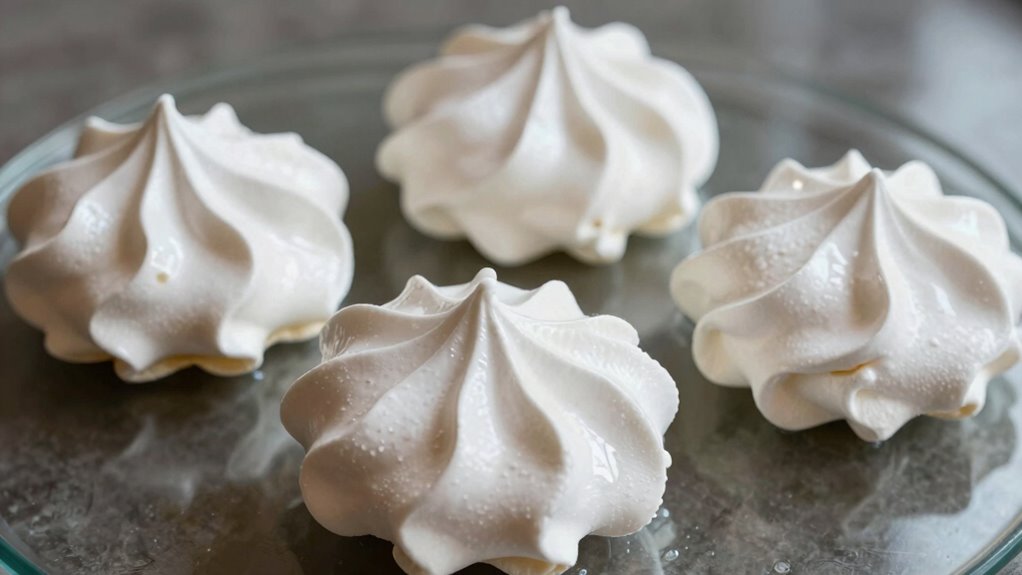
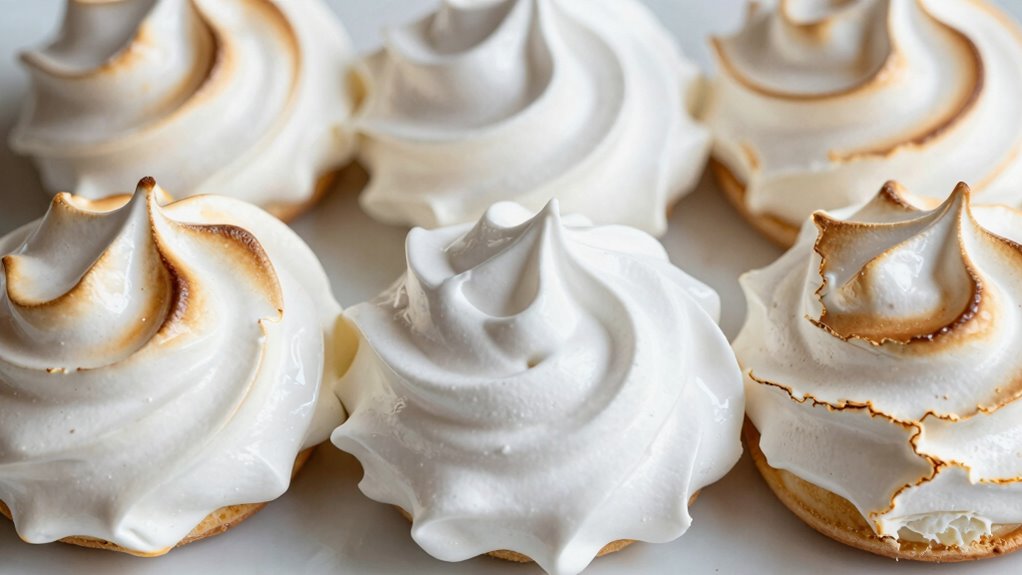
Swiss meringue is made by gently heating egg whites and sugar together over a double boiler until the sugar dissolves, then whipping the mixture until stiff, glossy peaks form. The key ingredient difference here is the controlled heat, which creates a more stable meringue. Its texture is smooth, velvety, and dense, making it ideal for recipes that require a sturdy meringue, like pies or toppings. Because of the heating process, Swiss meringue is less likely to collapse or weep, offering a firm structure that holds up well over time. Additionally, the gentle heating process also helps eliminate any residual bacteria, providing an extra layer of safety.
Swiss meringue’s gentle heating creates a stable, glossy, and dense texture ideal for sturdy pie toppings and long-lasting desserts.
Italian meringue involves pouring hot sugar syrup into whipped egg whites while continuously beating. This process results in a meringue with a slightly different ingredient profile—since the sugar syrup is cooked to a specific temperature, typically around 240°F (116°C), the final product is incredibly stable. Its texture comparison shows a silky, airy quality with a firm yet smooth bite. Italian meringue is often used in buttercreams or soufflés because its stability stands up to heat and time. This stability comes from the cooked sugar, which creates a thick, glassy consistency, making it less prone to deflation or weeping. Additionally, the cooking process ensures that Italian meringue is less susceptible to bacterial growth, making it safer for certain recipes. Moreover, the temperature control during cooking is crucial for achieving the desired stability and texture. Proper handling during preparation is also essential to maintain its integrity.
French meringue is the simplest to make, combining raw egg whites and sugar, then whipping until stiff peaks form. Its ingredient difference is minimal but essential—no heat is involved, which means the egg whites are less cooked than in Swiss or Italian styles. The texture comparison reveals a lighter, fluffier, and more delicate meringue, which is perfect for soufflés, pavlovas, or light desserts. However, because it isn’t heat-treated, French meringue is more fragile and less stable, especially if not used immediately or if exposed to humidity. Proper handling techniques and immediate use are often recommended to maintain its delicate structure. Understanding the stability differences can help bakers decide when to use each type to ensure optimal results. Proper handling and immediate use are often recommended to maintain its delicate structure. Being aware of its shelf life can help prevent collapse or spoilage if not consumed promptly.
As an affiliate, we earn on qualifying purchases.
Frequently Asked Questions
Which Meringue Type Is Best for Piping Intricate Designs?
For piping intricate designs, French meringue is your best choice because it’s light, airy, and easy to work with. Its smooth texture allows for precise detailing, and you can add flavor variations to enhance your designs. While Swiss and Italian meringues offer stable textures, they can be thicker and less flexible for fine piping. French meringue’s delicate texture makes it ideal for intricate, detailed decorations.
How Does Humidity Affect Each Meringue’s Stability?
Humidity is like a sneaky thief that steals the stability of your meringues. It causes moisture absorption, softening their structure and shortening their shelf life. French meringue, with its delicate egg whites, is most vulnerable, while Swiss and Italian meringues hold up better in humid conditions. To keep your creations crisp and beautiful, store them in a dry place and avoid humidity, ensuring they stay fresh longer.
Can Swiss or Italian Meringue Be Used for Buttercream?
Yes, Swiss and Italian meringues can be used for buttercream. Their stable egg whites and high sugar ratios make them ideal for creating smooth, airy buttercreams that hold shape well. You’ll want to guarantee the egg whites are properly cooked and cooled before mixing with butter. Since Swiss and Italian meringues are less prone to weeping and melting, they’re perfect choices for buttercream frosting, especially in warm or humid conditions.
Which Meringue Type Is Quickest to Prepare?
Italian meringue is the quickest to prepare because it involves pouring hot sugar syrup into whipped egg whites, which cooks the meringue instantly. You can explore flavor variations like vanilla or citrus while whipping, and store leftovers in an airtight container in the fridge for up to 24 hours. Swiss meringue takes slightly longer, but offers a smooth texture, while French meringue is the slowest, ideal for folding into recipes.
Are There Dietary Differences Between the Meringue Types?
If you have dietary restrictions, you’ll notice differences among meringue types. For example, French meringue uses raw egg whites, which may not suit those with allergies or vegan diets. Italian and Swiss meringues involve cooked sugar, often making them slightly safer but still not vegan. Vegan alternatives, like aquafaba, can mimic all three types, allowing you to enjoy meringue desserts without compromising dietary needs.
Italian meringue sugar thermometer
As an affiliate, we earn on qualifying purchases.
As an affiliate, we earn on qualifying purchases.
Conclusion
No matter which meringue you choose, each has its moment to shine—Swiss for stability, Italian for strength, and French for fluffiness. Remember, “a little knowledge is a dangerous thing,” so explore each type and find your favorite. With a bit of practice, you’ll master them all and elevate your desserts. Enjoy the process and savor every sweet bite—after all, the joy is in the journey, not just the outcome.
As an affiliate, we earn on qualifying purchases.
As an affiliate, we earn on qualifying purchases.
Halloween Picks
halloween
As an affiliate, we earn on qualifying purchases.