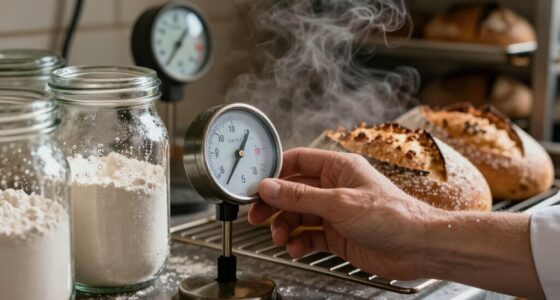

When choosing between baking steel and pizza stones, consider how they heat. Baking steel heats up quickly and retains that heat, giving you an immediate sizzle and a crispy crust. On the other hand, pizza stones take longer to preheat but offer great heat distribution and absorb moisture for a chewy texture. Your cooking style and preferences will dictate the best choice. There’s more to discover about each option’s benefits as you explore further.

Get kitchen gear delivered free with Prime
- Fast, free delivery on millions of items
- Prime Video, Amazon Music and more included
- Member-only deals all year
Key Takeaways
- Baking steel heats up quickly, providing immediate crust cooking, while pizza stones require longer preheating for optimal performance.
- Steel offers superior heat retention, ensuring consistent cooking results compared to the more variable heat distribution of pizza stones.
- Pizza stones absorb moisture, creating a crunchy crust, whereas baking steel enhances sizzle and faster cooking times.
- Baking steels are heavier, contributing to heat retention, while pizza stones are lighter and easier to handle for storage and mobility.
- Cleaning baking steel is simpler due to its non-porous surface, while pizza stones need more care to avoid absorbing flavors and odors.
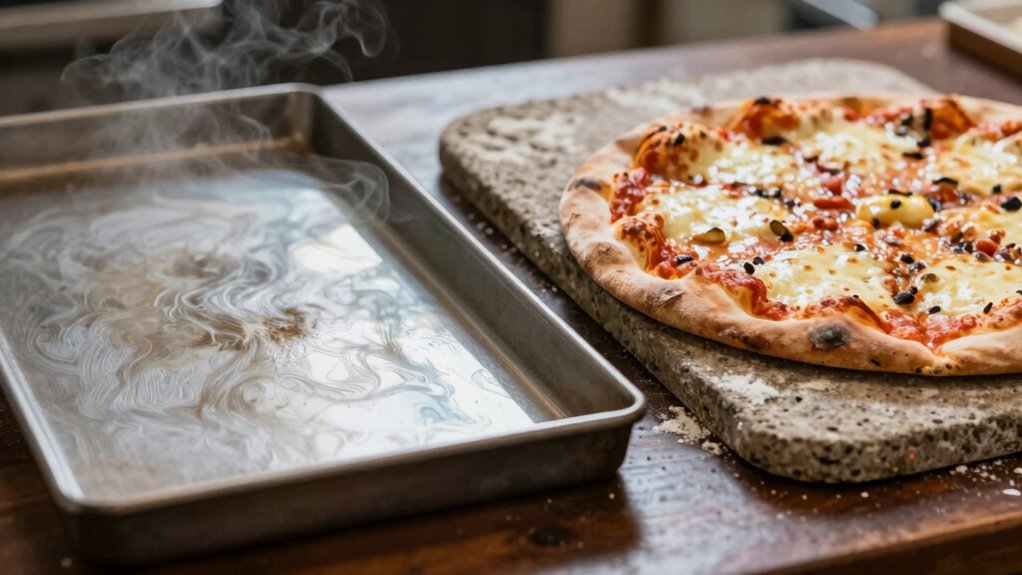
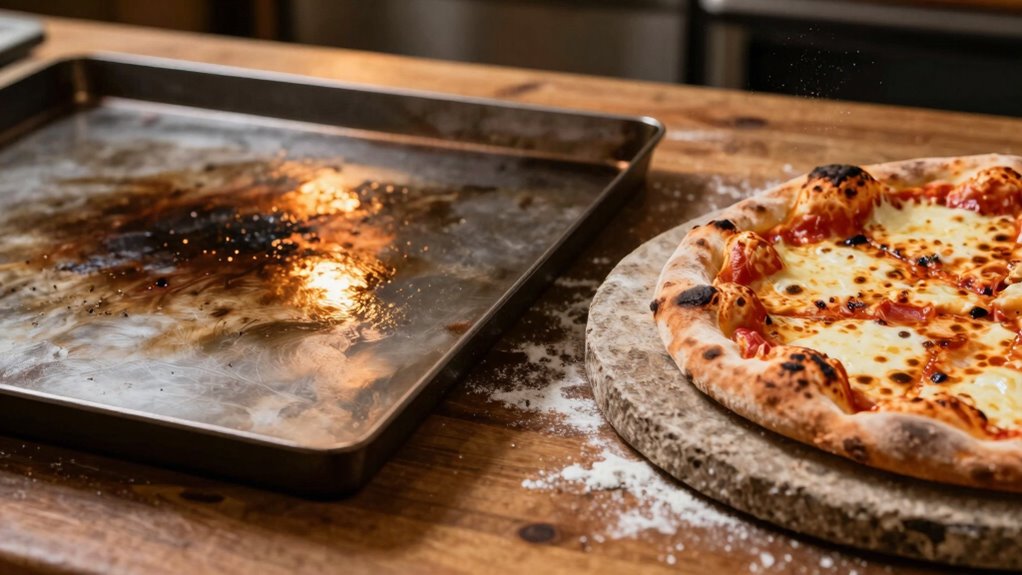
When you’re aiming for that perfect crust on your homemade pizza, choosing between baking steel and stone can make all the difference. Both options have their strengths, but understanding how they transfer heat can help you decide which fits your cooking techniques best. Baking steel is known for its superior heat retention, allowing it to reach high temperatures quickly and maintain them during cooking. This means that when you place your pizza on a preheated baking steel, the crust starts cooking immediately, resulting in a beautifully crisp exterior.
On the other hand, pizza stones have been a staple in kitchens for years, and for good reason. They offer excellent heat distribution, absorbing moisture from the dough, which helps create a crust that’s both crunchy and chewy. However, stones can take longer to heat up compared to steel. If you’re in a rush or want that immediate sizzle when your dough hits the surface, the baking steel might be the better choice for you. Additionally, the heat transfer properties of each material influence their overall performance and your cooking experience, impacting how quickly and evenly your pizza cooks.
You might wonder about the weight difference between the two. Baking steels are usually heavier than stones, which can be a factor in how easy they are to handle. If you’re working with a smaller oven or need to move things around, the lightweight nature of a pizza stone could be appealing. However, that weight does contribute to the steel’s ability to retain heat, making it a powerhouse for high-temperature cooking.
In terms of cleaning, both materials have their quirks. Baking steel is generally easier to clean since it’s less porous than stone. You can usually just scrape off any residue and wipe it down, while stones can absorb flavors and odors over time, requiring more care. Proper care and maintenance are essential to prolong the lifespan of your baking surface and ensure consistent results. Additionally, the heat transfer properties of each material influence their overall performance and your cooking experience, impacting how quickly and evenly your pizza cooks.
Ultimately, your choice boils down to your personal preferences and cooking style. If you’re focused on achieving that restaurant-quality crust quickly and consistently, a baking steel may suit you better. If you enjoy traditional methods and the nuances of how different cooking techniques affect your pizza, a stone could be the right fit. Either way, both options can help you elevate your pizza-making game, leading to delicious results every time you fire up your oven. So, choose wisely, and enjoy your culinary adventures!
As an affiliate, we earn on qualifying purchases.
Frequently Asked Questions
Can I Use Baking Steel or Stone in a Gas Oven?
Yes, you can use either baking steel or stone in a gas oven. Both options enhance oven performance by improving heating efficiency, allowing your baked goods to cook evenly. Baking steel heats up faster and retains heat better, while stone provides a consistent surface for baking. Depending on your preference, either choice can elevate your baking game. Just make sure to preheat your oven for ideal results!
How Do I Clean and Maintain Baking Steel or Stone?
Cleaning your baking steel or stone is like giving your kitchen a little spa day. For cleaning methods, simply scrape off any food residue with a spatula and wipe it down with a damp cloth. Avoid soap, as it can seep in. For maintenance tips, season your steel occasionally with oil to prevent rust and store it in a dry place. With these simple steps, you’ll keep your baking surface in top shape!
What Is the Lifespan of Baking Steel Compared to Stone?
Baking steel typically outlasts stone, making it a more durable option in the long run. While the initial cost of steel might be higher, you’ll find it pays off over time due to its sturdiness. In a durability comparison, steel withstands high temperatures better and resists cracking, unlike some stones. So, if you consider the cost analysis, investing in baking steel could save you money on replacements down the line.
Are There Any Safety Concerns With Baking Steel or Stone?
Yes, there are some safety concerns with both baking steel and stone. You should guarantee that the materials you use are food-safe and designed for high heat. Baking steel offers excellent heat retention, but it can become extremely hot, so always use oven mitts. Stones can crack if exposed to sudden temperature changes, posing a risk. Regularly inspect your tools for any damage to maintain safety while baking.
Can I Use Baking Steel or Stone for Other Foods Besides Pizza?
Absolutely, you can use baking steel or stone for a variety of dishes! Think of them as your kitchen’s trusty sidekicks, ready to elevate your baking techniques. From artisan bread to roasted vegetables, these surfaces distribute heat like a warm hug. Experiment with alternative recipes like cookies or even pastries, and watch the magic unfold. Just remember, they’re not just for pizza; they’re your canvas for culinary creativity!
As an affiliate, we earn on qualifying purchases.
Conclusion
In the grand kitchen kingdom, baking steel and stone are two noble knights, each wielding their unique powers. The steel, swift and fierce, delivers heat like a summer sun, while the stone, steadfast and patient, embraces warmth like a cozy hearth. When you choose between them, remember: the true magic lies in how you wield their strengths. So, whether you seek speed or tradition, your culinary quest will flourish with either champion by your side.
As an affiliate, we earn on qualifying purchases.
pizza stone with moisture absorption
As an affiliate, we earn on qualifying purchases.
As an affiliate, we earn on qualifying purchases.
Fall Picks
fall essentials
As an affiliate, we earn on qualifying purchases.