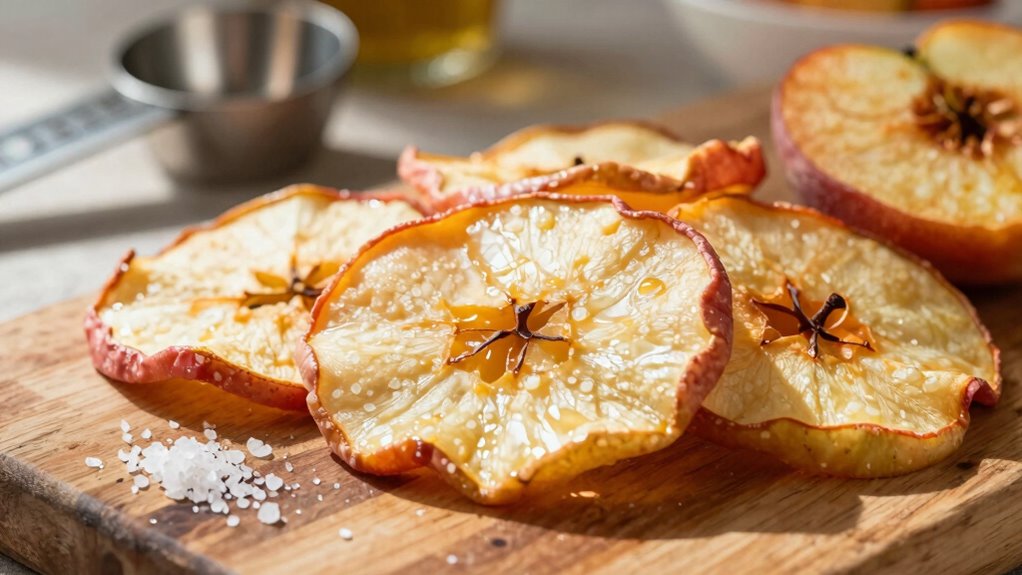

When dehydrating fruit for baking, slice it evenly for uniform drying. Use low temperatures, around 140°F, and monitor the process carefully to avoid over-drying, which can make the fruit tough. Thinner slices often yield better results. Store your dried fruit in airtight containers to preserve flavor and avoid moisture. Adjust your recipes to account for the concentrated sweetness of the dried fruit. Stick around, and you’ll uncover more tips for enhancing your baked goods.

Get kitchen gear delivered free with Prime
- Fast, free delivery on millions of items
- Prime Video, Amazon Music and more included
- Member-only deals all year
Key Takeaways
- Slice fruit evenly and thinly to ensure uniform drying and prevent tough, chewy bits.
- Monitor drying closely to avoid over-drying, which can lead to undesirable texture.
- Use low temperatures (around 140°F) for consistent drying without compromising flavor.
- Adjust drying times based on fruit type and humidity to achieve optimal results.
- Store dried fruit in airtight containers to maintain quality and prevent moisture absorption.
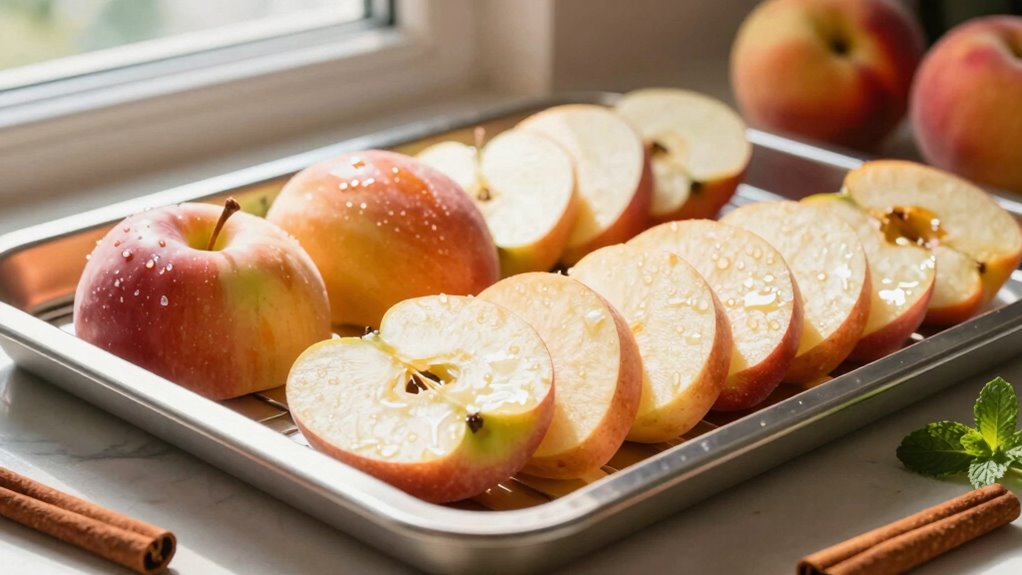
Once you’ve selected your fruit and drying method, it’s time to prepare the fruit. Slice it evenly to promote uniform drying. Thinner slices typically dehydrate better, preventing those pesky chewy bits that can ruin a recipe. Keep an eye on the drying process; over-drying can lead to a loss of flavor, while under-drying can leave your fruit too moist, risking spoilage. If you’re using an oven, a low temperature around 140°F works best. For a dehydrator, follow the manufacturer’s instructions for ideal results.
Flavor enhancement is another perk of dehydrating fruit. The drying process concentrates the sugars and flavors, making your fruit more potent in your recipes. Imagine biting into a muffin filled with intensely flavored dried blueberries or a cake with the rich essence of apricots. Those flavor bursts can transform an ordinary recipe into something truly special. Just remember that when adapting recipes, you might need to adjust sugar levels, as dried fruit is naturally sweeter. Additionally, understanding the dehydrating process can help you better control the texture and flavor of your finished dried fruit. Knowing how to properly dehydrate fruit ensures consistent results and optimal flavor concentration.
Dehydrating fruit enhances flavors, transforming your baked goods with concentrated sweetness and richness. Adjust sugar levels for the perfect result.
Storage tips are essential for maintaining the quality of your dehydrated fruit. Once cooled, store your dried fruit in airtight containers in a cool, dark place. Vacuum-sealing can extend shelf life even further. It’s also a good idea to label your containers with the date and type of fruit, so you know what you have and when it was dried. Proper storage techniques help prevent moisture absorption and preserve flavor over time.
As an affiliate, we earn on qualifying purchases.
Frequently Asked Questions
Can I Use Frozen Fruit for Baking Instead of Dehydrated Fruit?
Yes, you can use frozen fruit for baking instead of dehydrated fruit. In fact, frozen fruit benefits your recipes by adding moisture, which can enhance the baking texture. Just remember to thaw and drain excess liquid to avoid sogginess. This way, you’ll maintain a balanced consistency in your baked goods. Plus, frozen fruit is often flash-frozen at peak ripeness, ensuring you get great flavor without the hassle of dehydration. Enjoy your baking!
How Do I Store Dehydrated Fruit Long-Term?
Did you know that properly stored dehydrated fruit can last up to a year? To store it long-term, vacuum sealing is your best bet. Place your dehydrated fruit in vacuum-sealed bags to guarantee moisture control, keeping them away from air and humidity. Store these bags in a cool, dark place like a pantry or cupboard. This way, you’ll enjoy your flavorful treats months down the road without losing quality!
What Types of Fruit Dehydrate Best for Baking?
For baking, apples, pears, and peaches dehydrate best due to their high sugar content and texture. These ideal fruit types retain flavor and moisture, enhancing your recipes. You’ll enjoy the dried fruit benefits, like longer shelf life and concentrated flavors. Remember to slice them evenly for consistent results, and consider experimenting with berries too, as they can add a delightful burst of flavor to your baked goods. Happy baking!
Can I Rehydrate Dehydrated Fruit Before Baking?
Yes, you can rehydrate dehydrated fruit before baking! In fact, rehydrated fruit can increase moisture levels by up to 30%, enhancing its texture in your recipes. Popular rehydration methods include soaking in warm water or juice for about 30 minutes. This helps soften the fruit, ensuring it blends well into your batter. Just be cautious not to over-soak, as it may become too mushy for your desired outcome. Enjoy your baking!
Does Dehydrating Fruit Change Its Nutritional Value?
Yes, dehydrating fruit can change its nutritional value. When you remove water, the nutritional concentration increases per serving, but some vitamins, especially vitamin C, may degrade during the process. If you’re aiming for maximum vitamin retention, consider using lower temperatures and shorter drying times. While dried fruit packs a punch nutritionally, it’s essential to balance it within your diet to guarantee you’re getting a wide range of nutrients.
airtight food storage containers
As an affiliate, we earn on qualifying purchases.
As an affiliate, we earn on qualifying purchases.
Conclusion
To summarize, dehydrating fruit for baking is like crafting a fine wine; it takes patience and precision to achieve the perfect balance. By following the right methods and avoiding common pitfalls, you can guarantee your dried fruits enhance your baked goods rather than detract from them. So, embrace this technique, and you’ll elevate your recipes, creating delicious treats that are tender and flavorful, not tough or chewy. Happy baking!
As an affiliate, we earn on qualifying purchases.
As an affiliate, we earn on qualifying purchases.
Halloween Picks
halloween
As an affiliate, we earn on qualifying purchases.