When you switch from metal to glass pans, you need to adjust your baking time because glass heats slower and retains heat longer, meaning your baked goods may take longer to finish. Metal pans transfer heat quickly and cool faster, so they often require less baking time but might cause uneven results if your oven isn’t perfectly even. Understanding these differences helps you avoid over- or underbaking—keep going to learn how to perfect your timing for each pan type.
Key Takeaways
- Glass pans heat more slowly and unevenly, requiring longer baking times compared to metal pans.
- Metal pans conduct heat quickly and evenly, often leading to shorter baking durations.
- Overbaking is more likely with glass due to heat retention after removal from the oven.
- Recipes calibrated for metal pans may need time adjustments when using glass pans.
- Monitoring early and adjusting baking times ensures proper doneness across both materials.
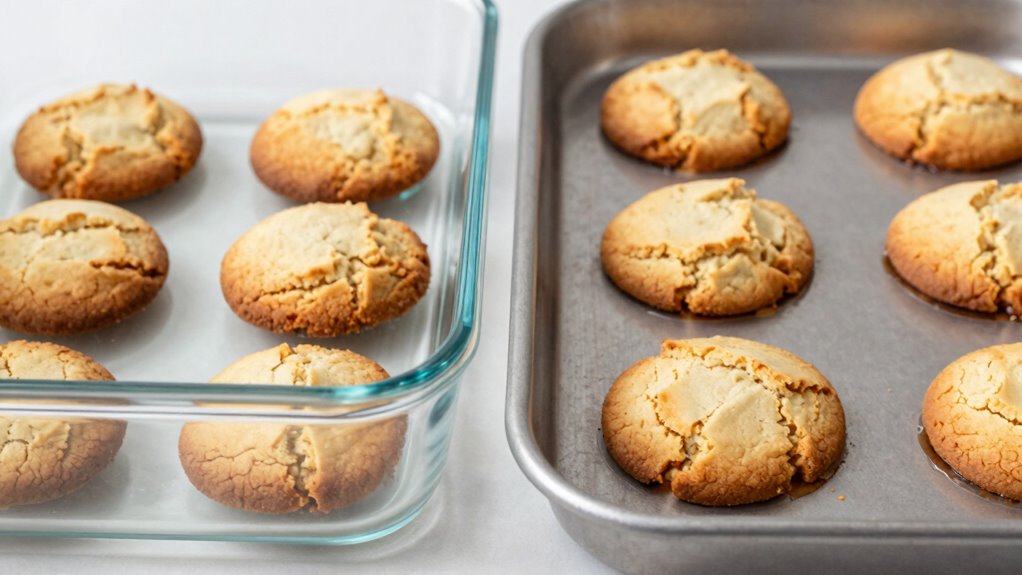
Have you ever wondered whether baking in glass pans is better than using metal ones? The choice between the two often comes down to personal preference, but it’s essential to understand how each affects your baking times and outcomes. One key factor that influences this is heat conduction, which determines how evenly and quickly heat transfers from the oven to your baked goods. Glass pans, being poor conductors of heat compared to metal, tend to heat up more slowly and unevenly. This means that when you use a glass dish, your baked item may require a longer baking time to reach the desired doneness. It’s not just about patience; it’s about oven safety and ensuring you don’t accidentally underbake or overbake your treats.
In terms of oven safety, understanding how heat behaves with different materials helps prevent mishaps. Metal pans, especially those made of aluminum or stainless steel, conduct heat rapidly and evenly, allowing baked goods to cook more quickly and consistently. With glass, the slower heat transfer can lead to uneven baking, where the edges might cook faster than the center. This difference means you need to stay alert and adjust your timing accordingly. If you follow a recipe that’s calibrated for metal pans, baking in glass without modification might result in undercooked centers or overly browned edges, which could compromise safety and quality. Additionally, material properties influence how each type of pan reacts during baking. Being aware of these properties can help you better predict how your baked goods will turn out and avoid common issues. Recognizing the thermal conductivity of each material is crucial for achieving consistent results.
Because glass retains heat longer, it continues cooking even after you’ve taken it out of the oven. This residual heat can cause overbaking if you’re not attentive, especially if you’re used to metal pans where the heat dissipates more rapidly once removed. So, it’s wise to lower your baking time slightly or check your baked goods earlier than usual when switching to glass. Conversely, if you’re baking in metal, you might need to extend the time or monitor more closely to prevent underbaking, especially if your oven runs hot or has hot spots. Furthermore, knowing the thermal properties of each material can help you better anticipate how they will behave during the baking process. Being mindful of these differences can help you avoid common pitfalls and improve your baking outcomes.
Ultimately, understanding heat conduction and oven safety helps you adapt your baking times to different pans. Recognizing that glass heats more slowly and retains heat longer can help you prevent common pitfalls like uneven baking or overbaking. Whether you prefer glass or metal, the key is to be aware of these differences and adjust your timing accordingly. This way, you’re not just baking blindly—you’re baking smarter, ensuring your baked goods come out perfect every time. Proper knowledge of heat transfer principles empowers you to make better choices in your baking routine.

Amazon Basics Glass Baking Dishes with BPA-Free Lids, 6-Piece Bakeware Set, Borosilicate Glass, Oven-Safe up to 752°F, Non-Slip and Stackable, Dishwasher-Safe, Linen Gray
6-PIECE BAKEWARE SET: 6-piece set of 3 oven-safe glass baking dishes and 3 lids for making casseroles, desserts,…
As an affiliate, we earn on qualifying purchases.
As an affiliate, we earn on qualifying purchases.
Frequently Asked Questions
How Does Oven Calibration Affect Baking Times in Glass and Metal Pans?
Oven calibration accuracy directly impacts baking times in both glass and metal pans by ensuring the oven reaches the set temperature. If your oven’s temperature is off, your baked goods might cook too quickly or slowly, especially since glass pans tend to require lower temperatures and metal pans heat up faster. Regularly calibrate your oven to maintain precise oven temperature, helping you achieve consistent baking results regardless of pan material.
Are There Specific Recipes That Work Better With Glass or Metal Bakeware?
You’ll find that delicate cakes and custards often turn out better in glass because it enhances even heat distribution and shows browning clearly. Conversely, metal pans excel with hearty bread and cookies, thanks to their quick heat transfer. Recipe variations and ingredient interactions influence these choices—lighter recipes benefit from glass’s gentle heating, while denser recipes need metal’s rapid warmth. Your selection depends on the desired texture and appearance of your baked goods.
Does Pan Color Influence Baking Time and Temperature Consistency?
Yes, pan material and color influence baking time and temperature consistency. Dark-colored pans absorb more heat, which can cause baked goods to brown faster and sometimes burn if not monitored closely. Conversely, glass pans distribute heat more evenly but may require slightly longer baking times. Lighter-colored pans reflect heat, resulting in more even baking. Adjust your timing and temperature based on your pan’s material and color for best results.
How Does Preheating Affect Baking in Glass Versus Metal Pans?
Preheating is like warming up before a race; it prepares your pan for ideal performance. With glass pans, preheating guarantees even heat transfer, preventing hot spots and uneven baking. Metal pans heat quickly, so preheating helps them reach the right temperature faster and maintains consistent heat transfer throughout. Skipping preheat can lead to uneven baking, especially in glass, where temperature changes impact cooking time more noticeably.
Can Using Different Oven Racks Impact Baking Results in Glass and Metal Pans?
Yes, your oven rack placement can impact baking results in glass and metal pans. Higher racks may cause quicker browning in metal pans due to better heat exposure, while lower racks might help glass pans bake more evenly by reducing direct heat. Pan material interaction with oven rack placement influences heat transfer, so experiment with rack positions to achieve ideal browning and doneness tailored to each pan type.

Good Cook Everyday Bake & Roast Pan with Scratch-Resistant Metal-Utensil Safe Nonstick, 13 x 9-Inch, Gray
13 X 9-INCH BAKE & ROAST PAN: Ensures a perfect bake every time for your favorite recipes, and…
As an affiliate, we earn on qualifying purchases.
As an affiliate, we earn on qualifying purchases.
Conclusion
Think of baking in glass versus metal as choosing between a slow-burning candle and a lightning bolt — each has its own rhythm. When you understand the timing differences, you become the conductor of your kitchen symphony, ensuring your baked goods turn out perfect every time. Don’t let the subtle nuances slip by; embrace them, and you’ll master the art of timing like a true culinary maestro. Your baked masterpieces deserve nothing less.

OXO Good Grips Freezer-to-Oven Safe 3 Qt Glass Baking Dish with Lid, 9 x 13
Strong, borosilicate glass construction for freezer to oven use withstands extreme temperature changes without the risk of cracking…
As an affiliate, we earn on qualifying purchases.
As an affiliate, we earn on qualifying purchases.
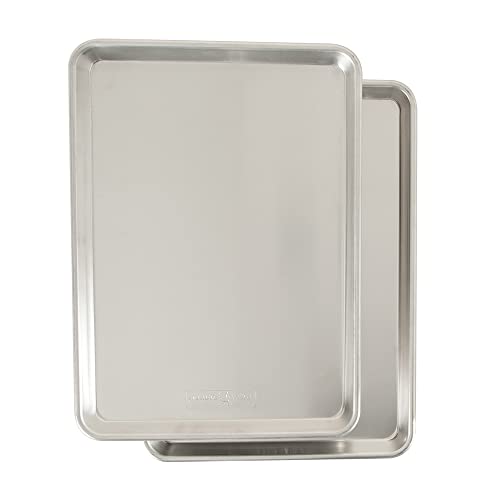
Nordic Ware Naturals Half Sheet – USA Made Aluminum Commercial Quality Sheet Pan for Baking or Roasting, Encapsulated Galvanized Steel Rim Prevents Warping, 2-Pack
Naturals bakeware is made of pure aluminum for superior heat conductivity and produces consistently evenly browned baked goods…
As an affiliate, we earn on qualifying purchases.
As an affiliate, we earn on qualifying purchases.