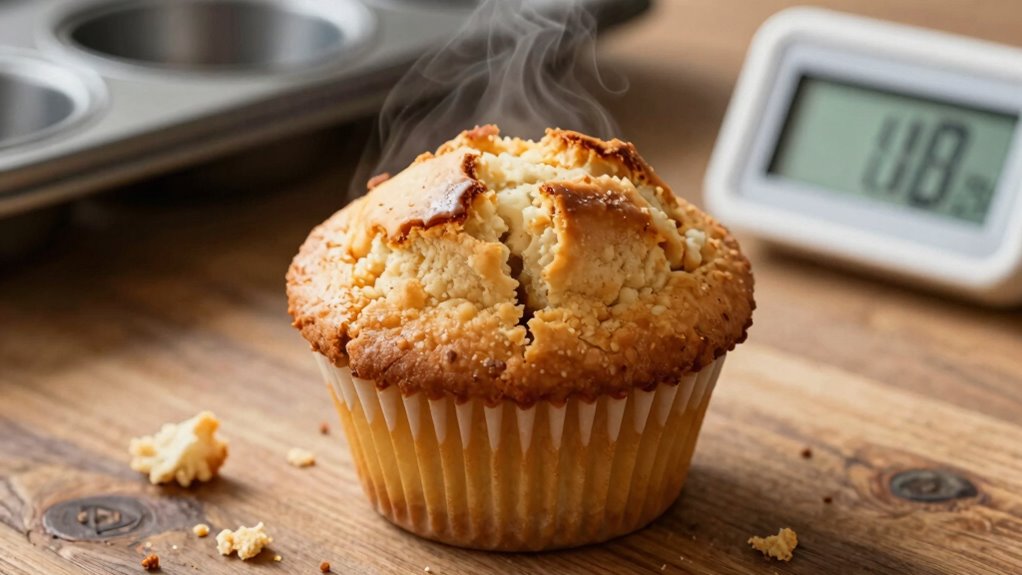

The biggest mistake you can make is baking muffins at too high a temperature. When the oven is too hot, the outer crust sets too quickly, trapping moisture inside. This causes the muffin to be dry and dense on the inside while forming a hard crust outside. Using the correct temperature allows heat to penetrate evenly, giving you moist, tender muffins. Keep going to discover more tips for perfect baking and avoid this common error.

Get kitchen gear delivered free with Prime
- Fast, free delivery on millions of items
- Prime Video, Amazon Music and more included
- Member-only deals all year
Key Takeaways
- Baking muffins at too high a temperature causes the outer crust to set prematurely, trapping moisture inside.
- Excessive heat leads to rapid fat evaporation and burning, resulting in dry, dense muffins.
- High temperature causes eggs to curdle and fats to burn, negatively impacting moistness and texture.
- An improperly calibrated oven can create uneven heat, drying out muffins before they fully bake.
- Maintaining the correct, moderate baking temperature ensures even cooking and preserves muffin moisture.
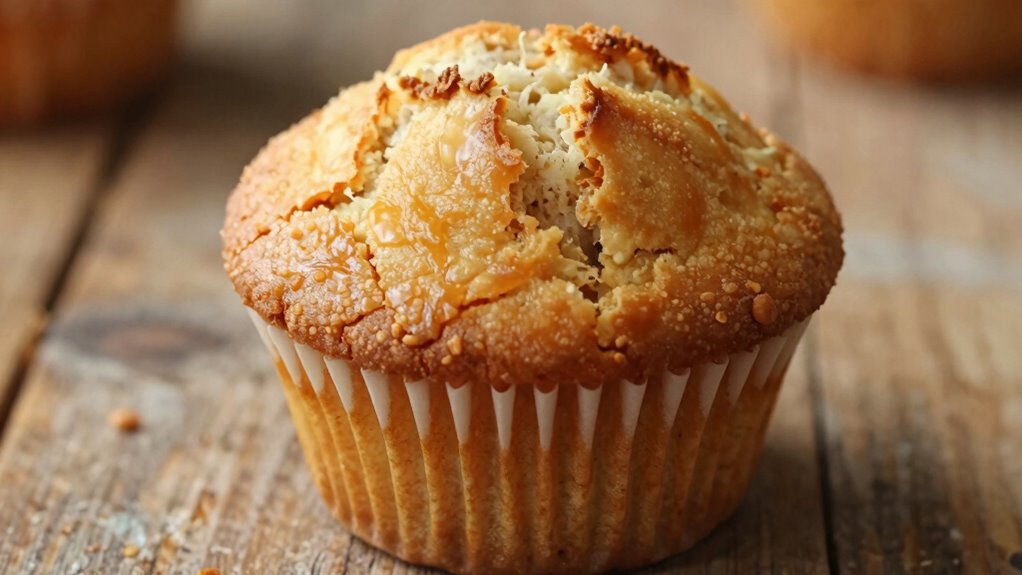
Have you ever wondered why your muffins turn out dry and crumbly? The answer often lies in a single, overlooked detail: baking temperature. When you bake at too high a temperature, you disrupt the delicate balance of baking chemistry and ingredient interactions that give muffins their moist, tender crumb. Understanding how temperature affects these processes can help you create consistently soft, moist muffins instead of dry, crumbly ones.
Baking at the right temperature ensures moist, tender muffins by preserving chemistry and ingredient interactions.
Baking chemistry plays a crucial role here. When you bake muffins, heat triggers a series of chemical reactions, like the coagulation of proteins and the melting of fats. These reactions transform raw batter into the fluffy, moist interior you want. However, if the oven is too hot, the outer layer of the muffin sets prematurely, forming a crust before the heat has fully penetrated. This crust can trap moisture inside, but more often, it causes the interior to dry out because the rapid surface setting prevents the batter from expanding and distributing moisture evenly. The result is a muffin that feels dry and dense rather than light and moist.
Ingredient interactions are just as important. Flour, fats, eggs, and liquids work together to keep muffins tender and moist. When you bake at the right temperature, these ingredients have enough time to interact properly. Fats melt smoothly, creating a moist texture, and eggs coagulate gradually, providing structure without drying out the batter. Liquids, especially milk or buttermilk, help hydrate the flour and other dry ingredients, contributing to the muffin’s moist crumb. But if the oven temperature is too high, these interactions happen too quickly or unevenly. The fats can burn or evaporate rapidly, and the eggs may curdle or set too fast, leading to a dry, crumbly texture. Using the correct temperature ensures even heat distribution and proper oven calibration can vastly improve your baking results.
Products Worth Considering

Le Creuset Signature 6.5-Quart Deep Round Dutch Oven with Light Gold Crucible Knob, Enameled Cast Iron, Bleu Riviera

Ninja Artisan 5-in-1 Portable Electric Pizza Oven, Blue & Gold

Le Creuset Enamemed Cast Iron Oval Dutch Oven, 5 qt., White/Crucible
As an affiliate, we earn on qualifying purchases.
Frequently Asked Questions
How Does Oven Humidity Affect Muffin Moisture?
Oven humidity directly impacts muffin moisture by influencing the baking environment. Higher humidity helps retain moisture, resulting in softer, more tender muffins, while low humidity causes them to dry out quickly. You should monitor oven conditions, possibly adding a small pan of water inside to increase humidity, ensuring better moisture retention. This simple step creates a more ideal baking environment, keeping your muffins moist and delicious.
Can Using Different Oven Types Change Baking Temperature Impacts?
A stitch in time saves nine, and the same applies to different oven types affecting baking. Your oven calibration influences how accurately temperature impacts baking duration. Electric, gas, or convection ovens each distribute heat differently, so you might need to adjust temperatures or baking times accordingly. Always monitor your muffins closely, as inconsistent heat can dry them out or leave them underdone, making precise adjustments essential for perfect results.
What Role Does Ingredient Freshness Play in Muffin Dryness?
Ingredient freshness plays a vital role in muffin moisture. When you use fresh ingredient quality, your muffins stay tender and moist. Preserving methods like proper storage prevent ingredients from losing moisture or developing staleness, which can lead to dryness. If your ingredients are old or dried out, your muffins will likely turn out dry too. Always choose fresh, well-preserved ingredients to guarantee soft, moist muffins every time.
How Does Altitude Influence Ideal Baking Temperature?
At high altitudes, you should consider altitude adjustment for baking temperatures, as lower air pressure affects heat transfer. You might need to increase the oven temperature slightly and improve air circulation to help muffins rise evenly. This adjustment prevents dryness and guarantees a moist, tender crumb. By fine-tuning your baking approach, you’ll create muffins that stay perfectly moist, despite the altitude’s subtle influence on your oven’s performance.
Are There Specific Temperature Guidelines for Gluten-Free Muffins?
Yes, there are specific temperature guidelines for gluten-free muffins. You should bake them at 375°F to guarantee proper rise and moisture retention, but avoid overbaking to prevent dryness. Be mindful of gluten cross contamination, so use dedicated utensils and surfaces. When making baking ingredient substitutions, keep in mind that different gluten-free flours may require slight temperature adjustments for ideal results. Always monitor your muffins closely during baking.
Conclusion
So, next time you bake muffins, remember that your oven’s temperature is your secret weapon—and your biggest enemy. Don’t let the one mistake of overbaking at the wrong temperature turn your muffins into bricks. Stay vigilant, keep that oven dial in check, and trust your instincts—just like bakers did in the olden days with their trusty wood-fired stoves. With that simple tweak, you’ll be enjoying moist, fluffy muffins every single time.