
If your loaf turns out dense and heavy, you might have missed signs of underproofing. Look for dough that feels firm, doesn’t expand much, or springs back quickly when pressed. A thick crust and tight crumb also indicate it wasn’t given enough time to develop flavor and volume. Pay attention during proofing, and you’ll uncover little clues that help you achieve a lighter, airy loaf—there’s more to uncover if you keep going.
Key Takeaways
- Dough remains firm and shows minimal expansion after fermentation, indicating underproofing.
- Crust remains thick and tough, rather than thin and crisp, signaling incomplete proofing.
- The loaf feels heavy and dense with few or no air pockets inside.
- Dough surface springs back quickly when gently pressed, showing insufficient rise.
- Lack of visual signs of full proofing suggests the dough needs more fermentation time.
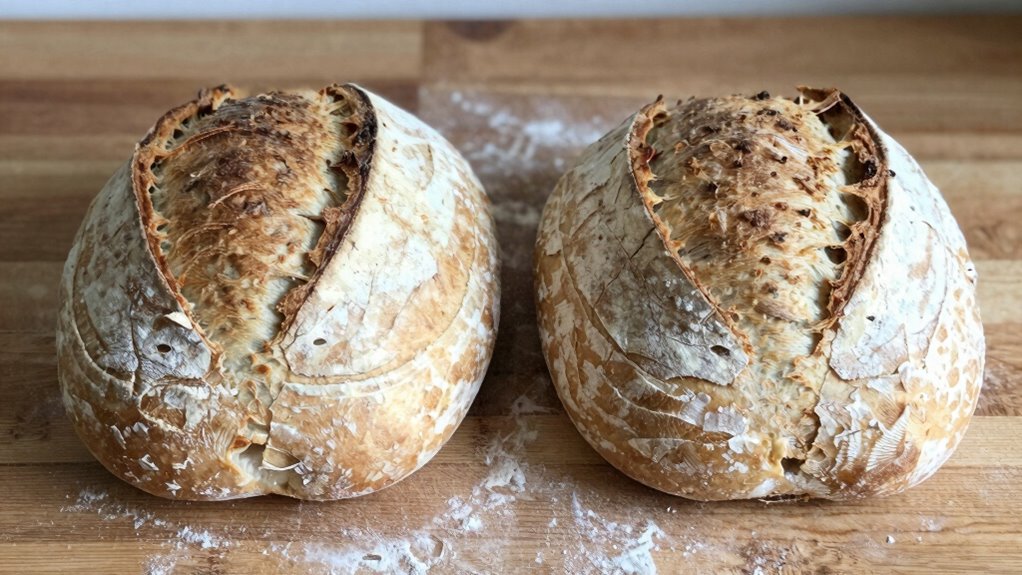
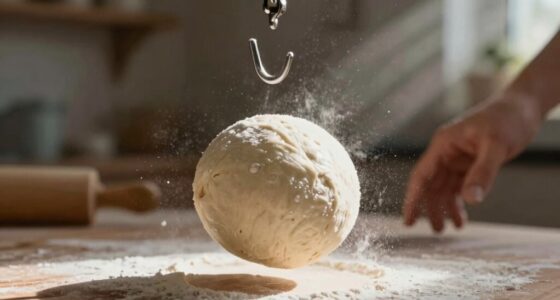
Have you ever baked bread only to find it dense and lacking the airy texture you expected? That often happens when your dough didn’t proof long enough. Underproofed loaves are a common mistake, but recognizing the signs can help you improve your baking. One key factor is fermentation timing. If you rush through the fermentation process, your dough won’t develop enough flavor or the necessary gluten structure to trap gas effectively. This results in a loaf that’s heavy and tight rather than light and open. Pay close attention to how your dough behaves during fermentation; it should roughly double in size and feel puffy and soft. If it’s still relatively firm or hasn’t expanded significantly, it’s a sign that fermentation needs more time. Additionally, proper dough hydration is crucial, as it directly influences fermentation and the dough’s ability to rise fully. Ensuring the right fermentation environment, such as proper temperature and humidity, can also help your dough proof more reliably. Adequate fermentation time also allows for the development of flavor compounds, making your bread tastier.
Underproofed bread lacks volume, flavor, and airiness—patience during fermentation is key for perfect loaf texture.
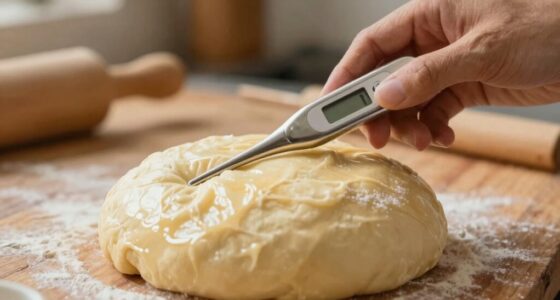
Dough hydration also plays a vital role here. When your dough has too little water, it becomes stiff and resistant, making it hard for it to rise properly. Conversely, overly hydrated dough can be sticky and difficult to handle, but it can also help facilitate better fermentation if managed correctly. Proper dough hydration creates a more elastic gluten network, which promotes good gas retention during proofing. When dough hydration is off, fermentation timing may be misjudged because the dough won’t expand as expected or could even collapse after shaping. Ensuring the right balance of water in your recipe allows for optimal fermentation timing, giving your dough the best chance to rise fully. Monitoring the dough’s fermentation progress can help you decide when it’s ready for the next step.
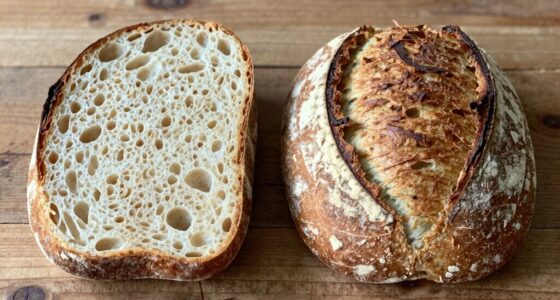
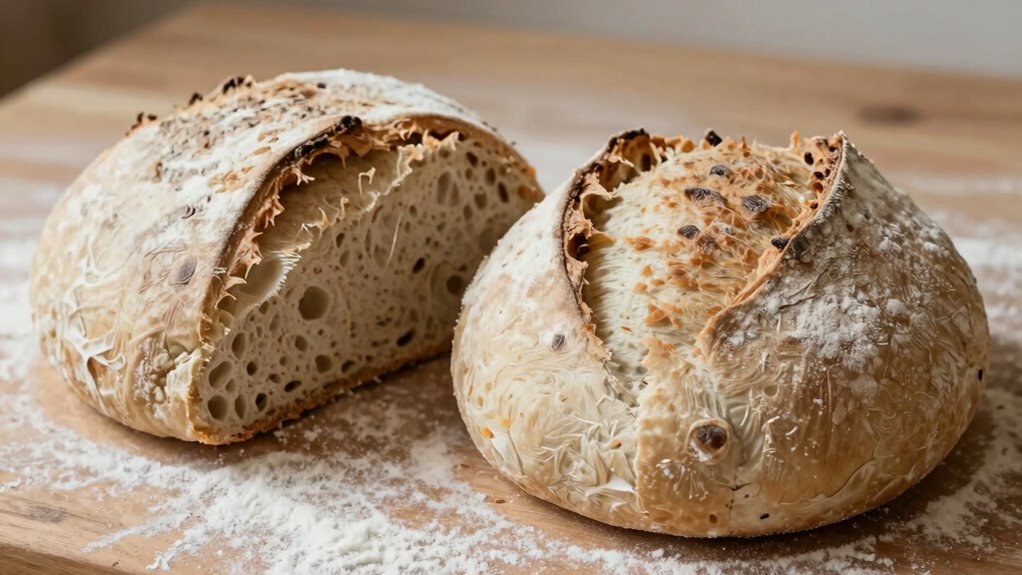
Another sign of underproofing is a dense crumb with little to no air pockets. When you slice into the loaf, you might notice it’s heavy and compact. This happens because the dough didn’t produce enough gas or didn’t have enough time for the gas to expand the dough fully. You might also see that the crust is thick and tough, rather than thin and crisp, indicating the dough didn’t reach its full potential during proofing. If you gently press the surface of your dough and it springs back quickly, that’s another sign it needs more time to prove. Proper fermentation allows the dough to develop strength and structure, leading to a better rise and more open crumb. Recognizing these signs early can save you from overworking the dough or rushing the process.
Ultimately, understanding fermentation timing and dough hydration helps you avoid underproofed loaves. Patience during proofing ensures your dough reaches its full volume and develops flavor, texture, and structure. By observing how your dough reacts and adjusting fermentation time accordingly, you’ll bake bread that’s light, airy, and delicious every time.
As an affiliate, we earn on qualifying purchases.
Frequently Asked Questions
Can Underproofed Bread Still Be Saved After Baking?
Yes, you can save underproofed bread after baking. Try slicing the loaf and lightly toasting or reheating it with a bit of steam to improve texture. You might also use artisan techniques like scoring or adding ingredient variations such as extra water or fermenting time next time. These methods help develop flavor and crust, ensuring future loaves are perfectly proofed and delicious.
How Does Underproofing Affect Bread Texture?
Underproofing affects bread texture by making it denser and less airy. When fermentation timing is cut short, the dough doesn’t develop sufficient elasticity, leading to a tighter crumb. You’ll notice the bread feels firmer and may lack the open, soft structure of properly proofed loaves. To avoid this, guarantee proper fermentation time so the dough can fully develop its elasticity, resulting in a light, tender texture after baking.
Does Underproofing Change the Flavor of the Bread?
You might notice that underproofing changes your bread’s flavor, often making it less complex. An interesting statistic shows that the fermentation process, driven by yeast activity, develops more nuanced flavors over time. When you underproof, yeast activity is limited, preventing full flavor development. This results in a bread with a flatter, less tangy taste, lacking the depth that proper fermentation brings. So, proper proofing is key for flavorful, well-rounded bread.
What’s the Best Way to Prevent Underproofing?
To prevent underproofing, you should carefully monitor fermentation timing and create an ideal proofing environment. Keep an eye on the dough to guarantee it doubles in size, indicating proper fermentation. Maintain consistent temperature and humidity levels in your proofing space, such as using a proofing box or a warm spot in your kitchen. This helps the dough rise evenly and prevents underproofing, resulting in better flavor and texture.
How Long Should Dough Ideally Proof for Optimal Results?
You should let your dough proof until it has doubled in size, which usually takes about 1 to 2 hours, depending on room temperature. During proofing, yeast activity causes the dough to rise and develop elasticity. You can also perform the poke test—if the indentation slowly springs back, your dough is ready. Proper proofing guarantees ideal yeast activity and dough elasticity, resulting in a light, airy loaf.
As an affiliate, we earn on qualifying purchases.
Conclusion
So, next time your bread’s not quite right, remember these signs of underproofing. If it feels dense and doesn’t spring back, it’s like a stubborn door that won’t open. Pay attention to the texture and shape before baking, and you’ll catch it early. With a little practice, your loaves will rise perfectly, just like a balloon soaring high. Baking is a dance, and understanding proofing makes your bread truly sing.
As an affiliate, we earn on qualifying purchases.
As an affiliate, we earn on qualifying purchases.