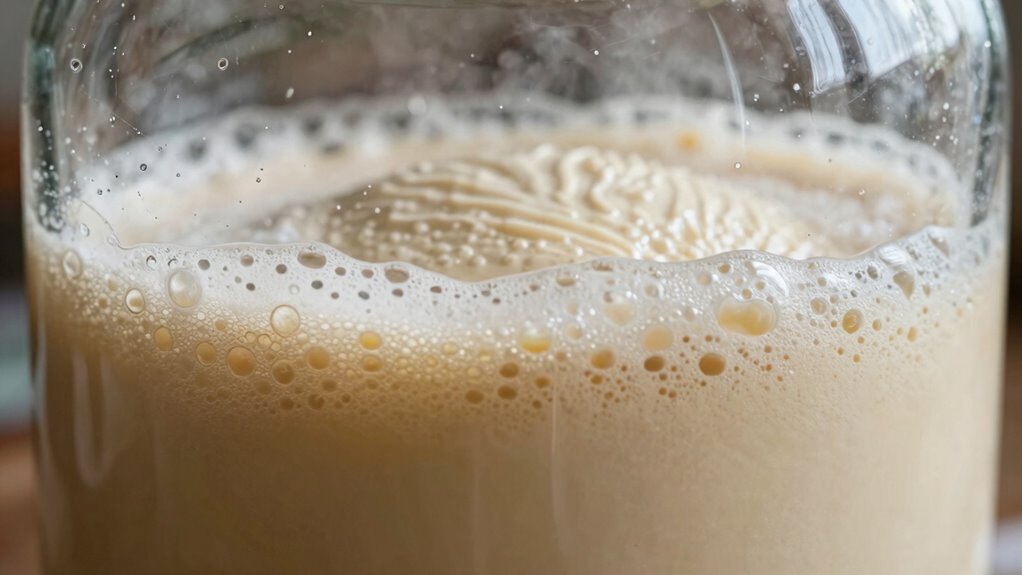

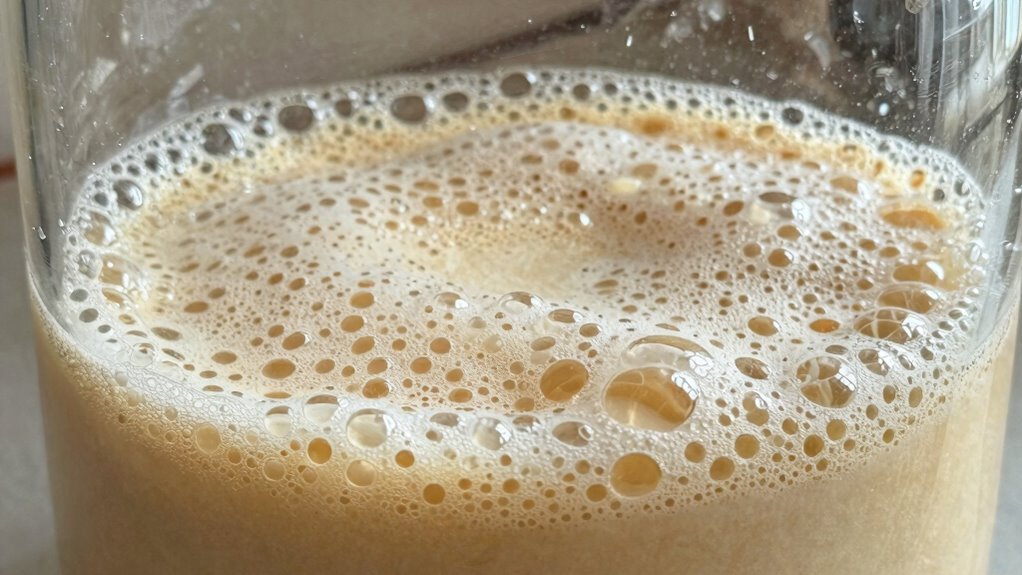
When bulk fermentation is done, your dough should have doubled in size and feel resilient when gently poked, bouncing back slowly. Look for small bubbles and a smooth, aerated surface that shows yeast activity. It should smell mildly tangy and yeasty, not sour or unpleasant. The dough will feel sticky yet elastic, with a strong gluten structure. If you keep a close eye on these signs, you’ll get a perfect fermentation—there’s more to uncover if you keep exploring.

Get kitchen gear delivered free — and shop member deals
- Fast, free delivery on millions of items
- Access to Prime Big Deal Days deals on October 6–7
- Prime Video, Amazon Music and more included
Key Takeaways
- Dough has visibly expanded in volume and appears aerated with a smooth surface.
- It feels elastic, slightly sticky, and springs back slowly when gently poked.
- Small bubbles form on the surface, indicating active yeast fermentation.
- The aroma is mildly tangy and yeasty, signaling proper fermentation.
- The gluten structure appears strengthened, and the dough resists collapse or over-expansion.
Have you ever wondered why bread develops its signature texture and flavor during the fermentation process? The secret lies in understanding yeast activity and the crucial role of fermentation timing. When you mix your dough and let it rest, yeast begins to feed on the sugars, producing carbon dioxide and alcohol. This activity is what causes the dough to rise, creating the light, airy crumb you’re aiming for. But how do you know when the bulk fermentation is “done”? It’s not about a specific clock time; instead, it’s about observing the dough’s transformation.
As fermentation progresses, you’ll notice the dough becomes more elastic and slightly puffed up. It should feel aerated and have a smooth surface. The surface might develop small bubbles, a sign that yeast activity is at its peak. When you gently poke the dough with your finger, it should slowly spring back and leave a slight indentation—that’s a good indicator that fermentation timing is on track. If it collapses or doesn’t bounce back, it might be over-fermented, which can lead to a dense loaf. A proper fermentation process is essential for achieving the desired bread qualities. Additionally, the dough’s elasticity and resilience are good indicators of gluten development, which is influenced by fermentation.
The timing of fermentation is influenced by several factors, including temperature, dough hydration, and the amount of yeast used. Warmer environments speed up yeast activity, so your dough might ferment faster, while cooler temperatures slow it down, requiring longer fermentation. As you gain experience, you’ll learn to read these signs rather than relying solely on time. The goal is to reach a stage where the dough has expanded noticeably, the gluten structure has strengthened, and the flavor has begun to develop complexity.
Pay attention to the smell as well. During proper fermentation, the dough will emit a mildly tangy, yeasty aroma—an indication that fermentation is happening correctly. Over-fermentation, on the other hand, can produce a sour, unpleasant odor. The overall texture should be slightly sticky but not overly wet or stiff. When you gently stretch the dough, it should feel resilient, indicating good gluten development. Understanding yeast activity and how it influences dough behavior is essential for bakers aiming for consistent results.
In essence, knowing when bulk fermentation is “done” involves a combination of visual cues, tactile feedback, and smell. It’s a dance between time, yeast activity, and environmental conditions. The fermentation timing can vary widely depending on these factors, so developing a keen eye and sense of smell is invaluable. The key is to watch for those signs of readiness rather than clock-watching. When all these elements align, your dough is prepared for the next step—shaping and baking—to produce bread with the perfect crumb, flavor, and texture.
bulk fermentation dough proofing basket
As an affiliate, we earn on qualifying purchases.
As an affiliate, we earn on qualifying purchases.
Frequently Asked Questions
How Long Should Bulk Fermentation Last for Different Bread Types?
The fermentation timing varies based on bread types. For lean, rustic loaves, aim for 1 to 2 hours; for enriched doughs, it might extend to 3-4 hours. You’re looking for dough maturity, which means it has roughly doubled in size, feels airy, and shows bubbles. Keep an eye on the dough rather than strict times—your goal is the right fermentation stage for ideal flavor and texture.
Can I Over-Ferment My Dough?
Don’t let the fermentation myths fool you—yes, you can over-ferment your dough if you’re not careful. Over-fermentation results in dough that’s overly slack, sticky, and loses its structure, making it hard to shape. Keep an eye on dough consistency and smell; if it’s overly sour or looks like a mess, it’s a sign to stop. Trust your senses, not just the clock, to avoid turning your bread into a flop.
What Signs Indicate My Dough Is Under-Fermented?
If your dough is under-fermented, you’ll notice it feels dense and lacks dough elasticity, making it harder to shape. The fermentation speed is slow, and it won’t have expanded much in size. You might see small bubbles or a tight surface, indicating insufficient fermentation. To avoid this, guarantee proper timing and warm environment, allowing the dough to develop enough strength and air pockets for a light, airy final product.
How Does Temperature Affect Bulk Fermentation Timing?
Ever wonder how temperature influences your dough’s fermentation timing? When the fermentation temperature is warmer, yeast activity speeds up, so your dough ferments faster. Conversely, cooler temperatures slow yeast activity, extending fermentation time. Keep your dough in a consistently warm spot (around 75-78°F) for ideal results. Too hot, and you risk over-fermentation; too cold, and it may under-ferment. Adjust your environment based on your desired fermentation pace.
Is It Necessary to Perform Stretch and Folds During Bulk Fermentation?
Yes, performing stretch and folds during bulk fermentation is necessary, especially for dough with high hydration. These folds help develop gluten structure, which improves dough elasticity and strength. By incorporating stretch and folds, you enhance gluten development without overworking the dough, leading to a better rise and texture. This step is vital for achieving ideal dough consistency, ensuring your bread has the right crumb and crust.
As an affiliate, we earn on qualifying purchases.
Conclusion
As you watch your dough reach that perfect, puffy stage, remember it’s like a hero’s journey—facing the fermentation test and emerging triumphant. When it’s “done,” the dough’s surface should be bubbly and airy, just like a well-loved story reaching its climax. Trust your senses; it’s the moment where patience pays off. With each batch, you’re crafting your own legend in the kitchen—bread worthy of the gods, or at least, your table.
kitchen digital dough thermometer
As an affiliate, we earn on qualifying purchases.
As an affiliate, we earn on qualifying purchases.
As an affiliate, we earn on qualifying purchases.
Fall Picks
fall essentials
As an affiliate, we earn on qualifying purchases.