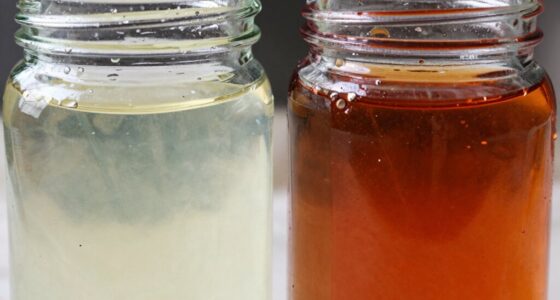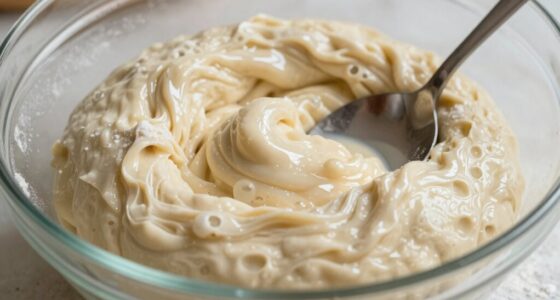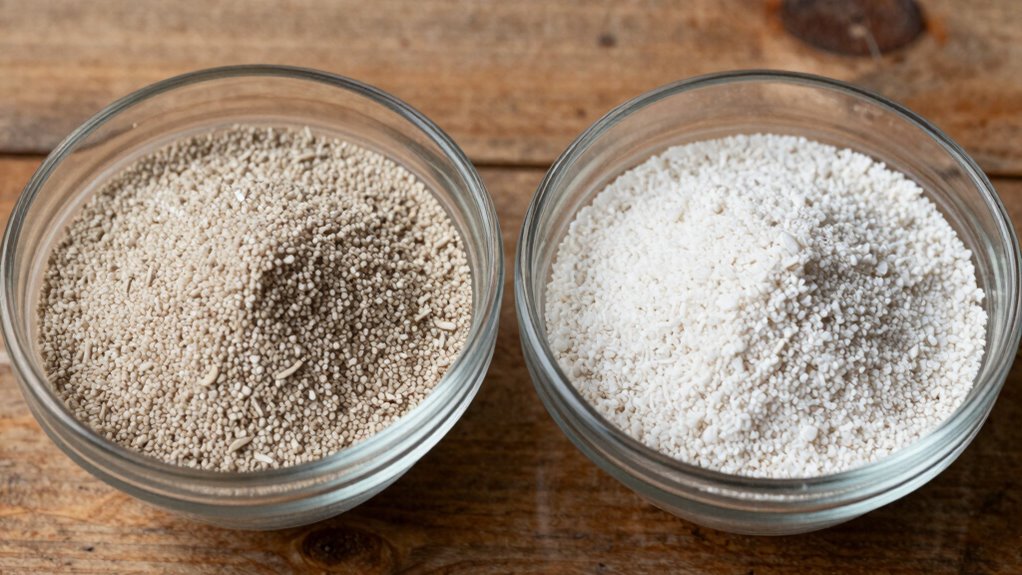

When swapping instant yeast for active dry yeast, remember that instant yeast ferments faster and requires no proofing, making it great for quick recipes. Active dry yeast needs proofing in warm water and takes longer to ferment, which develops deeper flavors. Store them properly to keep their effectiveness, with instant yeast stable at room temperature and active dry yeast best refrigerated. For precise results, you’ll find helpful tips on making successful replacements if you keep exploring.

Get kitchen gear delivered free with Prime
- Fast, free delivery on millions of items
- Prime Video, Amazon Music and more included
- Member-only deals all year
Key Takeaways
- Replace active dry yeast with instant yeast using a 25% reduction in quantity.
- No proofing needed when substituting instant yeast; mix directly into dry ingredients.
- When substituting active dry yeast with instant yeast, adjust for faster fermentation times.
- Store unused yeast properly—instant yeast at room temperature, active dry in the fridge or freezer.
- Adjust recipe timing based on yeast type to account for differences in fermentation speed.
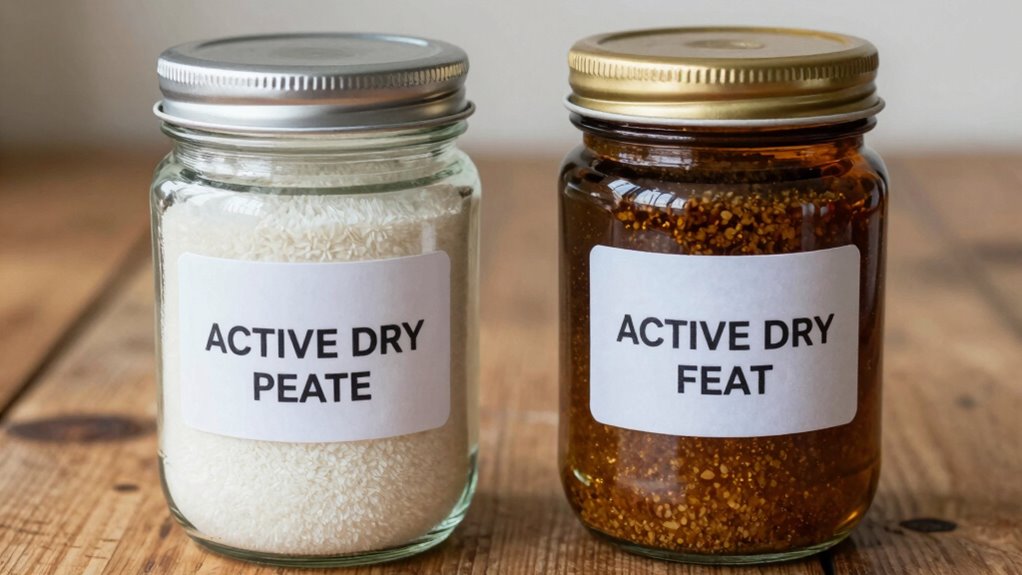
When choosing between instant yeast and active dry yeast, understanding their differences can make your baking experience smoother and more successful. One of the key factors to consider is fermentation speed. Instant yeast, also called rapid-rise or quick-rise yeast, ferments much faster than active dry yeast. It activates quickly, often within minutes, allowing your dough to rise in a shorter amount of time. This makes it ideal for quick bread recipes or when you’re pressed for time. Active dry yeast, on the other hand, takes longer to ferment because it has a slightly lower moisture content and needs to be proofed in warm water before use. This slower fermentation process gives you more control over the rise and can develop deeper flavor in your baked goods. Knowing this, you can decide which yeast to use based on your timing needs and desired flavor complexity.
Another important aspect to contemplate is storage requirements. Instant yeast is more stable at room temperature, thanks to its finer granules and lower moisture content, which means it stays viable longer without refrigeration. You can keep it in a cool, dry place for up to two years, making it convenient for occasional baking. Active dry yeast, however, is more sensitive to moisture and temperature fluctuations. It’s best stored in an airtight container in the refrigerator or freezer if you don’t plan to use it regularly. Proper storage helps maintain its viability and prevents spoilage. If you buy active dry yeast in bulk, refrigeration extends its shelf life, but always check the fermentation speed of each yeast type to adjust your baking schedule accordingly. Additionally, understanding the yeast activation process can help you optimize your baking results and ensure your dough rises perfectly every time. An understanding of yeast viability can also help determine the best storage practices to maintain its effectiveness over time, especially when considering storage conditions that affect its longevity. Properly stored yeast can also reduce the risk of spoilage, ensuring consistent results each time you bake.
As an affiliate, we earn on qualifying purchases.
Frequently Asked Questions
Can I Use Instant Yeast in Recipes Calling for Active Dry Yeast?
Yes, you can use instant yeast in recipes calling for active dry yeast. Just remember that instant yeast doesn’t need to be proofed; it activates quickly when mixed with flour or liquids. Use the same amount as active dry, but you might skip the initial yeast activation step. Store yeast in an airtight container in a cool, dry place to keep it fresh. Proper storage tips guarantee your yeast remains effective for future baking.
How Long Do Each Type of Yeast Last in Storage?
You wonder about yeast storage and shelf life. Well, instant yeast usually lasts about 2 years when stored properly in a cool, dry place, while active dry yeast can last up to 2 years too, but it’s more sensitive to humidity. Keep both airtight, and check for signs of spoilage—like a sour smell or clumping—to guarantee your yeast stays fresh for your baking adventures.
Do Different Brands of Yeast Affect Baking Results?
Different brands of yeast can affect your baking results because their yeast fermentation and activation processes might vary. Some brands use different strains or processing methods, which can influence how quickly and effectively the yeast activates. You might find that certain brands produce a more vigorous rise or better flavor. To get consistent results, stick to reputable brands and follow the recommended activation instructions closely, regardless of the brand you choose.
Is There a Flavor Difference Between Using Instant and Active Dry Yeast?
Yes, there’s a subtle flavor difference between instant and active dry yeast. Instant yeast tends to produce a cleaner, more neutral taste because it requires less yeast activation time, leading to quicker fermentation. Active dry yeast may add a slightly richer, bread-like flavor due to its slower yeast fermentation process. Your choice can influence the flavor profile, but overall, both yeasts perform well with proper yeast activation.
Can I Substitute Yeast Types in Gluten-Free Baking?
You can substitute yeast types in gluten-free baking, but you need to take into account gluten-free leavening and yeast alternatives carefully. Since traditional yeasts mainly rely on gluten structures, you might opt for gluten-free leavening agents like baking powder or baking soda, combined with natural yeast alternatives like fermented grains or sourdough starters. Always adjust your recipe to ensure proper rising and texture, as gluten-free baking needs specific leavening approaches.
active dry yeast storage container
As an affiliate, we earn on qualifying purchases.
As an affiliate, we earn on qualifying purchases.
Conclusion
Choosing between instant yeast and active dry is like selecting a trusted partner for your baking journey. Each brings its own rhythm, shaping your dough’s rise like a heartbeat in a symphony. Trust your instincts, and remember that understanding their subtle differences allows you to craft bread that’s not just baked, but truly alive. In the end, it’s your touch that transforms humble ingredients into a symbol of warmth and comfort.
instant yeast vs active dry yeast
As an affiliate, we earn on qualifying purchases.
As an affiliate, we earn on qualifying purchases.
As an affiliate, we earn on qualifying purchases.
Halloween Picks
halloween
As an affiliate, we earn on qualifying purchases.