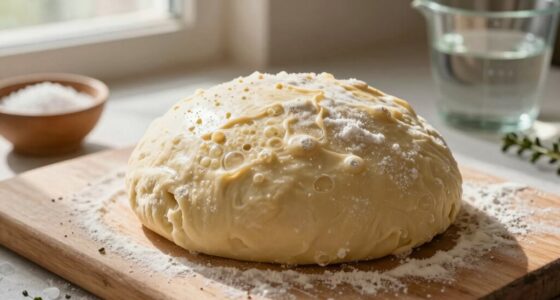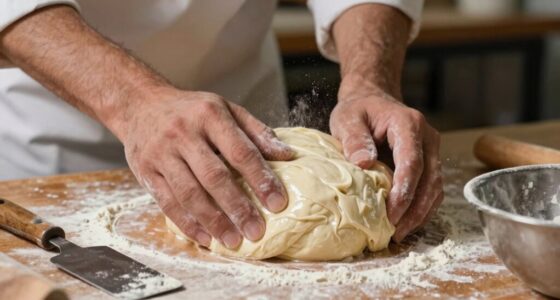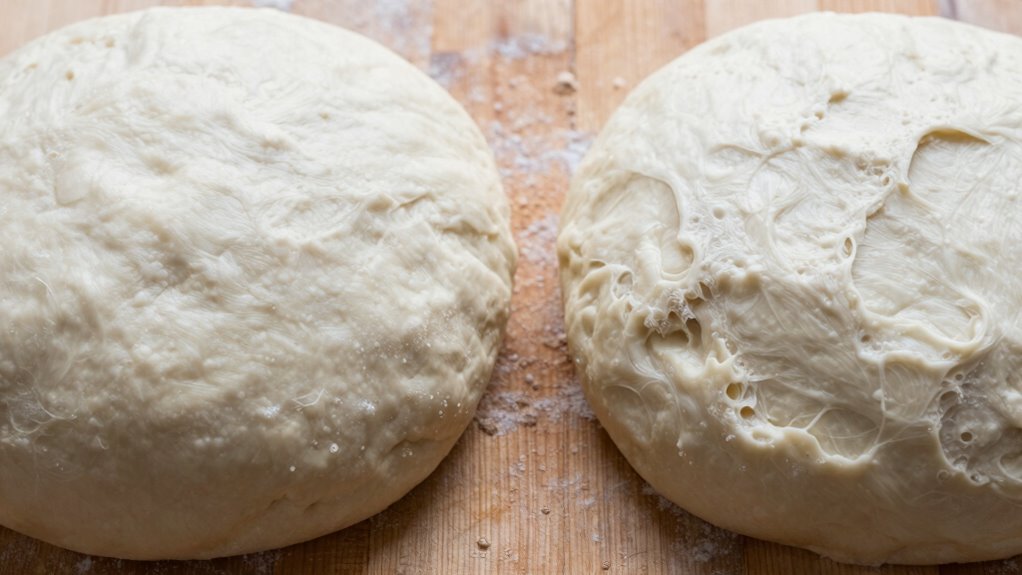

If your bread isn’t rising, the problem often lies with yeast activity, dough handling, or baking conditions. Make certain your yeast is fresh and bubbles within a few minutes of proofing, indicating it’s active. Proper kneading develops gluten for structure, but over- or under-kneading can weaken your dough. Also, check your oven temperature—too low or too high can hinder rising. Keep an eye on ingredient balance, especially salt and sugar, and maintain steady fermentation. To uncover more tips, keep exploring these factors.

Get kitchen gear delivered free with Prime
- Fast, free delivery on millions of items
- Prime Video, Amazon Music and more included
- Member-only deals all year
Key Takeaways
- Ensure your yeast is fresh and active by proofing it before mixing into dough.
- Maintain proper fermentation conditions, including correct temperature and adequate rising time.
- Avoid over- or under-kneading; proper gluten development is essential for trapping gas.
- Check oven temperature with a thermometer to support proper dough expansion during baking.
- Balance ingredients like salt and sugar, as they directly influence yeast activity and dough rise.
Have you ever wondered why your bread refuses to rise despite following the recipe? Often, the issue boils down to a few key factors, and understanding them can help you troubleshoot effectively. One common culprit is the development of gluten, which is essential for giving bread its structure and elasticity. When you knead your dough properly, you encourage gluten strands to form and align, creating a network that traps the carbon dioxide produced by the yeast. Without enough gluten development, your dough remains weak and unable to hold the gases necessary for rising. If you notice your dough feels overly sticky or doesn’t stretch easily, it might need a bit more kneading or a longer resting period to strengthen that gluten network. Additionally, proper fermentation is crucial, as it allows the yeast to produce enough gas for a good rise before baking. Ensuring proper fermentation also involves controlling the temperature and timing of the proofing process for optimal yeast activity. Maintaining consistent proofing conditions can prevent under- or over-fermentation, which affects the rise and texture of your bread. Proper dough handling techniques also play a vital role in maintaining the integrity of the gluten structure, leading to better rising results.
Another critical factor is oven temperature. Even if your dough has risen well during proofing, incorrect oven heat can prevent it from expanding properly. Too low a temperature might cause the yeast to become sluggish or die off before the dough can fully rise, resulting in dense bread. Conversely, an oven that’s too hot can cause the crust to form too quickly, sealing the gases inside and preventing the bread from rising further. Always preheat your oven thoroughly and use an oven thermometer if possible, to ensure the temperature is accurate. A common sweet spot for baking bread is around 375°F to 450°F, depending on the recipe. Proper oven temperature ensures that the yeast continues to produce gas as the bread bakes, and the crust develops at the right time to support the rise. Using accurate temperature control can make a significant difference in achieving the perfect loaf. Additionally, avoiding sudden temperature changes during baking can help maintain a steady rise and prevent collapse.
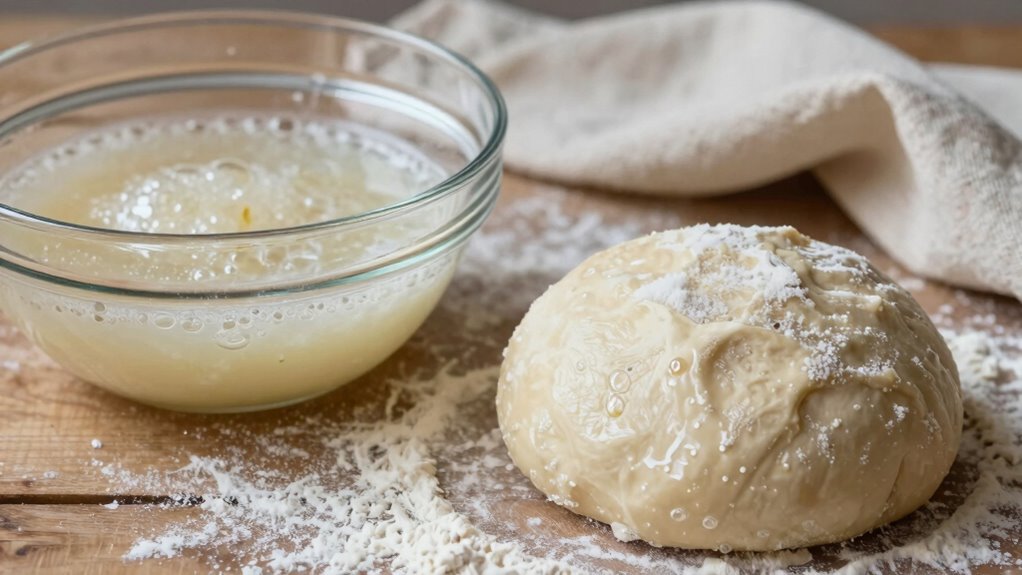
You also need to pay attention to the freshness of your yeast. Old, expired yeast can lose its potency, meaning it won’t produce enough carbon dioxide to lift your bread. Always check the expiration date and proof your yeast before mixing it into your dough. To do this, dissolve it in warm water with a pinch of sugar; if it bubbles within a few minutes, it’s active and ready to go. If not, it’s time to get new yeast. Proper storage of yeast in a cool, dry place can also help maintain its activity over time. As yeast activity is sensitive to storage conditions, keeping it in an airtight container in a refrigerator or pantry can extend its usable life. Ensuring your yeast is active is a fundamental step in achieving a good rise, as inactive yeast will result in flat bread.
In addition, the amount of salt and sugar you add can influence rising. Too much salt can inhibit yeast activity, while a proper balance helps control the fermentation process. Similarly, sugar provides food for yeast, boosting gas production. But adding too much can overfeed the yeast and cause it to die or produce irregular rises. Finding the right balance between these ingredients is crucial for consistent results and a well-risen loaf.
As an affiliate, we earn on qualifying purchases.
Frequently Asked Questions
Can Using Expired Yeast Affect Bread Rising?
Using expired yeast can definitely affect bread rising because it may no longer be active enough to leaven your dough. Proper yeast storage, like keeping it in a cool, dry place, helps preserve its potency. If your dough temperature isn’t right—ideally warm enough for yeast activation—your bread might not rise properly, especially if the yeast is expired. Always check if your yeast bubbles before mixing to guarantee it’s still active.
Does the Type of Flour Impact Yeast Activation?
Think of flour like the soil for your yeast garden. The type of flour, with its protein content, influences gluten development, which is essential for your bread’s rise. Higher protein flours, like bread flour, create a strong gluten network that activates yeast effectively. Conversely, low-protein flours, such as cake flour, may hinder gluten formation. So, choosing the right flour helps your yeast flourish and gives you that perfect rise.
How Does Altitude Influence Bread Rising?
At higher altitudes, your bread may not rise properly because of thinner air. You should make altitude adjustments by increasing the baking temperature slightly and reducing the amount of yeast or sugar. These changes help the dough rise better and prevent over-expansion. Adjusting your baking temperature and shortening rising times will give you a better rise, ensuring your bread turns out fluffy and well-structured despite the altitude.
Is It Necessary to Knead Bread Dough Thoroughly?
Think of kneading as sculpting a resilient statue. You need to knead bread dough thoroughly to develop gluten, which gives your bread its structure and elasticity. A proper kneading technique guarantees even gluten development, trapping gas produced by the yeast. Without enough kneading, your dough remains weak and won’t rise properly, resulting in dense bread. So, yes, thorough kneading is vital for a light, airy loaf.
Can Adding Sugar or Salt Affect Yeast Activity?
Adding sugar can boost yeast activity by providing extra fuel, speeding up the fermentation process, and helping your bread rise better. Conversely, salt slows down yeast fermentation by regulating yeast activity, which can prevent over-proofing but may also hinder rising if used excessively. So, balance your ingredients carefully—too much salt can inhibit fermentation, while a touch of sugar encourages yeast to produce carbon dioxide, resulting in a lighter, fluffier loaf.
As an affiliate, we earn on qualifying purchases.
Conclusion
So, next time your bread refuses to rise, don’t blame the yeast alone. Maybe it’s you rushing the process, or tossing in old ingredients. Ironically, all the patience in the world won’t help if you skip the basics. Sometimes, the culprit isn’t what’s missing but what’s overlooked. So, embrace the small details—after all, a perfect rise is just a matter of understanding your yeast’s silent patience. Happy baking!
As an affiliate, we earn on qualifying purchases.
As an affiliate, we earn on qualifying purchases.
Halloween Picks
halloween
As an affiliate, we earn on qualifying purchases.