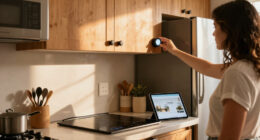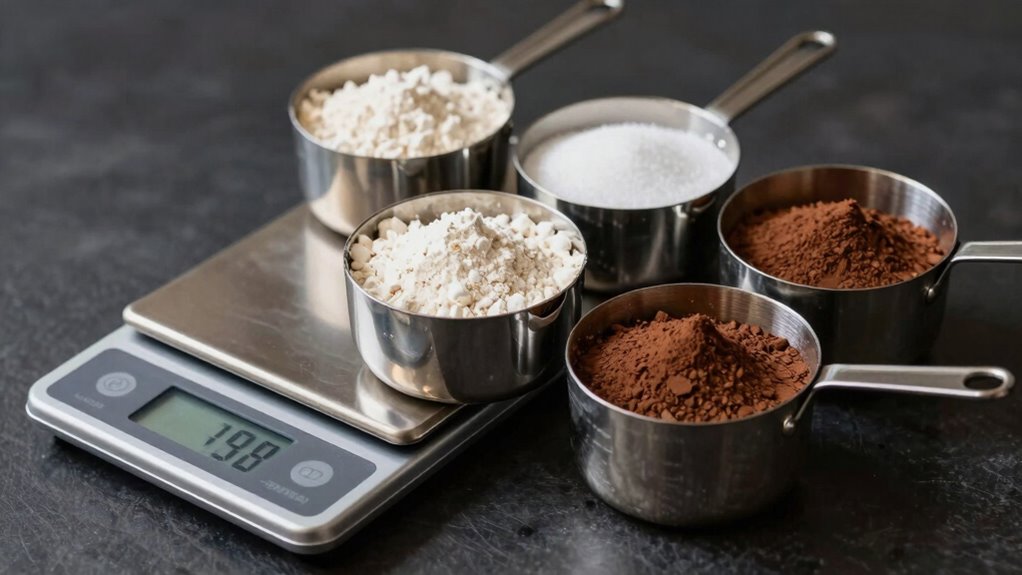
When it comes to measuring, weighing ingredients clearly outshines using cups. Weighing confirms you get consistent amounts, prevents discrepancies between scooping methods, and guarantees perfectly risen baked goods every time. You’ll avoid the guesswork that can compromise texture and flavor. Plus, it’s faster and tidier since you can zero out the scale with your bowl. With greater accuracy, you’ll feel more confident in your cooking skills. There’s much more to explore about maximizing your baking results.

Get kitchen gear delivered free with Prime
- Fast, free delivery on millions of items
- Prime Video, Amazon Music and more included
- Member-only deals all year
Key Takeaways
- Weighing ingredients provides precise measurements, ensuring consistent results in baking and cooking.
- Volume measurements can vary significantly due to ingredient density and scooping methods, impacting dish quality.
- Using a scale simplifies the measurement process and reduces dishwashing by zeroing out the scale with a bowl.
- Accurate weighing supports successful adjustments to recipes for dietary needs without compromising texture or flavor.
- Consistent ingredient weights foster confidence in cooking and encourage creative experimentation with substitutions.
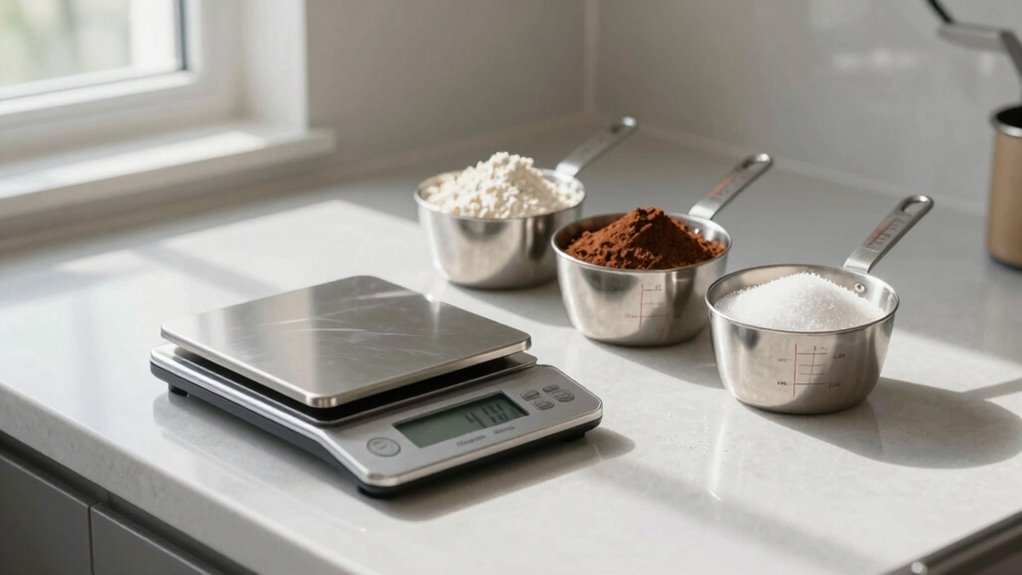
When you’re in the kitchen, deciding between measuring cups and weighing ingredients can make a big difference in your cooking and baking results. You might think measuring cups are good enough for most recipes, but if you aim for precision baking, weighing your ingredients is the way to go. Volume measurement can be convenient, but it often lacks the accuracy that weighing provides, especially when you’re working with ingredients of varying densities.
Imagine you’re baking a cake. A cup of flour can weigh anywhere from 120 to 150 grams, depending on how you scoop it. If you’re using volume measurement, you could easily end up with too much or too little flour, which can throw off your entire recipe. On the other hand, when you weigh your ingredients, you’re consistently using the exact amount needed, ensuring your cake rises perfectly every time. This kind of cooking accuracy is essential, especially for baked goods that rely on precise ratios of ingredients.
Ingredient density plays a significant role in this discussion. Different ingredients can occupy the same volume but have very different weights. For instance, a cup of sugar weighs more than a cup of flour. If you’re not weighing, you might mix these ingredients up and compromise your dish’s texture and flavor. Weighing eliminates this guesswork, allowing you to focus on the more creative aspects of cooking instead of worrying about whether you got the measurements right. Additionally, using a scale can help you better understand cooking science, ingredient properties, and how ingredient properties impact your results. Knowing the accuracy of measurements can also lead to more consistent results over time. Plus, understanding measurement techniques can improve your overall cooking skills and confidence. Incorporating a scale into your routine also helps you develop a deeper understanding of ingredient substitution and how to adapt recipes for different dietary needs.
Another advantage of using a scale is that it simplifies the measuring process. You can zero out the scale with your mixing bowl on it, adding each ingredient without needing to wash multiple measuring cups. This not only saves time but also keeps your kitchen tidy. Plus, if you’re doubling or halving a recipe, it’s much easier to adjust the weights than to recalculate volume measurements.
digital kitchen scale for baking
As an affiliate, we earn on qualifying purchases.
As an affiliate, we earn on qualifying purchases.
Frequently Asked Questions
Can I Use a Kitchen Scale for Liquids?
Yes, you can use a kitchen scale for liquids! Just remember to check the scale’s accuracy. When measuring liquids, place a container on the scale, then zero it out. This way, you’ll get an accurate liquid measurement without the weight of the container. Different liquids have varying densities, so make sure your scale is calibrated for precision. Using a scale can help you achieve consistent results in your cooking or baking!
How Do I Convert Cups to Grams?
To convert cups to grams, you need to know the ingredient’s density, which acts like a trusty GPS for your cooking journey. Different ingredients have different conversion factors—like flour versus sugar. For example, one cup of all-purpose flour weighs about 120 grams, while one cup of granulated sugar weighs around 200 grams. Just multiply the number of cups by the appropriate conversion factor, and you’ll be set for success in the kitchen!
Are There Different Types of Measuring Cups?
Yes, there are different types of measuring cups! You’ve got liquid measuring cups, typically made of glass or plastic with a spout for pouring, perfect for measuring ingredients like water or milk. Then there are dry measuring cups, often made of metal or plastic, designed for measuring flour, sugar, and other dry ingredients. Using the right type guarantees accuracy in your recipes, helping you achieve the best results every time you cook or bake!
What’s More Accurate, Digital or Mechanical Scales?
When you need precision, digital scales often win over mechanical ones. Digital accuracy provides clear readings, while mechanical scales can fluctuate. You’ll find that digital scales usually require less calibration, ensuring consistent performance every time you weigh. However, mechanical scales never need batteries and can be reliable if properly calibrated. Ultimately, if you value exact measurements in your cooking or baking, a digital scale’s efficiency might be your best choice.
How Should I Clean My Measuring Cups?
To clean your measuring cups, start by checking the materials—glass, plastic, or metal. For glass and metal, warm soapy water works great; just scrub gently with a sponge. If you’ve got plastic cups, avoid harsh abrasives to prevent scratches. For stubborn residues, soak them in a mixture of baking soda and water before scrubbing. Rinse well and let them air dry. This’ll keep your measuring cups looking brand new and ready for use!
precision measuring cups for cooking
As an affiliate, we earn on qualifying purchases.
As an affiliate, we earn on qualifying purchases.
Conclusion
When you’re baking, using a scale is like having a trusted map; it leads you to the exact destination of deliciousness. While measuring cups can be handy, they often lead to detours and inconsistencies. A study shows that recipes using weight yield 30% more accurate results. So next time you whip up a cake, grab that scale. It’ll help you navigate the world of baking with precision, ensuring every bite is as perfect as the last.
As an affiliate, we earn on qualifying purchases.
As an affiliate, we earn on qualifying purchases.
Halloween Picks
halloween
As an affiliate, we earn on qualifying purchases.