
To control cookie spread, focus on the temperature, type of fat, and resting time. Use softened butter for air pockets or opt for fats with higher melting points for less spread. Keep your dough chilled for at least 30 minutes to help maintain shape and enhance flavor. Monitoring your oven temperature is key, too. It helps the cookies rise properly and cook evenly. Stick around to discover more tips to perfect your cookie-making skills!

Get kitchen gear delivered free with Prime
- Fast, free delivery on millions of items
- Prime Video, Amazon Music and more included
- Member-only deals all year
Key Takeaways
- Use softened butter to create air pockets, which helps cookies hold their shape better during baking.
- Balance flour, sugar, and fat ratios to achieve the desired cookie structure and prevent excessive spread.
- Chill the dough for at least 30 minutes to solidify fats and reduce spreading during baking.
- Maintain consistent oven temperature to ensure even cooking and prevent premature spreading of cookies.
- Experiment with different fats and flours to control spread and enhance overall cookie texture.

When you think about cookie spread control, you might envision a perfectly baked treat that maintains its shape and texture. Achieving that ideal isn’t just about the recipe; it’s about mastering baking techniques and understanding how ingredient ratios impact your outcome. If you want cookies that hold their form rather than flattening into a puddle, you need to pay close attention to a few key elements.
First, let’s talk about fats. The type and temperature of the fat you use can greatly influence how much your cookies spread. If you’re using butter, make sure it’s softened but not melted. Softened butter will create air pockets when creamed with sugar, leading to a fluffy dough that holds its shape. If your butter is too warm, though, you risk creating a greasy mixture that leads to excess spread. You want to strike the perfect balance, so keep an eye on that temperature. Additionally, understanding the role of fat composition can help you choose the best fat for your desired cookie texture. Using fats with different melting points can also impact spread, so selecting the right fat is crucial.
The type and temperature of your fat, especially butter, are crucial for controlling cookie spread. Aim for softened, not melted, for the best results.
Next, evaluate your ingredient ratios. The balance of flour, sugar, and fat is vital. If you overload your dough with sugar, it’ll lead to excessive spread because sugar melts during baking and creates a liquid state. To maintain control, aim for a higher flour-to-fat ratio. This’ll give your cookies a sturdier base, helping them stay upright as they bake. Similarly, you can experiment with different types of flour. Using bread flour, for example, adds protein, which can improve the structure of your cookie and reduce spread. Furthermore, ingredient ratios are crucial because they directly affect the dough’s consistency and behavior during baking.
Another aspect to examine is chilling your dough. After you’ve mixed all your ingredients, letting the dough rest in the fridge for at least 30 minutes is a game-changer. This step allows the fats to solidify again, which will help prevent the cookies from spreading too much during baking. It also gives the flavors time to meld, enhancing the overall taste of your treats. Additionally, dough temperature plays a crucial role in how cookies spread, so keeping the dough cold is essential. Properly chilled dough also reduces the risk of spreading caused by warm dough, making the final product more consistent. To further improve control, some bakers even refrigerate their dough overnight for better flavor development and structure.
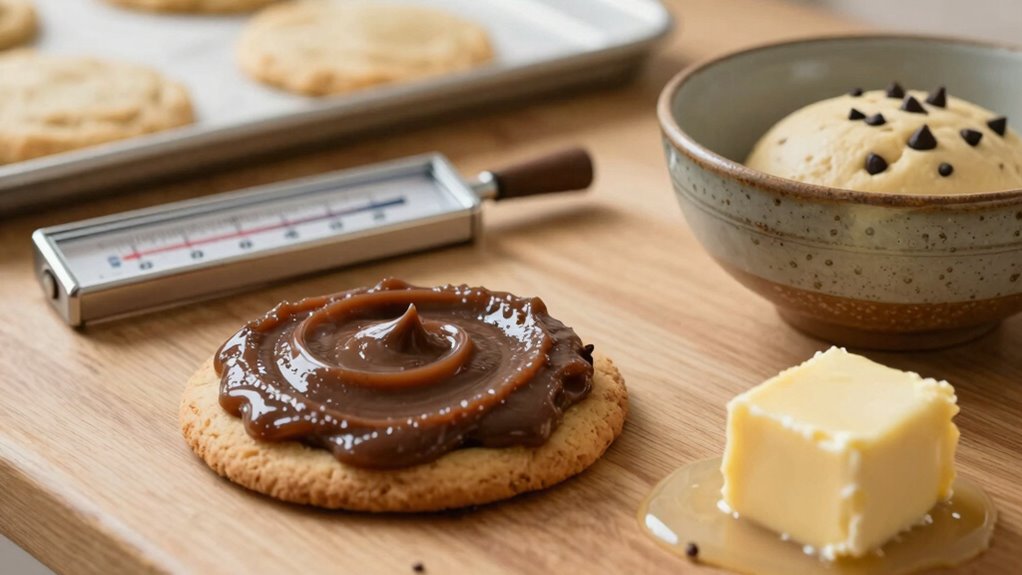
Lastly, don’t forget about oven temperature. If your oven runs hot, your cookies are more likely to spread before they can set. A consistent temperature guarantees that the cookies cook evenly, allowing them to rise and hold their shape. Investing in an oven thermometer can help you monitor this aspect closely.
Products Worth Considering

Le Creuset Enamemed Cast Iron Oval Dutch Oven, 5 qt., White/Crucible

Le Creuset Signature Enameled Cast Iron Round Dutch Oven, 5.5 qt, Deep Teal

Le Creuset Enameled Cast Iron Round Dutch Oven, 5.5 Qt, Flame
As an affiliate, we earn on qualifying purchases.
Frequently Asked Questions
Can I Use Different Types of Flour for Cookie Spread?
Yes, you can use different types of flour for cookie spread. Each flour has a unique gluten content and texture, which affects how your cookies spread. For instance, all-purpose flour offers a balance, while bread flour, with higher gluten, creates chewier cookies. On the other hand, cake flour has lower gluten and results in softer, more delicate cookies. Experimenting with various flours can lead to delightful, personalized cookie textures you’ll love!
How Does Baking Soda Affect Cookie Spread?
Baking soda affects cookie spread by creating chemical reactions during baking. When it’s mixed with acidic ingredients, it releases carbon dioxide, causing your cookies to rise. This reaction can lead to a lighter, airier texture, which might reduce spread. If you want thicker cookies, you might consider adjusting the baking soda amount. Keep in mind that too much can lead to an undesirable texture, making your cookies taste overly alkaline.
What Type of Sugar Is Best for Minimal Spread?
Want to keep your cookies from spreading too much? Granulated sugar is your best bet for minimal spread. It helps create a firmer structure, giving your cookies that desired thickness. On the other hand, brown sugar adds moisture and can lead to more spreading. If you’re aiming for a chewy texture with less spread, stick with granulated sugar. Experiment with ratios to find your perfect balance, and enjoy those perfectly shaped cookies!
Does the Baking Sheet Material Influence Cookie Spread?
Yes, the baking sheet material does influence cookie spread. If you use a thicker cookie sheet, it retains heat better, which can lead to less spreading. On the other hand, thinner sheets cool down quickly, causing cookies to spread more. Opt for materials like heavy-duty aluminum for controlled spreading. Pay attention to the thickness of your baking sheet, and you’ll notice a difference in how your cookies turn out.
Can I Freeze Cookie Dough to Control Spread?
Yes, you can freeze cookie dough to control spread! When you freeze the dough, it helps maintain a firmer texture, which leads to less spread during baking. Just make sure to wrap it tightly and freeze for at least 30 minutes to an hour. This freezing time allows the fats to solidify, which helps keep your cookies thicker and chewier. When you’re ready, just bake them straight from the freezer!
Conclusion
To sum up, mastering cookie spread is all about balancing temperature, fat content, and resting time. For instance, imagine a baker who tweaks her chocolate chip cookie recipe—chilling the dough longer results in perfectly thick, chewy cookies that stay pillowy instead of spreading too thin. By understanding these factors, you can create cookies that not only taste amazing but also look just right. So, experiment and enjoy the delicious results!