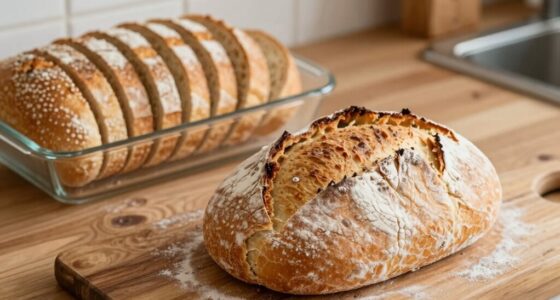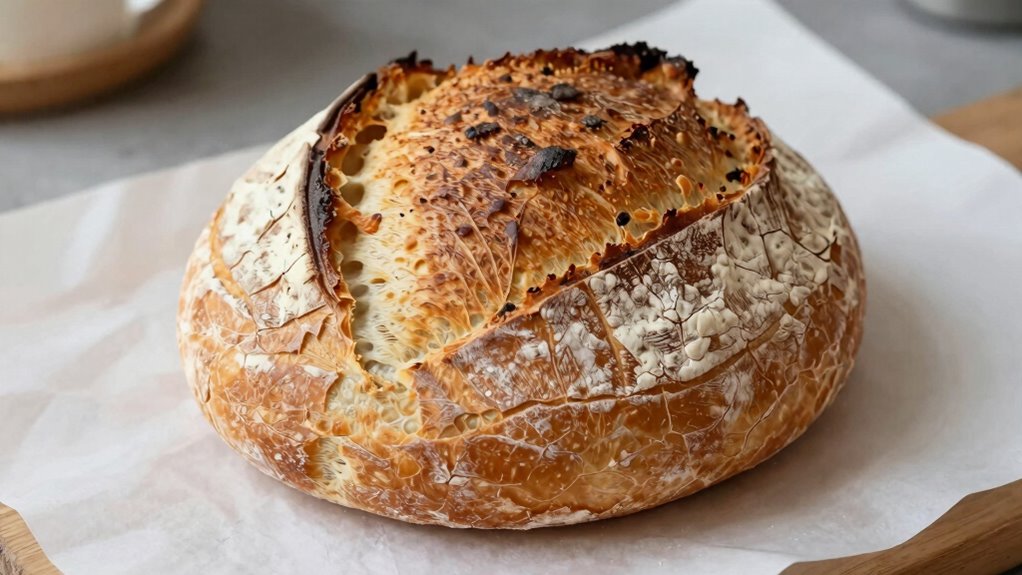

To prevent sticking when baking sourdough, use parchment paper as a non-stick barrier. Cut it slightly larger than your loaf and place it under the dough before baking. This simple trick helps you easily transfer the bread from the oven without tearing or breaking. Proper handling during removal keeps your loaf intact and bakery-quality. Keep practicing this technique, and you’ll discover more tips to perfect your sourdough baking along the way.

Get kitchen gear delivered free with Prime
- Fast, free delivery on millions of items
- Prime Video, Amazon Music and more included
- Member-only deals all year
Key Takeaways
- Cut parchment slightly larger than the loaf to prevent sticking and facilitate easy removal.
- Place parchment beneath the dough before baking to act as a non-stick barrier.
- Use high-quality, heat-resistant parchment for safe, effective baking at high temperatures.
- Gently peel away parchment after baking once the loaf has cooled slightly to avoid tearing.
- Proper handling with parchment helps preserve loaf shape, prevent cracks, and achieve bakery-quality results.
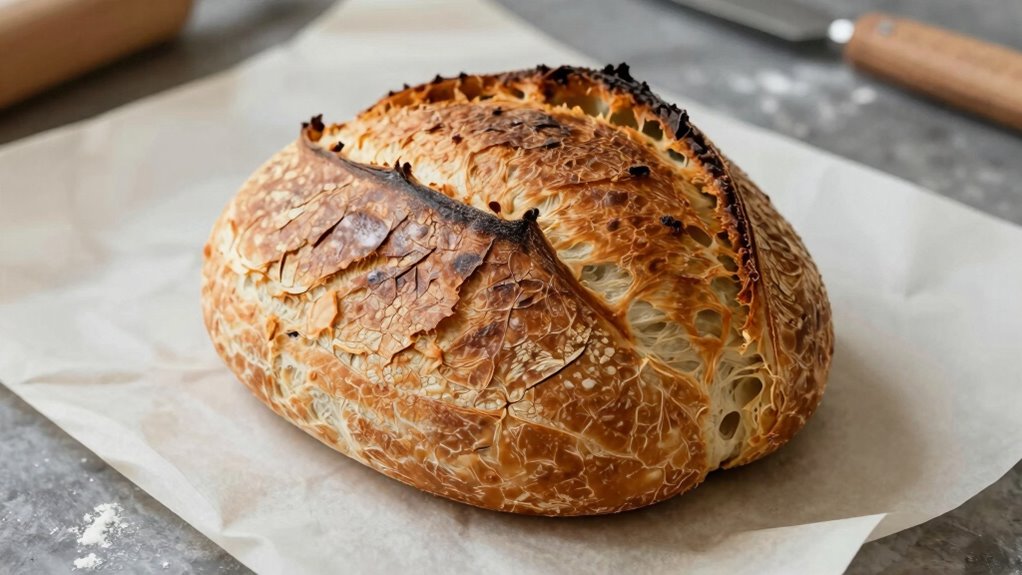
Have you ever struggled to remove baked goods from the pan without breaking them? If you’re into sourdough fermentation, you know how delicate those crusts can be, and the last thing you want is to ruin your loaf just when it’s ready. The good news is, with a simple parchment baking trick, you can make your sourdough baking process much easier and more successful. This trick involves using high-quality baking equipment combined with parchment paper, which acts as a non-stick barrier that prevents sticking and tearing.
When it comes to sourdough fermentation, patience and proper handling are key. After your dough has fermented and you’re ready to bake, the right baking equipment makes all the difference. A sturdy baking sheet or a Dutch oven with a lid can help create that perfect environment for a good crust, but even the best equipment won’t save you if your baked goods stick. That’s where parchment paper shines. Before you transfer your dough onto your preheated baking vessel, cut a sheet of parchment slightly larger than the shape of your loaf. Place it underneath the dough before baking. This way, as the bread expands and develops its crust, the parchment acts as a barrier, preventing sticking and making it easier to lift the loaf out once baked.
Not only does this trick protect your bread from tearing apart, but it also simplifies cleanup. You won’t have to scrub away baked-on dough from your baking equipment, saving you time and effort. Plus, parchment paper withstands high temperatures, making it suitable for the intense heat of sourdough baking. Just ensure you use unbleached, food-grade parchment for the best results. During the baking process, the parchment will withstand the heat while providing a smooth surface for the loaf to rise and develop that beautiful crust. Additionally, the heat resistance of parchment makes it an ideal choice for high-temperature baking. Using quality baking equipment that is designed for sourdough can further enhance your results and make handling your bread even easier. When your sourdough is done, let it cool slightly before lifting it onto a wire rack. Gently peel away the parchment, and you’ll find your loaf intact and ready to enjoy, with no tears or cracks. Incorporating proper handling techniques can also help preserve the integrity of your loaf during removal. Furthermore, selecting suitable baking tools can improve your overall baking experience and outcome.
This simple parchment baking trick is a game-changer, especially when paired with quality baking equipment designed for sourdough. It gives you peace of mind, knowing that your loaves will come out perfectly shaped and intact. Over time, you’ll find that this method becomes second nature, helping you achieve bakery-quality sourdough at home with less fuss and more confidence.
high-temperature unbleached parchment paper
As an affiliate, we earn on qualifying purchases.
As an affiliate, we earn on qualifying purchases.
Frequently Asked Questions
Can I Reuse Parchment Paper Multiple Times?
Yes, you can reuse parchment paper multiple times with reusable practices, but it depends on its condition. Carefully inspect it for tears or significant staining, as these can affect performance. Reusing reduces waste and has a positive environmental impact. To maximize its lifespan, gently clean off any residue and store it properly. This way, you save money, lessen your footprint, and still achieve great baking results.
Does Parchment Paper Affect Sourdough Flavor?
Imagine parchment paper as a silent guardian, shielding your sourdough from unwanted flavors like a gentle moat. It doesn’t affect your bread’s flavor directly, but it preserves the baking aroma by preventing sticking and burning. This keeps your sourdough’s natural taste pure, allowing flavor enhancement to shine through. So, while it doesn’t add to the flavor, parchment helps maintain the ideal environment for your bread’s authentic, delicious profile.
What Size Parchment Paper Is Best for Different Pans?
You should choose parchment paper size based on your pan’s dimensions, typically opting for a size that slightly overhangs for easy handling. Thicker parchment from brands like Reynolds or Unbleached offers better heat resistance and durability, especially for high-rising sourdoughs. For larger pans, go for 15×20 inches, while smaller ones might need 12×16 inches. Adjust the size slightly for best fit and to prevent sticking.
Is There a Risk of Parchment Catching Fire at High Temperatures?
Think of parchment paper as a trusty safety net; it’s designed to handle high temperatures safely. At typical baking temps, there’s little fire hazard, but exceeding 420-450°F increases risks. Always check your parchment’s temperature limit, and avoid direct flame or broiler use. For high-temperature safety, stay within recommended ranges, and you’ll prevent any fire hazards while baking your sourdough.
Can I Use Parchment Paper With Non-Stick Baking Surfaces?
Yes, you can use parchment paper with non-stick coating on non-stick baking surfaces. It helps prevent sticking and makes cleanup easier. However, if you’re concerned about non-stick coating safety or prefer a reusable option, consider parchment alternatives like silicone baking mats or greased baking pans. These options work well and reduce the risk of damaging your bakeware or introducing unwanted chemicals. Just make certain the temperature stays within the recommended limits for each material.
bakery-quality sourdough baking equipment
As an affiliate, we earn on qualifying purchases.
As an affiliate, we earn on qualifying purchases.
Conclusion
By using this no-stick parchment trick, you’ll confidently bake perfect sourdough every time. Imagine pulling out a golden loaf, effortlessly releasing from the parchment without sticking or tearing—just like Sarah did with her first sourdough. She swore by this method, and now her friends always ask for her secret. Give it a try yourself; with a little parchment, your baking results will be as flawless as you’ve always hoped. Happy baking!
non-stick baking parchment for bread
As an affiliate, we earn on qualifying purchases.
As an affiliate, we earn on qualifying purchases.
Dutch oven with lid for sourdough
As an affiliate, we earn on qualifying purchases.
As an affiliate, we earn on qualifying purchases.
Halloween Picks
halloween
As an affiliate, we earn on qualifying purchases.