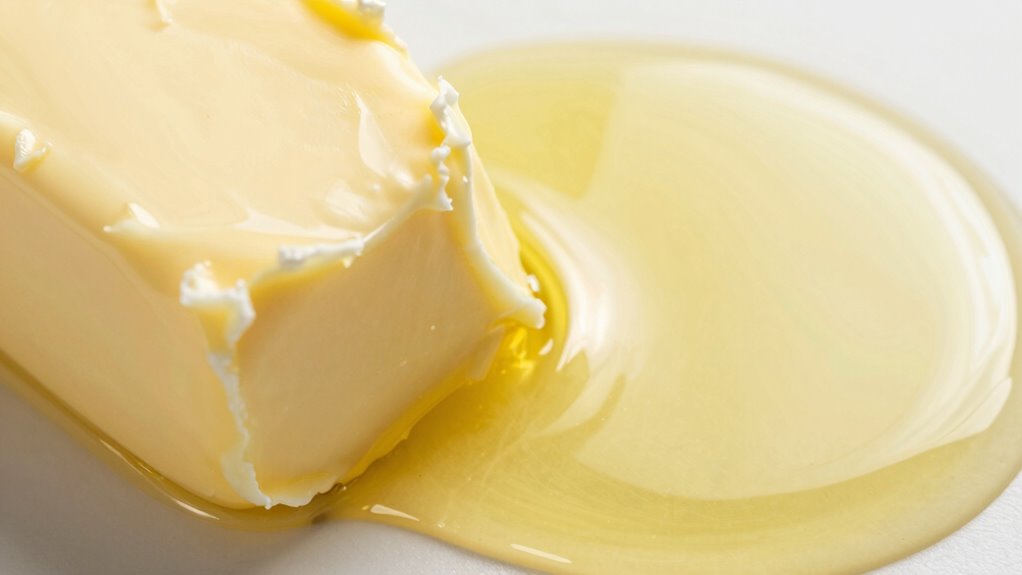

When choosing between butter and oil, you influence the texture of your baked goods or dishes considerably. Butter creates a tender, flaky, and crumbly texture thanks to its solidity at room temperature, ideal for pastries. Oil, being liquid, results in lighter, moister results, perfect for cakes and muffins. Understanding these differences helps you achieve the perfect mouthfeel, and if you keep exploring, you’ll discover how to make the best choice for every recipe.
Key Takeaways
- Butter creates flaky, tender textures due to its solid state at room temperature, while oil yields lighter, moister baked goods.
- The melting point difference causes butter to melt gradually, contributing to flaky layers; oil remains liquid, enhancing softness.
- Butter’s solid form provides structure and crumbly texture, whereas oil’s liquid consistency results in a more uniform, moist crumb.
- Using butter often produces a richer, crumbly bite, whereas oil gives a smoother, more tender mouthfeel in baked products.
- The choice impacts finished texture: butter for flaky pastries, oil for moist cakes and muffins.
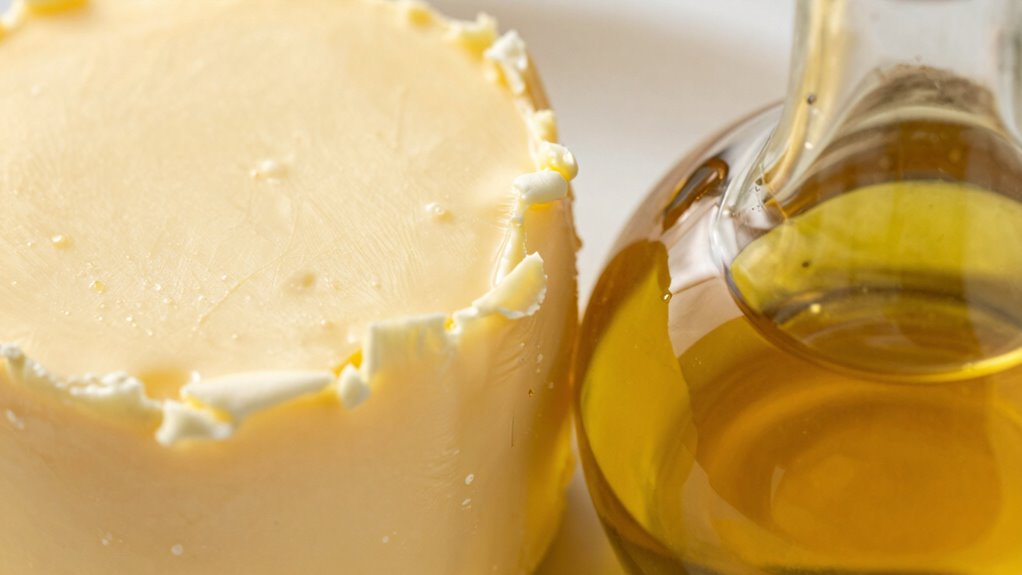
When choosing between butter and oil for cooking or baking, understanding their differences can help you make healthier and more flavorful decisions. Both fats bring unique qualities to your dishes, especially in terms of flavor enhancement and texture. Butter has a rich, creamy taste that can elevate baked goods and sauces, adding depth and a slightly sweet, nutty undertone. Its flavor enhancement often makes it the preferred choice in pastries, cookies, and certain savory recipes. Oil, on the other hand, tends to have a more neutral flavor, which can be beneficial when you want the ingredients’ natural tastes to shine through without interference. Depending on the type of oil—olive, vegetable, or sesame—it can add subtle nuances that complement rather than overpower your dish.
Choosing between butter and oil depends on flavor, texture, and health priorities for your cooking and baking.
The texture tradeoff between butter and oil is significant. Butter, because it solidifies at room temperature, creates a tender crumb in baked goods and offers a satisfying mouthfeel. When you use butter, you often get a flaky or crumbly texture that’s hard to replicate with oil. Oil, being liquid at room temperature, produces a different mouthfeel—often lighter and moister. This can be advantageous in recipes where you want a more uniform, moist texture, like cakes or muffins. However, it may lack the structural contribution that butter provides, sometimes resulting in a less flaky or crumbly outcome. Additionally, the choice of fat can influence the shelf life and overall freshness of your baked goods. Understanding these differences helps in selecting the right fat for each recipe to achieve the desired result. Incorporating fats with different melting points can also influence the final texture of your baked creations. Moreover, the melting point of fats plays a crucial role in how they behave during cooking and baking, affecting everything from spreadability to final texture. Recognizing how fat composition impacts melting and solidifying helps in precision baking and cooking.
Health implications also play a vital role in your choice. Butter contains saturated fats and cholesterol, which, when consumed excessively, might impact heart health. Yet, it also contains fat-soluble vitamins like A, D, E, and K. Oil varies widely—olive oil, for instance, is high in monounsaturated fats and antioxidants, making it a healthier option for some. Conversely, highly processed oils can contain trans fats or unhealthy omega-6 fatty acids, which are linked to inflammation and cardiovascular issues if eaten in large quantities. You need to weigh these health implications against flavor and texture benefits, especially if you’re aiming for a balanced diet.
In the end, your choice depends on what you prioritize: flavor enhancement, texture, or health. Butter might give your baked goods that irresistible richness and flaky texture, but oil can offer a lighter, moister consistency with different health considerations. Recognizing these distinctions helps you tailor your cooking and baking to suit your dietary goals and flavor preferences, making each dish not only delicious but also aligned with your health needs. Being aware of the nutritional profiles of these fats can further inform your decision-making process.

Pillsbury Flaky Layers Butter Tastin' Canned Biscuits, 5 Ct, 6 oz
FLAKY LAYERS: Enjoy peeling apart the warm, flaky layers of these biscuits
As an affiliate, we earn on qualifying purchases.
As an affiliate, we earn on qualifying purchases.
Frequently Asked Questions
How Does Butter Affect Baking Compared to Oil?
When you use butter in baking, you add creamy richness and a melt-in texture that enhances flavor and crumb structure. Butter’s solid fat melts during baking, creating a tender, moist crumb with a slightly flaky texture. Oil, on the other hand, keeps baked goods moist but doesn’t provide that same richness or flaky quality. So, choose butter for a richer, melt-in experience or oil for a softer, more uniform texture.
Which Is Healthier: Butter or Oil?
Think of butter and oil as two different roads to your health destination. Dairy versus plant-based options, butter often contains more saturated fat, which can raise cholesterol, making it less healthy if overused. Oil, especially plant-based like olive or canola, offers healthier fats and fewer calories. When comparing nutritional content, plant oils usually provide better heart health benefits, so you might choose them for a healthier lifestyle.
Can Butter and Oil Be Used Interchangeably?
Yes, you can often use butter and oil interchangeably, but keep in mind their different properties. Butter offers rich flavor and dairy substitutions, adding depth to baked goods, while oil provides better cooking versatility, especially at high temperatures. Swapping them might alter texture and taste, so consider the recipe’s needs. For best results, understand how each impacts the dish, especially when balancing flavor and consistency.
How Does Shelf Life Differ Between Butter and Oil?
You might think shelf life is straightforward, but the truth is, storage longevity varies greatly. Butter typically lasts a few weeks in the fridge, while oil can stay good for months, especially if stored in a cool, dark place. Preservation methods like refrigeration or airtight containers extend their usability. However, subtle changes in texture and aroma reveal the secrets of their aging process—making every use a cautious choice.
What Are the Flavor Differences in Dishes Using Butter Versus Oil?
When you use butter, you get richer, creamier flavor profiles that add depth to baked goods and sauces. Oil, on the other hand, offers a more neutral, clean taste, making it versatile for various dishes without overpowering other flavors. You’ll notice butter imparts a subtle sweetness and depth, while oil allows the natural flavors of ingredients to shine through, enhancing culinary versatility across different cuisines.
Crisco Pure Vegetable Oil,16 Fluid Ounce,(Pack of 2)
The information below is per-pack only
As an affiliate, we earn on qualifying purchases.
As an affiliate, we earn on qualifying purchases.
Conclusion
Think of butter and oil as two artists shaping your dish’s personality. I once watched a chef choose butter for its rich, velvety finish—like painting with thick, lush strokes—versus oil’s sleek, light touch. Each brings its own magic, but understanding their texture tradeoff helps you decide what’s right for your culinary masterpiece. So next time, pick wisely; your dish’s perfect texture might just depend on which artist you invite to the palette.
ZQWE 6PCS Texture Mat Stencil Molds Biscuit Cake Mold Floral Texture Fondant Transparent Printing Mould Baking Cake Decoration
✿ Cake plastic material mold for cake decoration, 3D DIY High quality plastic material, Sugarcraft, cake decoration, fudge,…
As an affiliate, we earn on qualifying purchases.
As an affiliate, we earn on qualifying purchases.

Silicone Baking Pastry Dough Mat – 28x20Inch Extra Large Cookie Bread Rolling Mats Sheet, Nonstick Kitchen Counter Kneading Board, Thick Reusable Pie Cookies Pizza Fondant Making Matt with Measurement
Premium Silicone Bakig Mat: Our kitchen baking mat is crafted with 100% food grade silicone. With 0.7mm thickness…
As an affiliate, we earn on qualifying purchases.
As an affiliate, we earn on qualifying purchases.