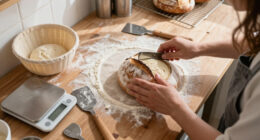
Cakes sink after baking mainly because of issues with oven temperature, batter mixing, and leavening agents. If your oven isn’t properly calibrated or heats unevenly, your cake may not rise evenly or could collapse. Overmixing batter introduces excess air that weakens the structure. Using too much or too little leavening can cause rapid rising or insufficient lift. Proper techniques and temperature control are key to avoiding sinking, and you’ll find more tips to troubleshoot your baking struggles here.

Get kitchen gear delivered free with Prime
- Fast, free delivery on millions of items
- Prime Video, Amazon Music and more included
- Member-only deals all year
Key Takeaways
- Overmixing batter introduces excess air, causing the cake to rise rapidly and then collapse during cooling.
- Using an oven that’s too hot sets the crust prematurely, trapping moisture and leading to sinking.
- Inaccurate leavening agent measurements or expired baking powder can cause uneven rising and collapse.
- Opening the oven door too early causes temperature drops, preventing proper setting and causing the cake to sink.
- Uneven oven heat or hot spots can result in inconsistent baking, leading to structural failure and sinking.
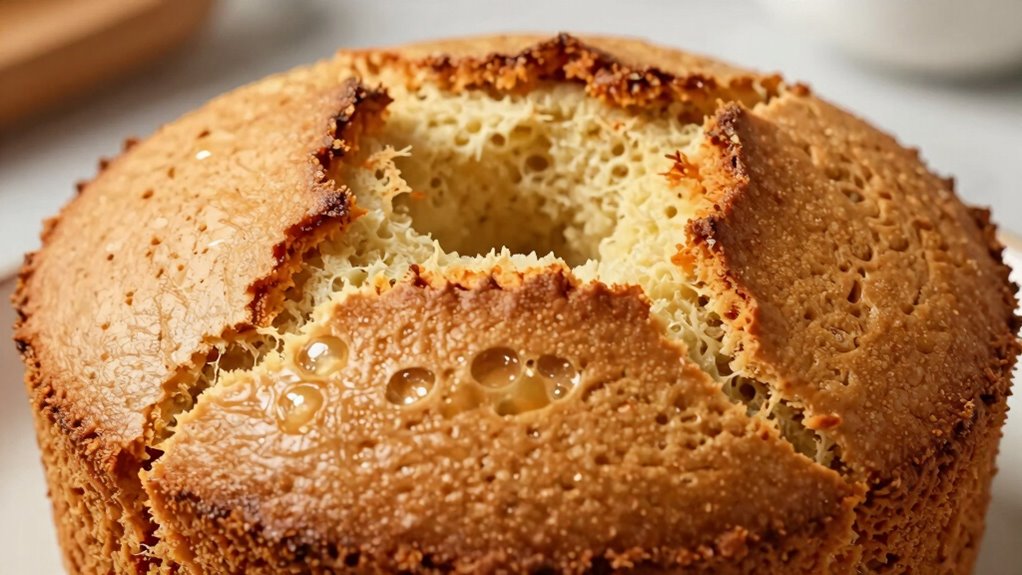
When cakes sink after baking, it’s often frustrating, but understanding the causes can help you prevent it. One common reason is uneven oven heat, which can cause the cake to rise unevenly and then collapse. To avoid this, make sure your oven is properly calibrated, and consider using an oven thermometer to monitor the temperature accurately. This small step can make a significant difference in how your cake bakes and rises.
Uneven oven heat can cause cakes to rise unevenly and collapse—calibrate your oven for perfect baking results.
Another culprit is overmixing the batter. When you mix too vigorously, you incorporate excess air into the batter, which can cause the cake to rise rapidly and then fall. This is especially true if you’re using baking tools like electric mixers or whisks. To prevent this, mix just until the ingredients are combined, and avoid beating the batter excessively. Proper mixing ensures a stable rise and reduces the risk of sinking. Additionally, understanding baking science can help you troubleshoot issues and improve your baking results.
The leavening agents—baking powder and baking soda—also play an essential role. If you add too much, the cake might rise too quickly and then collapse from the structure failing to hold the air bubbles. Conversely, using too little can result in insufficient rising. Always measure your baking tools carefully and follow the recipe precisely. Fresh leavening agents are indispensable, as old, expired ones lose their potency and can cause baking failures. Additionally, accurate measurement is key to maintaining the right balance in your batter, and knowing how chemical reactions work during baking can help you better understand these processes.
High oven temperature is another frequent cause of sinking cakes. If your oven runs hotter than the recipe calls for, the outside of the cake will set too quickly, trapping moisture inside and causing the center to be undercooked and prone to sinking. Always preheat your oven thoroughly and consider using an oven thermometer. Additionally, avoid opening the oven door too early during baking, as sudden temperature drops can cause the cake to deflate. Proper oven calibration can help ensure consistent baking results.
As an affiliate, we earn on qualifying purchases.
Frequently Asked Questions
Can Using Expired Baking Powder Cause Cakes to Sink?
Yes, using expired baking powder can cause your cake to sink. Expired leavening loses its effectiveness, meaning it won’t produce the necessary carbon dioxide for proper rising. This impacts baking freshness, resulting in a dense, sunken cake instead of a light, fluffy one. Always check the expiration date before baking, and replace old baking powder to guarantee your cakes rise perfectly and maintain their ideal texture.
Does Opening the Oven Door Affect Cake Rising?
Opening the oven door during baking can negatively impact your cake’s rise. When you do this, the sudden temperature change interrupts the oven’s heat, causing the cake to collapse or sink. It’s best to avoid opening the oven door until the cooling process begins, as maintaining a consistent temperature guarantees proper rising. Keep the door closed to help your cake bake evenly and achieve a perfect, fluffy texture.
How Does Altitude Influence Cake Sinking?
Imagine a mountain climber adjusting their gear—your baking must adapt too. Altitude effects can cause cakes to sink because the air is thinner, reducing lift. To combat this, you need to make baking adjustments like increasing flour or decreasing leavening agents. Higher altitudes demand careful tweaks to guarantee your cake rises perfectly and doesn’t fall, much like a seasoned mountaineer navigates changing terrain smoothly.
Can Uneven Oven Temperature Cause Sinking?
Yes, uneven oven temperature can cause your cake to sink. If your oven isn’t properly calibrated, hot spots may develop, leading to uneven baking. This affects batter consistency, causing parts of the cake to rise and then collapse if the heat fluctuates. To avoid sinking, make certain your oven is calibrated correctly, and check for hot spots. Use an oven thermometer to monitor temperature consistency and improve your baking results.
Is Overmixing Batter a Common Reason for Sinking?
A stitch in time saves nine, so overmixing your batter is a common reason your cake sinks. When you mix too much, it alters the mixing techniques and can develop gluten, making the batter too dense and unstable during baking. Proper batter consistency is essential; mix just enough to combine ingredients. Overmixing introduces excess air and weakens the structure, causing the cake to collapse once out of the oven.
cake mixing bowls with measurement marks
As an affiliate, we earn on qualifying purchases.
As an affiliate, we earn on qualifying purchases.
Conclusion
Understanding why cakes sink after baking is like uncovering the secret recipe behind a magic trick. When you know the causes—like overmixing, too much leavening, or opening the oven door too early—you can prevent it from happening. Baking is a bit like sailing; if you ignore the signs, things can go awry. But with a little attention and care, you’ll enjoy perfectly risen cakes, just like a ship sailing smoothly through calm waters.
As an affiliate, we earn on qualifying purchases.
As an affiliate, we earn on qualifying purchases.
Halloween Picks
halloween
As an affiliate, we earn on qualifying purchases.