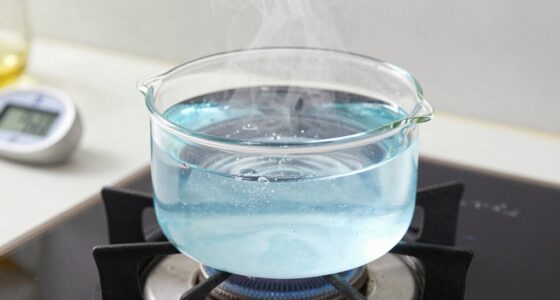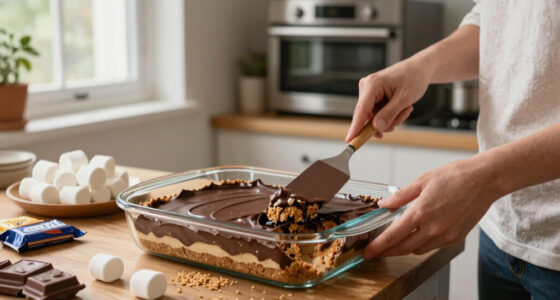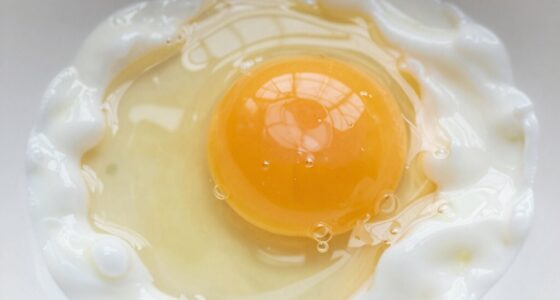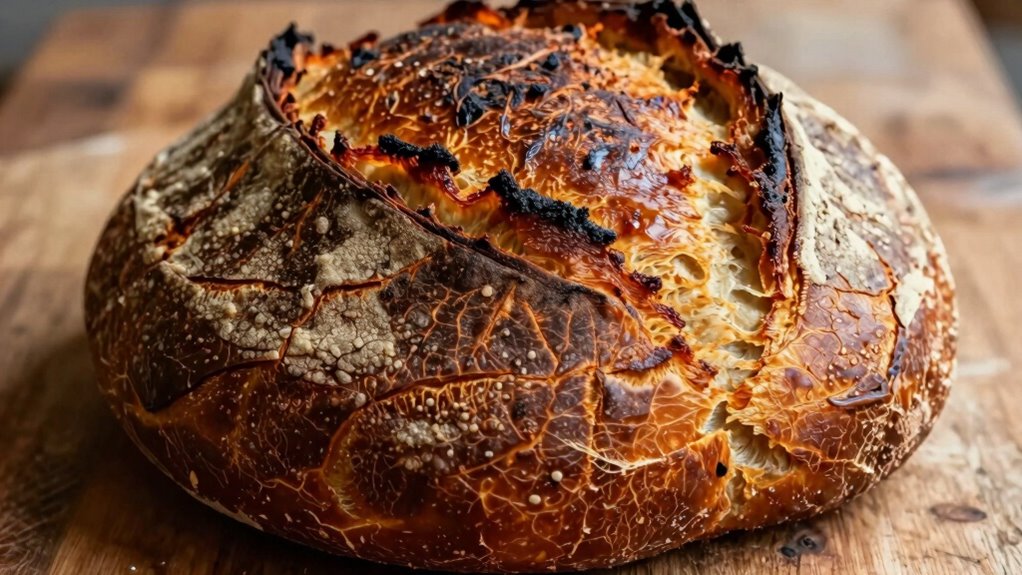

To get better browning through the Maillard reaction, control your oven temperature carefully—higher heat promotes richer crust color but avoid burning. Use ingredients with natural sugars or extra proteins like milk and eggs to enhance flavor and browning. Keep surfaces on the drier side, as moisture slows the process. Adjust baking time and consider egg washes or sugar glazes to boost browning. If you want to master these techniques, you’ll find more tips as you explore further.

Get kitchen gear delivered free with Prime
- Fast, free delivery on millions of items
- Prime Video, Amazon Music and more included
- Member-only deals all year
Key Takeaways
- Control oven temperature carefully to promote browning without burning, balancing heat for optimal Maillard reaction.
- Use ingredients rich in natural sugars and proteins, like milk or eggs, to enhance crust color and flavor.
- Adjust moisture levels—drier surfaces brown more efficiently—by controlling hydration and baking time.
- Apply egg washes or sugar glazes to accelerate Maillard reactions and improve crust appearance.
- Monitor baking closely in final stages to achieve desired browning while preventing over-darkening.
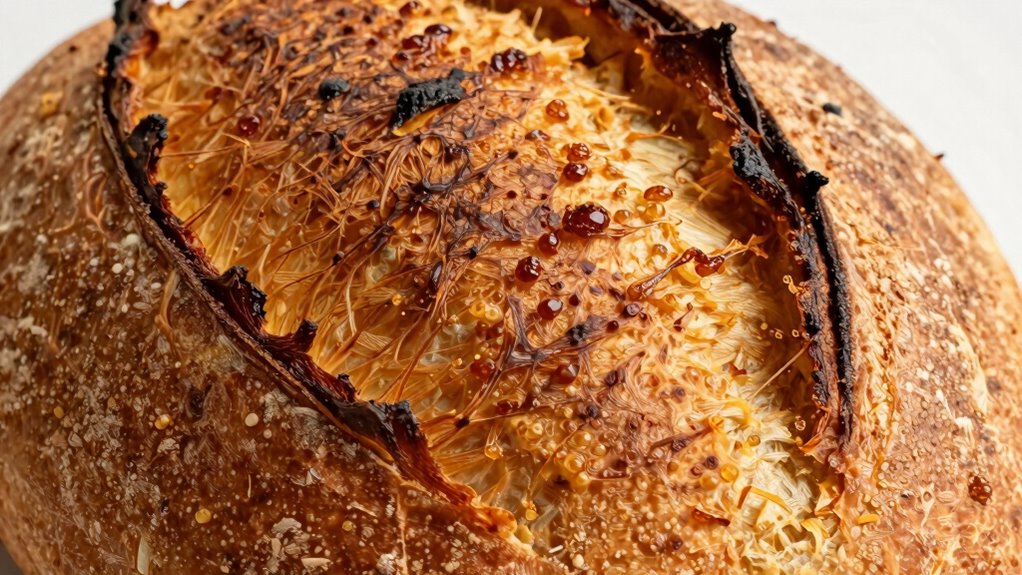
The Maillard reaction occurs when amino acids from proteins react with reducing sugars at high temperatures. As heat increases, these molecules interact, creating a cascade of complex compounds that develop rich flavors and deepen the crust color. To maximize this process, you want to control the baking environment. Higher oven temperatures tend to promote better browning, but you have to balance this carefully to avoid burning. It’s about finding that sweet spot where the Maillard reaction flourishes without compromising the interior doneness. Understanding the chemical reactions involved can help you better control the browning process and achieve more consistent results. Your ingredient choices also influence the browning process. Using ingredients with natural sugars, like honey or malt, can enhance flavor development and strengthen crust color. Conversely, overly sugary dough can cause faster browning or burning if not monitored. Adding a small amount of milk or eggs can provide extra proteins, giving more amino acids for the reaction to occur, resulting in a richer flavor profile and deeper crust. Keep in mind, too, that moisture levels matter—drier surfaces brown more readily than wet ones, so adjusting hydration can help you control the Maillard process. Proper temperature control is essential for achieving optimal browning without overdoing it. Timing is another critical factor. The longer your baked goods stay in the oven at the right temperature, the more pronounced the Maillard reaction becomes. However, prolonged baking can dry out your product or lead to undesirable darkening. So, it’s essential to observe your baked goods closely, especially during the final minutes, to achieve the perfect balance of flavor and crust color. If you want more intense browning, you can also brush your dough with an egg wash or a sugar glaze, both of which promote Maillard reactions and give your crust an appealing finish. In essence, mastering the Maillard reaction means paying attention to temperature, ingredients, moisture, and timing. When you do it right, the result is a crust that’s not only visually appealing but also packed with complex, savory flavors. This chemistry unlocks the full potential of your baked goods, making them more delicious and visually enticing with every bake. Proper kitchen techniques and precise control over each variable will significantly improve your baking outcomes. Additionally, understanding how temperature influences chemical reactions can help you fine-tune your process for even better results. Being aware of how moisture levels affect browning can further refine your baking strategy.
As an affiliate, we earn on qualifying purchases.
Frequently Asked Questions
How Does pH Affect Maillard Browning in Baked Goods?
You’ll find that pH adjustment notably influences Maillard browning in baked goods. Increasing the pH makes the environment more alkaline, which enhances Maillard reactions, leading to better browning. Conversely, lowering pH slows enzymatic activity and reduces browning. Adjusting pH carefully helps you control color and flavor, ensuring a desirable crust. Just be mindful that too high a pH can cause off-flavors or over-browning, so balance is key.
Can Dietary Sugars Influence the Maillard Reaction?
Think of dietary sugars as the fuel for a flavor fire in baking. Yes, they can influence the Maillard reaction, helping it burn brighter and more evenly. When sugars participate in sugar crystallization, they enhance caramelization and deepen browning. Plus, they contribute to flavor enhancement, adding richness and complexity to your baked goods. So, using the right type and amount of dietary sugars can elevate your baking to new, delicious heights.
What Are Common Mistakes That Inhibit Proper Browning?
You often inhibit proper browning by overusing sugars, which can cause excessive caramelization rather than Maillard browning, and by neglecting adequate oven ventilation, leading to uneven heat and moisture buildup. Avoid adding too much sugar and guarantee good airflow in your oven. These mistakes prevent the ideal conditions needed for the Maillard Reaction, resulting in dull, pale baked goods instead of the rich, golden-brown crust you’re aiming for.
How Does Baking Temperature Impact Maillard Reaction Speed?
Think of your oven temperature as the ignition switch for the caramelization process. Higher temperatures accelerate the Maillard reaction, turning your baked goods a rich, golden-brown hue faster. However, crank it up too high, and you risk burning, like a flame out of control. Maintain a steady, ideal oven temperature to balance speed and quality, ensuring even browning and deliciously flavorful results without scorching.
Are There Health Concerns Related to Maillard Browning?
You might wonder if Maillard browning poses health concerns. Generally, moderate browning from the Maillard reaction and caramelization effects is safe and adds flavor. However, over-browning or charring can produce acrylamide, which has potential health implications. To minimize risks, avoid overly burnt foods and cook at appropriate temperatures. Enjoy browning for better flavor and color, but stay mindful of overdoing it to maintain health.
As an affiliate, we earn on qualifying purchases.
Conclusion
By understanding and controlling the Maillard reaction, you can turn your baked goods into golden masterpieces. Think of it as a dance between heat and sugar, where perfect timing leads to irresistible browning. When you master this chemical ballet, every crust becomes a crispy canvas and every crumb a flavorful work of art. So, keep experimenting, and soon you’ll be baking with the confidence of a seasoned artist, creating browning that’s truly a feast for the senses.
As an affiliate, we earn on qualifying purchases.
As an affiliate, we earn on qualifying purchases.
Fall Picks
fall essentials
As an affiliate, we earn on qualifying purchases.