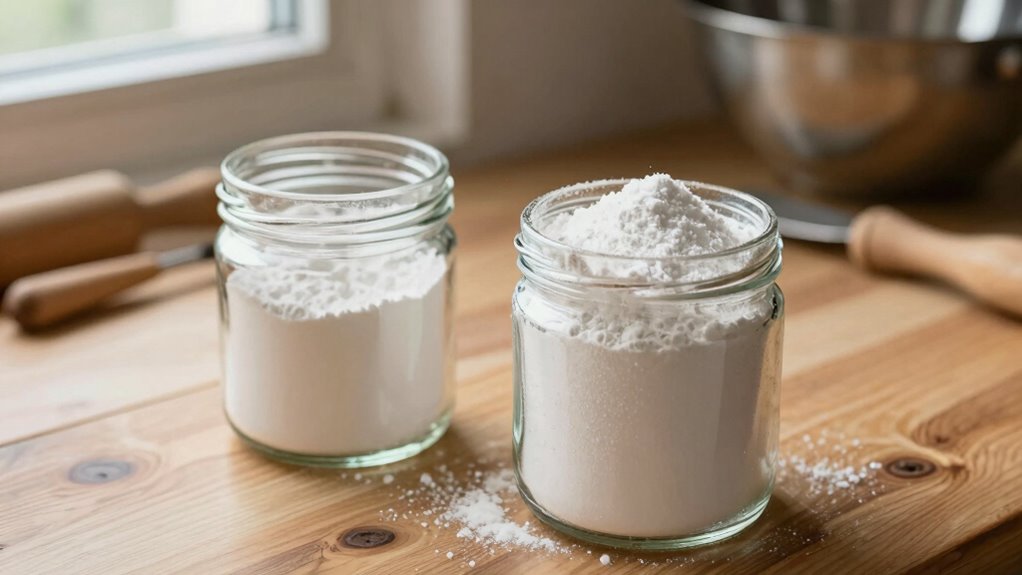

Baking soda and baking powder are not interchangeable because they react differently in recipes. Baking soda is pure sodium bicarbonate and needs an acid, like vinegar or lemon juice, to produce carbon dioxide for rising. Baking powder already contains acid and releases CO₂ when wet or heated, making it more convenient. Using the wrong one can cause flat or overly risen baked goods. To master your baking, understanding these differences guarantees better results — keep going to learn more.

Get kitchen gear delivered free with Prime
- Fast, free delivery on millions of items
- Prime Video, Amazon Music and more included
- Member-only deals all year
Key Takeaways
- Baking soda is pure sodium bicarbonate, while baking powder contains both baking soda and an acid, making them chemically different.
- Baking soda needs an acid (like vinegar or lemon juice) to activate and produce CO₂; baking powder is self-activating.
- Substituting one for the other requires adjustments, such as adding acid if using baking soda alone.
- Using baking powder instead of baking soda can cause over-rising or off-flavors due to different chemical reactions.
- Understanding their functions prevents baking errors like flat or overly risen baked goods.
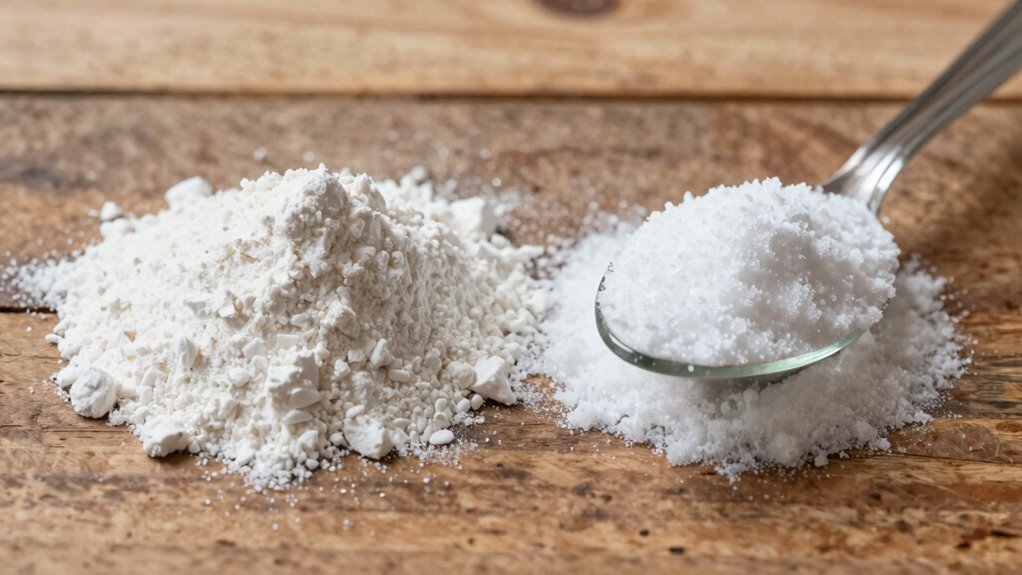
When it comes to baking, understanding the difference between baking powder and baking soda is essential for perfect results. These two ingredients often get mixed up, but they serve very different purposes in your recipes. To truly master baking, you need to know their historical origins and chemical differences. Baking soda, also known as sodium bicarbonate, has been used for centuries. Its origins trace back to ancient times when natural mineral deposits of sodium bicarbonate were mined and processed. It was initially used for cleaning and medicinal purposes before finding its place in baking. Baking powder, on the other hand, is a more modern invention, developed in the 19th century. It was created to simplify baking by providing a ready-made leavening agent that doesn’t require the addition of an acid separately.
Understanding the chemical differences between baking soda and baking powder is key to using them correctly. Baking soda is a pure chemical compound that reacts immediately when it contacts moisture and an acid, producing carbon dioxide bubbles that help your baked goods rise. If you don’t add an acid to activate it, baking soda won’t do its job, and your baked goods might turn out dense or flat. Baking powder, however, contains both an acid and a base—usually cream of tartar and baking soda—so it’s a complete leavening system. It’s designed to release carbon dioxide in two stages: once when it’s mixed with liquid and again when exposed to heat during baking. That’s why baking powder is often called a “double-acting” leavening agent. Understanding the chemical reactions involved can help you achieve the best texture and flavor in your baked goods. Additionally, knowing the proper amount to use and how each reacts can prevent common baking errors and ensure consistent results. Accurate measurement and substitution are vital skills for bakers to develop.
Baking soda reacts immediately with acids; baking powder releases CO₂ in two stages for a controlled rise.
Knowing how each leavening agent interacts with other ingredients is also essential for recipe adjustments**, especially when modifying recipes for dietary needs or flavor preferences. The differences in their chemical makeup also mean you can’t substitute one for the other without adjustments. If your recipe calls for baking soda, you typically need to add an acid like vinegar, lemon juice, or buttermilk to activate it. Using baking powder instead might result in too much rise or a different flavor since it already contains an acid. Conversely, if you use baking soda in a recipe that calls for baking powder, you’ll need to include an acid to avoid flat, dense results. Knowing these distinctions helps you troubleshoot baking mishaps and adapt recipes confidently. Proper ingredient substitution** is vital for achieving the desired texture and flavor when modifying recipes or correcting mistakes.
Additionally, understanding the chemical reactions involved can help you achieve the best texture and flavor in your baked goods. When you understand their backgrounds and chemistry, you’ll stop mixing them up and improve your baking every time.
Products Worth Considering

Ninja PossibleCooker Pro Plus 8.5 qt Bone & Champagne

KitchenAid Classic Series 4.5 Quart Tilt-Head Stand Mixer K45SS, Onyx Black

Le Creuset Enameled Cast Iron Round Dutch Oven, 5.5 Qt, Flame
As an affiliate, we earn on qualifying purchases.
Frequently Asked Questions
Can Baking Powder and Baking Soda Be Used Interchangeably in Recipes?
You can’t use baking powder and baking soda interchangeably because they serve different purposes. Baking soda acts as a leavening agent, causing flavor enhancement and texture alteration through its chemical reaction with acids. Baking powder already contains an acid, so it provides leavening without additional ingredients. Substituting one for the other can result in off-flavors or undesirable texture changes, so stick to the recipe to get the best results.
How Do I Tell if My Baking Soda Is Still Active?
Think of your baking soda like a secret weapon waiting to activate. To check its freshness, perform a simple shelf life test: mix a teaspoon of baking soda with a few drops of vinegar. If it fizzes vigorously, your baking soda is still active. If not, it’s time to replace it. Usually, baking soda stays good for about six months to a year, so keep track of its age!
What Are Common Mistakes When Substituting Baking Powder for Baking Soda?
When substituting baking powder for baking soda, you often make ingredient ratio mistakes, since baking powder is less potent. Use about three times more baking powder than baking soda, but be cautious—this can impact flavor, making baked goods slightly bitter or metallic. Also, remember baking powder contains acid, so it may alter the taste and texture of your recipe, so adjust other ingredients accordingly.
Are There Health Differences Between Using Baking Powder and Baking Soda?
Think of baking soda and baking powder as two different keys to a door — each opens a specific health pathway. Baking soda may cause stomach upset or high blood pressure if overused, especially for those with dietary restrictions. Baking powder often contains added ingredients like cornstarch, which might affect sensitivities. Overall, moderate use is safe for most, but check labels and consult healthcare providers if you have health concerns or dietary restrictions.
How Should I Store Baking Powder and Baking Soda for Longevity?
To maximize shelf life, store baking powder and baking soda in airtight containers in a cool, dry place away from humidity and heat. Keep them out of direct sunlight to prevent deterioration. Always check for freshness before use—baking powder should bubble in water, and baking soda should fizz. Proper storage tips help maintain their effectiveness, ensuring your baked goods turn out perfect every time.
Conclusion
Now that you know the difference, you can confidently choose the right leavening agent for your recipes. Think of baking powder and baking soda as two musical instruments—each plays a unique note in your baking symphony. Using the wrong one is like hitting the wrong key; it throws everything off. So, keep them straight, and your baked goods will rise just perfectly, hitting all the right notes every time.