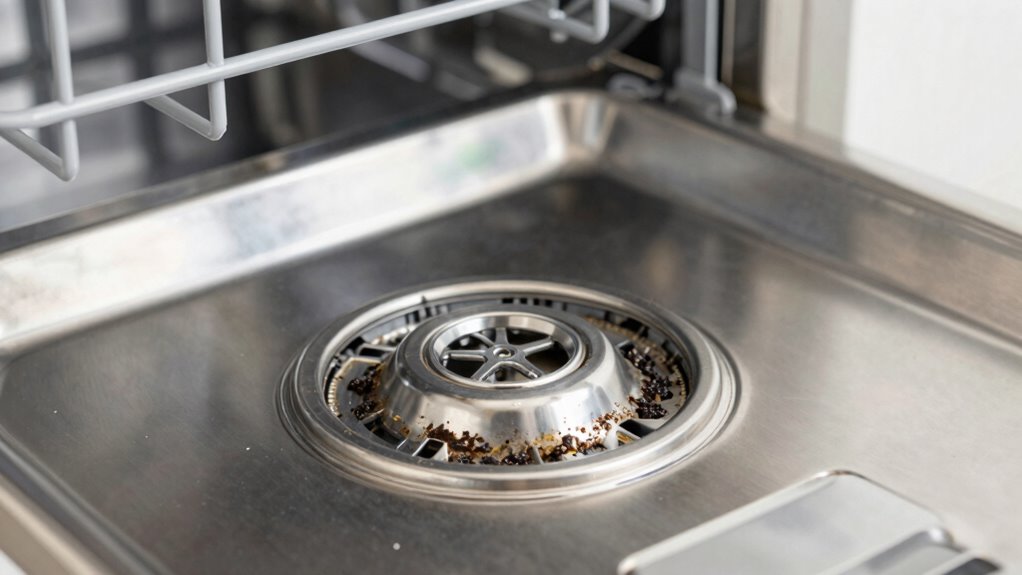

A foul smell often comes from a dirty dishwasher filter that traps debris, grease, and food particles. When neglected, bacteria and mold grow, causing odors and reducing cleaning efficiency. To fix this, locate the filter, remove it carefully, rinse it under warm water, and scrub away buildup with a soft brush. Regular maintenance keeps odors away and ensures your dishwasher works like new. Keep going for detailed steps to keep your dishwasher smelling fresh.

Get kitchen gear delivered free with Prime
- Fast, free delivery on millions of items
- Prime Video, Amazon Music and more included
- Member-only deals all year
Key Takeaways
- Regularly locate and remove the dishwasher filter near the bottom center to prevent odor-causing debris buildup.
- Clean the filter monthly by rinsing with warm water and gentle brushing to eliminate trapped food and grease.
- Avoid harsh chemicals and abrasive tools; opt for mild detergents and soft brushes to preserve filter integrity.
- Incorporate routine maintenance like vinegar cycles and door venting to prevent mold and odors.
- Neglecting filter cleaning leads to grime buildup, bacterial growth, and persistent foul smells in your dishwasher.
dishwasher filter cleaning brush
As an affiliate, we earn on qualifying purchases.
As an affiliate, we earn on qualifying purchases.
Why Does a Dirty Dishwasher Filter Cause Odors and Performance Problems?
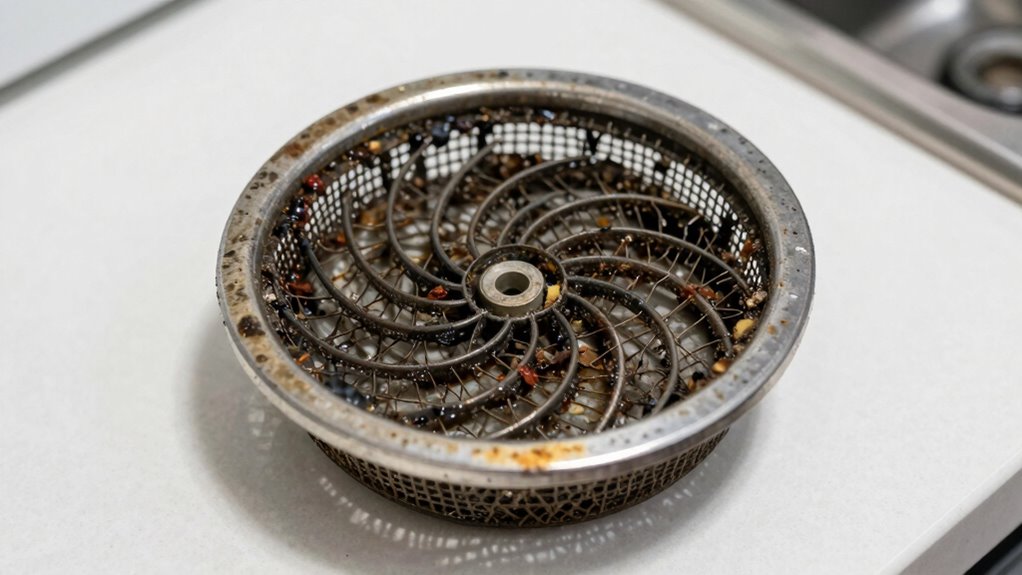
A dirty dishwasher filter can cause odors and performance issues because it traps food particles, grease, and debris that can quickly build up over time. Poor filter maintenance allows these trapped substances to decay, creating unpleasant odors that spread throughout your dishwasher. Odors cause stem from bacteria and mold thriving on leftover organic matter, which can be exacerbated by infrequent cleaning. When the filter isn’t cleaned regularly, these odor-causing microbes multiply, intensifying the smell. Additionally, a clogged filter hampers water flow and cleaning efficiency, leading to longer cycles and less effective washing. Regularly inspecting and cleaning your filter is essential to prevent buildup, eliminate odor causes, and keep your dishwasher running smoothly. Proper filter maintenance not only improves performance but also helps maintain a fresh, odor-free environment. Proper filter maintenance plays a crucial role in how well your dishwasher cleans and dries dishes, especially in low-light conditions. To ensure optimal operation, many modern dishwashers feature self-cleaning filters that reduce manual upkeep and help maintain freshness. Incorporating energy-efficient cleaning cycles can further enhance overall performance and reduce energy consumption.
dishwasher odor removal products
As an affiliate, we earn on qualifying purchases.
As an affiliate, we earn on qualifying purchases.
How Do I Find and Remove My Dishwasher Filter Safely?
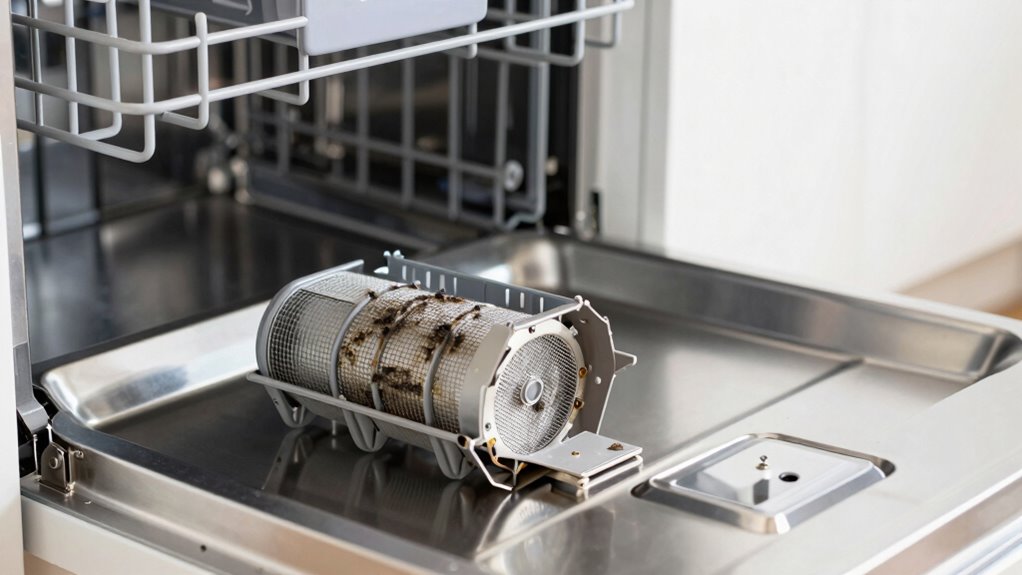
Finding and removing your dishwasher filter is straightforward if you know where to look and how to handle it safely. First, open your dishwasher and locate the bottom rack to access the filter area, usually near the center. Most filters twist counterclockwise to release, so grip it firmly and turn to remove it. Be cautious to avoid dropping any parts or damaging the surrounding components. Once removed, inspect the filter for debris or buildup. For safe cleaning, rinse it under warm water, gently brushing away any stubborn grime. Remember, always handle the filter carefully to prevent damage. Proper filter removal and safe cleaning help maintain your dishwasher’s performance and ensure odors are eliminated effectively. Regular filter maintenance is essential for preventing odors and keeping your dishwasher functioning efficiently. Additionally, staying informed about innovative cleaning techniques can further improve your appliance care routine. Incorporating routine cleaning of your dishwasher’s filter can also help influence its sound healing science, promoting a more peaceful and efficient household environment.
dishwasher filter replacement kit
As an affiliate, we earn on qualifying purchases.
As an affiliate, we earn on qualifying purchases.
How to Clean Your Dishwasher Filter Step-by-Step
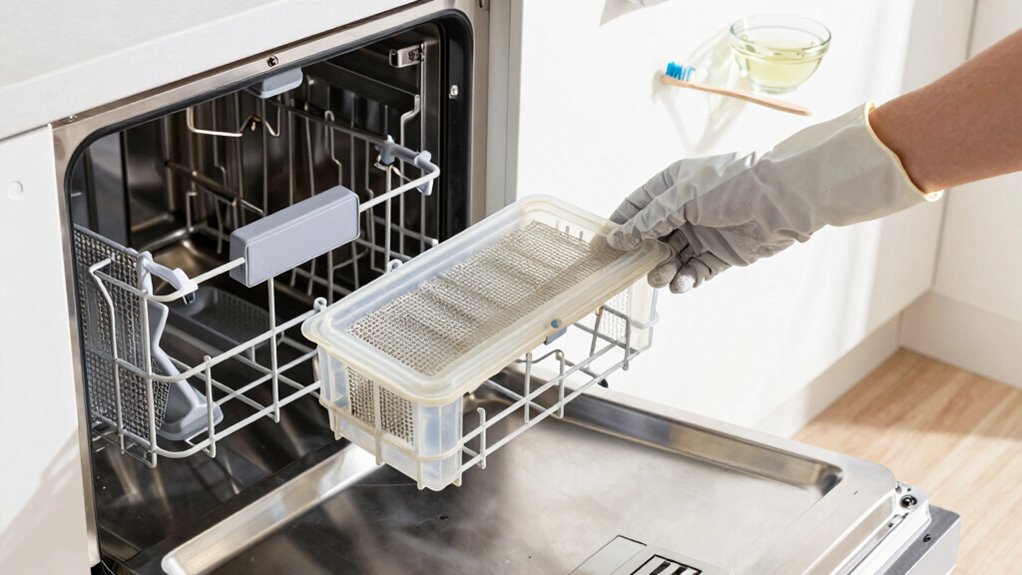
Cleaning your dishwasher filter thoroughly is essential for maintaining peak performance and eliminating odors. Start by removing the filter according to your dishwasher’s manual. Rinse it under warm water to loosen any detergent residue and debris. Use a soft brush or toothbrush to scrub away stubborn grime, paying close attention to small crevices that can trap residue. Once clean, inspect the area where the filter seats to ensure no debris obstructs water flow. Reinstall the filter carefully, ensuring it fits snugly. Proper cleaning prevents detergent residue buildup, which can impede water flow and cause odors. Regularly maintaining your filter keeps your dishwasher running efficiently and smelling fresh, avoiding the common issues caused by neglected cleaning. Incorporating a filter maintenance routine can help prevent odors before they start. Additionally, understanding how deep-sky imaging setups are optimized can serve as a helpful analogy for maintaining complex systems like dishwashers. To further ensure optimal performance, consider checking your dishwasher manual periodically for specific cleaning guidelines.
As an affiliate, we earn on qualifying purchases.
How Can I Keep My Dishwasher Smelling Fresh After Cleaning?
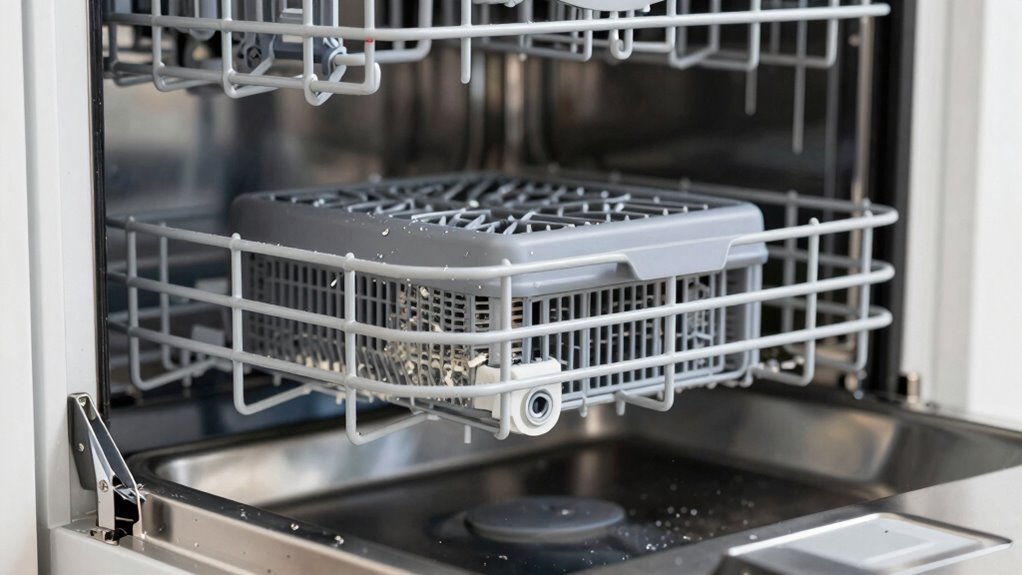
To keep your dishwasher smelling fresh after cleaning, try running a vinegar cycle once a month to neutralize odors. Additionally, leaving the door ajar after each use helps air out the interior and prevents musty smells from developing. These simple steps make sure your dishwasher stays clean and fresh between deep cleanings. Incorporating air quality considerations can also help reduce lingering odors caused by accumulated grime or mold, especially when combined with proper privacy policy practices that ensure your data and browsing habits remain secure and private. Implementing filtration systems designed for your home can further improve overall indoor air quality and reduce odor-causing particles. Regularly inspecting and cleaning your filter ensures optimal performance and odor control. Paying attention to proper hygiene in your dishwasher, such as cleaning the door seals and gaskets, can also help maintain a fresh scent.
Regularly Run Vinegar Cycles
Running vinegar cycles regularly is one of the simplest ways to keep your dishwasher smelling fresh after cleaning. Vinegar cycles help with odor prevention by breaking down soap scum, grease, and lingering debris that cause unpleasant smells. To do this, pour a cup of white vinegar into the bottom of the dishwasher and run a hot water cycle without dishes. This process removes buildup that can trap moisture and odors. Performing vinegar cycles once a month keeps your appliance clean and fresh, preventing mold and mildew from developing. Regular odor prevention ensures your dishwasher stays smelling clean, reducing the need for more intensive cleaning later. Make vinegar cycles a routine part of your maintenance to keep your dishwasher smelling fresh effortlessly.
Keep Door Ajar After Use
Leaving the dishwasher door slightly open after each use allows air to circulate inside, preventing moisture buildup that can lead to mold, mildew, and unpleasant odors. This simple ventilation tip enhances odor prevention by reducing dampness that fosters bacteria growth. Keeping the door ajar creates better airflow, helping the interior dry more completely and discouraging odor-causing mold. It’s an effective habit to maintain a fresh-smelling dishwasher. Be consistent with this practice, especially if you notice lingering smells after cleaning. Additionally, consider rubber door seal maintenance and periodic cleaning to support odor prevention. Proper ventilation not only keeps your dishwasher smelling fresh but also prolongs its lifespan. So, make a habit of leaving the door slightly open after use—your nose (and appliance) will thank you. Regularly inspecting the drain filter ensures that debris doesn’t cause odors or blockages, further supporting a fresh-smelling dishwasher. Consistent airflow management helps prevent moisture accumulation and keeps your appliance odor-free over time. Maintaining good ventilation practices is essential for preventing persistent odors and ensuring your dishwasher remains fresh. Incorporating proper cleaning techniques can further eliminate odor-causing residues and maintain a hygienic environment inside your dishwasher.
What Mistakes Should I Avoid When Cleaning the Dishwasher Filter?
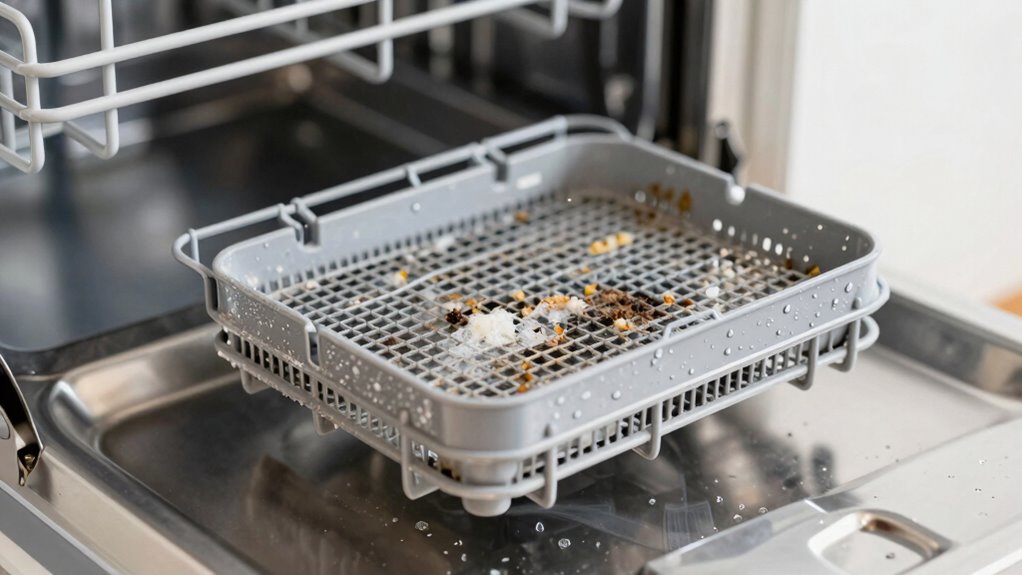
Avoid neglecting regular maintenance on your dishwasher filter, as this can lead to buildup and odors. Don’t use harsh cleaning agents that can damage the filter or leave residue behind. Staying mindful of these mistakes helps make certain your dishwasher stays clean and odor-free. Additionally, filter maintenance is essential for preventing the accumulation of debris that causes unpleasant smells. Regularly checking and testing your appliance ensures it operates efficiently and helps catch issues before they worsen. Proper cleaning techniques also help extend the lifespan of your dishwasher components and maintain optimal performance.
Overlooking Regular Maintenance
Failing to follow proper procedures when cleaning your dishwasher filter can actually worsen odors instead of eliminating them. Regular dishwasher maintenance is essential for odor prevention, so neglecting routine cleanings allows grime and leftover debris to build up. This buildup creates a breeding ground for mold and bacteria, which intensifies unpleasant smells. Skipping scheduled maintenance can also cause clogs and reduce dishwasher efficiency. To avoid these issues, set reminders to check and clean your filter regularly, even if it appears clean. Proper maintenance guarantees your dishwasher runs smoothly and keeps odors at bay. Remember, consistent cleaning is key to odor prevention, and overlooking this step can undo all your previous efforts to keep your appliance fresh and odor-free.
Using Harsh Cleaning Agents
When cleaning your dishwasher filter, using harsh cleaning agents can do more harm than good. Harsh chemicals may corrode parts or leave residues that cause odors to persist. Avoid abrasive tools like steel wool or rough scrub brushes, as they can scratch the filter or damage delicate components. These scratches create hiding spots for mold and bacteria, worsening odor issues. Instead, opt for gentle scrub brushes or soft cloths, and use mild detergents or vinegar solutions. Relying on aggressive cleaners might seem effective initially, but they often compromise the filter’s integrity and overall dishwasher performance. Taking a careful, gentle approach ensures your filter stays clean without risking damage or lingering smells.
How Often Should I Clean My Dishwasher Filter for Best Results?
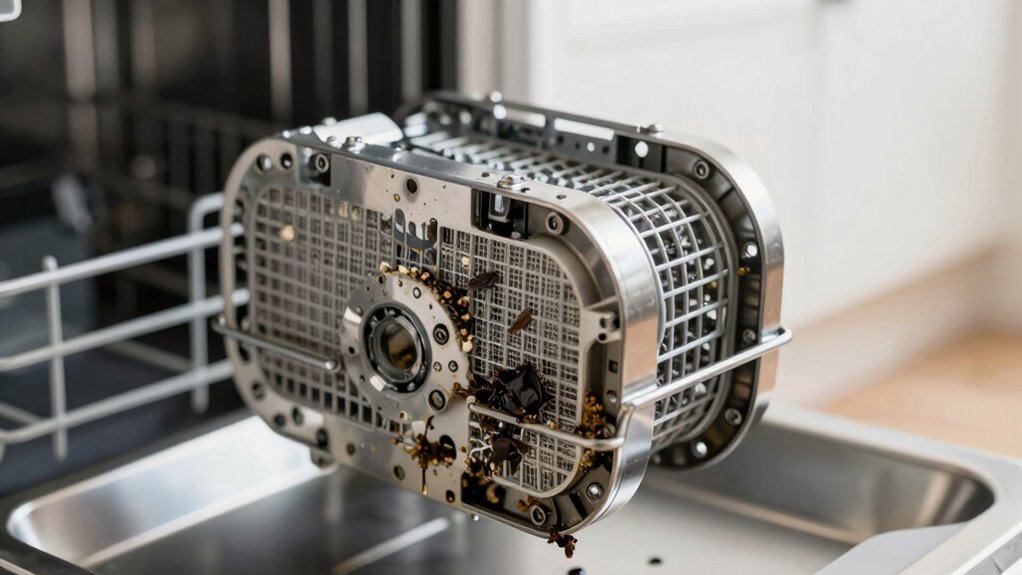
To keep your dishwasher running efficiently and prevent odors, it’s essential to clean the filter regularly. Most experts recommend doing this at least once a month, especially if you use your dishwasher frequently. Regular filter maintenance ensures that food debris and grease don’t build up, which can cause unpleasant smells and reduce cleaning performance. If you notice standing water or musty odors, it’s a sign to clean the filter sooner. For households with heavy use or hard water, more frequent cleaning—every two weeks—may be necessary. Keeping the filter clean not only promotes odor prevention but also extends your dishwasher’s lifespan. Make it a habit to check and clean the filter regularly to maintain peak performance and fresh-smelling dishes.
Frequently Asked Questions
Can a Clogged Filter Affect Dishwasher Cycle Times?
A clogged filter can definitely affect your dishwasher cycle times. When filters are blocked, water flow slows down, making your dishwasher work harder and longer to clean dishes properly. This reduces overall dishwasher efficiency, leading to longer cycles and potentially incomplete cleaning. Regularly cleaning your filters ensures ideal water flow, keeps your dishwasher running smoothly, and helps you avoid longer cycle times caused by clogged filters.
Is It Safe to Use Harsh Chemicals on the Filter?
Using harsh chemicals on your dishwasher filter isn’t safe. For example, a homeowner used bleach to clean it, causing damage and releasing fumes that harmed her family. Always prioritize chemical safety by sticking to gentle cleaning chemicals specifically designed for dishwasher filters. This prevents corrosion, protects your appliance, and keeps your household safe. Remember, harsh chemicals can do more harm than good, so choose wisely when cleaning your filter.
How Do I Know if My Filter Needs Replacing?
You’ll know your filter needs replacing if, during a filter inspection, it looks damaged, cracked, or overly clogged despite cleaning. If it’s stubbornly dirty or shows signs of wear, replacement is your best bet. Use replacement tips like checking manufacturer recommendations and ensuring a proper fit. Regularly inspecting and replacing your filter keeps your dishwasher running efficiently and prevents odors, saving you from costly repairs down the line.
Will Cleaning the Filter Improve Overall Dishwasher Lifespan?
Think of your dishwasher like a garden; if you don’t tend to the soil, it’ll lose its importance. Regular filter maintenance acts like nourishing the soil, preventing buildup that wears down parts. Cleaning your filter regularly can considerably extend your dishwasher’s lifespan by keeping it running smoothly and preventing damage. So, yes, a clean filter directly contributes to your appliance’s longevity, saving you money and hassle in the long run.
Are There Eco-Friendly Ways to Clean the Dishwasher Filter?
Yes, you can clean your dishwasher filter eco-friendly using biodegradable cleaners and reusable filters. First, remove the filter and soak it in a mixture of warm water and biodegradable dish soap. Gently scrub away debris with a soft brush. For added freshness, rinse with vinegar. Reusable filters reduce waste, and biodegradable cleaners keep your dishwasher eco-conscious. This method keeps your appliance clean and environmentally friendly.
Conclusion
Think of your dishwasher filter as the heart of your machine—keeping it clean guarantees it beats smoothly and keeps your kitchen fresh. Skipping this step is like ignoring a small leak that could flood your home. Regularly cleaning your filter is the key to a harmonious balance, preventing odors and performance issues. Embrace this simple ritual as nurturing your appliance’s soul, so it continues to serve you reliably and breathe new life into your dishes every time.
Halloween Picks
halloween
As an affiliate, we earn on qualifying purchases.