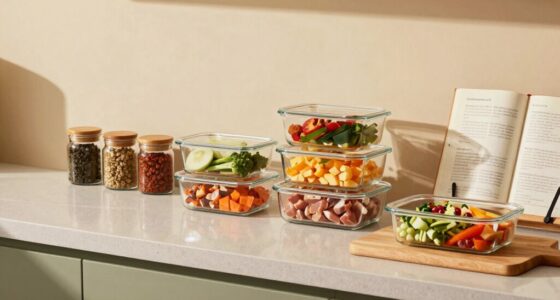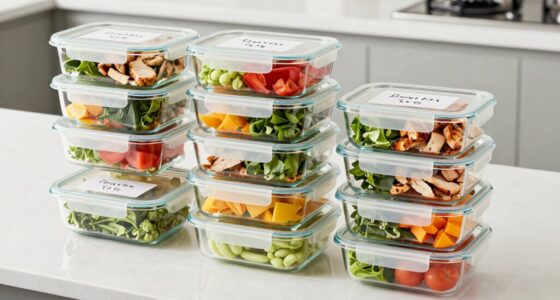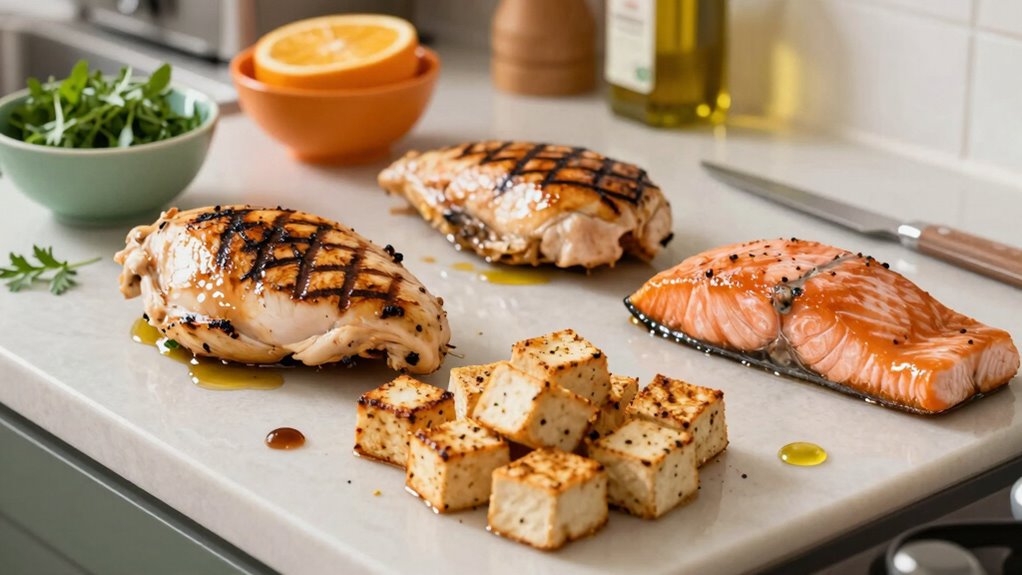

To prevent batch-cooked proteins from tasting “leftover,” focus on selecting fresh, quality ingredients and using flavorful herbs, spices, and marinades to boost taste. Cool and store your proteins promptly in airtight containers, removing excess air to preserve moisture and flavor. Reheat gently with moisture, like steaming or covering, and add fresh herbs or citrus before serving to brighten flavors. Master these techniques, and you’ll keep your proteins delicious and satisfying every time.
Key Takeaways
- Incorporate fresh herbs, bold spices, and citrus to brighten flavors and prevent dishes from tasting stale.
- Store proteins in airtight containers or vacuum-sealed bags to preserve freshness and moisture.
- Reheat gently using steaming or covered methods to maintain texture and flavor.
- Portion proteins before cooking and divide into meal-sized servings to ensure even reheating and freshness.
- Use proper labeling, quick refrigeration, and appropriate storage durations to maintain optimal taste and safety.

Airtight Food Storage Containers with Lids, Vtopmart 24 pcs Plastic Kitchen and Pantry Organization Canisters for Cereal, Dry Food, Flour and Sugar, BPA Free, Includes 24 Labels,Black
Help Organize Your Kitchen and Pantry— Imagine every time walking to your kitchen or pantry, found everything is…
As an affiliate, we earn on qualifying purchases.
As an affiliate, we earn on qualifying purchases.
How to Choose the Right Proteins for Meal Prep
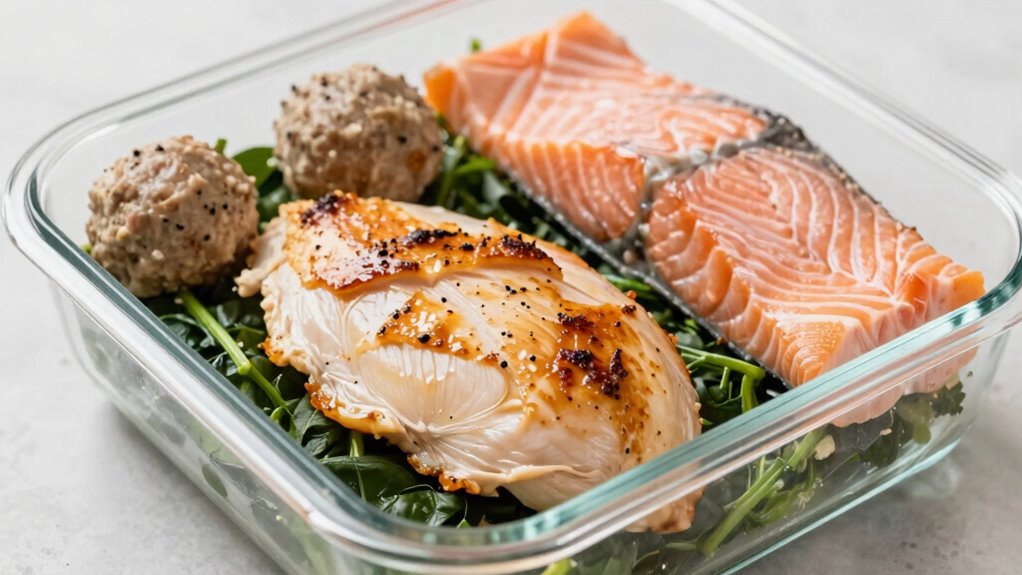
Choosing the right proteins for meal prep starts with considering your dietary goals and preferences. Your protein sourcing impacts flavor, texture, and how well the meat holds up over multiple meals. If you’re focused on lean options, chicken breast or turkey are great choices—they’re versatile and stay tender when cooked properly. For more flavor and moisture, consider cuts like thighs or pork shoulder, which may need longer cooking but add richness. When planning your meals, think about how you’ll incorporate proteins into different dishes so they complement your overall diet. Balance is key: include a variety of sources, such as fish, beans, or plant-based options, to keep your meal planning interesting and nutritious. Additionally, understanding the cooking methods that best suit each protein type can help prevent leftovers from tasting “leftover” and maintain their appeal throughout the week. Using appropriate storage techniques can preserve freshness and flavor over time. Incorporating auditory cues during cooking or reheating can also enhance flavor perception, making your batch-cooked proteins stay delicious longer. Considering protein texture and how it responds to different cooking styles is essential for ensuring your batch-cooked proteins stay tasty and satisfying throughout the week. Moreover, selecting proteins that respond well to reheating can help avoid dryness or loss of flavor, ensuring your meals remain enjoyable even after storage.

Chef Preserve Compact Vacuum Sealer for Food (Vacuum Sealer Machine + 30 Reusable Vacuum Bags) Powerful Handheld Vacuum Sealer Machine, Seal Meal Saver, Portable Food Sealer
💰REDUCE WASTE AND SAVE MONEY: Chef Preserve vacuum seals your food in less than 5 seconds, extends freshness,…
As an affiliate, we earn on qualifying purchases.
As an affiliate, we earn on qualifying purchases.
Why Fresh-Flavor Matters for Delicious Batch Proteins
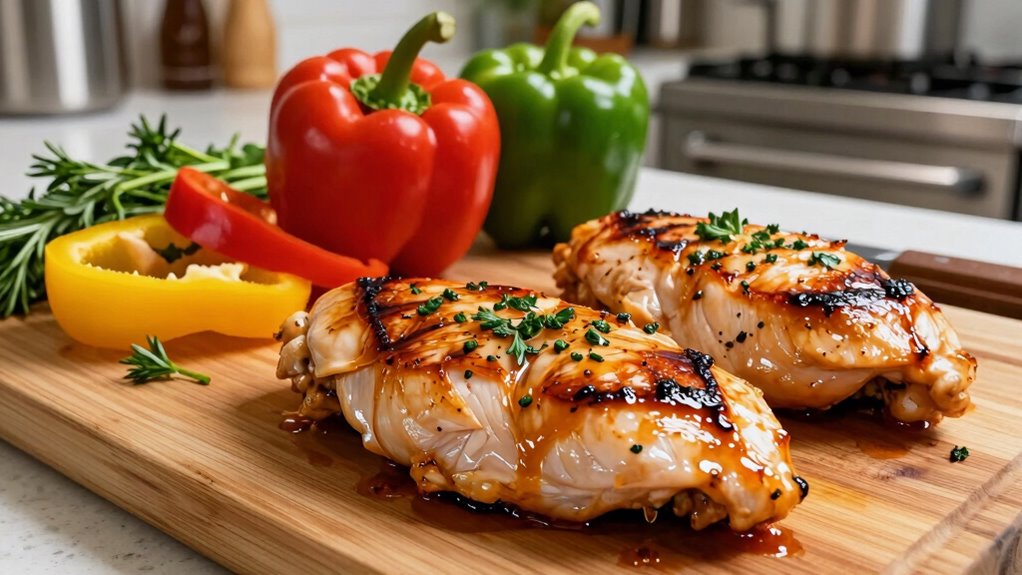
Fresh flavor is essential for batch-cooked proteins because it directly impacts how delicious your meals taste over multiple days. Using fresh herbs and bold spices enhances the natural taste, making leftovers feel just as vibrant as first-made. When you start with fresh ingredients, your proteins retain their juiciness and aroma longer, avoiding that dull, “leftover” flavor. Incorporate herbs like parsley, cilantro, or basil to brighten dishes, and don’t shy away from bold spices like paprika, cumin, or chili powder to add depth. Additionally, understanding sustainable sourcing can help ensure your ingredients are both fresh and environmentally friendly. Embracing energetic alignment when selecting and preparing your ingredients can further enhance the overall flavor experience. Choosing fresh ingredients keeps your proteins flavorful, no matter how many days they’re stored, especially when you consider market quality standards that guarantee freshness and safety. Paying attention to proper storage techniques can also help preserve the freshness of your proteins for longer periods.

Annaklin Reusable Food Bags, 12 Pack 100% Silicone Food Storage Bags Stand Up Zip Lock Container, Freezer Microwave Oven Dishwasher Safe, 4 Medium 4 Small 4 Extra Small, Aqua
【SAFE & RELIABLE】Annaklin's silicone food storage bags are 100% food-grade, free from PVC, lead, chlorine, and BPA. Non-toxic,…
As an affiliate, we earn on qualifying purchases.
As an affiliate, we earn on qualifying purchases.
How to Cool and Store Proteins to Keep Them Fresh
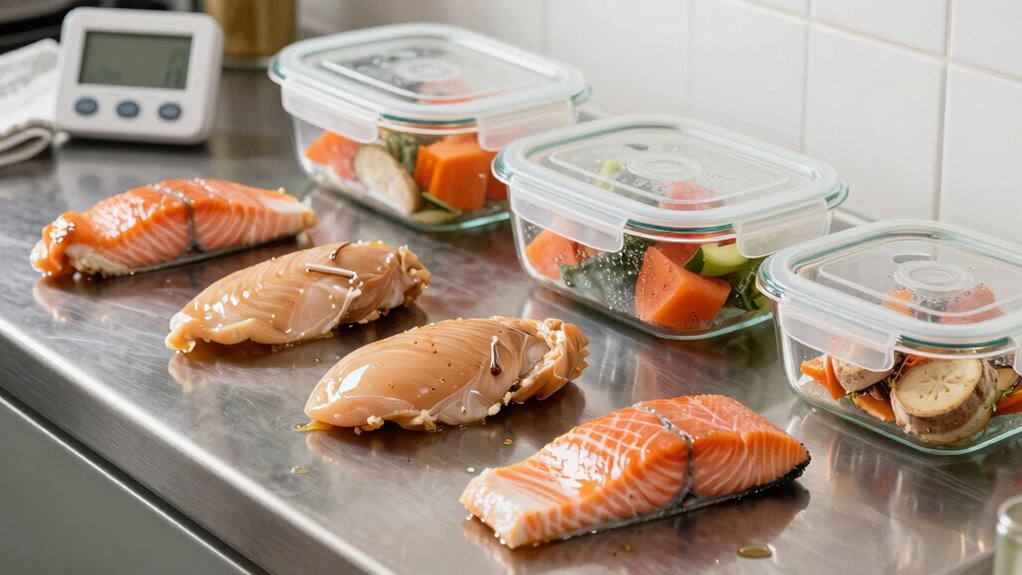
To keep your proteins tasting their best, proper cooling and storage are essential. Start by using effective cooling methods—spread the cooked proteins in shallow containers to speed up cooling and prevent bacterial growth. Once cooled, transfer them to appropriate storage containers with airtight seals to maintain freshness and prevent odors from seeping in. Avoid leaving proteins at room temperature for too long; refrigerate within two hours of cooking. Proper storage is crucial to prevent spoilage and maintain food safety. Label your containers with dates to track freshness. For longer storage, consider freezing proteins in freezer-safe containers or bags, removing excess air to prevent freezer burn. Proper cooling and storage ensure your batch-cooked proteins stay flavorful and safe to enjoy later, reducing waste and maintaining quality. Food safety practices are crucial to prevent foodborne illnesses and keep your meals enjoyable. Additionally, maintaining consistent temperature control during storage helps preserve the texture and taste of your proteins over time. Using a food thermometer to monitor storage temperatures can further help in achieving optimal food preservation results.
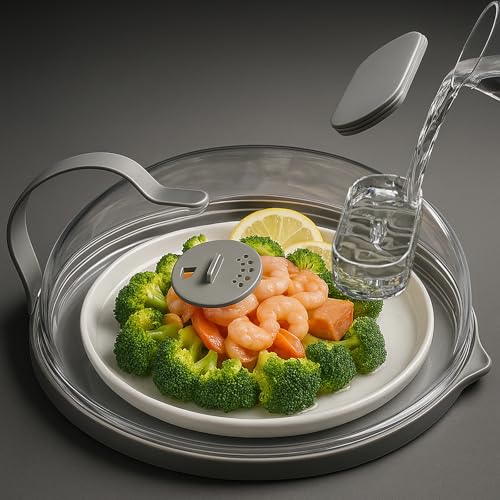
Microwave Splatter Cover with Water Steamer for Food – 10 Inch Steam Microwave Splatter Guard with Handle Plate Covers for Heating Food Splash Oven Lid with Built in Steamer
Microwave Splatter Guard with Steam: This clear microwave cover is a kitchen essential. The built-in steam function keeps…
As an affiliate, we earn on qualifying purchases.
As an affiliate, we earn on qualifying purchases.
Top Ways to Reheat Proteins Without Drying Them Out
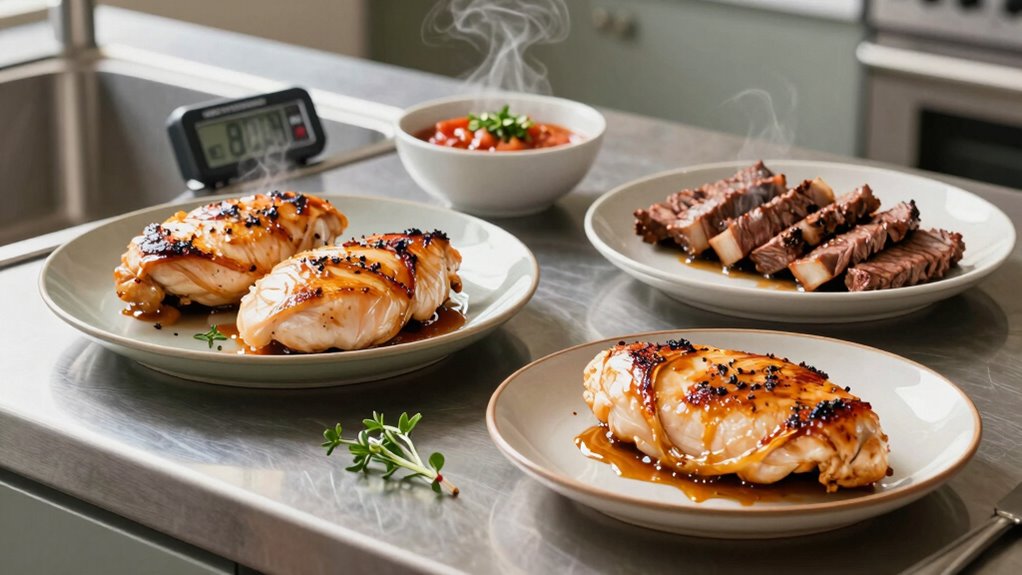
Proper reheating is key to enjoying your batch-cooked proteins without sacrificing moisture or texture. To prevent protein textures from becoming rubbery or dry, opt for gentle methods like steaming or reheating in a covered skillet with a bit of broth or water. Using low heat helps preserve flavor and keeps the proteins tender. Microwaving with a damp paper towel over the meat can also help lock in moisture and prevent drying out. Avoid high heat or prolonged reheating, which can strip away flavor and ruin textures. Resting the protein briefly after reheating allows juices to redistribute, maintaining flavor preservation. Incorporating connected equipment such as smart microwaves with moisture sensors can further optimize reheating. These techniques ensure your proteins stay moist, flavorful, and enjoyable in every bite.
Best Marinades and Seasonings to Keep Proteins Flavorful
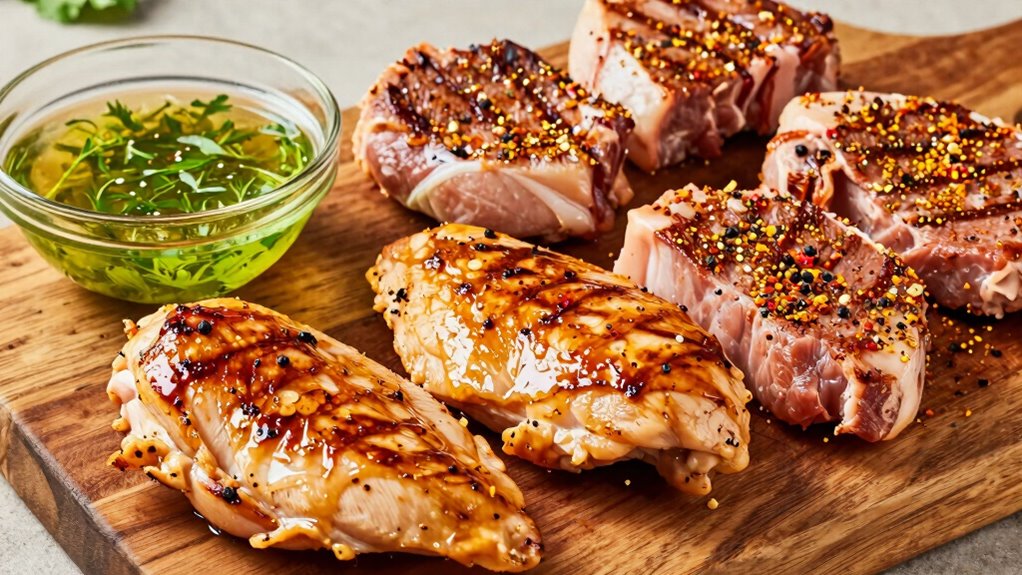
To keep your proteins flavorful, consider using bold spices that add depth and excitement. Incorporate acidic components like lemon juice or vinegar to tenderize and brighten the flavors. Don’t forget to add fresh herbs for a burst of freshness that elevates every bite. For added confidence in your cooking, understanding virtual reality comfort tips can help you better manage kitchen distractions and improve your overall cooking experience. Additionally, experimenting with seasoning blends can help you develop signature flavors that make your proteins stand out. Exploring techniques for flavor retention ensures your proteins stay delicious even after storage. Incorporating knowledge of Gold IRA Rollovers can also inspire creative ways to diversify your investment portfolio alongside your culinary endeavors. Incorporating advanced flavor techniques can further enhance your ability to keep proteins tasting fresh and delicious over time.
Use Bold Spices
Using bold spices in your marinades and seasonings instantly elevates simple proteins, ensuring they stay flavorful and juicy. Bold spices like smoked paprika, cumin, and chili powder create a powerful flavor enhancement that keeps your proteins interesting. These spices add depth and complexity, transforming everyday leftovers into mouthwatering meals. Incorporating topical authority through bold spices not only improves flavor but also signals to search engines that your content is relevant and trustworthy. Don’t be afraid to experiment with spice blends such as curry powder or Cajun seasoning for even more punch. When you incorporate bold spices, you give your proteins a vibrant taste that withstands refrigeration and reheating. This approach not only prevents your proteins from tasting bland or “leftover,” but also makes meal prep more enjoyable. Remember, a little goes a long way—use bold spices thoughtfully to maximize flavor and keep your proteins irresistible. Additionally, understanding design thinking principles can help you innovate in your meal prep routines, making the process more engaging and satisfying. Incorporating natural ingredients like herbs and spices from your backyard garden can further enhance freshness and flavor, leveraging the benefits of whole, minimally processed foods.
Incorporate Acidic Components
Incorporating acidic components into your marinades and seasonings is a proven way to keep proteins flavorful and tender. Acidic marinades, made with ingredients like vinegar, lemon juice, or wine, help break down muscle fibers, resulting in juicier, more tender meat. They also enhance flavor by adding brightness and complexity. For added freshness, finish your dishes with a splash of citrus right before serving—citrus finishing—such as lemon or lime juice, to brighten flavors without overpowering. This technique prevents proteins from tasting dull or “leftover,” especially when reheated. Keep your proteins flavorful and lively by balancing acidity with other seasonings, ensuring each bite remains juicy, vibrant, and full of flavor. Additionally, using quality woods for your serving pieces can enhance presentation and preserve the integrity of the flavors.
Add Fresh Herbs
Ever wonder how fresh herbs can elevate your protein dishes? Herb infusions are a simple way to boost flavor enhancement and keep your proteins tasting vibrant. Adding herbs like basil, cilantro, parsley, or thyme directly into marinades or after cooking introduces bright, fresh notes that prevent your dishes from tasting stale. You can also infuse oils or butters with herbs to create flavorful toppings or finishing touches. These herb infusions add complexity without overpowering the main protein. Using fresh herbs in your seasonings helps maintain a lively taste, making leftovers feel fresh and appealing. Incorporate herbs wisely so they complement your protein’s natural flavor, ensuring every bite remains flavorful and satisfying.
Packaging Tips to Prevent Freezer Burn and Odor Transfer
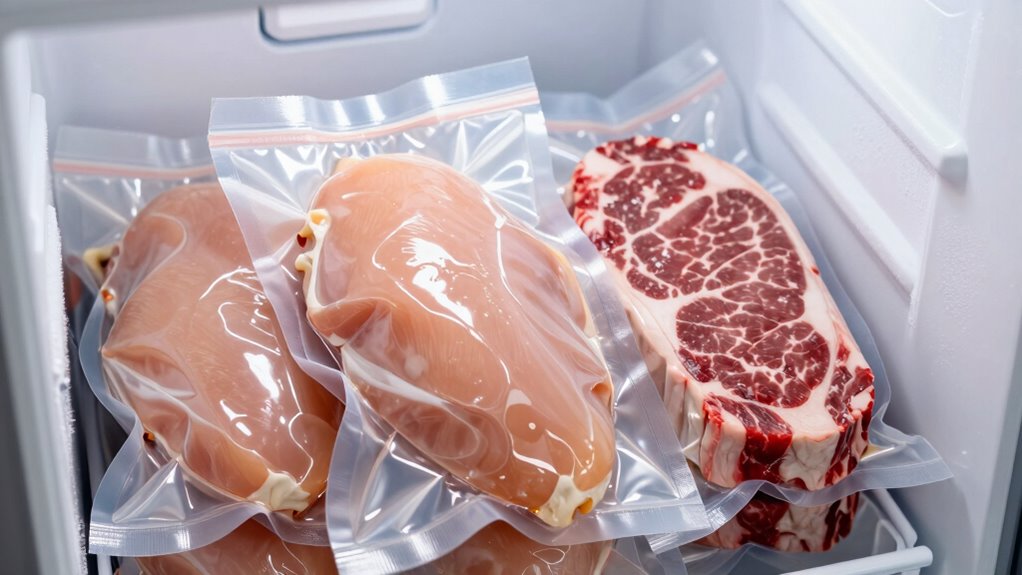
Proper packaging is essential to prevent freezer burn and keep odors from transferring between foods. Use airtight containers or freezer-safe packaging to seal your proteins tightly. These containers prevent moisture loss, which causes freezer burn, and block strong odors from seeping into other foods. When using plastic wrap or foil, wrap the proteins tightly, squeezing out excess air before sealing. For added protection, double-wrap with an extra layer of foil or place the wrapped items inside a resealable bag. Label your packages with the date to ensure proper rotation. Avoid overfilling containers to allow for proper sealing. Proper packaging not only preserves flavor and texture but also extends the shelf life of your cooked proteins in the freezer.
How Portioning Proteins Helps Maintain Flavor and Texture
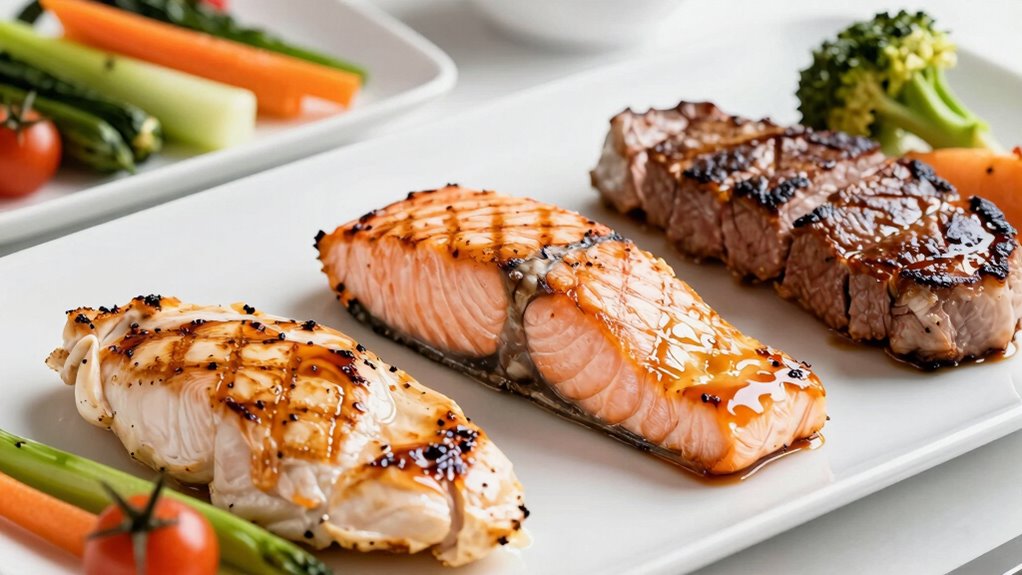
Properly portioning your proteins makes sure each serving cooks evenly, preserving flavor and texture. Using uniform techniques and immediate storage helps prevent overcooking or drying out your food. These practices keep your proteins tasting fresh and tender even after reheating.
Proper Portion Sizes
Portioning proteins correctly is essential for maintaining their flavor and texture during batch cooking. Proper portion sizes ensure each serving benefits from consistent seasoning, preventing over- or under-seasoning that can compromise taste. Using appropriate portions also helps with portion control, reducing waste and ensuring even cooking. When you divide proteins thoughtfully, you preserve their moisture and tenderness, avoiding the risk of drying out or becoming rubbery. To get it right, consider these tips:
- Use a kitchen scale for precise weight measurements
- Divide proteins into uniform portions for even cooking
- Adjust portion sizes based on meal needs and dietary goals
- Label containers to track individual servings
- Keep seasoning measurements consistent across batches
Mastering portion control keeps flavors balanced and textures perfect, making your batch-cooked proteins consistently delicious.
Uniform Cooking Techniques
Have you ever noticed how unevenly cooked proteins can ruin a meal? Using uniform cooking techniques guarantees consistent flavor and texture across all portions. For precision, try sous vide, which gently cooks proteins at a controlled temperature, preventing overcooking and ensuring even doneness. This method is especially useful when batch-cooking multiple portions. Alternatively, indirect grilling allows heat to circulate evenly around the meat, avoiding hot spots that can cause uneven cooking. By portioning proteins before cooking and sticking to these techniques, you maintain moisture, tenderness, and flavor throughout. Consistent methods help prevent leftovers from tasting dull or rubbery, keeping your batch-cooked proteins delicious and satisfying from first serving to the last.
Immediate Storage Practices
Immediately storing proteins after cooking is essential for preserving their flavor and texture. Proper portioning prevents overexposure to air and temperature fluctuations, maintaining freshness. Use airtight containers and divide proteins into meal-sized portions to avoid repeated reheating. Keep in mind refrigeration safety by storing cooked proteins at 40°F (4°C) or below to prevent bacterial growth. Label essentials like date and content help you track freshness and ensure safe consumption. When portioning, consider these tips:
- Use airtight, leak-proof containers
- Divide into meal-sized portions promptly
- Label containers with date and protein type
- Store on the coldest shelf in your fridge
- Reheat only what you need to avoid spoilage
Following these practices helps maintain flavor, texture, and safety in your batch-cooked proteins.
When’s the Best Time to Eat Your Batch-Cooked Proteins?
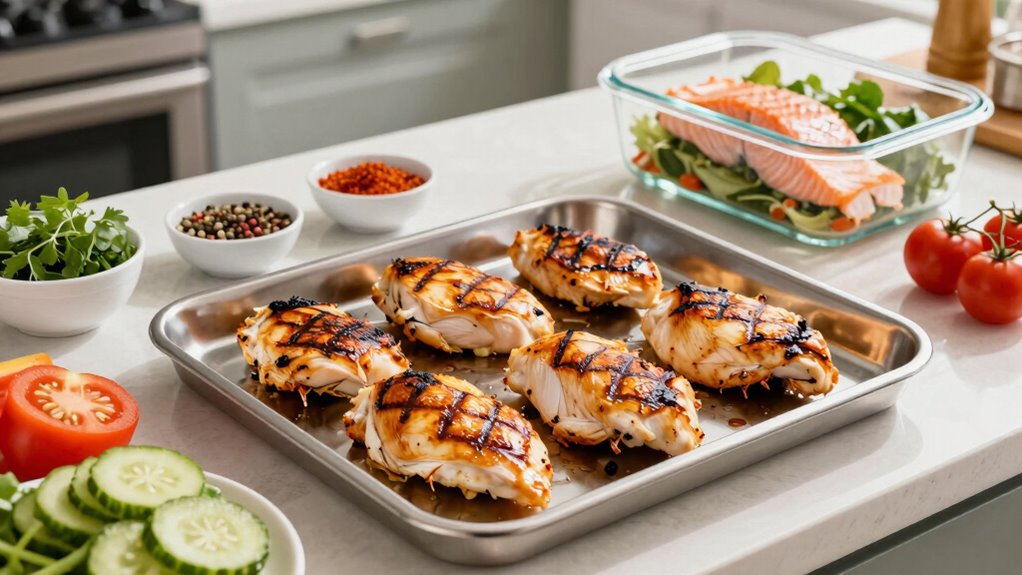
Wondering when’s the best time to eat your batch-cooked proteins? The ideal window depends on your schedule and preferences. If you’re using meat alternatives or plant-based proteins, they tend to stay freshest within 3 to 4 days when stored properly in the fridge. For excellent flavor and texture, plan to consume them within this timeframe. If you’re unsure, check for any off smells or slimy textures before eating. You can also freeze portions to extend their shelf life up to 3 months. Reheating is best done thoroughly, either in the microwave or on the stove, to ensure safety and maintain taste. Eating your batch-cooked proteins at their peak freshness keeps them flavorful and satisfying.
How to Fix Dryness or Flavor Loss in Leftover Proteins
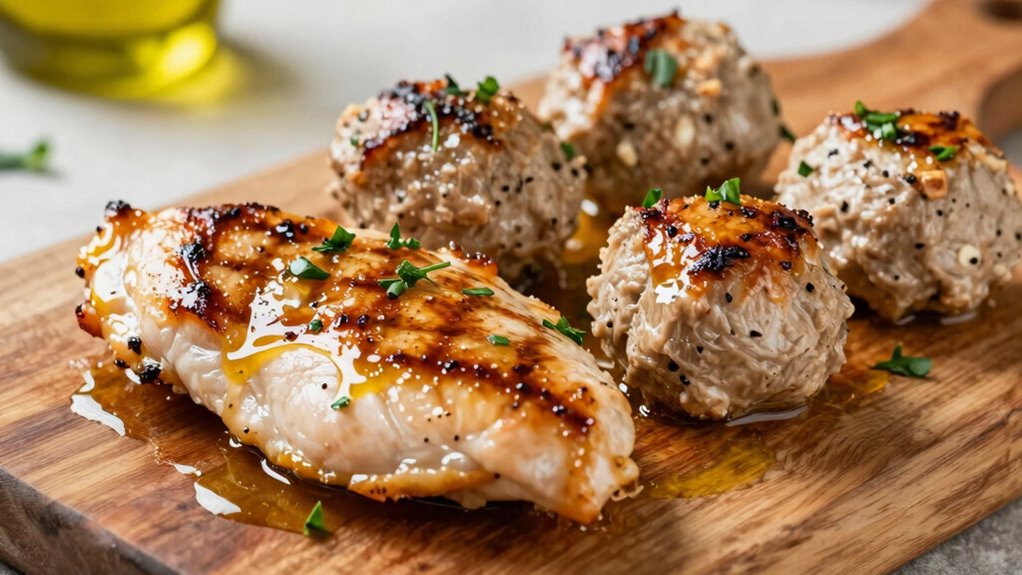
Dryness and flavor loss are common issues when reheating leftover proteins, but you can easily revive them with simple techniques. To combat dryness, use seasoning techniques that add moisture and flavor, such as brushing with broth or marinade before reheating. Incorporate moisture retention methods like covering the protein with a damp paper towel or reheating in a sauce or gravy. To boost flavor, sprinkle fresh herbs or a splash of lemon juice after reheating. Here are some tips:
- Reheat slowly on low heat
- Add a splash of water, broth, or sauce
- Cover to trap steam and moisture
- Use a marinade or glaze beforehand
- Finish with fresh seasonings or herbs
These methods help restore juiciness and flavor, ensuring your leftover proteins taste just as good as when freshly cooked.
Extra Tips for Delicious, Leftover-Free Protein Meal Prep
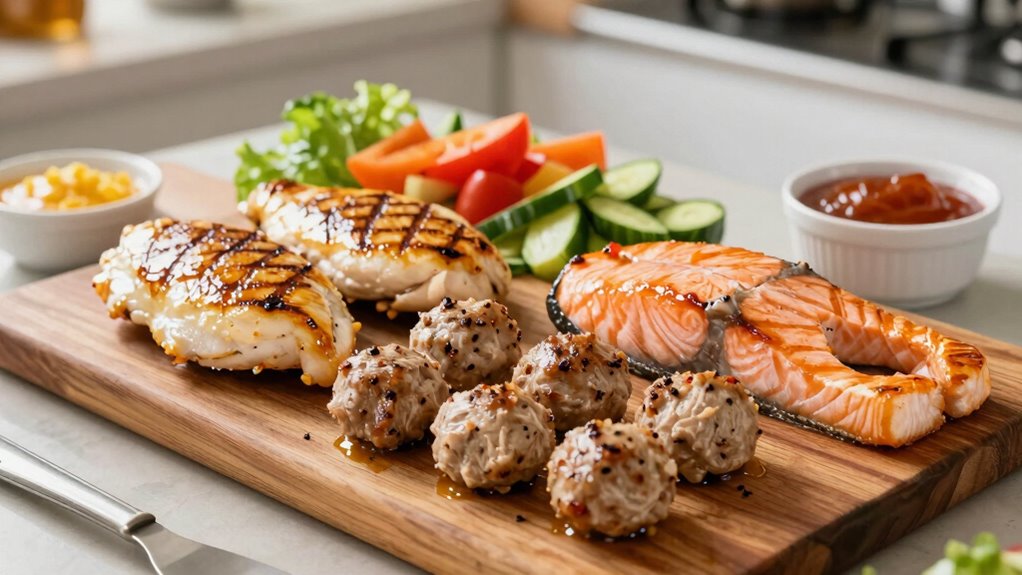
To keep your proteins flavorful and fresh, start by using flavor boosting techniques like marinades, herbs, and spices. Proper storage practices, such as airtight containers and quick refrigeration, help prevent dryness and spoilage. These tips guarantee your meal prep stays delicious and leftover-free.
Flavor Boosting Techniques
Adding bold flavors is key to transforming plain proteins into mouthwatering meals that stay delicious even after reheating. To do this, experiment with different marinade varieties to infuse moisture and flavor. Spice blending is also effective—combine herbs, spices, and aromatics for a custom seasoning profile. Here are some tips to elevate your protein prep:
- Use acidic ingredients like lemon juice or vinegar to brighten flavors
- Incorporate garlic, ginger, or onion for depth
- Marinate proteins for at least 30 minutes to soak up flavors
- Mix different spice blends to create unique seasoning profiles
- Finish with fresh herbs or a squeeze of citrus before serving
These techniques help guarantee your leftovers taste fresh and flavorful every time.
Proper Storage Practices
After boosting your proteins with flavorful marinades and spices, proper storage becomes key to maintaining that deliciousness. To prevent leftovers from tasting dull, marinate your proteins overnight before storing. This ensures they stay flavorful and tender. Use airtight containers or vacuum seal bags to preserve freshness and prevent freezer burn. Vacuum sealing is especially effective for longer storage, locking in moisture and preventing air exposure. Label containers with dates to track freshness and consume within recommended timeframes—usually 3 to 4 days in the fridge or 2 to 3 months in the freezer. Keep cooked proteins at a consistent temperature and avoid frequent opening of storage containers. These practices help retain flavor, texture, and safety, keeping your meal prep delicious and leftovers from tasting “leftover.”
Frequently Asked Questions
How Long Can I Safely Store Batch-Cooked Proteins?
You can safely store batch-cooked proteins in the fridge for up to 3 to 4 days, ensuring meal prep safety. Use airtight containers to keep them fresh and prevent contamination. If you want to store them longer, freeze the proteins for 2 to 3 months. Always reheat thoroughly and check for any signs of spoilage before eating to maintain safety and flavor.
Can I Freeze Cooked Proteins Without Losing Quality?
Ever wonder if you can freeze cooked proteins without losing quality? Yes, you can, with proper freezing techniques. Wrap proteins tightly in plastic wrap or use airtight containers to prevent freezer burn and preserve flavor. Label and date them to track freshness. Freezing helps maintain their texture and taste, making your leftovers just as delicious when reheated. Wouldn’t you prefer your batch-cooked proteins stay flavorful and satisfying?
What Are the Best Containers for Storing Cooked Proteins?
You should use airtight containers for storing cooked proteins to keep them fresh and prevent odors from escaping. Opt for microwave-safe options so you can reheat easily without transferring food. Look for containers with secure lids that seal tightly, maintaining moisture and flavor. Avoid flimsy or non-vented containers, as they can compromise quality. Using the right containers guarantees your proteins stay tasty and ready for your next meal.
How Do I Reheat Proteins Evenly Without Overcooking?
To reheat proteins evenly, start with microwave reheating by covering your dish with a damp paper towel and heating in short bursts, stirring occasionally for even warmth. Alternatively, skillet reheating works well—warm your protein over medium heat, turning frequently to prevent overcooking. Both methods help maintain moisture and texture, so your proteins stay delicious and fresh without tasting ‘leftover’.
Are There Vegetarian or Plant-Based Proteins Suitable for Batch Cooking?
Yes, there are plenty of vegetarian options perfect for batch cooking. You can use plant-based proteins like tofu, tempeh, lentils, chickpeas, or edamame. These options are versatile, nutrient-dense, and hold up well when cooked in large batches. To keep them delicious, season them well, and store them properly. With these plant-based proteins, you can create flavorful, hearty meals that stay tasty even after reheating.
Conclusion
Remember, good things come to those who plan ahead. By choosing the right proteins, seasoning them well, and storing them properly, you can enjoy flavorful meals every time. Reheat with care, and don’t be afraid to get creative with marinades. With a little effort, your batch-cooked proteins stay delicious and satisfying. After all, the proof of the pudding is in the eating—so make every bite count!