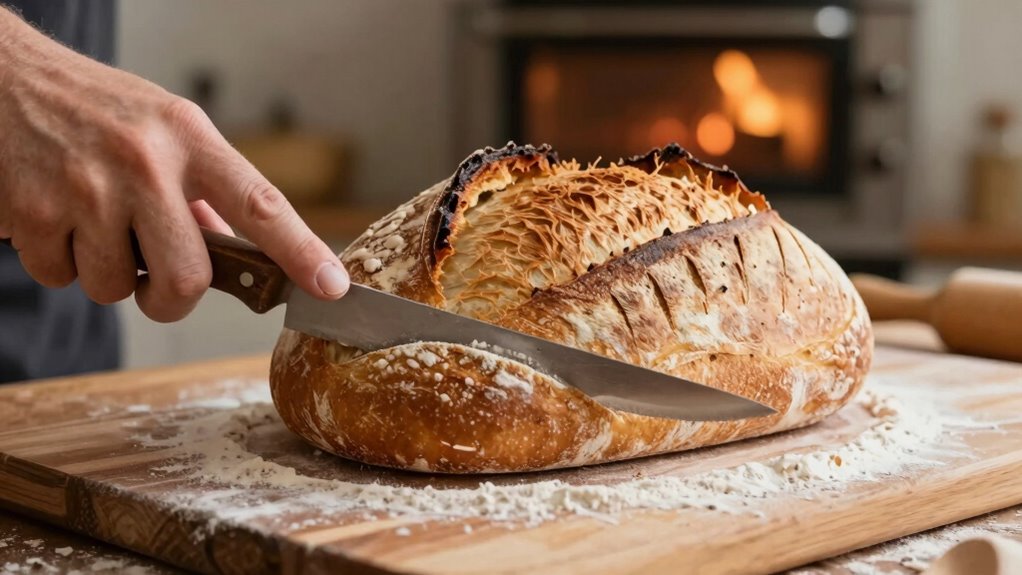

To achieve the best oven spring in your bread, you should aim to score it between one-quarter and one-half inch deep. This depth helps the loaf expand while keeping its structure intact. If your dough is wetter, stick to shallower scores; drier doughs can handle deeper ones. Remember, using a sharp blade for quick cuts can make a difference. If you want to explore more techniques and tips for perfect scoring, keep going!

Get kitchen gear delivered free with Prime
- Fast, free delivery on millions of items
- Prime Video, Amazon Music and more included
- Member-only deals all year
Key Takeaways
- Score bread to a depth of one-quarter to one-half inch for optimal oven spring and structure.
- Shallower scores suit wetter doughs, while drier doughs can handle deeper cuts.
- Use a sharp blade or lame for clean, swift cuts to prevent dragging.
- Experiment with various scoring patterns to direct steam and enhance expansion.
- Adjust scoring based on dough hydration and texture for best results.

When you’re baking bread, knowing how deep to score it can make all the difference in the final loaf. Scoring isn’t just about aesthetics; it affects how the bread rises in the oven. If you score too shallow, your loaf might not expand properly, resulting in a dense, unappealing texture. On the other hand, scoring too deep can lead to unwanted tearing and uneven crusts. You want to strike the right balance to guarantee your bread achieves that glorious oven spring.
Knowing the right depth to score your bread is crucial for achieving that perfect rise and texture.
Let’s explore scoring techniques that can help you achieve that perfect rise. The depth of your score should generally be around one-quarter to one-half inch. This depth allows the loaf to open up while still maintaining structural integrity. For wetter doughs, those with higher hydration levels, you might want to aim for slightly shallower scores. Higher dough hydration can make the dough more delicate, so a gentler approach can yield better results. If you’re working with a drier dough, you can afford to score a bit deeper since it’s more resilient.
Your scoring technique plays a vital role as well. A sharp razor blade or lame is essential for making clean cuts. When you score, do it in a swift motion to minimize any dragging that could distort the shape of the loaf. Some bakers prefer to score diagonally, while others may choose straight cuts. Experiment with different patterns to find what you like best. Just remember, the goal is to direct the steam and allow the bread to expand as it bakes.
Additionally, understanding dough elasticity can help you better anticipate how your loaf will respond to scoring and shaping, especially with different hydration levels.
Products Worth Considering

Le Creuset Enamemed Cast Iron Oval Dutch Oven, 5 qt., White/Crucible

Le Creuset Signature Enameled Cast Iron Round Dutch Oven, 5.5 qt, Deep Teal

Le Creuset Enameled Cast Iron Round Dutch Oven, 5.5 Qt, Flame
As an affiliate, we earn on qualifying purchases.
Frequently Asked Questions
Can I Use a Knife Instead of a Blade for Scoring?
Yes, you can use a knife instead of a blade for scoring. While a blade offers precision, a knife has its advantages too. You’ll find that a sharp knife can create effective scoring techniques, allowing your bread to expand beautifully during baking. Just make sure to use a clean, sharp knife and score at an angle for best results. With practice, you’ll achieve great oven spring using either tool!
What Type of Bread Benefits Most From Scoring?
Artisan loaves, like sourdough, benefit the most from scoring. By using the baguette technique, you create a controlled expansion during baking, allowing for that beautiful oven spring. Scoring also lets you add decorative patterns, enhancing the visual appeal of your bread. You’ll notice that the deeper and more intentional your scores, the better the texture and crust develop, elevating your baking game. So grab that blade and start scoring!
How Can I Practice Scoring Techniques?
Grab a loaf of dough, and as you inhale the yeasty aroma, start practicing your scoring techniques. Use a lame or sharp knife to create various scoring patterns, like swirls or straight lines, to see what works best for you. Try different angles and depths on separate loaves. Consider baking a few practice rounds, each time adjusting your method. With each slice, you’ll get closer to mastering that perfect oven spring.
Does Scoring Affect the Bread’s Flavor?
Yes, scoring does affect bread’s flavor. When you use scoring techniques, you create openings that allow steam to escape, leading to a better oven spring. This process enhances flavor development by promoting a crusty exterior while keeping the interior moist. The way you score can also influence how the heat reaches the dough, further affecting taste. So, don’t underestimate those cuts; they’re key to achieving delicious, flavorful bread!
Can I Score Bread After It Has Risen?
You can definitely score bread after it’s risen! In fact, it’s like giving your loaf a stylish haircut. Using scoring techniques at this stage helps control how the dough expands in the oven, ensuring a beautiful crust. Just remember, your dough’s elasticity matters; if it’s too soft, scoring might not be as effective. So, grab your blade and make those cuts confidently—it’ll enhance your bread’s oven spring dramatically!
Conclusion
In summary, scoring your bread correctly is essential for achieving that perfect oven spring. Aim for a depth of about a quarter to half an inch—just deep enough to let the dough expand without losing its structure. Remember, a well-scored loaf can rise like a phoenix from the ashes, transforming into a masterpiece. So, don’t skimp on this step; your bread deserves the best treatment to reach its full, glorious potential!