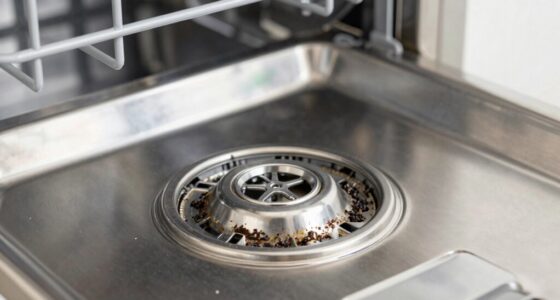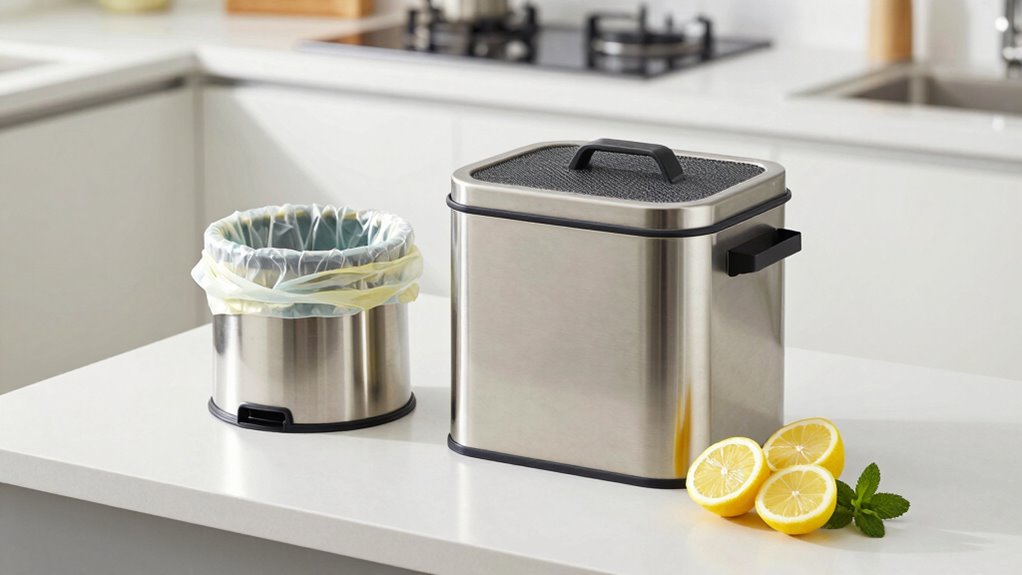

To prevent kitchen odors, choose odor-resistant trash and compost containers with tight-fitting lids and secure seals. Line bins with biodegradable bags and regularly rinse and clean them to prevent bacteria buildup. Use natural odor absorbers like baking soda, dried herbs, or activated charcoal inside containers and nearby areas. Guarantee proper ventilation and quick disposal to keep smells at bay. If you want to learn more tips for keeping your kitchen fresh, keep exploring these strategies.

Get kitchen gear delivered free with Prime
- Fast, free delivery on millions of items
- Prime Video, Amazon Music and more included
- Member-only deals all year
Key Takeaways
- Use airtight, odor-proof containers with tight-fitting lids and secure seals for trash and compost storage.
- Line bins with biodegradable, snug-fitting liners and replace them regularly to prevent leaks and odors.
- Incorporate odor-absorbing materials like baking soda, activated charcoal, or natural herbs inside containers.
- Place waste bins in well-ventilated areas and consider adding ventilation features or air purifiers.
- Maintain cleanliness by rinsing containers often, sealing waste tightly, and promptly disposing of or composting waste.
odor-proof trash and compost containers
As an affiliate, we earn on qualifying purchases.
As an affiliate, we earn on qualifying purchases.
Why Do Kitchen Odors Spread From Trash and Compost?
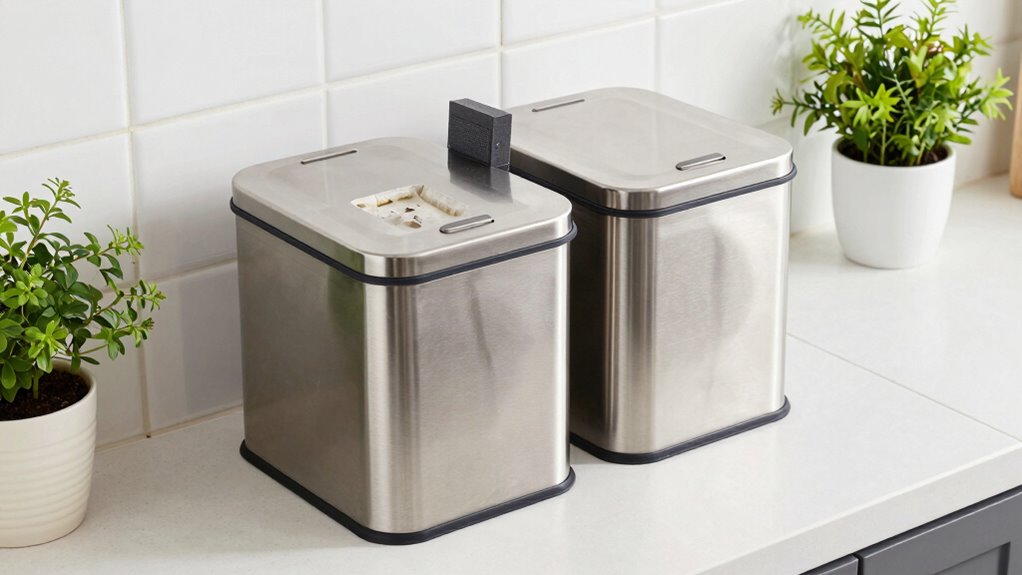
Odors from trash and compost can quickly spread throughout your kitchen because these materials release volatile organic compounds (VOCs) into the air. When odor molecules are released, air circulation becomes a key factor in how far these smells travel. Poor air movement allows the molecules to linger longer, making your kitchen smell stronger and more persistent. As air circulates, it carries these odor molecules to different areas, spreading the smell beyond the trash bin or compost container. This is why even small amounts of waste can create a noticeable smell if your ventilation isn’t adequate. To minimize odor spread, you need good air circulation, which helps disperse the odor molecules more efficiently and prevents them from settling in your kitchen. Proper ventilation is essential for controlling and reducing these odors effectively. Additionally, using air purifiers with activated carbon filters can further reduce airborne VOCs and improve indoor air quality. Understanding air exchange rates can also help optimize your ventilation system for better odor control. Implementing odor-absorbing materials around trash and compost areas can also help trap and neutralize smells before they spread. Incorporating ventilation fans can significantly enhance air movement and reduce odor buildup in your kitchen space.
sealed compost bins with ventilation
As an affiliate, we earn on qualifying purchases.
As an affiliate, we earn on qualifying purchases.
How to Choose the Best Trash and Compost Containers for Odor Control

Choosing the right trash and compost containers can considerably reduce odors in your kitchen. Start by considering material selection; opt for containers made from odor-resistant materials like stainless steel or heavy-duty plastic, which don’t absorb smells easily. Container design is equally important—look for models with tight-fitting lids and secure seals to contain odors effectively. Avoid containers with wide openings or poorly fitting lids, as these can allow smells to escape. Consider containers with ventilation features that help manage moisture without releasing odors. Size also matters: choose a container that fits your household’s waste volume without overflowing, which can cause smells to spread. Additionally, proper maintenance and regular cleaning of containers can significantly improve odor control. Using odor-absorbing materials like baking soda inside the containers can also help neutralize lingering smells. Incorporating effective air circulation around your trash area can further reduce odor buildup and keep your kitchen smelling fresh. By selecting containers thoughtfully, you’ll create a more odor-free, fresh-smelling kitchen environment.
activated charcoal odor absorber for kitchen
As an affiliate, we earn on qualifying purchases.
As an affiliate, we earn on qualifying purchases.
Sealing Methods and Liners That Keep Smells In
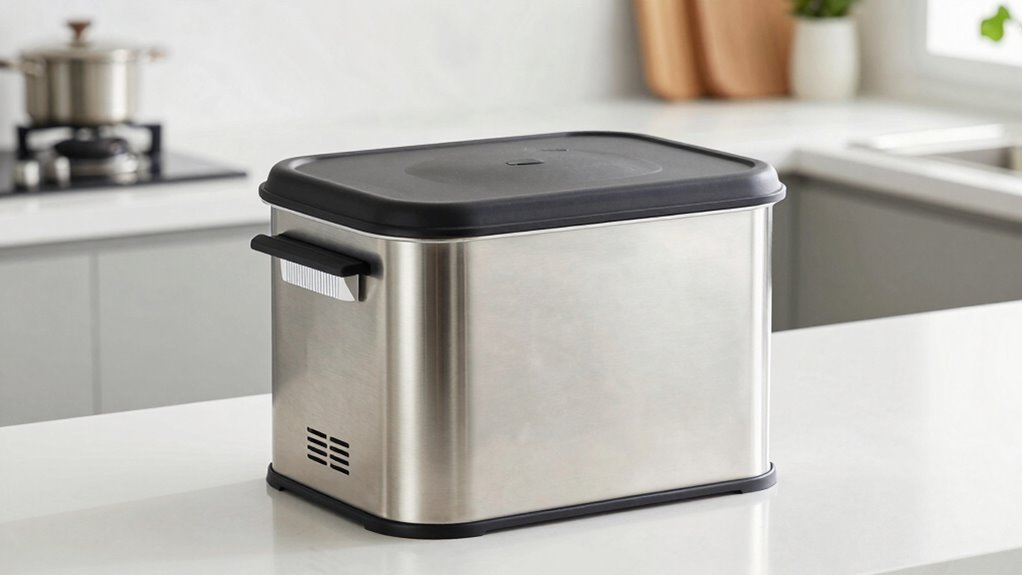
To effectively keep smells contained, selecting the right sealing methods and liners is essential. Use trash cans with airtight seals to prevent odors from escaping. These seals create a barrier that keeps smells in, especially when the lid is closed tightly after disposal. Pair this with odor proof liners, which are designed specifically to trap odors and prevent leaks. Odor proof liners are thicker and often infused with scent-blocking agents, making them ideal for trash and compost containers. When replacing liners, guarantee they fit snugly to avoid gaps that could let odors escape. Combining airtight seals with quality odor proof liners provides a double layer of protection, keeping your kitchen smelling fresh and clean. To enhance odor control, consider incorporating ventilation systems that help manage any residual smells. Proper airflow can significantly reduce lingering odors and improve overall freshness in your space, especially when combined with other odor neutralization methods.
biodegradable trash liners for odor control
As an affiliate, we earn on qualifying purchases.
As an affiliate, we earn on qualifying purchases.
How to Keep Your Trash and Compost Areas Clean and Dry
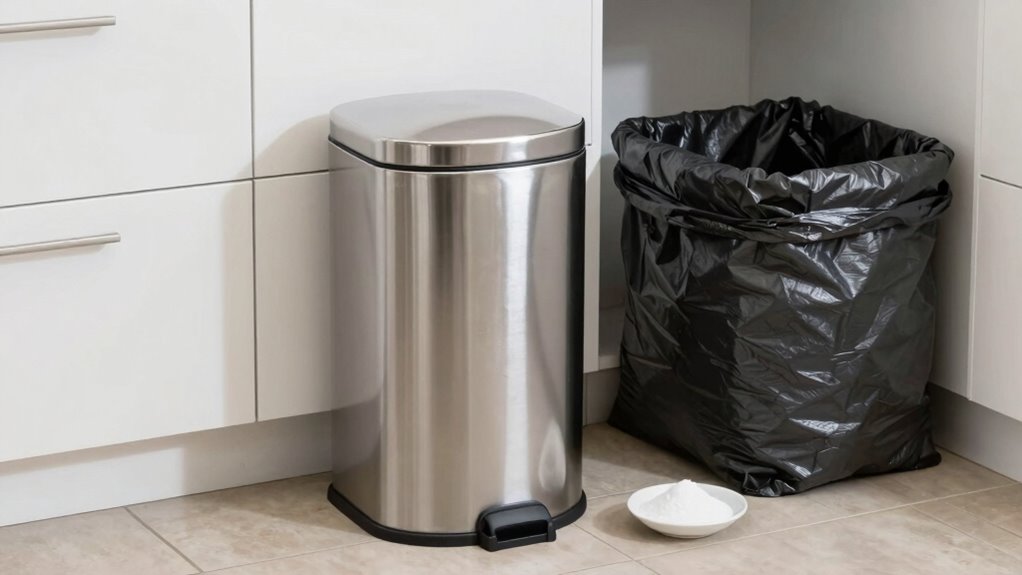
Keeping your trash and compost areas clean and dry is essential for maintaining a hygienic and odor-free space. To achieve this, start by lining your bins with biodegradable bags, which make cleanup easier and prevent leaks. Use odor absorbing mats underneath your bins to absorb spills and moisture, keeping the area dry. Regularly rinse out your trash and compost containers to prevent buildup and bacteria growth. Ensure that you seal your bags tightly before disposal to contain odors. Consider placing a small moisture-absorbing packet inside your compost bin to reduce excess dampness. Proper application of styling creams can help manage moisture and keep your hair looking natural and healthy. Additionally, choosing appropriate compost bins designed for moisture control can further reduce dampness and odors. Using ventilation in your trash area can significantly improve air circulation, reducing lingering smells. Incorporating airflow techniques can optimize odor dispersal and help maintain a fresher environment. Employing nanotechnology-based odor control solutions is an emerging trend that can further enhance odor elimination technology. Consistent maintenance, paired with these simple tools, helps keep your trash area clean, dry, and odor-free, creating a more pleasant kitchen environment.
Natural Odor Absorbers That Help Keep Your Kitchen Fresh
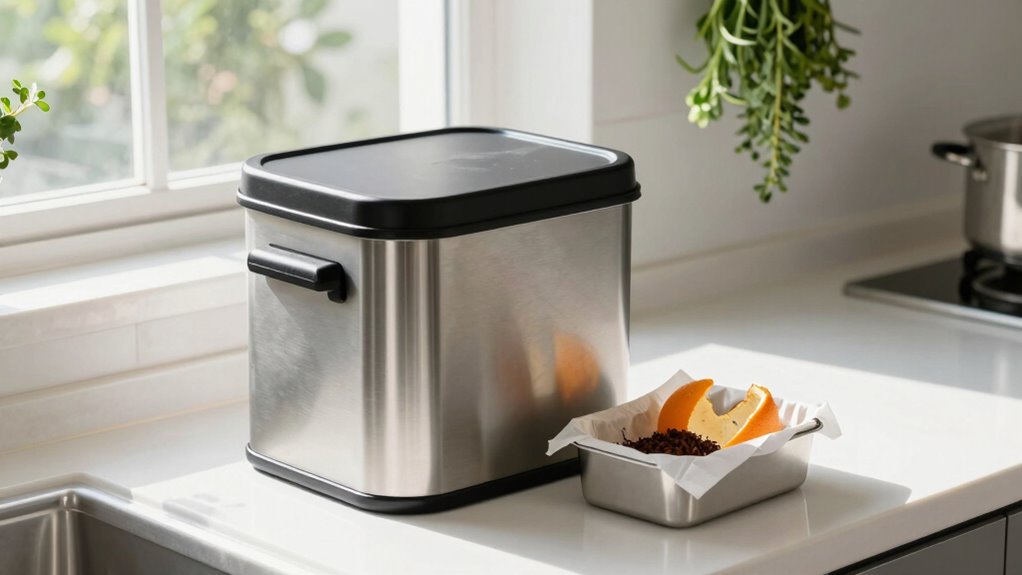
Natural odor absorbers can be a simple and effective way to maintain a fresh-smelling kitchen without relying on artificial sprays or chemicals. Herbal remedies like dried lavender, rosemary, or thyme can absorb bad odors while adding a pleasant scent. Place small sachets or bowls of these herbs near your trash or compost area. Baking soda is a classic odor neutralizer; sprinkle it at the bottom of trash cans or inside compost bins to absorb moisture and odors. You can also keep an open box of baking soda in your fridge or near trash to help freshen the air. These natural options are safe, inexpensive, and environmentally friendly, giving you a simple way to keep your kitchen smelling clean and fresh without harsh chemicals. Additionally, using natural odor absorbers is similar to how materials used in body jewelry like titanium and surgical steel are chosen for their hypoallergenic and non-reactive properties, making them safe for sensitive skin and reducing irritation. Incorporating these natural solutions can also reduce the reliance on synthetic fragrances, which may sometimes cause allergic reactions or sensitivities. For an extra boost, consider adding sustainable practices like composting or recycling to further enhance your eco-friendly kitchen environment. Moreover, selecting eco-conscious waste management methods can help minimize odors and promote a healthier home.
Making Odor Prevention a Routine: Cleaning and Disposal Tips
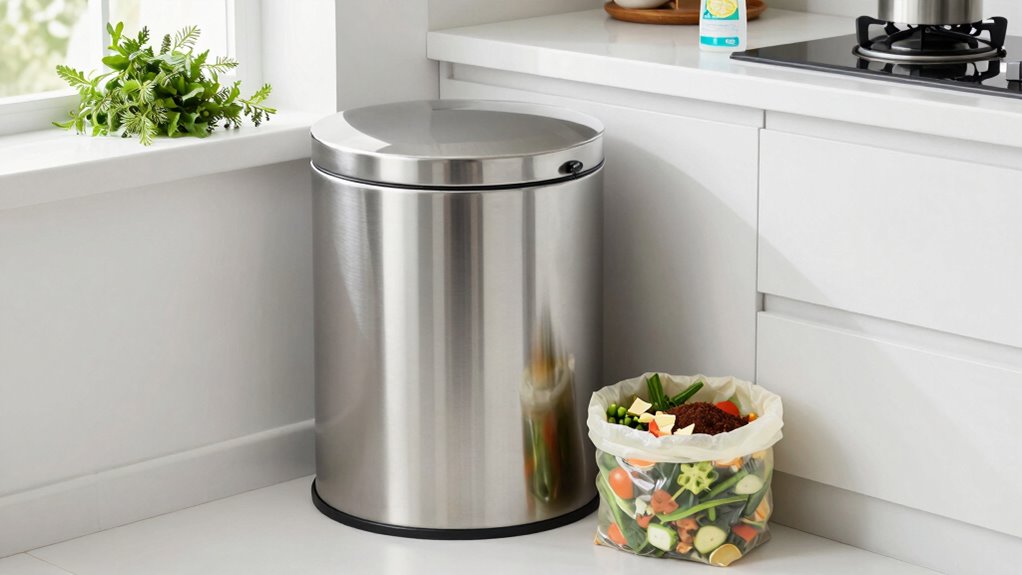
Establishing a regular cleaning routine is essential for preventing odors before they become a problem. Consistent cleaning helps maintain good air circulation and reduces bacteria buildup that causes smells. Stick to a cleaning schedule for your trash and compost areas to stay ahead of odors. Using advanced filtration systems in vacuums can help reduce airborne allergens and odors during cleaning sessions. Incorporating proper waste segregation can also minimize cross-contamination and odor transfer.
Optimizing Your Kitchen Layout to Reduce Odors
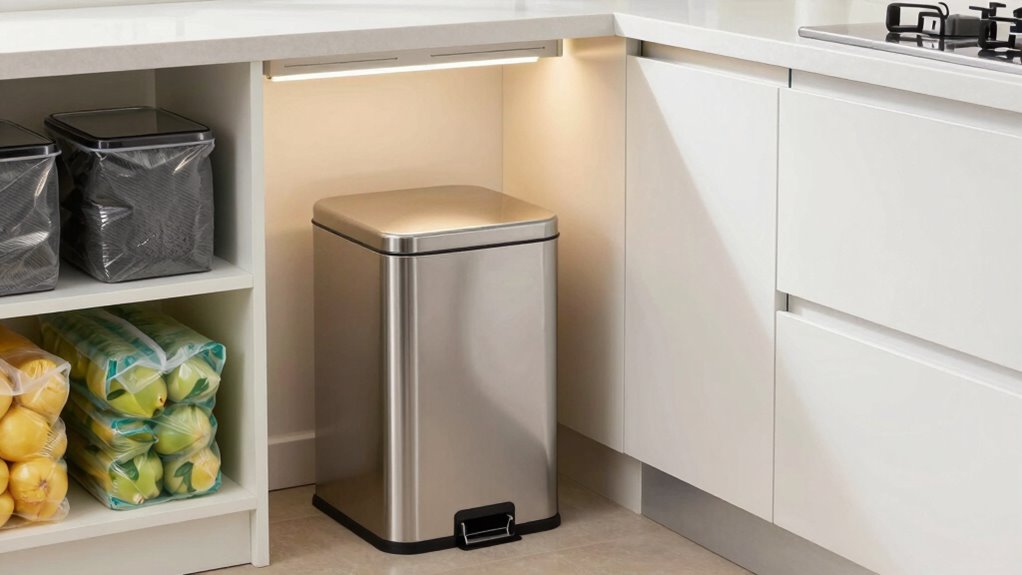
A well-organized kitchen layout can considerably cut down on odors by making trash and compost management more efficient. Place your trash and compost bins near your countertop placement, so you can quickly toss items without tracking odors through the space. Use dedicated containers with tight-fitting lids to contain smells, and keep these within easy reach, preferably under the sink or in a designated corner. Proper cabinet organization helps prevent spills and leaks that cause odors to spread. Store your trash and compost bins in well-ventilated areas or with odor-absorbing liners to further minimize smells. By strategically arranging your kitchen with accessible, sealed containers and thoughtful placement, you reduce the chance of lingering odors and keep your kitchen smelling fresh.
Eco-Friendly Products and Fresheners for Odor Control

Using eco-friendly products and fresheners is an effective way to keep your kitchen smelling fresh without relying on harsh chemicals. Biodegradable bags are a great choice for trash liners, as they break down naturally and reduce environmental impact. Reusable deodorizers, like charcoal bags or silicone gel packs, absorb odors instead of masking them. You can also use natural freshening options such as essential oil sprays or vinegar solutions to keep your space smelling clean. Additionally, placing a small dish of baking soda near your trash area helps neutralize unpleasant odors. These eco-friendly solutions not only improve your kitchen’s smell but also support sustainability. By choosing biodegradable bags, reusable deodorizers, and natural fresheners, you create a healthier, greener environment in your home.
Troubleshooting Common Odor Problems and How to Fix Them
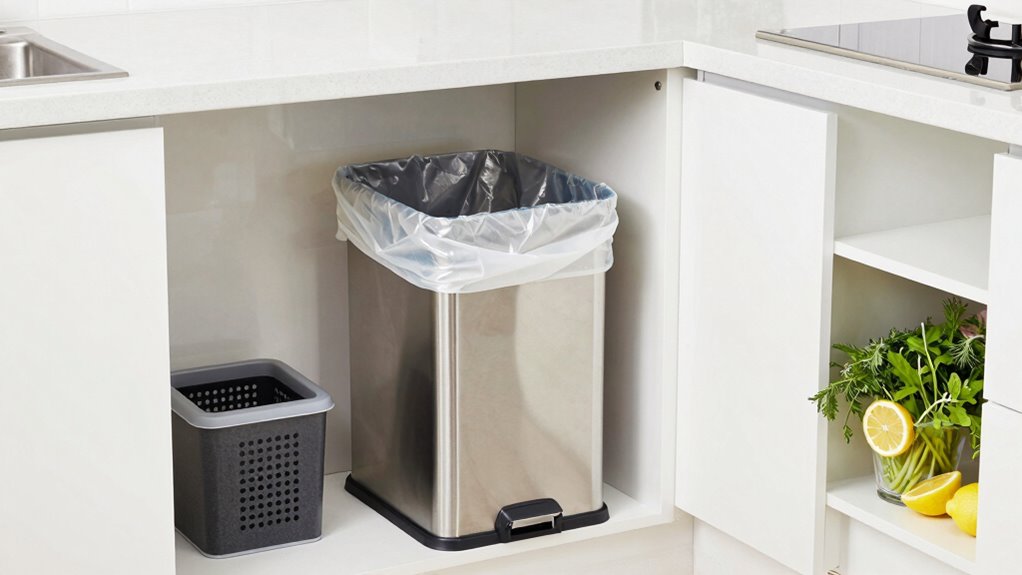
When persistent odors invade your kitchen, pinpointing the source is essential to effectively eliminate them. Start by checking your trash and compost areas for leaks or buildup. Poor airflow management can trap smells, so ensure vents and lids are functioning properly. Use odor neutralizers like baking soda or activated charcoal to absorb odors. If smells linger, increase ventilation or upgrade lids to airtight models. Consider adding an air purifier nearby to continuously filter the air. Here’s a quick guide:
| Issue | Solution |
|---|---|
| Bad odor persists | Improve airflow, add odor neutralizers |
| Odor leaks from container | Seal lids tightly, replace worn seals |
| Smells return quickly | Increase ventilation, use odor absorbers |
Addressing these factors helps keep your kitchen fresh and odor-free.
Frequently Asked Questions
Can Certain Kitchen Materials Help Reduce Odor Absorption?
Yes, certain kitchen materials can help reduce odor absorption. Using reusable containers with tight-fitting lids keeps smells contained, preventing them from spreading. Adding activated charcoal to your trash area absorbs odors effectively and keeps your kitchen smelling fresh. You can also place activated charcoal in small breathable bags or containers near trash bins, which helps neutralize odors naturally and keeps your space smelling clean without chemicals.
How Often Should I Replace Compost Liners for Freshness?
You should replace your compost liners, whether biodegradable liners or scent-absorbing bags, once they’re full or start to smell. Typically, this means every 1 to 2 weeks, depending on how much compost you generate. Regularly changing them prevents odors from escaping and keeps your kitchen smelling fresh. Always check for leaks or signs of odor buildup, and replace liners promptly to maintain a clean, odor-free environment.
Are There Specific Types of Trash Bags That Prevent Odors?
Did you know that using odor resistant bags can reduce kitchen smells by up to 80%? You should look for odor resistant bags or compostable liners designed specifically to contain odors. These bags contain odor-blocking materials that trap smells, keeping your kitchen fresher. Opt for compostable liners to be eco-friendly while still preventing odors effectively. Using the right bags makes a noticeable difference in maintaining a clean, odor-free space.
What Are the Best Practices for Disposing of Smelly Food Waste?
To dispose of smelly food waste effectively, use eco-friendly containers with tight-fitting lids to contain odors. Rinse food scraps before discarding to minimize smell, and line containers with compostable bags or recycling tips like activated charcoal filters. Empty and clean your containers regularly, especially if they hold organic waste. This proactive approach keeps your kitchen smelling fresh and supports eco-friendly practices, making waste disposal more sustainable and odor-free.
How Can I Prevent Pests While Managing Trash and Compost Odors?
Did you know pests are attracted to 75% of household trash? To prevent them, use pest deterrent plants like mint or lavender near your trash area. Sealant barriers, such as tight-fitting lids and compost bins with secure lids, keep odors in and pests out. Regularly empty and clean containers, and avoid leaving food scraps exposed. These steps help you manage odors effectively while keeping pests at bay.
Conclusion
By following these simple tips, you can keep your kitchen smelling fresh like a blooming garden. Think of your trash and compost areas as your kitchen’s breath—keeping them odor-free is like giving it a calming, clean whisper. With a little effort and routine care, you’ll create a space that feels inviting rather than stinky. Stay consistent, and enjoy a fresher, happier kitchen every day—your nose will thank you.
Halloween Picks
halloween
As an affiliate, we earn on qualifying purchases.