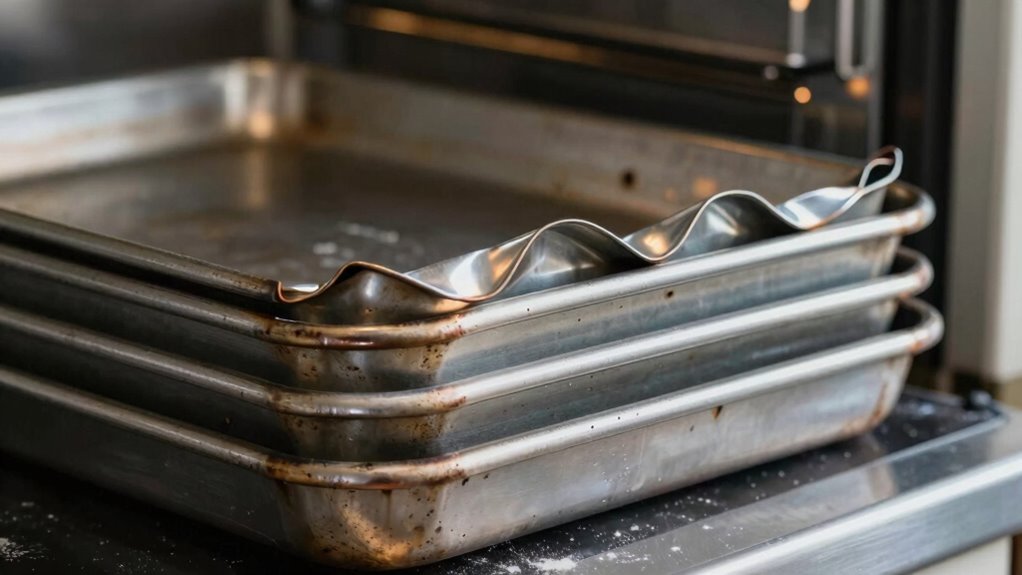

Warped sheet pans can throw off your cooking by causing uneven heat distribution. They often warp from extreme heat exposure, overcrowding, or abrupt temperature changes. To prevent this, invest in high-quality pans made of durable materials like aluminum or stainless steel. Avoid placing them directly over flames and let them cool gradually. Proper loading techniques and regular maintenance, like hand-washing without abrasives, also help. Want to discover more tips on keeping your pans in top shape?

Get kitchen gear delivered free with Prime
- Fast, free delivery on millions of items
- Prime Video, Amazon Music and more included
- Member-only deals all year
Key Takeaways
- Warping occurs due to extreme heat exposure; avoid placing pans directly over flames or in excessively hot ovens.
- Use high-quality, heavy-duty sheet pans made of aluminum or stainless steel to resist warping.
- Overcrowding pans leads to uneven weight distribution, increasing the risk of bending; ensure proper spacing for uniform cooking.
- Gradual cooling of pans prevents abrupt temperature changes that can cause warping; allow them to reach room temperature before cleaning.
- Regular maintenance, such as hand-washing with gentle soap and avoiding abrasive cleaners, extends the lifespan of sheet pans.
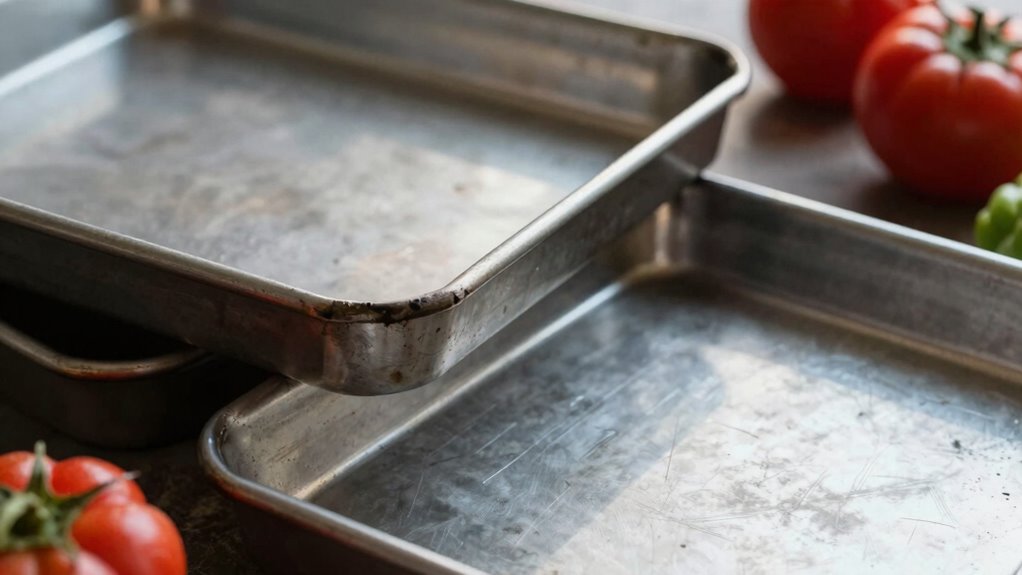
Preventing warping isn’t just about choosing the right pans; it also involves adopting some smart practices in your kitchen. First, consider investing in high-quality, heavy-duty sheet pans that can withstand temperature fluctuations better than their lightweight counterparts. Look for options made from materials like aluminum or stainless steel, which tend to hold their shape longer. If you already have pans that are prone to warping, you might want to limit their exposure to extreme heat. For instance, don’t place them directly over a flame or in an oven that’s too hot.
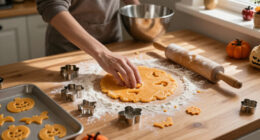
Another effective way to prevent warping is to avoid overcrowding your sheet pans. When you cram too many items onto a single pan, it can create uneven weight distribution, causing parts of the pan to bend under pressure. Instead, give your cookies or vegetables some space. This not only helps with warping but also guarantees even cooking.
Avoid overcrowding your sheet pans to ensure even cooking and prevent warping; give your food some space to breathe.
It’s also important to allow your pans to cool gradually after use. If you’ve just pulled a pan out of a hot oven, resist the urge to plunge it into cold water for a quick cool-down. This abrupt temperature change can lead to warping. Instead, let it sit at room temperature for a while before cleaning it. Understanding the effects of temperature fluctuations can help you better care for your pans and prevent warping over time. Additionally, some coating types may be more susceptible to warping or damage, so choosing pans with durable finishes can be beneficial. Being aware of material properties can guide you in selecting the best pans for durability and longevity. You can also consider regular maintenance routines to prolong the lifespan of your pans and keep them in optimal condition.
Finally, regular maintenance can extend the life of your sheet pans. Hand-wash them with gentle soap and avoid using abrasive cleaners that could scratch the surface. By taking these steps, you can considerably reduce the chances of warping. With a little care and attention, you’ll keep your sheet pans flat and ready for all your baking adventures, guaranteeing that every batch turns out just right.
As an affiliate, we earn on qualifying purchases.
Frequently Asked Questions
Can I Still Use a Warped Sheet Pan?
Yes, you can still use a warped sheet pan, but it might affect your baking performance. Warping can disrupt heat distribution, leading to uneven cooking. If you choose to use it, keep an eye on your food and adjust cooking times as needed. For best results, consider using it for tasks that don’t require precise baking, like roasting veggies. Just be mindful that some dishes may not turn out as well.
How Do I Know if My Sheet Pan Is Warped?
You can tell if your sheet pan is warped by placing it on a flat surface. If it rocks or wobbles, it’s likely warped. Using proper baking techniques helps, but pan maintenance is key to longevity. Regularly check your pans for warping, especially after high-heat use. If you notice any issues, consider replacing it to guarantee even baking and prevent uneven cooking results. Keep your pans in good shape for the best outcomes!
What Materials Are Less Likely to Warp?
If you want sheet pans that are less likely to warp, consider aluminum and stainless steel. Aluminum’s advantages lie in its lightweight design and excellent heat conductivity, making it a favorite in many kitchens. On the other hand, stainless steel offers durability that withstands high temperatures without bending. Both materials provide reliable options for your baking needs, ensuring your pans stay flat and your cookies come out perfectly every time.
Is It Safe to Bake on a Warped Pan?
Baking on a warped pan isn’t safe, and it can compromise your food’s quality. When your pan’s not flat, you risk uneven cooking, which can lead to burnt or undercooked areas. Plus, the durability of your pan may be at stake; a warped surface can become more prone to damage over time. For baking safety and best results, it’s best to use a flat, sturdy pan for all your delicious creations.
How Often Should I Replace My Sheet Pans?
You should replace your sheet pans every 3 to 5 years, depending on their durability and how often you use them. Keep an eye out for replacement signs like warping, scratching, or peeling coating. If you notice uneven baking or burnt edges, it’s time for a new one. Investing in quality pans can extend their life, but regular checks will help you maintain excellent performance in your kitchen.
As an affiliate, we earn on qualifying purchases.
Conclusion
So, you’ve got a warped sheet pan that’s more of a modern art piece than a cooking tool. But fear not! With a little care and some common sense, you can keep your pans as flat as your last failed soufflé. Remember, they’re not trying to be avant-garde; they just want to bake your cookies evenly. So treat them right, and they might just help you achieve culinary greatness instead of kitchen comedy. Happy baking!
As an affiliate, we earn on qualifying purchases.
As an affiliate, we earn on qualifying purchases.
Fall Picks
fall essentials
As an affiliate, we earn on qualifying purchases.