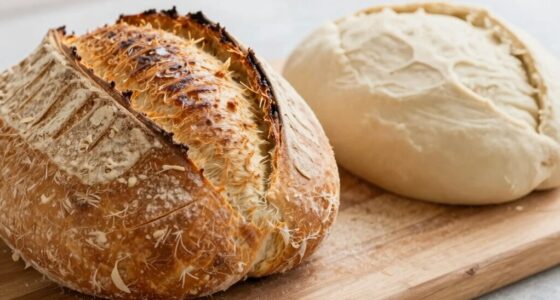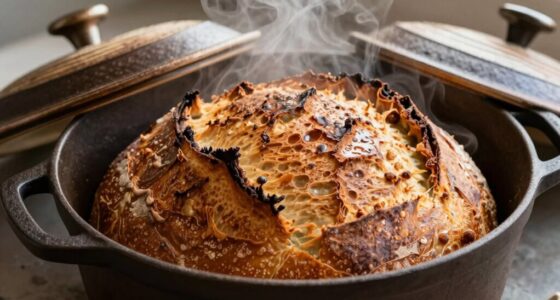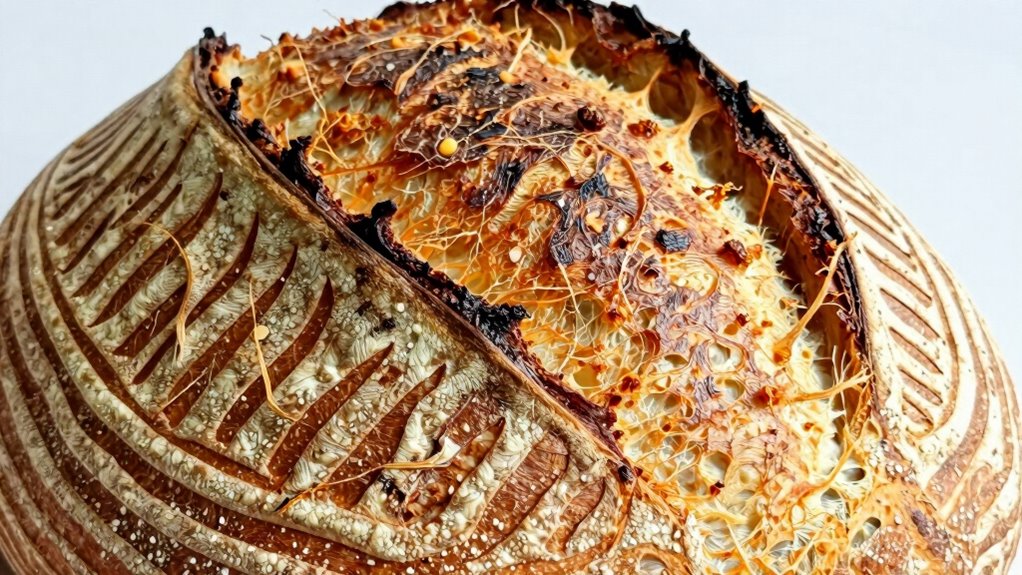
For the best oven spring, you should score your bread about one-quarter to one-half inch deep. This depth allows the crust to expand properly without tearing or flattening the loaf. If you score too shallow, you’ll limit how much it rises, but if you go too deep, the dough might tear or crack unevenly. Get the feel for the right depth, and you’ll see better results. Keep exploring to learn more tips for perfect scoring.

Get kitchen gear delivered free with Prime
- Fast, free delivery on millions of items
- Prime Video, Amazon Music and more included
- Member-only deals all year
Key Takeaways
- Score about one-quarter to one-half inch deep for optimal oven spring and controlled expansion.
- Avoid scoring shallower than one-quarter inch to prevent limited oven spring.
- Do not cut deeper than half an inch to prevent tearing or crust damage.
- Use a sharp blade to make clean, consistent cuts at the ideal depth.
- Adjust scoring depth based on dough type and elasticity for best results.
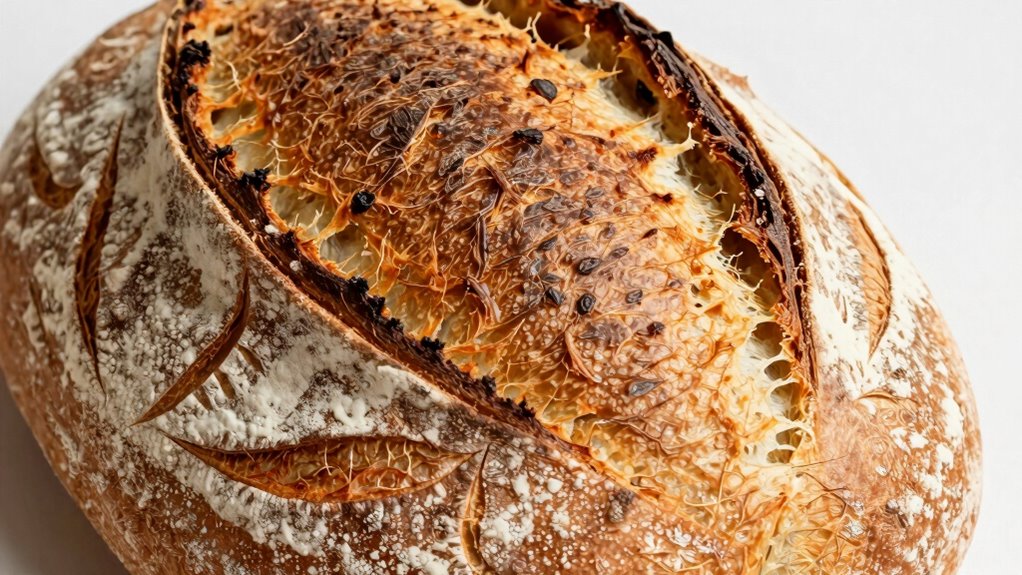
Ever wondered how deep you should score your bread before baking? The depth of your scoring can considerably influence how your loaf expands in the oven, affecting both appearance and oven spring. The right scoring technique involves more than just marking the dough; it’s about understanding how deep to cut to encourage a controlled, beautiful rise without sacrificing the bread’s structure. When you’re learning to perfect your bread, choosing the right bread scoring tools becomes essential. These tools, whether a lame, razor blade, or sharp knife, determine the precision and control you have over each cut. The goal is to make clean, deliberate scores that allow the bread to expand properly, and that means knowing how deep to go. Proper scoring depth is crucial for achieving consistent results and a professional look.
Generally, you want your scores to be about one-quarter to one-half inch deep. Too shallow, and the bread may not have enough room to expand, resulting in a less dramatic oven spring and a flatter loaf. If you cut too deep, however, you risk tearing the dough or causing uneven expansion, which can look irregular or lead to an overly open crumb. The ideal depth allows the dough’s surface to split cleanly without compromising the integrity of the crust. You should aim for a controlled, confident cut that penetrates the surface layer but doesn’t dig too far into the interior. Understanding your scoring technique and how it impacts the final loaf can help improve your results over time. Additionally, practicing with different scoring depths can help you develop a feel for how your dough responds during baking. Developing a consistent technique and understanding the bread’s elasticity can further enhance your results.
Using the right bread scoring tools and techniques also involves considering the type of dough you’re working with, as different doughs can respond differently to various depths of scoring. The more familiar you become with your bread scoring tools, the better you’ll be at controlling the depth of your scores.
Products Worth Considering

Cuisinart Stainless Steel Bread Maker, 12 Programs, 2 lb Capacity

Instant Pot Vortex Plus 10-Quart 7-in-1 Air Fryer Oven

Breville Smart Grinder Pro Conical Burr Coffee Grinder, Brushed Stainless Steel
As an affiliate, we earn on qualifying purchases.
Frequently Asked Questions
Can Scoring Technique Affect the Bread’s Final Shape?
Yes, your scoring technique definitely affects your bread’s final shape. When you choose different scoring aesthetics and patterns, it guides how the bread expands and cracks during baking, influencing its appearance. Shallow scores produce subtle cracks, while deeper ones create dramatic splits. Properly executed, your scoring enhances the bread’s visual appeal and allows for controlled oven spring, shaping the loaf beautifully and highlighting your artistic intent.
Does the Type of Blade Influence Scoring Depth?
Your scoring tool’s blade sharpness wildly influences scoring depth—you’d cut through the dough like a hot knife through butter! A high-quality, sharp blade guarantees you can control how deep you score, which directly impacts oven spring. Thinner, sharper blades allow for cleaner, more precise cuts, giving your bread the perfect expansion. Conversely, dull blades may result in uneven scoring and less dramatic oven spring, so choose your blade wisely for the best results.
How Does Dough Hydration Impact Scoring Effectiveness?
Dough hydration effects considerably influence scoring effectiveness because higher hydration creates a softer, more elastic dough, making it easier to score cleanly. Adequate hydration promotes gluten development, which helps the dough hold its shape and allows scoring cuts to expand properly during oven spring. If your dough is too dry, scoring can tear or flatten, reducing oven spring. Adjust hydration levels to balance softness and gluten strength for ideal scoring results.
Should Scoring Be Done Before or After Proofing?
You should score your bread before proofing. Studies show scoring enhances dough elasticity, allowing the bread to expand properly during baking. Scoring after proofing can cause the crust to crack unpredictably, affecting oven spring. When you score beforehand, it guides the expansion, especially if your oven temperature is high. This technique guarantees a clean, beautiful rise, giving your bread a professional look and perfect texture.
Can Scoring Cause the Bread to Deflate?
Scoring can cause bread to deflate if you press too deep or apply uneven pressure, disrupting the dough’s structure. However, with artistic patterns and consistent scoring, you control the surface tension and allow proper oven spring. To prevent deflation, score lightly and evenly, focusing on scoring consistency. This technique helps the bread expand beautifully without losing its shape, giving you a perfect crust and impressive visual appeal.
Conclusion
Think of scoring your bread like planting a seed in fertile soil. When you make that perfect cut, you’re giving your dough room to grow and breathe, guiding it toward a glorious oven spring. If your cut is too shallow, it’s like trying to grow a tree with a tiny crack—growth stalls. But if you cut too deep, it’s like opening a chasm—your bread might collapse. Find that sweet depth, and watch your loaf rise like a proud, soaring tree.