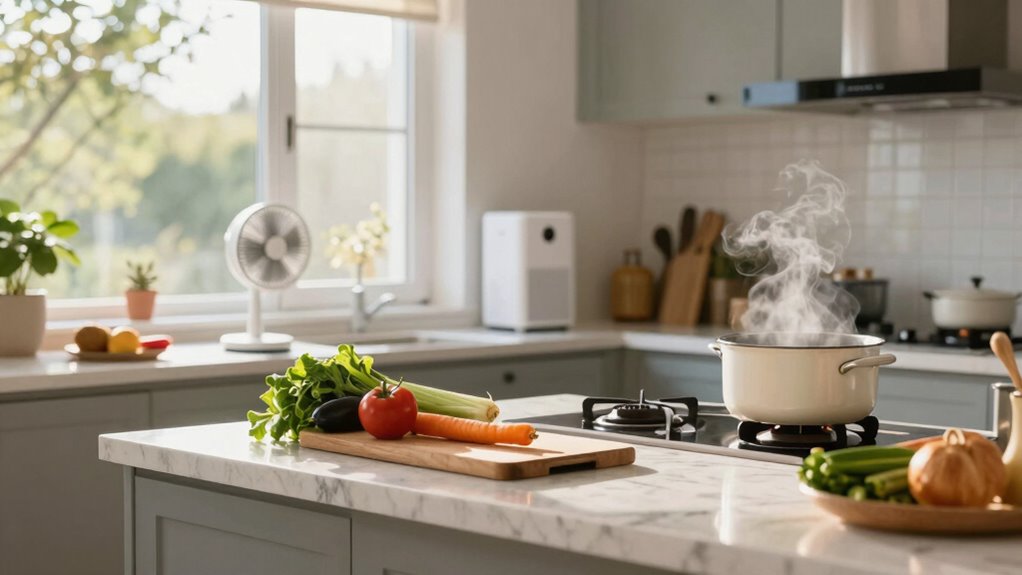

Without a range hood, improving your kitchen air quality involves good ventilation and odor control. Open windows and use exhaust fans to circulate fresh air and remove fumes. Place air purifiers with activated carbon filters near cooking areas to trap odors and pollutants. Regularly clean surfaces and avoid blocking airflow pathways. For more effective and budget-friendly tips, you can explore different airflow techniques and tools that keep your kitchen fresh and healthy.
Key Takeaways
- Open windows and doors during and after cooking to promote natural ventilation and reduce odors.
- Use portable fans and strategically position air purifiers with activated charcoal or HEPA filters.
- Incorporate natural odor absorbers like boiling lemon, cinnamon, or herbs to neutralize smells.
- Regularly clean surfaces, appliances, and replace filters to maintain air quality and reduce pollutants.
- Install exhaust fans or improve cross-ventilation for effective fume and odor removal without a range hood.

MOOKA Air Purifiers for Home Large Room up to 1076ft², H13 True HEPA Air Filter Cleaner, Odor Eliminator, Remove Smoke Dust Pollen Pet Dander, Night Light, B-D02L White
MOOKA B-D02L AIR PURIFIER FOR LARGE ROOM: With the high-efficiency filtration system, the air purifier covers an area…
As an affiliate, we earn on qualifying purchases.
As an affiliate, we earn on qualifying purchases.
Why Good Air Quality Matters When Cooking Without a Range Hood
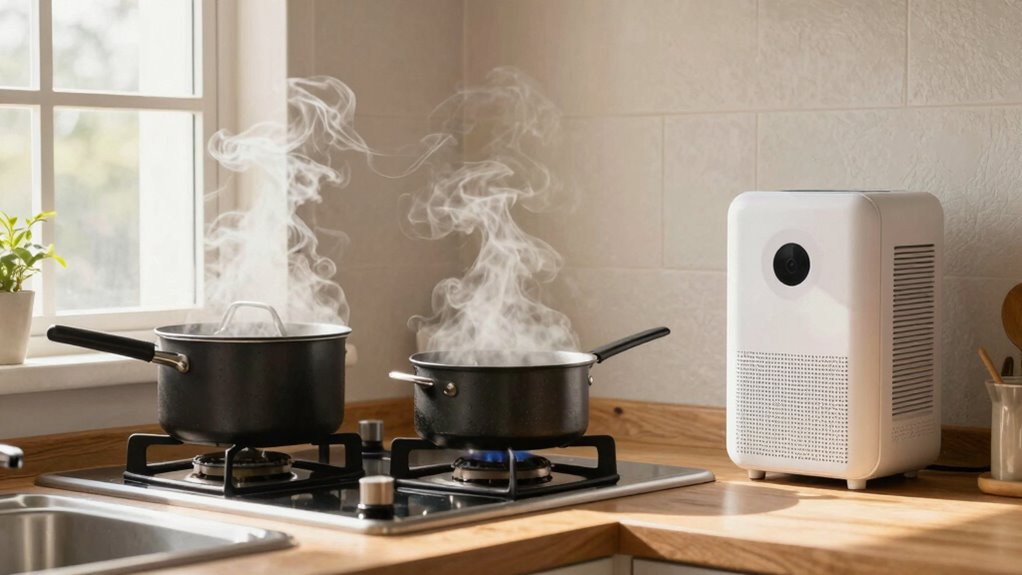
Cooking without a range hood can lead to poor indoor air quality, which may cause health issues and discomfort. Without proper ventilation, smoke, grease particles, and odors linger, decreasing air quality in your kitchen. Poor air quality can trigger respiratory problems, allergies, and headaches over time. Maintaining good air quality offers clear health benefits, helping you breathe easier and reducing exposure to harmful pollutants. When you cook without a range hood, it’s essential to find alternative ways to improve ventilation and reduce airborne contaminants. Prioritizing air quality isn’t just about comfort; it’s about protecting your long-term health. Being aware of how cooking impacts indoor air helps you take steps to ensure a healthier, more comfortable living environment. Proper ventilation plays a key role in maintaining a healthier kitchen environment, especially when a range hood isn’t available. Additionally, using air purifiers can effectively reduce airborne pollutants and improve indoor air quality.
Incorporating ventilation strategies can further enhance air circulation and help remove contaminants more efficiently.
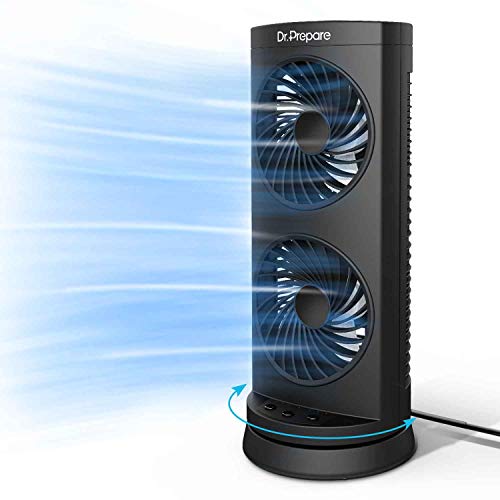
Dr. Prepare Desk Fan Tower Fan Cooling Fan, Portable Oscillating Fan with 3-Speed Options, Dual Air Circulation, 110° Oscillation, 3 Timers, Table Fan for Bedroom Dorm Room Office Desktop, 13 inch
【Feel The Coolness】Features dual fans to maximize air movement and deliver strong airflow throughout the stuffy space in…
As an affiliate, we earn on qualifying purchases.
As an affiliate, we earn on qualifying purchases.
How to Vent Kitchen Odors Without a Range Hood
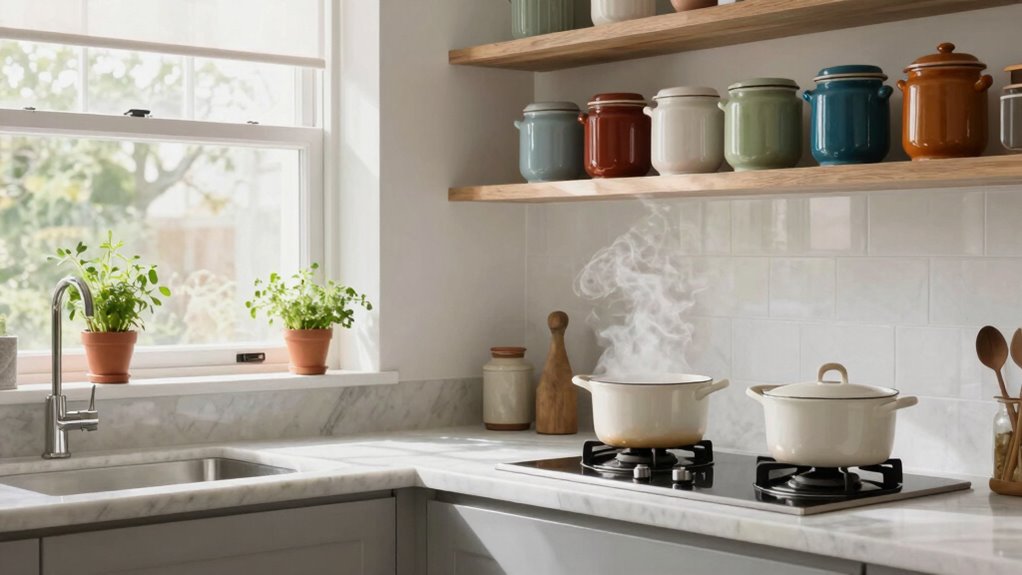
Even without a range hood, you can effectively vent kitchen odors by improving airflow through strategic ventilation methods. Opening windows and using exhaust fans helps circulate fresh air and remove lingering smells. Positioning your cookware selection and kitchen decor to promote airflow—such as placing oscillating fans or creating cross-ventilation—can make a big difference. Keep windows open during and after cooking to let odors escape naturally. Avoid clutter that blocks airflow and consider using air purifiers with activated carbon filters to trap odors. Properly arranged cookware and decor can also enhance ventilation by preventing air stagnation. Additionally, understanding the importance of air circulation and how it impacts odor removal can help you optimize your ventilation strategies. For instance, ensuring airflow patterns are directed toward open windows or exhaust fans can significantly improve odor dispersal. Being aware of ear wax odor or other unexpected smells can help you identify issues early and take appropriate measures. Utilizing ventilation techniques like using fans or strategic window placement can further improve air quality. These simple steps ensure your kitchen stays fresh, even without a range hood, making your cooking space more comfortable and inviting.

Moso Natural Air Purifying Bag 200g | HGTV Editor's Pick | Premium Bamboo Charcoal Odor Absorber for Home & Car | Closet Odor Eliminator & Car Air Freshener | Long Lasting Charcoal Bags Cover 90sqft
Car and Closet Odor Eliminator: The Moso Natural activated charcoal odor absorber works like a magnetic sponge to…
As an affiliate, we earn on qualifying purchases.
As an affiliate, we earn on qualifying purchases.
Best Ventilation Solutions for Kitchens Without Range Hoods

When your kitchen lacks a range hood, selecting effective ventilation solutions becomes essential for maintaining air quality. You should consider installing ventilation systems that improve airflow and remove pollutants. An excellent option is a high-quality exhaust fan placed strategically near cooking areas, which helps vent fumes and moisture outside. Complement this with air filtration units, like HEPA filters, to trap airborne particles and odors that escape the ventilation. Portable air purifiers can also boost indoor air quality, especially in smaller spaces. Make certain your ventilation systems are powerful enough for your kitchen size and are maintained regularly. Proper airflow management is crucial for preventing the buildup of pollutants and ensuring a healthier cooking environment. Additionally, choosing ventilation systems with adjustable settings can help tailor airflow to your specific needs. Incorporating air purification technologies into your ventilation plan can further enhance air quality by effectively reducing airborne contaminants, creating a healthier environment, reducing pollutants and odors without a range hood. Regularly inspecting and replacing filters ensures optimal performance of your air filtration units and maintains cleaner indoor air. Implementing proper maintenance schedules is vital to sustain the effectiveness of your ventilation and filtration solutions over time.

Comfort Zone Twin Window Fan with Reversible Airflow Control, 9 inch, Auto-Locking Expanders, 2 Speed Fan, Dual Fan, Exhaust, Airflow 9.84 ft/sec, Ideal for Home, Kitchen, Bedroom & Office, CZ319WT
DUAL SPEED SELECTION: Enjoy the flexibility of choosing between two air output options on this twin speed window…
As an affiliate, we earn on qualifying purchases.
As an affiliate, we earn on qualifying purchases.
How to Use Exhaust Fans and Windows to Vent Your Kitchen
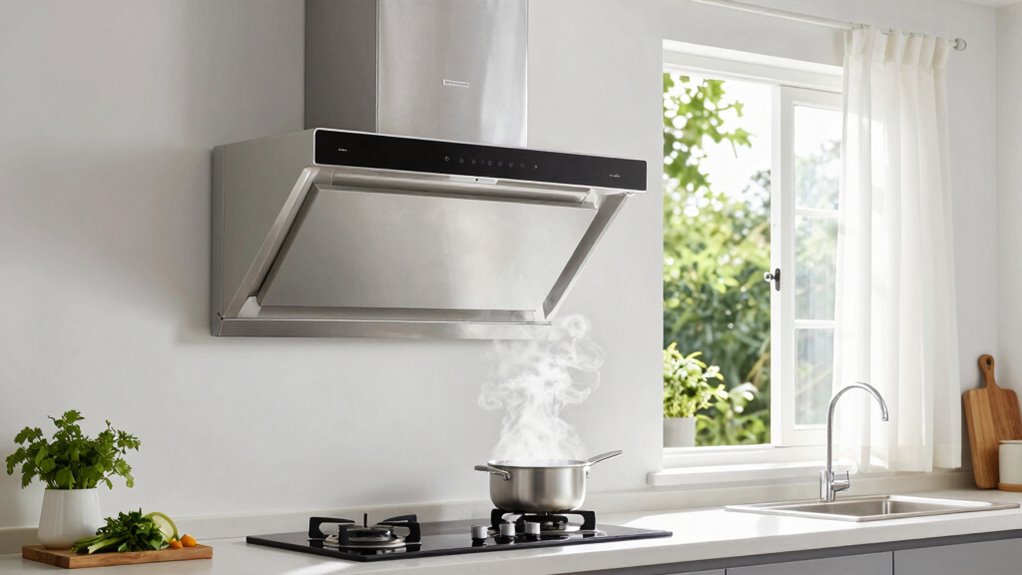
Maximizing the effectiveness of your kitchen ventilation starts with properly using exhaust fans and windows. First, consider your kitchen layout; place exhaust fans near the cooking area to capture smoke and odors quickly. Use windows strategically—open them during cooking to create cross-ventilation, allowing fresh air to flow in and fumes to escape. Keep your exhaust fans clean and well-maintained to ensure peak performance, and check that filters are clear of grease and debris. When cooking, turn on the exhaust fan early and keep windows open throughout to prevent buildup of pollutants. Regular ventilation maintenance helps maintain airflow and prevents odors from lingering. Additionally, integrating local automation systems can help monitor air quality and notify you when ventilation is needed, further enhancing your kitchen’s air quality. Proper ventilation strategies are essential for safe and healthy cooking environments. By combining proper fan use and strategic window opening, you greatly improve your kitchen’s air quality, even without a range hood. Incorporating knowledge about air purification methods can also contribute to a cleaner indoor environment. Using smart sensors to track pollutant levels can optimize your ventilation efforts and ensure a healthier kitchen atmosphere. Ensuring consistent air exchange is vital for removing cooking byproducts effectively.
How Air Purifiers Can Keep Your Kitchen Air Fresh
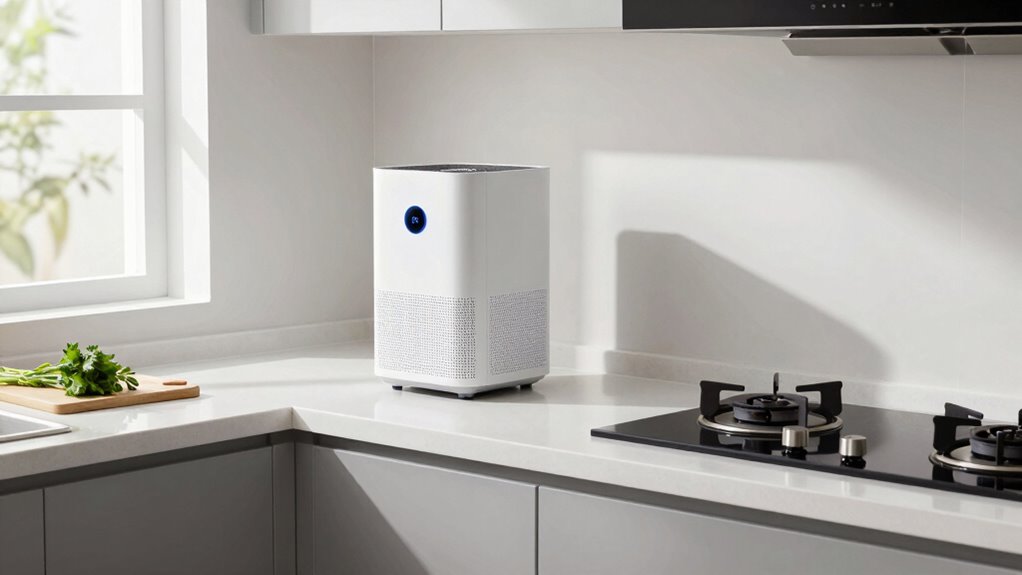
Air purifiers can effectively remove lingering odors and keep your kitchen smelling fresh. They also help reduce cooking fumes, making the air healthier to breathe. Plus, they improve air circulation, ensuring your kitchen stays comfortable and clean. Regular maintenance, such as checking and replacing filters, is essential to keep your purifier working efficiently for optimal performance. Incorporating proper ventilation can further enhance air quality by dispersing airborne pollutants more effectively. Additionally, choosing an air purifier with advanced filtration options can target specific pollutants like volatile organic compounds, further improving indoor air quality. Proper air flow management is also crucial for maintaining a healthy kitchen environment. Being mindful of filter lifespan and replacing filters as recommended ensures ongoing effectiveness of your air purifier.
Effective Odor Removal
Have you ever noticed lingering cooking odors that just won’t go away? To combat this, proper air purifier placement is key. Position your device near the source of the odor, like the stove or prep area, to maximize effectiveness. Use odor absorption techniques, such as choosing purifiers with activated carbon filters, which are specifically designed to trap and neutralize smells. Regularly changing or maintaining these filters enhances odor removal. Additionally, keep doors and windows open when possible to promote airflow, helping odors escape and fresh air circulate. Incorporating connected equipment like smart air purifiers that can monitor air quality levels and adjust accordingly can further improve your kitchen’s environment. Combining strategic placement with effective odor absorption techniques ensures your air purifier works efficiently, keeping your kitchen smelling clean and fresh without the need for a range hood.
Reducing Cooking Fumes
Cooking fumes can quickly accumulate and degrade your kitchen’s air quality, but the right air purifier can make a noticeable difference. Air purifiers with activated carbon and HEPA filters excel at pollutant removal, capturing smoke, odors, and airborne particles. Choosing a purifier suited for your kitchen size ensures ideal air quality. Keep in mind:
| Feature | Benefit |
|---|---|
| Activated Carbon | Absorbs odors and chemical fumes |
| HEPA Filter | Removes fine particulate matter |
| Suitable Capacity | Ensures efficient pollutant removal |
| Continuous Operation | Maintains fresh air constantly |
| Proper Placement | Maximizes purifier effectiveness |
Using an air purifier helps maintain cleaner, fresher air, reducing fumes and improving your kitchen environment without a hood. Discover Home Decor Inspiration and Interior Design Tips
Improving Air Circulation
To keep your kitchen air fresh, improving airflow is essential, especially when using an air purifier. Proper airflow patterns help distribute clean air evenly and prevent the buildup of fumes and odors. Focus on optimizing your ventilation design by ensuring fresh air enters from one side and stale air exits from another. This creates a steady circulation that enhances the purifier’s effectiveness. You can achieve better airflow by opening windows or installing vents that promote cross-ventilation. Position your air purifier in a central location where it can maximize air circulation. Avoid blocking vents or airflow pathways, which can hinder the circulation process. Improving your ventilation design and airflow patterns ensures your kitchen remains fresh and free of lingering fumes.
Natural Ways to Manage Smoke and Cooking Odors

Managing smoke and cooking odors naturally is an effective way to keep your kitchen air fresh without relying on chemical-laden air fresheners. You can improve indoor air quality by using natural ventilation methods, such as opening windows and doors during cooking. This allows fresh air to flow in and odors to escape, reducing buildup. Using exhaust fans or portable fans directed toward open windows also helps circulate air effectively. Additionally, boiling a mixture of water and natural ingredients like lemon, cinnamon, or herbs can neutralize odors without introducing chemicals. Placing bowls of activated charcoal or baking soda around your kitchen can absorb lingering smells. These simple, natural strategies support healthier indoor air quality while keeping your kitchen smelling fresh.
Tips for Cleaning and Reducing Air Pollutants in Your Kitchen

Regularly cleaning your kitchen surfaces and appliances is essential for reducing airborne pollutants. Dust, grease, and food particles from pollutant sources can linger and compromise your air quality. Use a damp cloth and non-toxic cleaners to wipe down countertops, stovetops, and appliances, removing residues that can trap pollutants. Incorporate air quality monitoring devices to identify pollutant levels and pinpoint sources of contamination. Pay special attention to areas prone to grease buildup, such as range hoods, backsplash, and oven vents. Regularly empty trash cans and clean recycling bins to prevent mold and odors. Properly maintained cleaning routines help minimize airborne particles, improving overall air quality in your kitchen and making it safer for you and your family.
Choosing the Right Ventilation Tools on a Budget
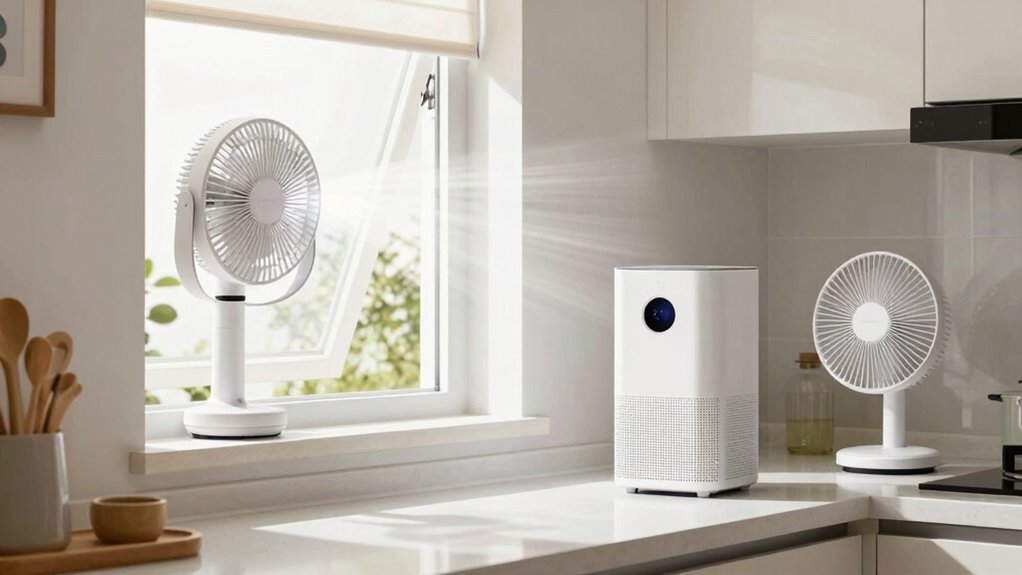
Effective ventilation can considerably improve your kitchen’s air quality without breaking the bank. Start with simple DIY upgrades like installing exhaust fans or vent covers to increase airflow. Look for affordable, energy-efficient models that fit your space and budget; many brands offer budget tips online for easy installation. Using portable fans can also help circulate air and remove cooking fumes. Check secondhand stores or online marketplaces for used equipment, which can save money while still providing effective ventilation. Consider creating a makeshift range hood using inexpensive materials if a traditional hood isn’t an option. Prioritize tools that are easy to install and maintain, ensuring long-term effectiveness without overspending. With a little research and DIY effort, you can substantially boost your kitchen’s air quality on a tight budget.
Common Mistakes to Avoid When Ventilating Without a Hood
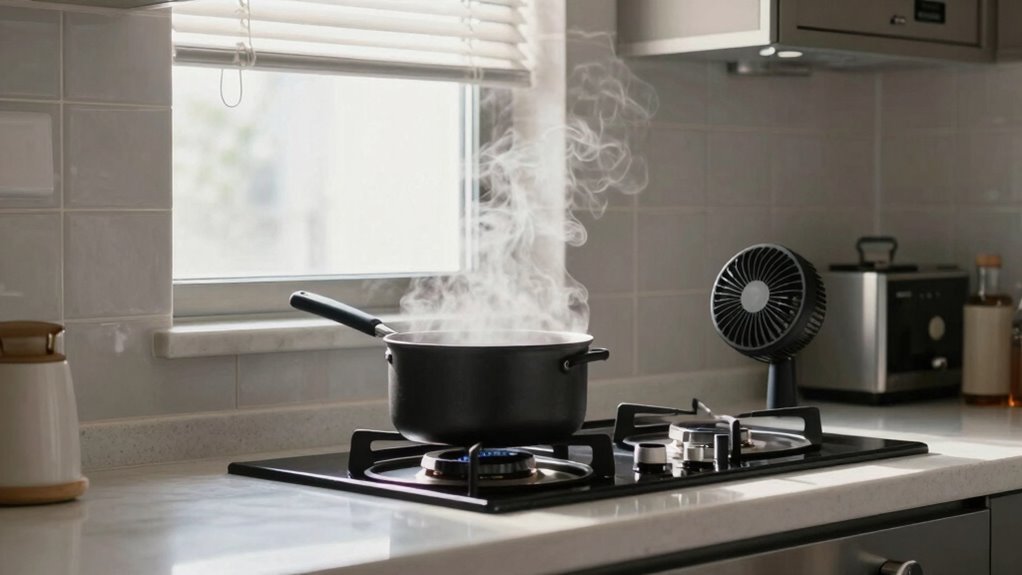
Even without a range hood, it’s easy to make common ventilation mistakes that can worsen indoor air quality. One common error is poor installation, which can block airflow or cause exhaust leaks, reducing effectiveness. Avoid misconceptions about airflow; many believe that simply opening a window is enough, but without proper placement or cross-ventilation, pollutants linger. Another mistake is not using exhaust fans correctly or neglecting to turn them on while cooking. Overestimating passive ventilation can also backfire, allowing smoke and fumes to build up. To improve air quality, ensure your ventilation tools are installed properly, with clear pathways for airflow. Don’t assume that any ventilation method works equally well—addressing installation mistakes and understanding airflow principles are key to effective ventilation without a hood.
When Should You Consider Installing a Range Hood or Professional Ventilation?
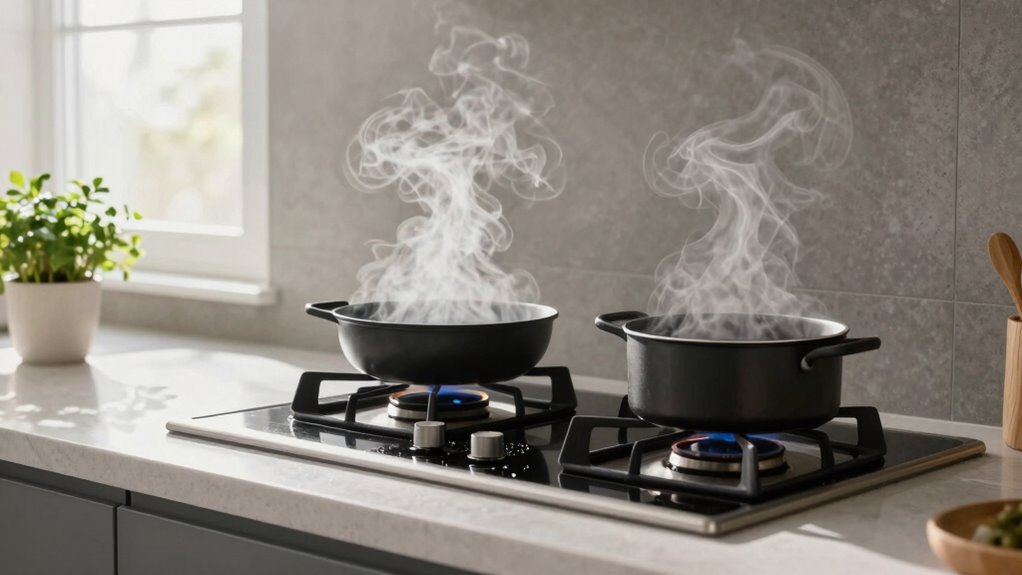
If your current ventilation isn’t effectively removing smoke, odors, or airborne particles, it might be time to think about a range hood or professional system. Pay attention to how often you cook and whether lingering smells or smoke bother you, as these are key indicators. Upgrading your ventilation can make a noticeable difference in your kitchen’s air quality and overall comfort.
Ventilation Effectiveness
When cooking produces strong odors, smoke, or steam that lingers in your kitchen, it’s time to contemplate installing a range hood or upgrading your ventilation system. To determine if your current setup is effective, start with a ventilation assessment. This helps identify if airflow optimization is needed to improve air exchange and remove contaminants efficiently. If odors persist or smoke seems to settle quickly, your ventilation isn’t performing well enough. Proper ventilation reduces indoor pollutants and maintains air quality. Consider whether your existing system moves enough air or if there are blockages or leaks. When these issues arise, installing a range hood or professional ventilation system becomes essential to ensure your kitchen stays fresh, safe, and comfortable.
Cooking Frequency Patterns
Frequent cooking sessions, especially those involving frying, grilling, or boiling, can quickly fill your kitchen with lingering odors, smoke, and steam. If your cooking frequency is high or your meal preparation habits involve multiple daily meals, investing in a range hood or professional ventilation becomes essential. Regularly cooking several times a day increases indoor air pollutants, making proper ventilation necessary to maintain air quality. Even if you don’t cook daily, occasional intense cooking sessions can still create enough buildup to warrant better airflow solutions. Consider installing a range hood if your cooking frequency suggests you spend significant time preparing meals. This helps prevent odors from lingering and reduces indoor air contamination, ensuring your kitchen remains fresh and healthy regardless of your cooking habits.
Odor and Smoke Control
To effectively manage odors and smoke in your kitchen, installing a range hood or professional ventilation becomes essential as soon as you notice lingering smells or visible smoke during cooking. Poor air quality can lead to discomfort and even health issues, making odor control a priority. Consider installing ventilation if you experience strong odors lasting after cooking, smoke accumulation, or if your kitchen tends to trap smells. A range hood helps extract airborne particles, improving air quality and reducing lingering odors. You might also explore portable air purifiers or increased natural ventilation. Keep in mind, proper ventilation not only enhances comfort but also protects your indoor air quality over time. Addressing these issues promptly ensures a healthier, more pleasant cooking environment for everyone.
Frequently Asked Questions
Can Indoor Plants Improve Air Quality in a Kitchen Without a Hood?
Indoor plants can improve air quality in your kitchen without a hood by actively purifying the air through natural processes. Choose plants known for indoor air purification, like pothos or snake plants, and guarantee proper plant maintenance by watering appropriately and providing adequate light. These plants absorb pollutants and release oxygen, helping to reduce indoor air pollution and create a healthier cooking environment.
How Often Should I Clean My Kitchen’s Ventilation Devices?
Ever wonder how often you should clean your kitchen’s ventilation devices? You should perform regular ventilation maintenance, ideally every 3 to 6 months, depending on usage. Establish a cleaning schedule to prevent grease buildup and ensure proper airflow. Regular cleaning keeps your ventilation systems efficient, reduces odors, and improves air quality, especially without a hood. Don’t wait until grime affects performance—stay proactive with consistent maintenance.
Are There Specific Cooking Techniques to Reduce Odors Naturally?
To naturally reduce odors, you can use smoke mitigation and odor absorption techniques. Opt for simmering vinegar or lemon slices on the stove to neutralize smells. Use a small fan or open windows to improve ventilation during cooking. Cover strong-smelling foods with lids or foil. You can also place bowls of baking soda or activated charcoal nearby to absorb odors. These methods help keep your kitchen fresher without a hood.
What Are Safe, Low-Cost Alternatives to Traditional Exhaust Fans?
Did you know that proper ventilation can cut cooking odors by up to 80%? If you don’t have a traditional exhaust fan, consider affordable air purification devices like portable air purifiers with HEPA filters, or DIY solutions such as open windows and strategically placed fans. These ventilation devices help improve air quality naturally, are safe, low-cost, and easy to set up, making your kitchen healthier without expensive upgrades.
How Do I Detect Poor Air Quality in My Kitchen?
You can detect poor air quality in your kitchen by using air quality sensors, which monitor pollutants and humidity levels, alerting you to issues. Additionally, smoke detection devices can immediately notify you if smoke or dangerous fumes are present. Regularly check for lingering odors or visible smoke, and trust these sensors to provide real-time data, helping you address problems quickly and keep your kitchen safe and well-ventilated.
Conclusion
Even without a range hood, you can keep your kitchen fresh by using fans, open windows, and air purifiers. Imagine cooking a spicy curry—by opening a window and turning on a fan, you prevent lingering odors and airborne pollutants. Regular cleaning and smart ventilation choices make a big difference. With these tips, you’ll create a healthy, odor-free space, even if you don’t have a built-in hood. Your kitchen can stay fresh and inviting every time you cook.