
When it comes to dough, underproofed and overproofed states are easily identifiable. If your dough feels dense and springs back quickly when poked, it’s underproofed. On the other hand, if it’s overly soft and collapses, it’s overproofed. You want a dough that’s puffy and holds its shape. Recognizing these traits can help you achieve the ideal texture. Stick around to uncover more tips for perfecting your bread-making technique.

Get kitchen gear delivered free with Prime
- Fast, free delivery on millions of items
- Prime Video, Amazon Music and more included
- Member-only deals all year
Key Takeaways
- Underproofed dough feels dense and springs back quickly when poked, indicating insufficient yeast activity.
- Overproofed dough is soft and weak, showing no resilience when poked.
- Look for volume increase; underproofed dough lacks it, while overproofed dough may collapse.
- Ideal proofed dough should be puffy and airy, maintaining its shape when handled.
- Proofing time varies; warmer conditions require less time for optimal fermentation.

When you’re baking bread, understanding the difference between underproofed and overproofed dough is essential for achieving that perfect rise. Both conditions stem from fermentation timing, and recognizing them can save your loaf from turning into a disappointment. You want to aim for the sweet spot where the dough has risen just enough to develop flavor and structure.
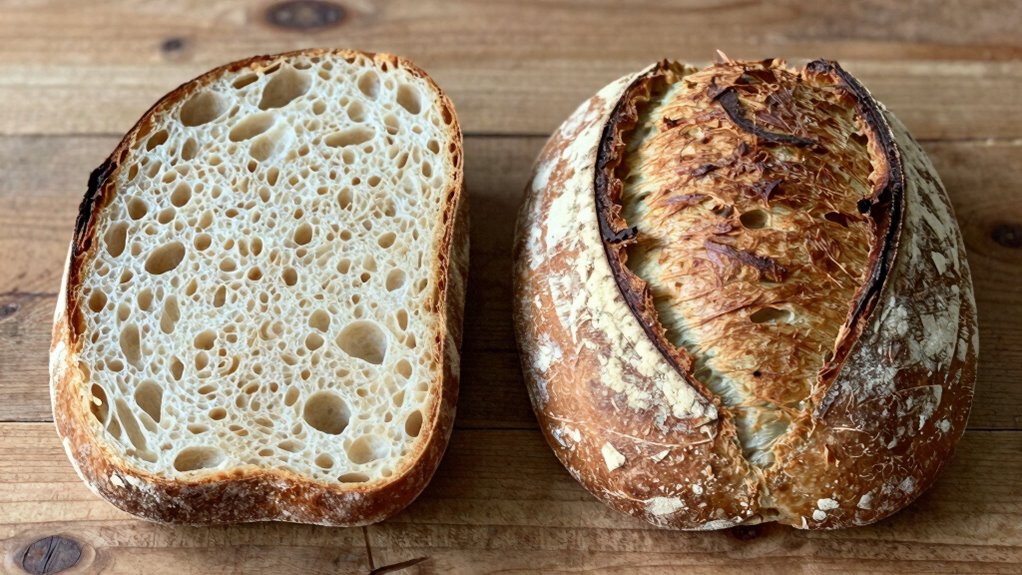
Underproofed dough often feels dense and hasn’t expanded adequately. When you poke it, it springs back quickly, indicating that the yeast hasn’t had enough time to work its magic. You’ll notice a tight dough texture, making it difficult for the bread to rise in the oven. If you find yourself in this situation, don’t panic; you can still rescue your dough. Let it rest a bit longer and check it frequently. A good sign of readiness is when the dough holds an impression but gradually springs back, showing it’s ready for the oven.
Underproofed dough feels dense and springs back quickly; let it rest until it holds an impression and is ready for baking.
On the flip side, overproofed dough presents its own set of challenges. You’ll recognize it by its overly soft texture and a lack of structure. When you poke it, there’s little to no spring back, and the dough might even deflate. This is a sign that the yeast has consumed most of the sugars, leading to weakened gluten structure. If you’ve overproofed your dough, you might be tempted to bake it anyway, but this usually leads to flat, dense bread that fails to rise properly in the oven.
To strike the right balance, keep a close eye on fermentation timing. The ideal proofing time can vary based on several factors, including temperature and humidity. If your kitchen is warm, the dough may need less time to proof compared to a cooler environment. Use your senses; feel the dough and observe its volume. If it looks puffy and feels airy but still holds its shape, you’re on the right track.
As an affiliate, we earn on qualifying purchases.
Frequently Asked Questions
What Ingredients Affect Proofing Levels in Dough?
Yeast activity and flour type play essential roles in proofing levels. When you use active yeast, it ferments sugars, creating gas that makes the dough rise. Different flour types can affect this process; for instance, high-protein bread flour supports stronger gluten development, enhancing rise. If you choose all-purpose flour, it may not provide the same support. Keep an eye on the temperature too, as warmth can boost yeast activity and speed up proofing.
How Does Temperature Influence Proofing Outcomes?
Imagine biting into a perfectly airy loaf, where every crumb sings of ideal proofing. Temperature plays a vital role in this harmony. Warmer conditions boost yeast activity, speeding up fermentation, while cooler temperatures slow it down, risking underproofing. If it’s too hot, you might rush the process, leading to overproofing. Finding that sweet spot guarantees your dough rises just right, giving you that delightful texture you crave.
Can I Rescue Underproofed or Overproofed Dough?
Yes, you can rescue underproofed or overproofed dough! For underproofed dough, let it rest longer at room temperature or in a warm spot for proofing adjustments. If it’s overproofed, gently deflate it and reshape, then allow it to proof again for a shorter time. Use dough recovery techniques like adjusting the temperature or humidity to create an ideal environment. Keep an eye on it, and you’ll get a better rise!
What Tools Help Measure Dough Proofing Accurately?
To measure dough proofing accurately, use a kitchen scale and a thermometer. Weighing your ingredients helps maintain proper dough hydration, while a thermometer guarantees the right temperature for ideal yeast activity. You can also use a proofing box or a simple oven with the light on to create a warm environment. Observing the dough’s volume and texture will give you additional clues about its proofing stage, so keep an eye on it!
How Long Should I Typically Proof My Dough?
When you watch your dough rise, it should swell like a balloon, filled with potential. Typically, you’ll proof your dough for about 1 to 2 hours, depending on factors like dough hydration and yeast activity. Keep an eye on it; the surface should be slightly domed and puffy. If it doubles in size, you’ve hit the sweet spot. Trust your instincts, and remember, practice makes perfect!
As an affiliate, we earn on qualifying purchases.
Conclusion
In the world of baking, a little too much zeal can lead to some doughy dilemmas. If your bread seems a bit too enthusiastic or a tad shy, don’t fret; it’s all part of the learning curve. With practice, you’ll master that sweet spot between underproofed and overproofed. Remember, each loaf tells a story, and with each bake, you’re one step closer to perfection. Embrace the journey, and let your dough rise to the occasion!
As an affiliate, we earn on qualifying purchases.
As an affiliate, we earn on qualifying purchases.
Halloween Picks
halloween
As an affiliate, we earn on qualifying purchases.