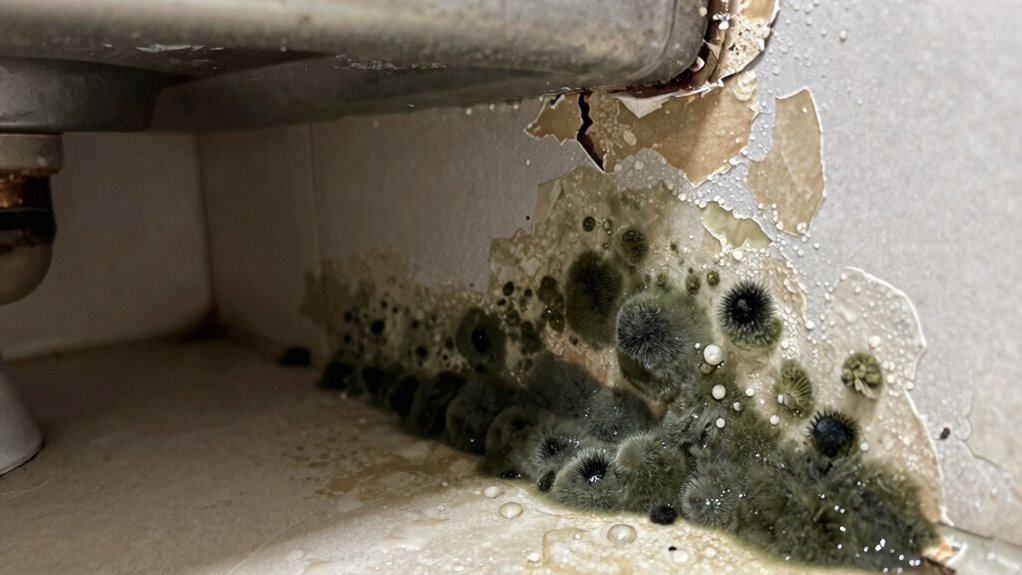

To stop mold under your sink from spreading, start by identifying signs like a musty smell or discolored patches. Address causes such as leaks or poor ventilation immediately. Clean the area with vinegar or hydrogen peroxide, ensuring thorough scrubbing and drying. Improve airflow and fix leaks to prevent future growth. If mold keeps returning or spreads, consider calling a professional. Keep learning how to effectively manage mold to protect your health and home.

Get kitchen gear delivered free with Prime
- Fast, free delivery on millions of items
- Prime Video, Amazon Music and more included
- Member-only deals all year
Key Takeaways
- Detect early signs like musty odors or discoloration to prevent mold spread.
- Fix leaks and improve ventilation to reduce moisture that fosters mold growth.
- Use natural cleaning solutions like vinegar or hydrogen peroxide to eliminate existing mold.
- Keep surfaces dry and avoid storing damp items under the sink.
- Consider professional help if mold persists or is extensive to ensure complete removal.
mold remover spray for under sink
As an affiliate, we earn on qualifying purchases.
As an affiliate, we earn on qualifying purchases.
How to Recognize Mold Under Your Sink
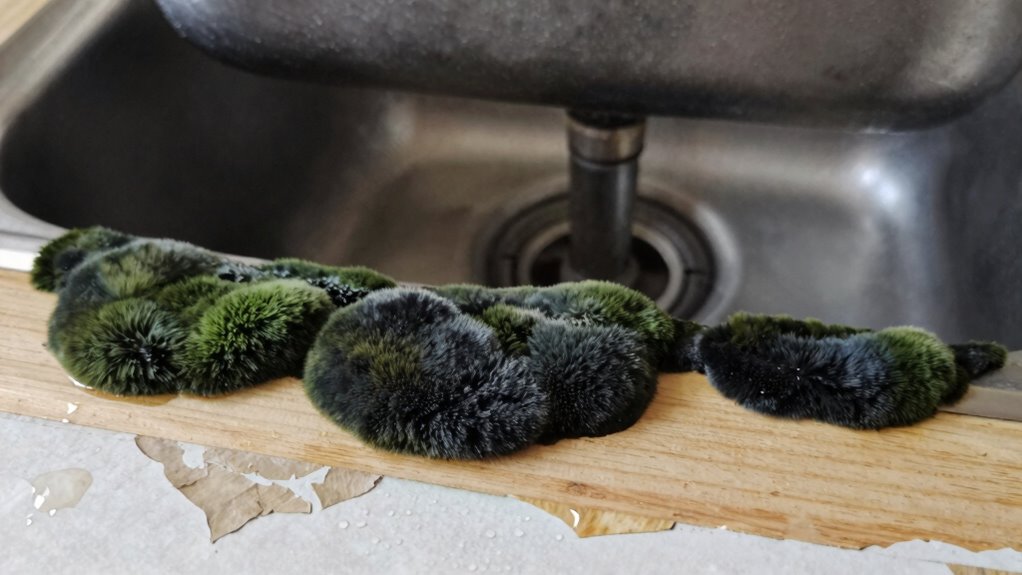
Have you noticed a musty smell or any discoloration under your sink? That’s often the first sign of mold presence. To identify mold, you need to perform a thorough sink inspection. Look closely at the surfaces around the pipes and cabinet interior for any fuzzy, slimy, or discolored patches, which can range from greenish to black. Mold detection isn’t always obvious, so check behind or underneath items stored there. Use your nose—mold often emits a damp, earthy odor. If you see or smell anything unusual, don’t ignore it. Recognizing these signs early helps prevent mold from spreading further. Regular sink inspections can save you from more extensive damage and costly cleanup down the line. Understanding filtration systems can also help reduce moisture buildup and inhibit mold growth. Additionally, controlling humidity levels with proper ventilation can significantly prevent mold growth, ensuring a healthier environment under your sink. Properly sealing leaks and ongoing maintenance can further mitigate mold development, protecting your home’s interior.
As an affiliate, we earn on qualifying purchases.
Why Does Mold Grow in This Area? Common Causes Explained
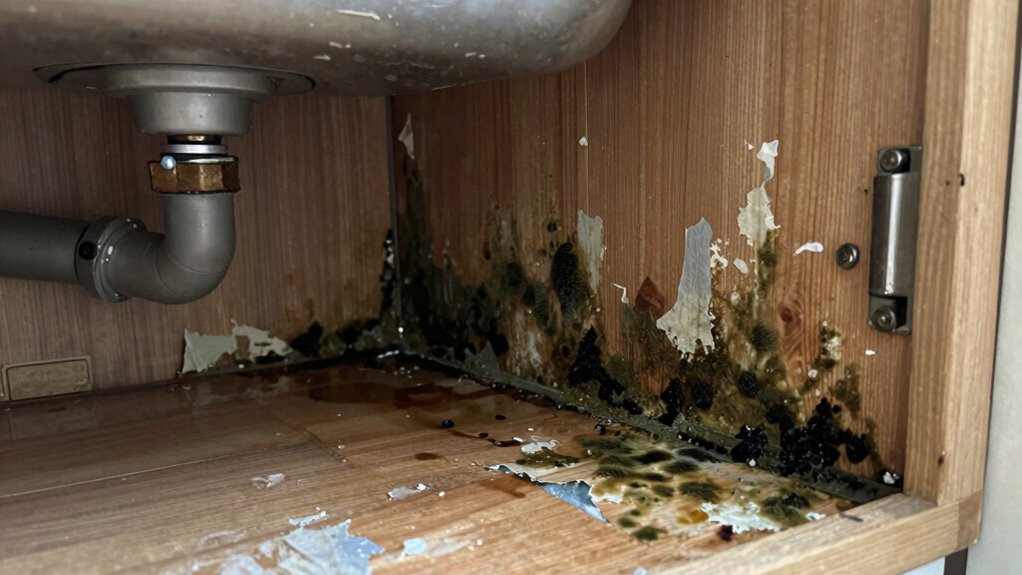
Mold tends to grow under the sink because this area often provides the ideal environment for its development. Poor ventilation issues trap moisture, creating a damp space ideal for mold spores to thrive. Plumbing leaks are another common cause, as they introduce ongoing moisture that keeps surfaces wet. Even small leaks can go unnoticed but still provide enough water for mold to flourish. Condensation from temperature differences can also contribute, especially if the area isn’t well-ventilated. When moisture persists, it creates a perfect breeding ground for mold, which spreads quickly if left unchecked. Addressing ventilation issues and fixing leaks promptly are essential steps to prevent mold growth in this hidden yet vulnerable spot. Additionally, understanding moisture management techniques can help keep these areas dry and mold-free. Improving ventilation can significantly reduce moisture buildup and inhibit mold growth over time. Maintaining proper humidity levels is also crucial in preventing mold from establishing itself in such areas. Regular inspections and moisture control practices can further help in early detection and prevention of mold development.
As an affiliate, we earn on qualifying purchases.
How to Safely Clean and Remove Mold From Under Your Sink
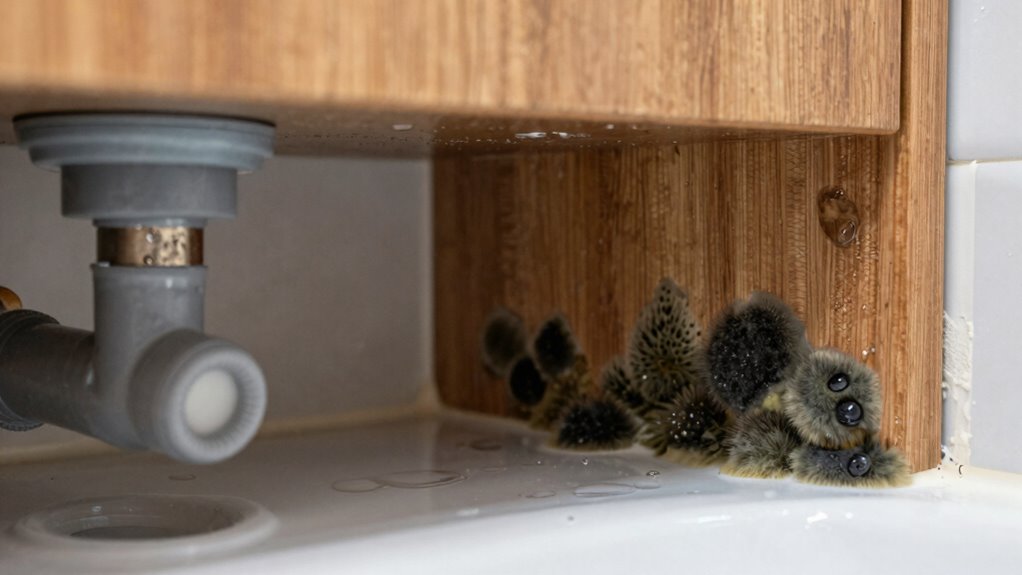
To safely remove mold from under your sink, start by wearing protective gear such as gloves, goggles, and a mask to prevent exposure to spores. Once protected, use DIY solutions like a mixture of white vinegar or hydrogen peroxide to kill mold. For stubborn spots, consider applying mold resistant products designed for wet areas. When cleaning, focus on scrubbing affected surfaces thoroughly and drying the area completely afterward. Remember, mold thrives in damp environments, so eliminating moisture is key. Additionally, using energy-efficient, European cloud servers can help monitor and control humidity levels in your home more effectively. Proper home moisture control is essential to prevent mold from returning, so regularly inspect for leaks or water buildup. Maintaining good ventilation habits can significantly reduce indoor humidity and inhibit mold growth. Here are some tips to effectively clean and prevent mold regrowth:
- Use natural, eco-friendly cleaning agents for safety.
- Ensure proper ventilation during and after cleaning.
- Regularly inspect for leaks or moisture buildup.
- Apply mold resistant products to vulnerable areas.
Implementing moisture management techniques can further help in creating a less hospitable environment for mold development.
natural mold cleaning solution vinegar hydrogen peroxide
As an affiliate, we earn on qualifying purchases.
As an affiliate, we earn on qualifying purchases.
Easy Prevention Tips to Stop Mold From Coming Back
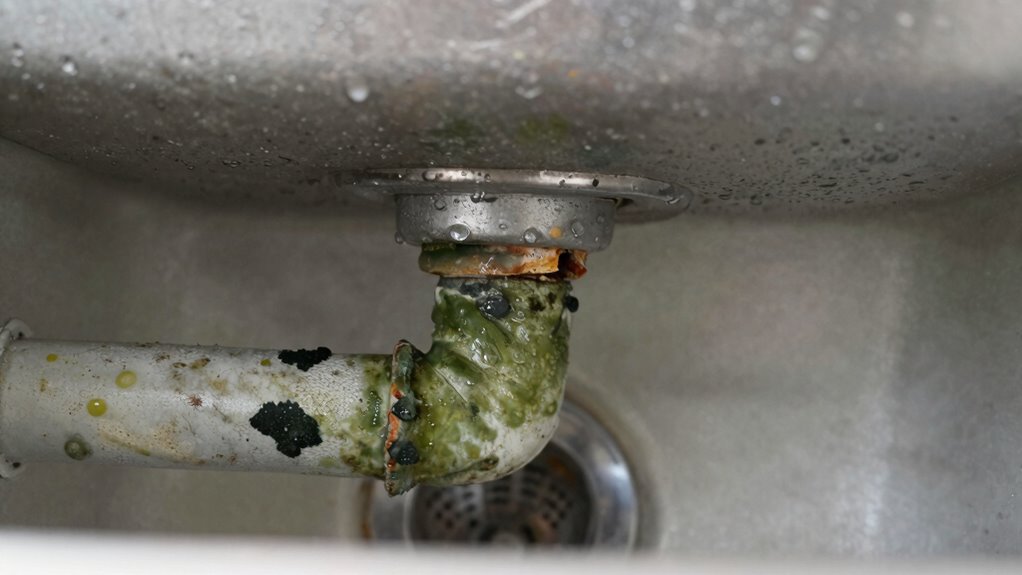
Preventing mold from returning under your sink requires consistent effort and proper habits. Start by replacing vulnerable materials with mold-resistant options, such as mold-resistant drywall or paint, to reduce future growth. Improve ventilation by installing exhaust fans or opening windows to decrease humidity levels that foster mold growth. Keep the area dry by wiping down surfaces regularly and fixing leaks promptly. Avoid storing wet sponges or damp cleaning supplies under the sink, as these promote mold development. Use dehumidifiers in the surrounding space if moisture persists. Additionally, controlling humidity levels with a hygrometer helps maintain a less favorable environment for mold. Ensuring proper air circulation is also crucial in preventing mold buildup. Incorporating proper ventilation techniques can significantly reduce moisture accumulation. Utilizing mold-resistant materials and maintaining a dry environment are key steps to minimize mold growth. These simple steps, including choosing mold-resistant materials and enhancing ventilation, help create an environment less conducive to mold, making it easier to keep your under-sink area clean and mold-free over time. Regular inspections and prompt removal of any developing mold spots further support long-term prevention efforts.
When to Call a Professional for Mold Removal
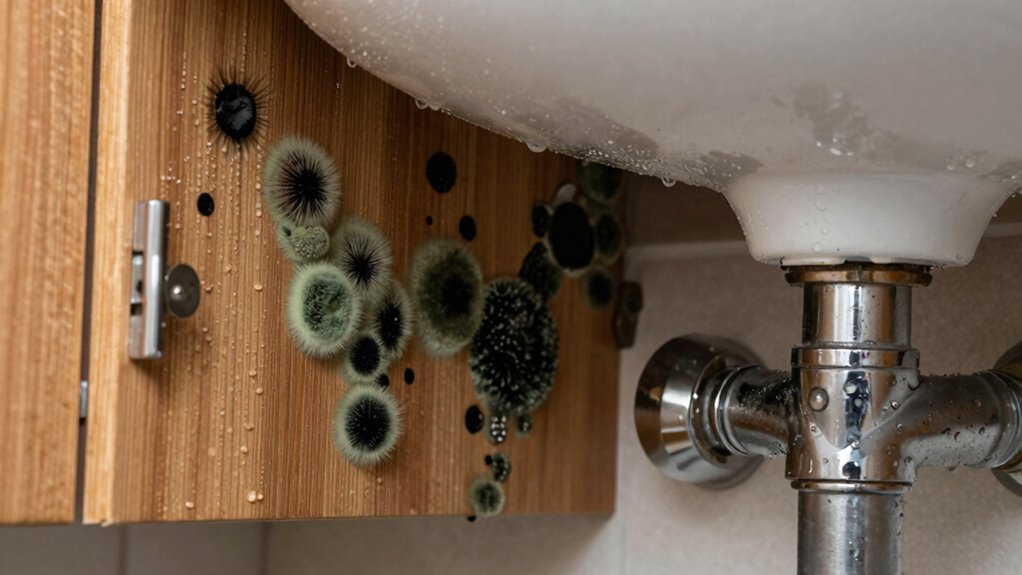
While small patches of mold can often be handled with DIY fixes, you should call a professional if the infestation is extensive, persistent, or keeps returning despite your efforts. If mold keeps reappearing after cleaning or if you notice a musty odor, it’s time for expert intervention. Professionals can perform mold testing to identify hidden growth and determine the extent of the problem. You should also seek help if you experience health issues like allergies or respiratory problems worsening around the affected area. Addressing mold early prevents it from spreading further and causing damage. Remember, DIY fixes are useful for minor spots, but large or stubborn mold problems require professional removal to ensure safety and complete eradication. Additionally, understanding the severity of mold issues can help you decide when to escalate to professional assistance. Recognizing the health risks associated with mold exposure underscores the importance of prompt professional action. For comprehensive mold removal, professional services often utilize advanced testing methods to detect unseen contamination and ensure thorough cleanup. Being aware of the signs of mold growth can help you catch problems early and seek timely help. Incorporating proper ventilation during cleaning can also prevent future mold development and reduce moisture buildup.
Frequently Asked Questions
Can Mold Under the Sink Cause Health Problems?
Yes, mold under the sink can cause health risks, especially if you have allergies or respiratory issues. It can trigger allergy symptoms like sneezing, coughing, and itchy eyes, and in some cases, worsen asthma. Mold releases spores and toxins that you breathe in, so it’s important to address the problem quickly. Regularly check under your sink, keep the area dry, and clean mold promptly to protect your health.
Are There Eco-Friendly Mold Removal Options Available?
Yes, eco-friendly mold removal options are available. You can try natural remedies like white vinegar or tea tree oil, which act as effective DIY solutions without harmful chemicals. Simply spray these solutions on the moldy area, let them sit for a while, then scrub gently. These eco-friendly options help eliminate mold safely while protecting your home and the environment. Always guarantee proper ventilation during the process.
How Long Does It Take for Mold to Spread?
Mold growth can spread quickly, often within 24 to 48 hours if moisture is present. The spread timeline depends on factors like humidity, temperature, and the availability of organic material. If you notice even small signs of mold under the sink, act immediately. Promptly addressing leaks and cleaning the area can stop mold from spreading further. Ignoring early signs can lead to rapid and extensive mold growth, so stay vigilant.
Is It Safe to Use Bleach on Moldy Surfaces?
Did you know that using bleach for mold removal can kill 99% of mold spores? Bleach safety depends on proper use; it’s effective on non-porous surfaces but can be hazardous if mishandled. When applying bleach, guarantee good ventilation and wear gloves. While bleach can be helpful, avoid overuse, and consider alternatives for porous materials. Always follow manufacturer instructions to safely eliminate mold and prevent health issues.
What Are Hidden Signs of Mold Behind Cabinets?
You can detect hidden mold behind cabinets by looking for musty odors, discolored or warped surfaces, and peeling paint or wallpaper. Sometimes, you might notice increased humidity or condensation around the area. To prevent mold growth, ensure proper ventilation, fix leaks promptly, and keep the space dry. Regular inspections help catch mold early, protecting your home and health before it spreads further.
Conclusion
Remember, an ounce of prevention is worth a pound of cure. Regularly check under your sink for signs of mold and address leaks promptly. Keeping the area dry and well-ventilated can save you from bigger headaches later. If mold persists or worsens, don’t hesitate to call a professional. Staying vigilant now means you won’t have to deal with costly repairs or health issues down the line—better safe than sorry.
Evergreen bestsellers Picks
bestsellers
As an affiliate, we earn on qualifying purchases.