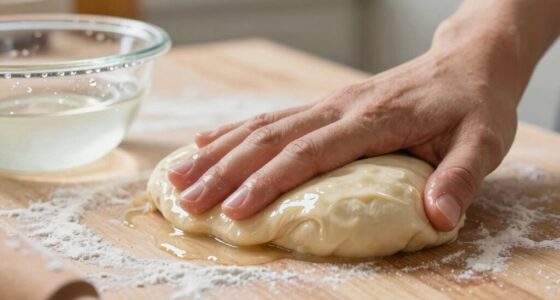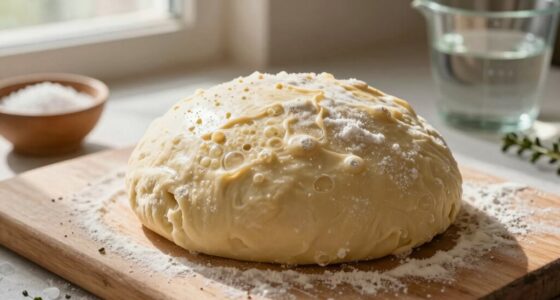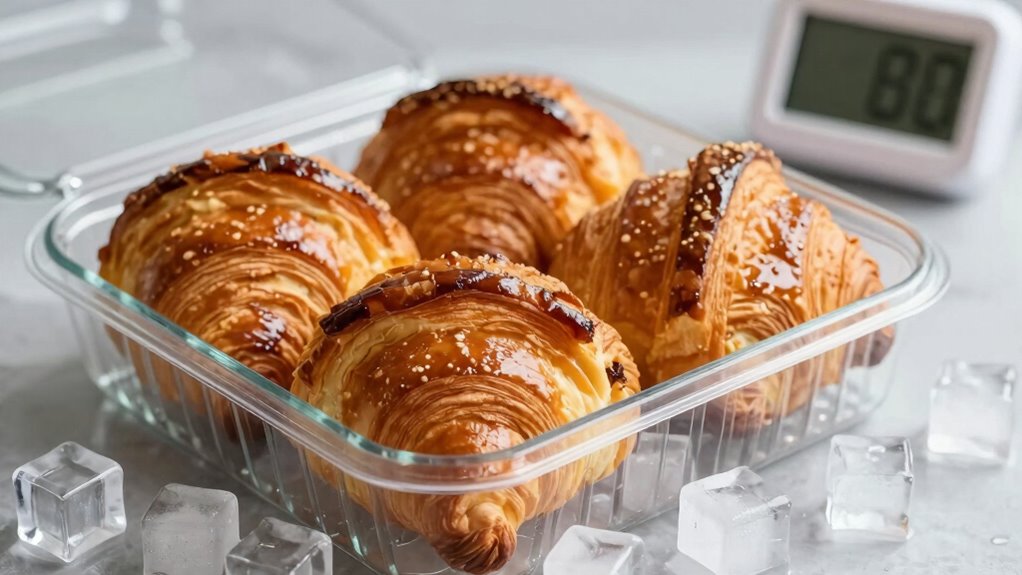

Cold proofing balances flavor development with timing by slowing fermentation, allowing yeast to produce richer flavors and improve dough texture. The extended process enhances gluten, creates finer crumb, and promotes a chewier crust. However, too long or too short can impact flavor and structure. Managing temperature and duration carefully can maximize benefits. Curious to understand how to best control cold proofing for perfect results? Keep exploring for more tips.

Get kitchen gear delivered free with Prime
- Fast, free delivery on millions of items
- Prime Video, Amazon Music and more included
- Member-only deals all year
Key Takeaways
- Cold proofing slows yeast activity, allowing for extended fermentation and enhanced flavor development.
- Longer cold proofing improves gluten structure, resulting in better dough elasticity and crumb quality.
- Precise timing is crucial; over-proofing can lead to sour flavors or dough collapse, while under-proofing limits flavor benefits.
- Cold proofing offers flexibility in scheduling, enabling better control over dough rise and texture.
- Balancing temperature and duration optimizes flavor richness without compromising dough integrity.
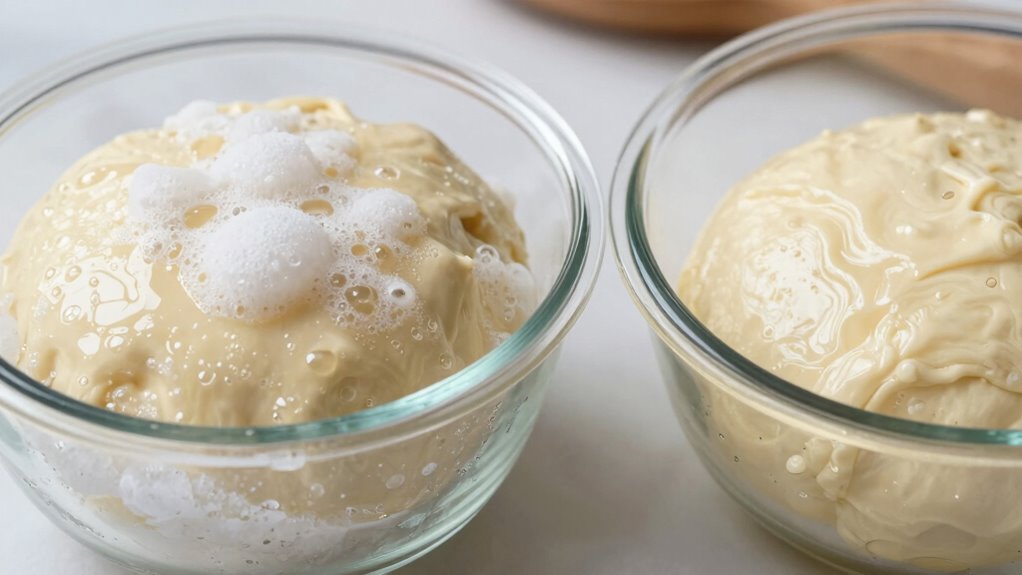
Cold proofing is a critical process for protecting structures and equipment from low temperatures that can cause damage or failure. When it comes to baking, however, cold proofing serves a different purpose: it influences how your bread develops flavor and texture. By slowing down yeast activity during dough fermentation, you gain more control over the process, which can markedly impact the final product. When you choose to cold proof your dough, you’re essentially giving the yeast more time to work at a lower temperature, resulting in a slow fermentation that enhances flavor complexity. This extended fermentation allows the yeast to produce more nuanced byproducts, like organic acids and esters, which contribute to a richer, more developed taste in your baked goods.
Cold proofing slows yeast activity, allowing for richer flavor development and improved bread texture through extended fermentation.
Timing is essential in cold proofing. If you leave your dough in the fridge for too long, it can over-ferment, leading to a sour or off-putting flavor, or a collapse in structure. Conversely, too short a period might not maximize the flavor benefits. Typically, cold proofing can range from a few hours to overnight, depending on the recipe and desired outcome. During this process, yeast activity slows but doesn’t stop entirely, meaning dough fermentation continues at a much slower pace. This slow fermentation gives you a chance to develop complex flavors and improve dough extensibility, making it easier to shape and bake with better oven spring.
Additionally, cold proofing can help with dough elasticity, leading to a better rise and more consistent crumb structure. You’ll notice that cold proofing also affects the texture of your bread. The longer fermentation allows gluten to develop more fully, resulting in a finer crumb and a chewier crust. Because yeast activity is subdued during cold proofing, the dough’s rise is more controlled, reducing the risk of over-expansion or irregular holes. This can be particularly advantageous for artisan-style loaves where a consistent crumb and depth of flavor matter. Additionally, cold proofing provides flexibility in your baking schedule, letting you prepare the dough well ahead of time without sacrificing quality. Incorporating fermentation control into your baking process can help optimize both flavor and texture. Properly managing fermentation is also crucial for achieving the desired proofing time and ensuring your bread turns out just right.
In the end, understanding the balance between flavor and timing is essential. Cold proofing doesn’t just extend dough fermentation; it reveals deeper flavors and better textures if managed carefully. You have the power to influence how your bread turns out by adjusting how long and at what temperature you let your dough ferment. Whether you’re aiming for a mildly tangy loaf or a richly flavored crust, mastering cold proofing allows you to fine-tune the process for perfect results every time.
As an affiliate, we earn on qualifying purchases.
Frequently Asked Questions
How Does Cold Proofing Affect Bread Texture?
Cold proofing slows fermentation, allowing gluten to develop more thoroughly. This process results in a bread texture that’s denser yet chewy, with a fine crumb structure. By controlling fermentation through cold proofing, you prevent over-proofing and achieve better gluten development. Ultimately, it enhances the bread’s chewiness and structure, giving you a well-rounded, flavorful loaf with a satisfying texture.
Can Cold Proofing Be Done With All Types of Dough?
You can cold proof most doughs, but some respond better depending on dough hydration and fermentation speed. High-hydration doughs benefit from cold proofing, as it slows fermentation and develops flavor. However, very stiff or low-hydration doughs might not proof well in cold conditions, leading to poor rise. Adjust fermentation times accordingly, and experiment to find what works best for your dough type and desired texture.
What Are Common Mistakes During Cold Proofing?
During cold proofing, you might overproof your dough if you leave it too long, which slows yeast activity and weakens gluten structure. Prevent this by timing your proof correctly—typically 12 to 24 hours—and keeping the dough at a consistent cold temperature. Also, don’t skip checking for signs of overproofing, like excessive rise or sour smell, to ensure your bread develops good flavor and texture without losing its shape.
How Does Temperature Influence Flavor Development?
Temperature is the maestro conducting your dough’s symphony, shaping its flavor. When you control fermentation temperature, you release deeper flavor complexity, allowing subtle notes to flourish. Too warm, and flavors may become muddled; too cold, and fermentation stalls, dulling taste. By maintaining the right temperature, you guarantee even fermentation control, giving your bread a rich, well-rounded flavor profile that sings with every bite.
Is Cold Proofing Suitable for Quick Bread Recipes?
Cold proofing isn’t ideal for quick bread recipes because it slows down fermentation, which is essential for developing dough elasticity. Quick breads rely on chemical leaveners like baking soda or baking powder for rapid rise, so cold proofing would hinder that process. If you want a faster result, stick to traditional proofing methods at room temperature. Cold proofing is better suited for yeasted breads that benefit from slow fermentation.
As an affiliate, we earn on qualifying purchases.
Conclusion
Now that you understand cold proofing’s balance between flavor and timing, you’re ready to master it. Remember, it’s all about patience and precision—do you want bread that’s bursting with flavor and perfect texture? By adjusting your cold proofing technique, you’ll enjoy bakery-quality results right at home. So, why settle for less when you can create the ideal loaf every time? Happy baking and savor every delicious bite!
As an affiliate, we earn on qualifying purchases.
As an affiliate, we earn on qualifying purchases.
Halloween Picks
halloween
As an affiliate, we earn on qualifying purchases.