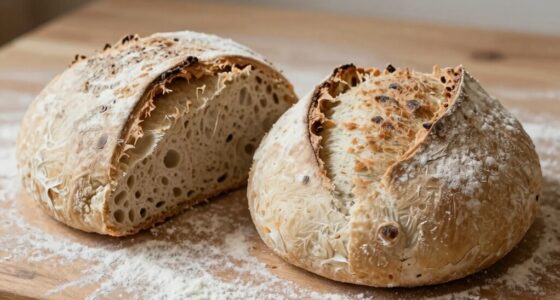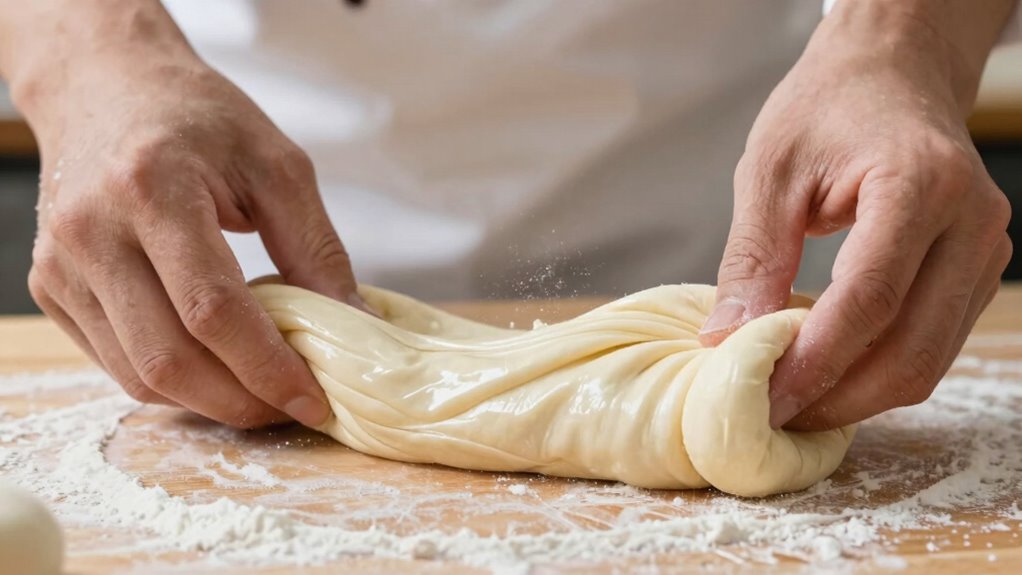

Stretch-and-fold is a simple technique that strengthens your dough without heavy kneading. By performing gentle folds during fermentation, you help develop gluten, creating a resilient yet extensible dough. This process improves gas retention and results in an open crumb. It’s easy to master with patience and attention to dough texture. As you practice, you’ll discover how this method simplifies bread-making and enhances your control. Keep exploring, and you’ll uncover more tips to perfect your baking skills.

Get kitchen gear delivered free with Prime
- Fast, free delivery on millions of items
- Prime Video, Amazon Music and more included
- Member-only deals all year
Key Takeaways
- Stretch-and-fold gently develops gluten strength and elasticity without heavy kneading.
- It involves performing strategic folds during fermentation at specific intervals.
- The technique enhances dough’s ability to trap gas, resulting in an open crumb.
- Recognizing dough’s response guides timing and adjustments for optimal development.
- Mastery of this method simplifies bread-making and improves final bread texture.
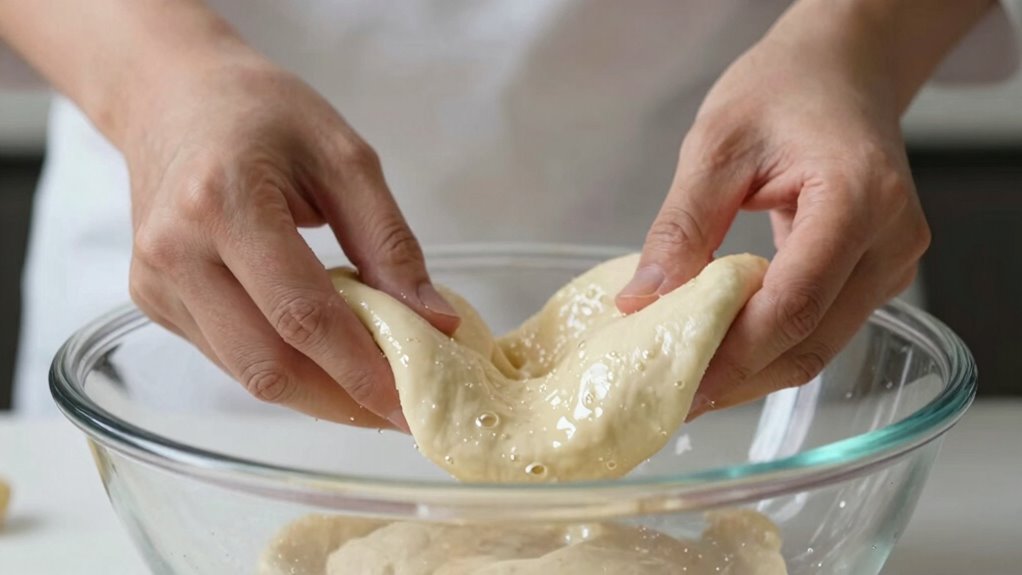
Have you ever wondered how bakers achieve that perfect, airy loaf with a beautifully open crumb? The secret often lies in how they develop dough strength without overworking it. That’s where the stretch-and-fold technique comes into play. Unlike traditional kneading, this method gently encourages dough to build elasticity and structure through a series of strategic folds during fermentation. When done correctly, it enhances dough elasticity, giving your bread a resilient yet extensible texture that traps gas efficiently, resulting in a light, airy crumb.
The core idea is to perform a series of stretch-and-folds at specific intervals during fermentation. This process allows gluten strands to develop gradually, which is vital for creating a strong dough that can hold its shape and rise well. You don’t need heavy kneading or equipment—just your hands and patience. When you stretch and fold, you’re fundamentally strengthening the dough’s gluten network without damaging its delicate structure. This active process encourages the dough to become more elastic, making it easier to shape later on and improving the final bread quality. Additionally, understanding the fermentation process helps bakers time their folds more effectively and achieve optimal dough development. Developing an awareness of gluten formation can further enhance your understanding of how these techniques influence dough strength. Moreover, paying attention to the dough’s texture during each fold can help you recognize the ideal point of elasticity.
Timing is everything here. The fermentation timing determines how well your dough will respond to each stretch and fold. Typically, you’ll perform a series of these folds every 20 to 30 minutes during the initial fermentation phase. This schedule gives the dough enough time to develop dough elasticity and strength, but not so long that it overferments or becomes slack. Watching how the dough reacts during each fold is key—if it feels tight and resistant, you’re on the right track. If it begins to lose tension or becomes overly slack, you might need to adjust your timing or fermentation conditions.
This technique isn’t just about physical effort; it’s about understanding your dough’s response to fermentation timing. Over time, you’ll develop a feel for when to perform each fold, how many to do, and how the dough should look and feel. It’s a dynamic process, and patience pays off. As you become more familiar with how your dough responds, you’ll find your ability to control dough elasticity and fermentation timing improves, leading to more consistent results. The beauty of stretch-and-fold is that it simplifies bread-making while giving you greater control over the final texture. It’s a clever, effective way to build strong, extensible dough that produces bakery-quality bread at home. Understanding gluten development is key to mastering this technique and achieving optimal results in your baking. Being attentive to the dough’s response can help you fine-tune your process for better bread every time.
bread dough stretch and fold technique
As an affiliate, we earn on qualifying purchases.
As an affiliate, we earn on qualifying purchases.
Frequently Asked Questions
Can Stretch-And-Fold Be Used for Gluten-Free Bread?
Yes, you can use stretch-and-fold for gluten-free bread as a kneading substitute. Since gluten-free alternatives lack the strong gluten structure, this technique helps develop the dough’s strength and elasticity. By carefully stretching and folding, you incorporate air and improve texture without traditional kneading. It’s especially effective for gluten-free recipes, giving you better rise and a more cohesive crumb, making your bread more enjoyable and easier to handle.
How Long Does Each Stretch-And-Fold Session Typically Take?
Think of each stretch-and-fold session as a gentle dance with your dough, lasting about 20 to 30 seconds. The duration depends on your dough’s hydration levels and fermentation timing, which influence how pliable it is. Typically, you’ll do 3-4 folds every 30 minutes during bulk fermentation. As you become more experienced, you’ll intuitively know when your dough has gained enough strength without overworking it.
Is Special Equipment Needed for Stretch-And-Fold Technique?
You don’t need special equipment for the stretch-and-fold technique, making it a simple kneading alternative. All you require is a clean work surface and your hands. The process involves gently stretching and folding the dough to develop gluten strength, so there’s no need for mixers or tools. This method is ideal if you want to avoid traditional kneading while still building sturdy, elastic dough.
How Does Temperature Affect the Stretch-And-Fold Process?
Temperature directly impacts the stretch-and-fold process by influencing fermentation speed and dough elasticity. Warmer temperatures accelerate fermentation, making the dough more pliable and easier to stretch, which enhances gluten development. Conversely, cooler temperatures slow fermentation, resulting in firmer dough that’s harder to stretch. You should monitor and control the temperature to optimize elasticity and fermentation speed, ensuring consistent results and a better rise in your bread.
Can Stretch-And-Fold Be Combined With Other Bread-Making Methods?
Like a master chef blending techniques, you can combine stretch-and-fold with methods like bulk fermentation or autolyse. This enhances dough hydration and optimizes fermentation timing, resulting in improved gluten structure and flavor. Incorporating these methods allows you to customize your bread-making process, making it more efficient. Just guarantee proper timing so the dough develops strength without over-proofing, creating a perfect balance for a superior loaf.
gluten development bread making tools
As an affiliate, we earn on qualifying purchases.
As an affiliate, we earn on qualifying purchases.
Conclusion
By incorporating the stretch-and-fold technique into your baking routine, you actively develop gluten strength without kneading. Think of it like sculpting dough—each fold aligns the gluten strands, creating a sturdy structure that rises beautifully. Visualize the process as gentle, deliberate movements shaping a resilient, airy loaf. This method proves that patience and precision can rival vigorous kneading, turning simple stretches into a powerful tool for perfect bread. So, embrace the technique and watch your baking transform.
bread proofing baskets and covers
As an affiliate, we earn on qualifying purchases.
As an affiliate, we earn on qualifying purchases.
As an affiliate, we earn on qualifying purchases.
Fall Picks
fall essentials
As an affiliate, we earn on qualifying purchases.