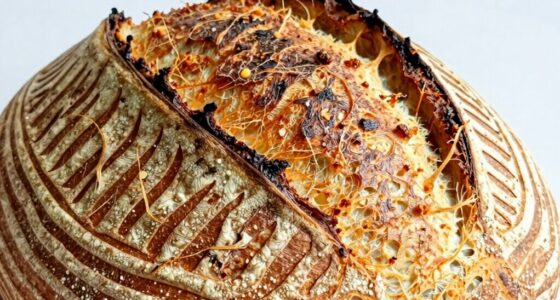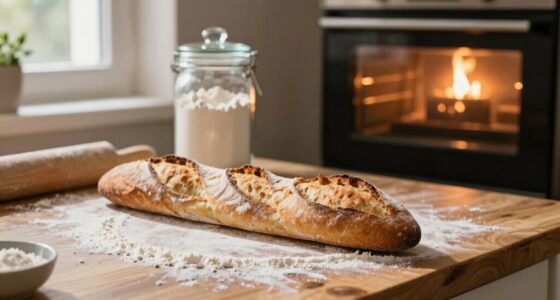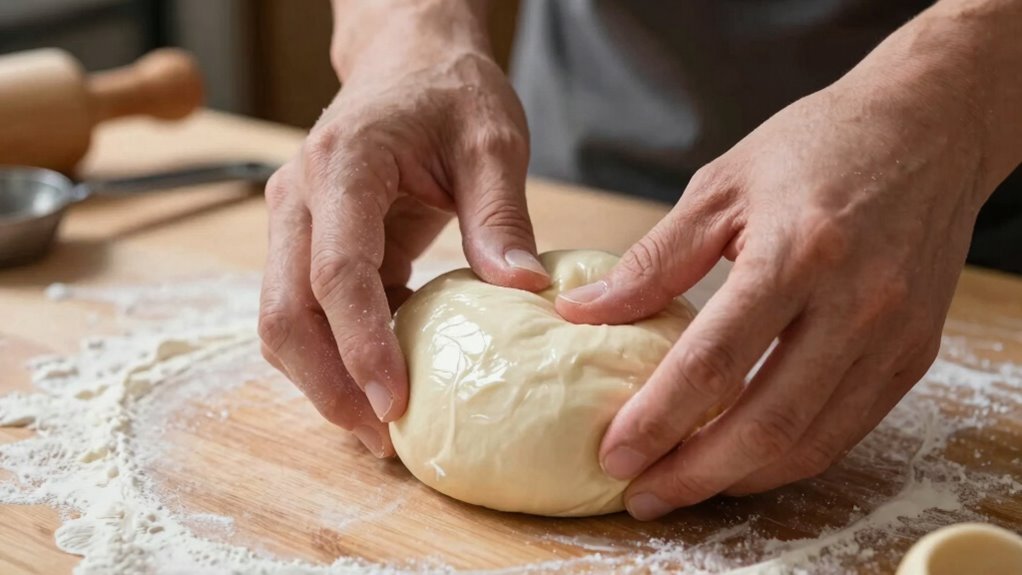

To shape a tight boule without deflating your dough, handle it gently and avoid overworking it. During bulk fermentation, use fold techniques every 30 minutes to develop gluten and strengthen the dough. When final shaping, use careful, gentle folding and support tools like a banneton basket. Be minimal with handling during proofing and transfer, and score just before baking to release gas. For more tips on perfecting your technique, keep exploring this process.
Key Takeaways
- Handle dough gently during shaping to preserve gas and gluten structure.
- Use careful folding techniques during bulk fermentation to develop strength without overworking.
- Transfer dough carefully onto parchment, supporting its shape to prevent flattening.
- Score the dough just before baking to release gases without deflating.
- Maintain a controlled, humid environment during proofing to support elasticity and shape retention.

Have you ever wondered how to achieve that perfectly tight boule crust? It all starts with understanding the right shaping process, especially when it comes to maintaining dough strength and avoiding deflation. One key step is mastering folding techniques, which help develop gluten structure without overworking the dough. During bulk fermentation, you might gently fold the dough every 30 minutes or so, using a stretch and fold method. This technique enhances dough strength and elasticity, making it easier to shape later. When it’s time to shape your boule, handle the dough with care, avoiding excessive pressure that could push out the gases you’ve worked so hard to develop.
Once you’ve shaped your dough, the next critical phase is proofing. To keep the dough’s structure intact and prevent it from deflating, you want to proof it in a controlled environment—a proofing chamber or a similar warm, humid spot. This environment allows the dough to rise slowly, preserving the gases inside and developing a tight, well-rounded shape. When placing the dough in the proofing chamber, use a banneton basket if you have one. The basket helps support the dough’s shape and encourages a taut surface, which contributes to a tight boule crust. Cover the dough lightly with a cloth or plastic wrap to avoid drying out the surface, but don’t let it sit uncovered for too long, as that could cause a skin to form and hinder expansion.
As the dough proofs, avoid the temptation to move or handle it excessively. Every touch risks deflating the gases that create that desirable tight crust. When you’re ready to bake, gently turn the proofed dough onto a parchment-lined peel or baking sheet, taking care not to flatten the surface. Use a sharp blade to score the boule; this not only allows gases to escape during baking but also helps maintain the shape. The final result should be a beautifully taut, shiny crust with a tight crumb inside. The secret lies in gentle handling throughout the process—careful folding, proper proofing in the right environment, and minimal disturbance at the final stage. It’s also important to understand how gluten development influences dough elasticity and strength. With practice, you’ll master shaping a tight boule that boasts both a stunning crust and an airy, well-structured interior.
As an affiliate, we earn on qualifying purchases.
Frequently Asked Questions
Can I Use a Different Flour Type for Shaping?
Yes, you can use alternative flours for shaping, but keep in mind they may affect gluten development. Flours like rye or whole wheat have less gluten, making the dough less elastic and harder to shape tightly. To compensate, consider adding essential wheat gluten or adjusting hydration levels. This helps maintain structure and elasticity, ensuring your boule keeps its shape without deflating during shaping.
How Long Should I Proof Before Shaping?
You should proof your dough until it’s roughly 50-75% risen, usually about 1 to 2 hours depending on room temperature. This proofing time allows the dough’s elasticity to develop, making shaping easier without deflating it. Rushing this step can turn your beautiful boule into a flat pancake, so give it enough time to rise properly. Patience here guarantees a perfectly shaped, airy loaf.
Is It Necessary to Flour the Surface?
Flouring the surface isn’t strictly necessary, but it helps prevent sticking, especially with high hydration doughs that have more moisture. When you flour lightly, it preserves gluten development and keeps the dough’s surface intact while shaping. Just use a small amount of flour to avoid altering the dough’s hydration too much. Proper flouring guarantees a smooth shape without deflating the dough, maintaining good gluten structure for a tight boule.
Can I Shape a Boule Without a Banneton?
Think of shaping your boule like sculpting a masterpiece—your hands are the tools. Yes, you can shape a boule without a banneton by gently forming it on a floured surface, ensuring it maintains its shape. Keep the oven temperature high for a good oven spring and use scoring techniques to control expansion. Just handle the dough carefully to avoid deflating it, and your homemade bread will turn out beautifully.
How Do I Prevent Sticking During Shaping?
To prevent sticking during shaping, make sure your dough has proper moisture—neither too dry nor too sticky. Use ample flour on your work surface and your hands, which helps release the dough easily. Employ gentle shaping techniques, such as tightening the surface tension without overhandling, to keep the dough intact. Consistently dust your tools and surface, and work quickly to minimize sticking, guaranteeing a smooth shaping process.
As an affiliate, we earn on qualifying purchases.
Conclusion
Remember, practice makes perfect when shaping a tight boule. With patience and attention, you’ll master the technique without deflating your dough. Don’t rush the process—trust in your skills and enjoy the journey. As the saying goes, “A journey of a thousand miles begins with a single step.” Keep shaping, keep learning, and soon you’ll be showcasing beautiful, perfectly formed loaves that make every effort worthwhile.
As an affiliate, we earn on qualifying purchases.
As an affiliate, we earn on qualifying purchases.