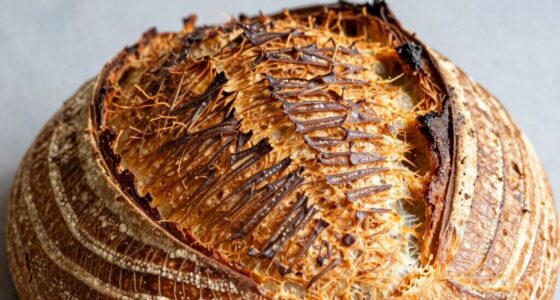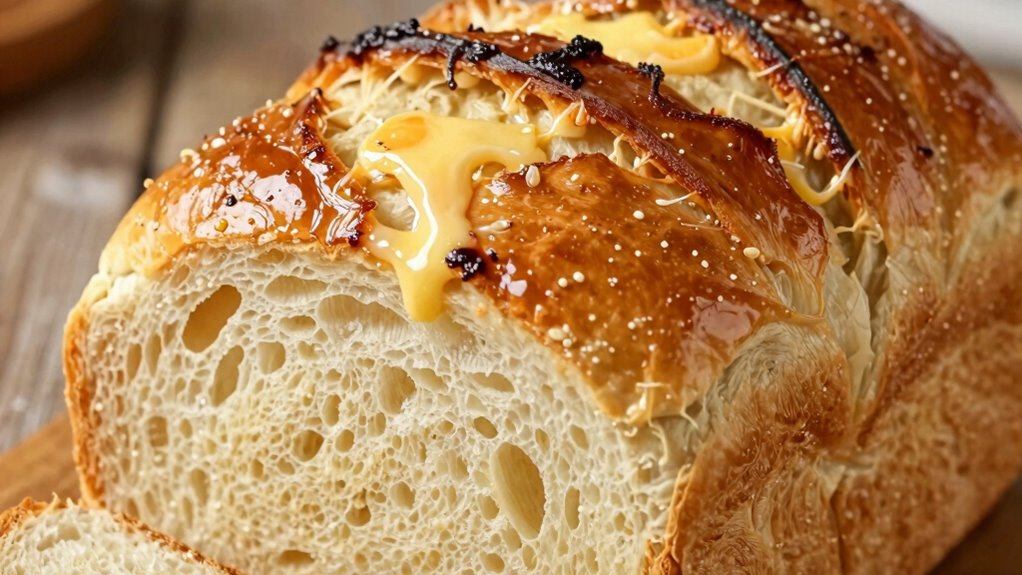

Adding milk, butter, and eggs to your dough makes a big difference by enriching flavor, tenderizing texture, and improving dough resilience. These ingredients influence fermentation, helping it develop richer, layered flavors while controlling how the dough rises. They also strengthen gluten, making the dough softer, more elastic, and easier to shape. Understanding how these ingredients work together can help you create consistently delicious, airy pastries — if you keep exploring, you’ll uncover even more baking secrets.

Get kitchen gear delivered free with Prime
- Fast, free delivery on millions of items
- Prime Video, Amazon Music and more included
- Member-only deals all year
Key Takeaways
- Milk, butter, and eggs enhance dough tenderness, flavor, and richness, leading to a more desirable final product.
- These ingredients influence fermentation by providing sugars and enzymes that control yeast activity.
- They improve gluten development, resulting in a softer, more elastic dough that rises better.
- Incorporating these ingredients affects dough structure, making it more resilient and easier to shape.
- Proper use of milk, butter, and eggs allows for recipe fine-tuning to achieve optimal texture and flavor.
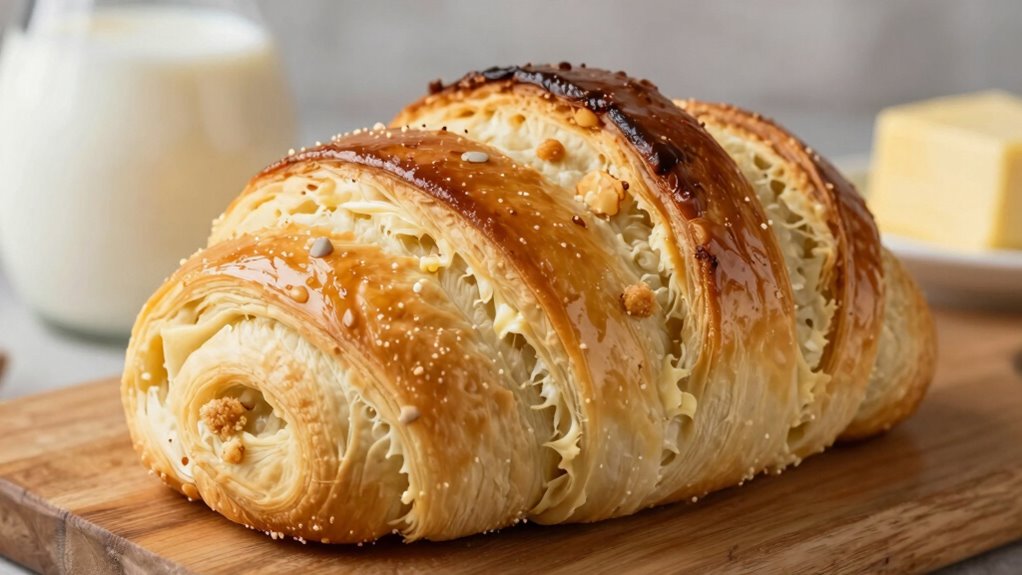
Have you ever wondered what makes enriched dough so soft, flavorful, and perfect for pastries? The secret lies in how the ingredients interact during the baking process. When you incorporate milk, butter, and eggs into your dough, you’re not just adding flavor—you’re fundamentally changing how the dough behaves and how the final product turns out. These ingredients influence fermentation processes and gluten development, which are key to achieving that tender, airy texture that makes pastries so irresistible.
Fermentation processes play an essential role in developing flavor and structure in enriched dough. When yeast ferments, it produces carbon dioxide, which creates the dough’s rise. The presence of milk and eggs can modify this process, often slowing down fermentation slightly but enhancing the depth of flavor. Milk’s natural sugars and proteins feed the yeast, leading to a more controlled fermentation. This results in a dough that rises steadily and develops complex flavors. Similarly, eggs contain enzymes and fats that influence fermentation, helping to produce a dough with a richer taste and softer crumb. As the dough ferments, these ingredients work together to build layers of flavor, making each bite more delicious. Additionally, the fermentation process is affected by the temperature and duration of proofing, which can be adjusted to achieve the desired flavor and texture. Understanding how fermentation enzymes interact with these ingredients can further optimize your baking results. Incorporating these ingredients also impacts the gluten structure, leading to a more tender and resilient dough that can withstand shaping and rising. Recognizing the role of ingredient interactions can help bakers fine-tune their recipes for perfect results every time.
As an affiliate, we earn on qualifying purchases.
Frequently Asked Questions
How Does Milk Affect Dough Fermentation?
Milk affects the fermentation process by providing sugars that boost yeast activity, making the dough ferment faster. It also contains fats and proteins that strengthen gluten development, resulting in a softer, richer texture. You’ll notice that with milk, the yeast produces carbon dioxide more efficiently, leading to better rise and fluffiness. Overall, milk enhances both fermentation and the dough’s flavor, giving your baked goods a tender, moist quality.
Can I Substitute Butter With Oil in Enriched Dough?
Yes, you can substitute butter with oil in enriched dough. While oil’s neutral flavor offers a different taste, it’s a handy alternative for those avoiding dairy. Using alternative fats like olive or coconut oil can add unique flavor variations, enhancing your baked goods. Keep in mind, oil may change the dough’s texture slightly, but with proper adjustments, your bread stays soft and delicious. Surprisingly, this swap can inspire creative new recipes!
What Is the Best Type of Eggs for Enriched Dough?
You should choose fresh eggs, ideally within three weeks of the pack date, for enriched dough. Egg shell color doesn’t matter much—white or brown eggs work equally well. Fresh eggs give better flavor and structure, while older eggs might be less reliable. Always crack the egg into a separate bowl first to check for freshness before adding it to your dough, ensuring the best results.
How Do Added Fats Change Dough Texture?
Adding fats transforms dough like magic, making it irresistibly tender. You’ll notice improved dough elasticity, which means it stretches easily without tearing, and the crumb becomes incredibly soft and moist. Fats coat the gluten strands, limiting their development, so the dough feels richer and more delicate. This results in a bread with a luxurious texture, almost like biting into a cloud, elevating your baking from good to extraordinary.
Are Enriched Doughs Suitable for Gluten-Free Baking?
Enriched doughs aren’t ideal for gluten-free baking because gluten provides the structure you need. Using gluten-free alternatives can help, but cross-contamination concerns are real, especially if your ingredients aren’t certified gluten-free. You might get better results with gluten-free recipes specifically designed for enriched textures, which often incorporate stabilizers or gums. Always double-check labels and confirm all ingredients are free from gluten to avoid issues.
As an affiliate, we earn on qualifying purchases.
Conclusion
Now that you know how milk, butter, and eggs transform your dough, you’ll see these ingredients as more than just additions—they’re game changers. They enrich flavor, tenderize, and create a luxurious texture that elevates your baked goods. Don’t forget, sometimes the difference between good and great is just a matter of adding a little extra. With these basics under your belt, you’re all set to turn simple dough into something truly special—because the proof is in the pudding.
As an affiliate, we earn on qualifying purchases.
As an affiliate, we earn on qualifying purchases.
Halloween Picks
halloween
As an affiliate, we earn on qualifying purchases.