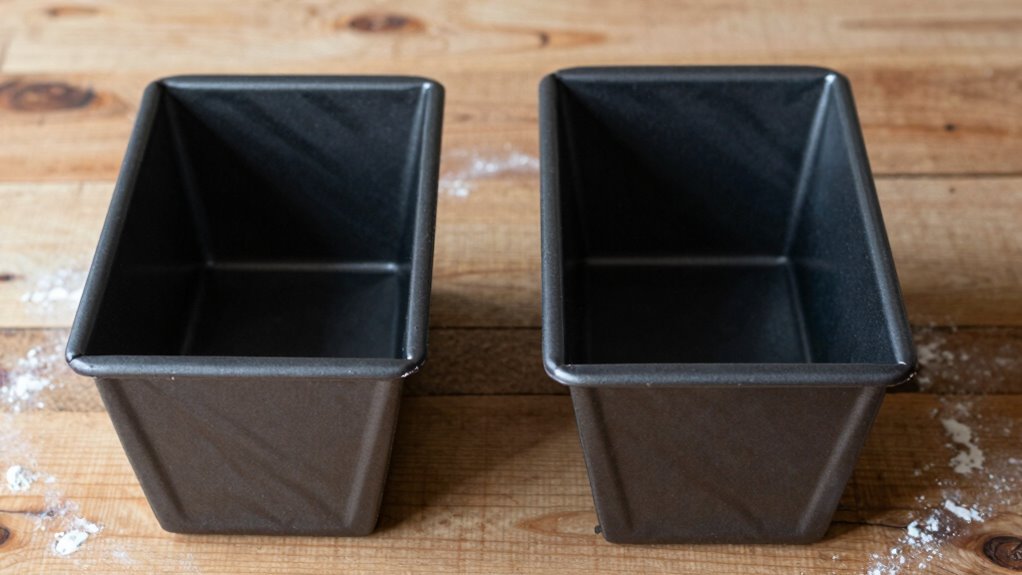
When it comes to loaf pans, size matters. An 8×4-inch pan holds about 6 cups of batter, while a 9×5-inch pan holds around 8 cups. If you swap them, your bread can end up undercooked or overcooked. The batter’s consistency and baking time can vary considerably with different sizes. To achieve perfect loaves, always match your recipe to the pan size. Curious about how pan materials and oven temperatures play a role? There’s more to discover!

Get kitchen gear delivered free with Prime
- Fast, free delivery on millions of items
- Prime Video, Amazon Music and more included
- Member-only deals all year
Key Takeaways
- The 8×4-inch pan holds about 6 cups of batter, while the 9×5-inch holds around 8 cups, affecting baking outcomes.
- Using the wrong pan size can lead to undercooked or overcooked loaves due to differing volume capacities.
- Larger pans may increase baking time, making it essential to adjust recipes accordingly for uniform results.
- Pan material, such as aluminum or glass, impacts heat conduction and may require temperature adjustments for baking.
- Consistent oven temperature and proper pan selection are crucial for achieving optimal baking quality.
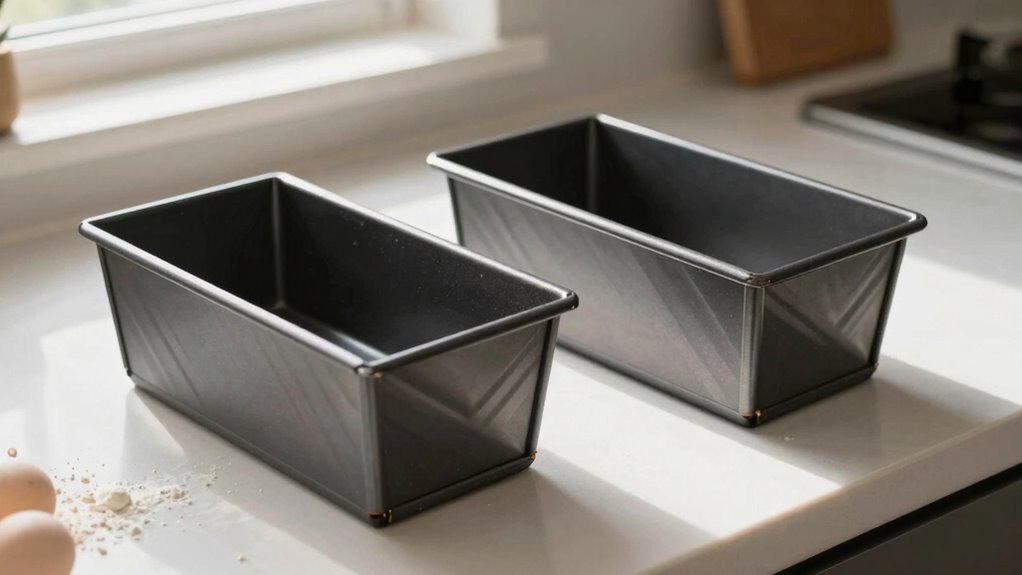
When you’re baking bread or other delicious treats, choosing the right loaf pan size can make all the difference. You might think that an 8×4-inch pan and a 9×5-inch pan are interchangeable, but they aren’t. Understanding the subtle distinctions between these sizes can greatly impact your baking results. If you’ve ever had a loaf that’s too dense or didn’t rise enough, it might just be a matter of pan size.
The 8×4-inch pan typically holds about 6 cups of batter, while the 9×5-inch pan can hold around 8 cups. This difference means that recipes designed for one size might not perform well in the other. If you’re tempted to use the 9×5-inch pan for an 8×4-inch recipe without making any adjustments, you could end up with a loaf that’s undercooked in the middle or overcooked on the edges. To avoid this, always check the volume your recipe requires and match it to the right pan.
Choosing the right pan size is crucial; mismatched volumes can lead to uneven baking and disappointing results.
Another key factor is the pan material. Whether you’re using aluminum, glass, or non-stick pans can affect how your bread bakes. Aluminum pans tend to conduct heat more evenly, which can lead to a better rise, while glass pans may require a slight adjustment in baking time. If you switch materials, think about making minor recipe adjustments. For instance, if you’re using a glass pan instead of aluminum, you might want to reduce the baking temperature by 25°F to prevent over-browning. Being aware of the heat conduction properties of your pan material can help you fine-tune your baking process. Additionally, pan material influences how quickly heat is transferred, impacting the overall baking outcome. Recognizing the heat transfer characteristics of different pans can help you anticipate baking times more accurately.
When adjusting recipes, pay attention to the batter’s consistency. If you’re using a 9×5-inch pan for a recipe meant for an 8×4-inch pan, you may find that the baking time increases. Test for doneness with a toothpick; if it comes out clean, you’re good to go. You can also rotate your pan halfway through the baking time to guarantee even cooking. Additionally, understanding the volume capacity of your pans can help ensure your batter is the right amount for even baking.
Furthermore, knowing your oven’s temperature accuracy can also influence your baking success, especially when switching between different pan materials or sizes. Ultimately, understanding loaf pan sizes isn’t just a matter of preference; it’s about achieving the best possible baking outcome. So next time you’re preparing to bake, take a moment to reflect on your pan size and material. Making the right choice can elevate your baking game and lead to perfectly shaped, delicious loaves. Trust me, your taste buds will thank you for the extra attention to detail!
As an affiliate, we earn on qualifying purchases.
Frequently Asked Questions
Can I Use a Glass Loaf Pan Instead of Metal?
Yes, you can use a glass loaf pan instead of metal, but keep a few things in mind. Glass pans heat more evenly, so you might need to adjust your baking temperature slightly. Generally, reduce the temperature by 25°F if you’re following a metal pan recipe. Also, glass retains heat longer, so your bread may bake faster. Keep an eye on it to prevent over-baking! Enjoy your delicious creation!
What’s the Best Way to Grease a Loaf Pan?
Greasing techniques can really make or break your baking! To grease a loaf pan, you can use butter, oil, or a cooking spray. Simply spread a thin layer on the bottom and sides, ensuring it’s evenly coated. If you’re looking for pan alternatives, parchment paper works wonders too; just line the bottom for easy removal. With these simple steps, your loaf will slide right out, ready for slicing and savoring!
How Do I Adjust Baking Time for Different Pan Sizes?
To adjust baking time for different pan sizes, keep an eye on your loaf’s doneness. If you switch to a larger pan, reduce the baking time by about 10-15 minutes, since it’ll cook faster. For a smaller pan, add a few extra minutes. Remember, the loaf pan material matters too; metal pans conduct heat better than glass, so you might need to tweak your baking temperature adjustments accordingly.
Are Silicone Loaf Pans Effective for Baking?
Sure, if you’re into baking with futuristic materials like silicone, you’ll love it! Silicone loaf pans are effective for baking, offering benefits like easy release and flexibility. You won’t have to wrestle your bread out like it’s a stubborn toddler. Just keep an eye on your baking temperature; silicone can cook unevenly if you’re not careful. So, embrace the silicone revolution, and watch your baked goods slide right out!
Can I Stack Loaf Pans in the Oven?
You shouldn’t stack loaf pans in the oven. When you do, you risk uneven cooking due to restricted airflow. This is especially true if you’re using different materials, like metal and silicone, as they conduct heat differently. If you need to bake multiple loaves, keep them spaced apart to guarantee even baking at your desired oven temperature. Stacking can lead to undercooked centers or burnt edges, so it’s best to avoid it.
As an affiliate, we earn on qualifying purchases.
Conclusion
When you choose between an 8×4 and a 9×5 loaf pan, remember they’re like two musicians playing in different keys. Each size has its unique rhythm, affecting baking times and textures. If you want your bread to rise and sing, stick to the size the recipe calls for. Mixing them up is like trying to dance to a tune you can’t quite hear—your loaf might just end up flat and out of step.
As an affiliate, we earn on qualifying purchases.
As an affiliate, we earn on qualifying purchases.
Fall Picks
fall essentials
As an affiliate, we earn on qualifying purchases.