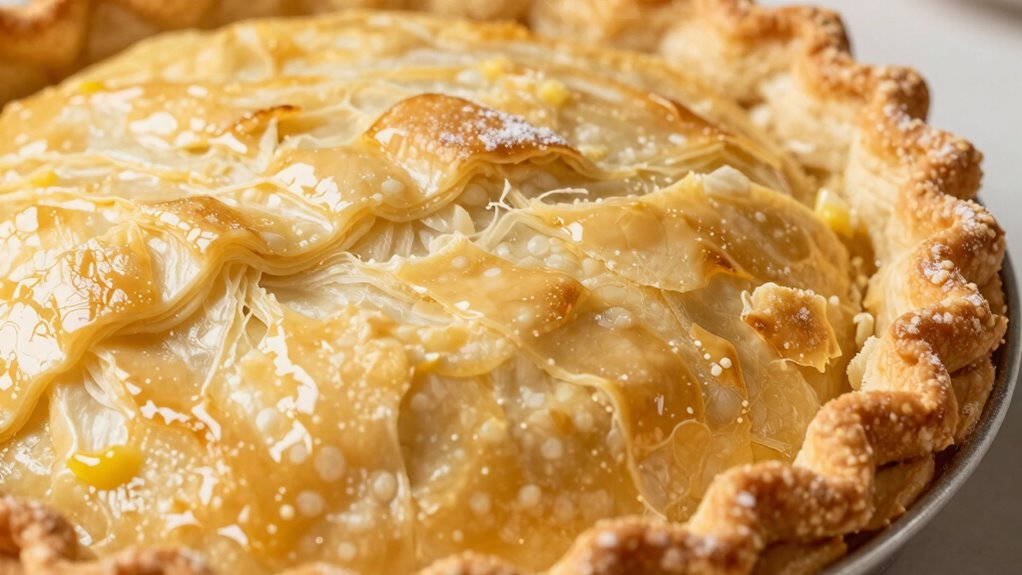

To achieve flaky pie crusts, keep your butter in small, solid pieces rather than melting it completely. Tiny chunks create steam during baking, forming those signature flaky layers. If the butter melts into the dough, you’ll end up with a denser crust. Handle the ingredients gently and work quickly to maintain the correct temperature. Want to know more about perfecting your crust? Keep exploring, and you’ll discover essential tips for flaky results every time.

Get kitchen gear delivered free with Prime
- Fast, free delivery on millions of items
- Prime Video, Amazon Music and more included
- Member-only deals all year
Key Takeaways
- Use small, pea-sized butter pieces to create steam pockets for flaky layers.
- Keep butter cold to prevent melting and ensure it remains in small, solid pieces during mixing.
- Incorporate butter quickly and gently to maintain its size and distribution.
- Avoid overworking dough to prevent large butter chunks from blending completely.
- Properly chilled dough helps preserve butter size and enhances flakiness during baking.
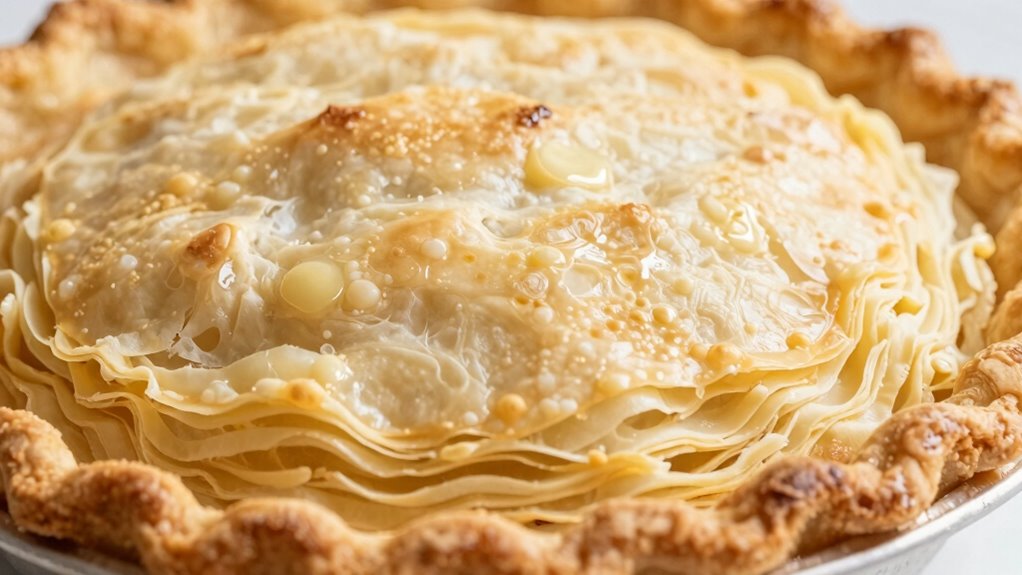
Have you ever wondered what makes a pie crust irresistibly flaky? The secret often lies in the butter size rule, but understanding how to apply it effectively can make all the difference. One crucial factor is dough temperature. When you keep your butter and water cold, it prevents the fats from melting too quickly, ensuring they stay in small, solid pieces within the dough. This is essential because those small pockets of fat turn into steam during baking, creating the flaky layers you crave. If your ingredients are warm, the butter melts into the flour, resulting in a tough, dense crust. So, always chill your ingredients and work quickly to maintain that low dough temperature. Additionally, incorporating proper handling techniques during mixing helps prevent overworking the dough, which can develop too much gluten and compromise flakiness. Proper handling also involves being mindful of the dough consistency, which should be crumbly but hold together when pressed. Paying attention to ingredient temperature ensures your dough remains workable and prevents overmixing, which can lead to a less flaky crust. Maintaining the correct fat distribution throughout the dough is also vital for achieving that desirable flaky texture, as uneven distribution can cause uneven layers. Moreover, using a gentle folding method when combining ingredients can help preserve those small, flaky fat pockets.
Next, mastering baking techniques plays a vital role. Proper handling of the dough minimizes gluten development, which can make your crust tough and chewy instead of tender and flaky. Use as little water as possible when mixing your dough—just enough to bring it together. When you do mix, handle it gently and avoid overworking it. Once combined, shape your dough into a flat disk, wrap it in plastic, and refrigerate for at least 30 minutes. Resting the dough allows the gluten to relax and the fats to firm up, which helps in creating those distinct, flaky layers. When you’re ready to roll it out, do so on a lightly floured surface, and work quickly to keep everything cold. Cold dough responds better to rolling and results in a tender, flaky crust.
Baking techniques are equally important. For best results, preheat your oven thoroughly and consider using a baking stone or heavy-duty baking sheet to promote even heat distribution. Some bakers swear by blind baking—baking the crust briefly before adding filling—to prevent sogginess and enhance flakiness. Proper oven temperature ensures rapid steam formation, which is key to creating those delicate layers. Keep the oven hot enough, usually around 375°F to 425°F, depending on your recipe, and avoid opening the door too often during baking, which can cause temperature fluctuations and inhibit proper puffing.
As an affiliate, we earn on qualifying purchases.
Frequently Asked Questions
Can I Use Margarine Instead of Butter for Flaky Crusts?
Yes, you can use margarine instead of butter for flaky crusts. Margarine substitution is common and works well, especially for a vegan pie crust. Just choose a margarine with a high fat content to mimic butter’s flakiness. Keep in mind, the flavor might differ slightly, but the texture should still be delicious. This makes it easy to create a flaky, dairy-free crust that’s perfect for your baking needs.
How Does Oven Temperature Affect Pie Crust Flakiness?
If you bake a pie at a higher oven temperature, your crust tends to be crispier and flakier. For example, baking at 425°F instead of 350°F can produce more layered, golden crusts. Oven temperature directly impacts baking outcomes; too low, and the crust may turn out soggy or dense, while too high can cause burning. Making certain the right temperature ensures your crust is perfectly flaky and well-cooked.
Is It Okay to Freeze Pie Dough With Butter?
Yes, you can freeze pie dough with butter. Make sure the butter has the right consistency—firm but not frozen solid—before freezing. Use proper freezing techniques by wrapping the dough tightly in plastic wrap and placing it in an airtight container or freezer bag to prevent freezer burn. When ready, thaw the dough in the fridge. This method preserves the dough’s quality, making it easy to work with later.
How Does Humidity Impact Butter Size During Mixing?
Imagine humidity as a sneaky artist, subtly shaping your dough’s texture. When humidity effects increase, the moisture causes butter particle size to swell, creating larger, softer butter pieces. This can make mixing trickier, leading to less flaky crusts. Low humidity keeps butter particles small and firm, perfect for that delicate, flaky layer. So, humidity plays an essential role in how your butter behaves during mixing, influencing your crust’s final flakiness.
What Are Common Mistakes That Ruin Pie Crust Flakiness?
You ruin pie crust flakiness by overworking the dough, which develops gluten and makes it tough. Handling the dough too aggressively or using excessive pressure can also flatten the butter, reducing flakiness. Avoid ingredient substitution that alters fat content, like replacing butter with margarine, as it affects texture. Keep your dough cold, handle it gently, and stick to original ingredients for a flaky crust every time.
As an affiliate, we earn on qualifying purchases.
Conclusion
Now that you know the butter size rule, you’re well on your way to perfect, flaky pie crusts every time. Remember, patience and attention to detail are the keys to success. Don’t rush the process—good things come to those who wait, and your pie will turn out just as delicious as you envision. Keep practicing, trust the process, and soon you’ll be the master of flaky crusts that impress everyone at the table.
As an affiliate, we earn on qualifying purchases.
As an affiliate, we earn on qualifying purchases.
Halloween Picks
halloween
As an affiliate, we earn on qualifying purchases.