Cookies brown unevenly due to improper airflow and pan placement. When baking sheets are too close together, hot air can’t circulate properly, leading to burnt edges and pale centers. It’s essential to leave space around each sheet for even cooking. Additionally, adjusting oven racks can help improve heat distribution. Consider using convection settings if available. Keeping these factors in check guarantees your cookies bake uniformly and reach that perfect golden-brown finish. There’s even more to discover about achieving cookie perfection!

Get kitchen gear delivered free with Prime
- Fast, free delivery on millions of items
- Prime Video, Amazon Music and more included
- Member-only deals all year
Key Takeaways
- Close placement of baking sheets restricts airflow, causing uneven heat distribution and inconsistent browning.
- Proper spacing between pans allows hot air to circulate, promoting even cooking.
- Adjusting oven racks can enhance heat distribution for better baking results.
- Convection settings improve airflow, helping cookies brown uniformly.
- Rotating baking sheets halfway through baking ensures even exposure to heat.
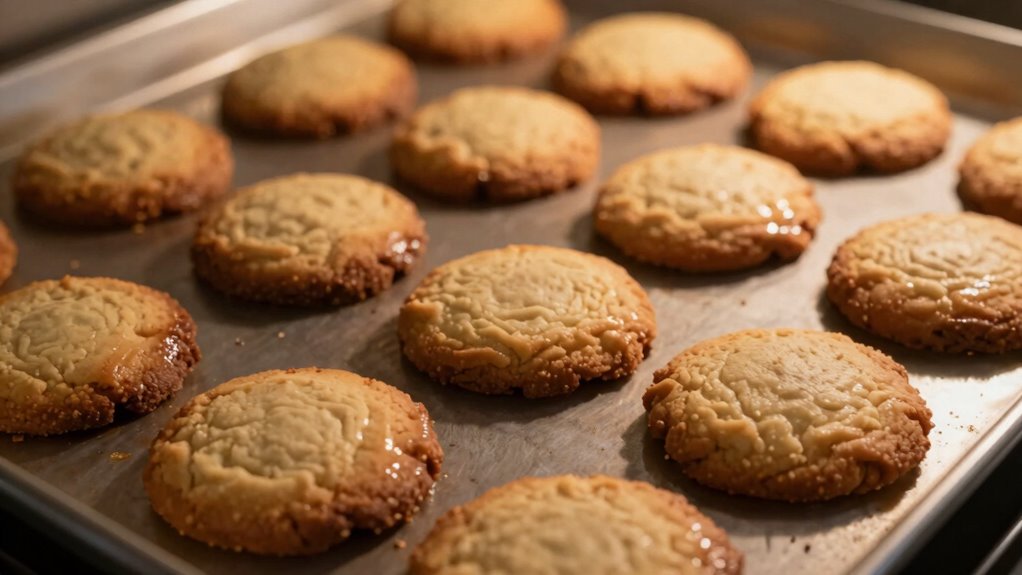
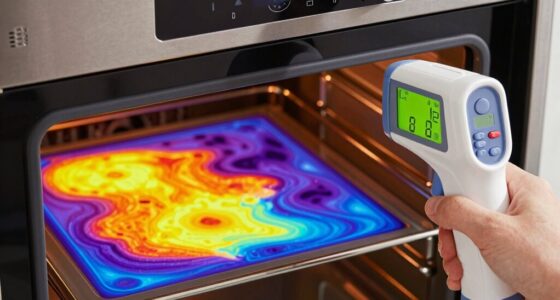
When you pull a batch of cookies from the oven, you might notice that some are perfectly golden while others look pale and undercooked. This uneven browning can be frustrating, but understanding a few key factors can help you achieve a more consistent result. One of the primary reasons for this discrepancy is the oven temperature. If your oven isn’t calibrated correctly, you might find that some areas heat unevenly, causing certain cookies to brown faster than others.
Uneven browning in cookies can be frustrating, often caused by incorrect oven temperature and calibration. Understanding these factors leads to consistent results.
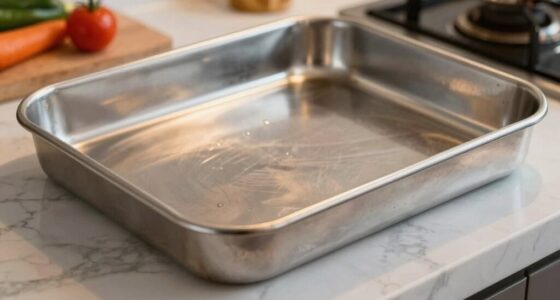
The baking sheets you choose also play a significant role. Different pan materials, like aluminum versus dark non-stick, conduct heat differently. Dark pans tend to absorb more heat, leading to quicker browning. If you’re using multiple baking sheets at once, their materials can interact with the air flow in the oven, affecting how evenly your cookies bake. Be sure to rotate your sheets halfway through baking to promote even cooking, especially if your oven has hot spots.
Another critical factor is the cookie dough itself. Ingredient ratios can affect moisture content, impacting how your cookies spread and brown. If your dough is too wet, you may end up with cookies that don’t brown properly. In contrast, drier dough might lead to overly crispy edges. Keeping your ingredient ratios balanced can make a world of difference. Additionally, humidity levels in your kitchen can alter how your dough behaves. On particularly humid days, you might need to adjust your flour measurements to account for extra moisture in the air. Proper baking techniques like chilling your dough can also help control spreading and browning. Moreover, understanding the effects of humidity on baking can help you choose the right ingredients and techniques for different weather conditions.
Cookie size also matters. Larger cookies will take longer to bake, which can result in uneven browning. If you’re baking assorted sizes, consider baking them in separate batches. That way, you can guarantee they all get the right amount of time in the oven without risking some getting overcooked while others remain underdone.
Lastly, don’t underestimate the importance of pan placement. If you place your baking sheets too close together, you might block airflow, which can prevent even cooking. Ideally, you want to leave space around each sheet to allow hot air to circulate freely. Proper airflow and strategic pan placement are crucial to achieving evenly baked cookies. Additionally, using baking tips like adjusting oven racks or employing convection settings can help improve heat distribution. By keeping these factors in mind—oven temperature, baking sheets, cookie dough composition, and pan placement—you can master the art of baking cookies that are uniformly golden and delicious every time.
As an affiliate, we earn on qualifying purchases.
Frequently Asked Questions
How Does Oven Temperature Affect Cookie Browning?
Oven temperature plays an essential role in cookie browning. When your oven isn’t properly calibrated, heat distribution can be uneven, leading to some cookies browning faster than others. If it’s too hot, the edges may burn while the center remains pale. Conversely, a cooler oven can cause underbaking. To achieve that perfect golden-brown cookie, make sure your oven’s accurate and consider using an oven thermometer for consistent results.
Can Cookie Dough Consistency Influence Browning?
Yes, cookie dough consistency can definitely influence browning. If your dough has higher hydration, it might spread more during baking, leading to a different browning pattern. Ingredient ratios also play a role—more sugar can promote caramelization, while too much flour might inhibit it. So, adjusting your dough’s hydration and ratios can help you achieve that perfect, even brown you’re looking for in your cookies.
Does Baking Sheet Material Impact Browning?
Yes, baking sheet materials definitely impact browning. Different cookie sheet types, like aluminum, dark metal, or non-stick, each conduct heat differently. Aluminum sheets promote even browning because they distribute heat well, while dark metal sheets absorb more heat and can lead to quicker browning. Non-stick surfaces may prevent sticking but can result in uneven browning. So, choose your baking sheet wisely to get those perfectly browned cookies you crave!
How Do Different Types of Sugar Affect Browning?
Different types of sugar considerably impact browning in your cookies. For instance, brown sugar increases moisture, leading to softer cookies and deeper flavor due to caramelization effects. Did you know that using just 1/4 cup of brown sugar instead of white can enhance that depth? White sugar, on the other hand, contributes to a crispier texture. Experimenting with these sugars lets you create cookies with unique flavors and textures every time!
What Role Does Humidity Play in Baking Cookies?
Humidity levels greatly impact baking cookies. When it’s humid, the moisture content in the air can make your dough stickier, affecting how cookies spread and brown. You might find that cookies don’t crisp up as well, resulting in a softer texture. On the flip side, low humidity can dry out your dough, leading to a denser cookie. Adjusting your baking technique based on humidity can help you achieve the perfect cookie.
As an affiliate, we earn on qualifying purchases.
Conclusion
To sum up, understanding how airflow and pan placement affect cookie browning can elevate your baking game. Did you know that cookies baked on the top rack can brown up to 30% faster than those on the bottom? By rotating your pans and using the right oven racks, you can achieve that perfect golden color all around. So, next time you bake, keep these tips in mind for deliciously even cookies every time!
As an affiliate, we earn on qualifying purchases.
As an affiliate, we earn on qualifying purchases.
Fall Picks
fall essentials
As an affiliate, we earn on qualifying purchases.