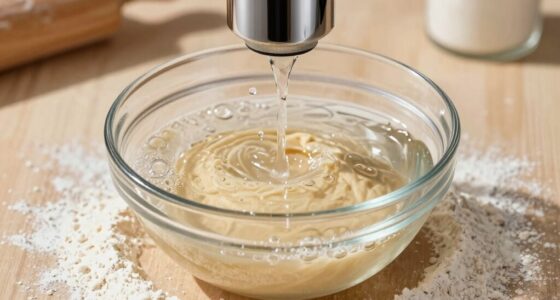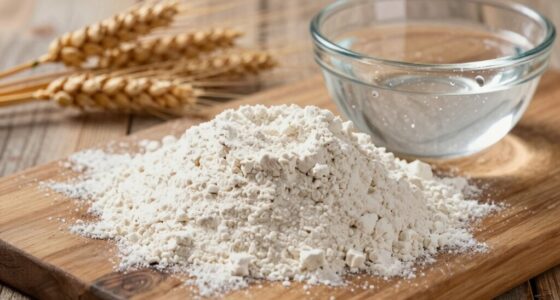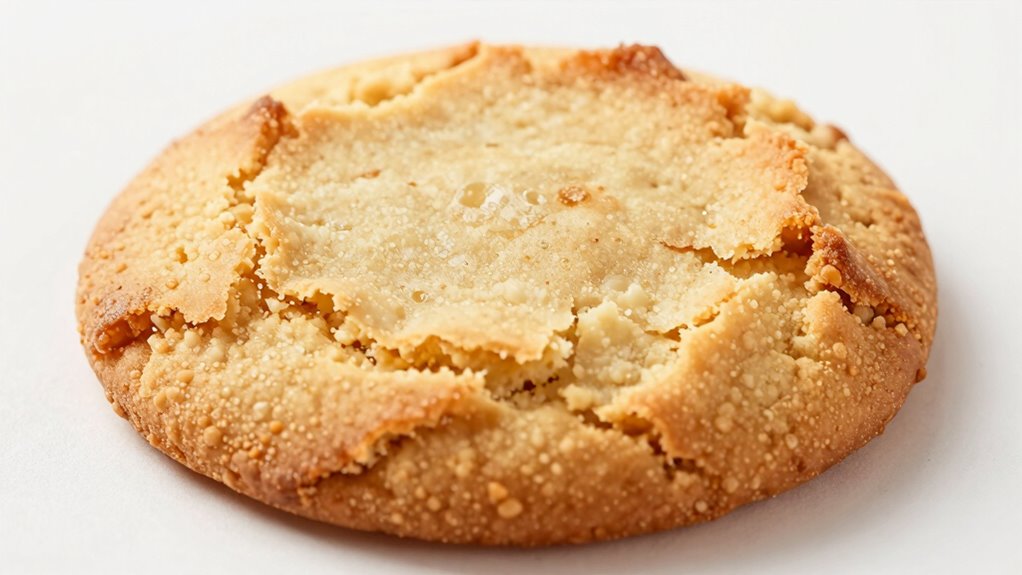

If you want thin, crispy cookies, use a thinner, spreadable dough with more butter, bake at a higher temperature briefly, and handle the dough warm for more spreading. For chewier cookies, choose a thicker dough with less butter, chill it to limit spreading, and bake at a lower temperature longer. Cookie size and shape also influence texture. Keep these tips in mind, and you’ll discover how simple adjustments can perfect your cookie outcome.

Get kitchen gear delivered free with Prime
- Fast, free delivery on millions of items
- Prime Video, Amazon Music and more included
- Member-only deals all year
Key Takeaways
- Thinner, spread-out dough and higher baking temperatures produce crispy, thin cookies.
- Thicker, chilled dough and lower heat create chewy, hearty cookies.
- Baking time affects texture: shorter for crispiness, longer for chewiness.
- Using parchment or silicone mats ensures even heat and consistent cookie texture.
- Cookie size influences texture: smaller cookies are crispier; larger cookies are chewier.
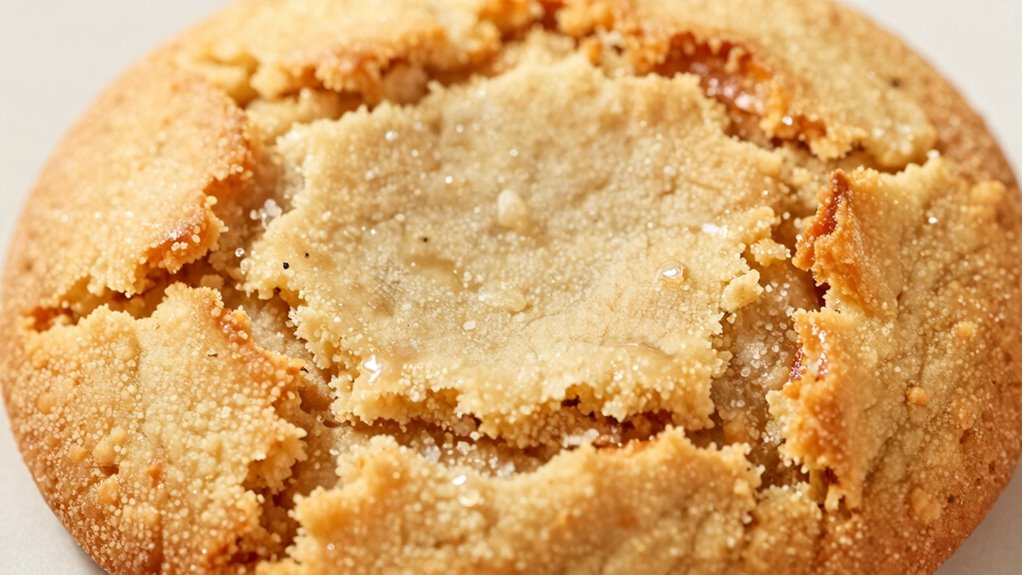
Achieving the perfect cookie texture doesn’t have to be complicated. Whether you want thin and crispy, or thick and chewy, understanding the role of dough consistency and baking techniques makes all the difference. The first step is recognizing that the way you prepare your dough sets the foundation. A thinner, more spreadable dough will typically produce cookies that are crisp and delicate, while a thicker, sturdier dough tends to result in chewy, hearty cookies. Adjusting ingredients like butter, sugar, and flour influences this dough consistency. For example, using more butter and less flour makes the dough softer and encourages spreading during baking, leading to a crispy edge. Conversely, adding a little extra flour or chilling the dough before baking can help it stay thicker, creating a chewy texture.
Your choice of baking techniques further refines the cookie’s final texture. For thin, crispy cookies, you want to bake at a slightly higher temperature for a shorter time, which helps them spread quickly and crisp up. It’s also *essential* to monitor baking time closely; overbaking turns them into brittle, overly crispy treats, while underbaking leaves them soft and chewy. On the other hand, if you aim for chewy cookies, baking at a slightly lower temperature with a longer bake time allows the centers to stay moist and tender. Using parchment paper or silicone baking mats can promote even heat distribution, preventing hotspots that could cause uneven baking and inconsistent textures.
Another technique that influences cookie texture is chilling the dough. When you refrigerate your dough before baking, it firms up, which inhibits spreading and results in a thicker, chewier cookie. If you want a thin, crisp cookie, keep the dough soft and warm right before baking, so it spreads out more. Additionally, the size and shape of your cookie dough balls impact texture; smaller, flatter cookies tend to be crispier, while larger, thicker ones are often chewier.
silicone baking mats for cookies
As an affiliate, we earn on qualifying purchases.
As an affiliate, we earn on qualifying purchases.
Frequently Asked Questions
How Does Oven Temperature Affect Cookie Texture?
Oven heat considerably influences your cookie texture. Higher oven temperatures cause the cookies to bake faster, resulting in a crispier, thinner cookie because of rapid moisture evaporation. Conversely, lower oven heat extends baking duration, allowing cookies to spread more evenly and develop a chewier, softer interior. By adjusting oven temperature and baking duration, you can control whether your cookies turn out thin and crispy or thick and chewy.
Can Ingredient Substitutions Change Cookie Chewiness?
Think of ingredient swaps as magic spells that can transform your cookie’s texture. Substituting butter for shortening, or adding an extra egg, can make your cookies chewier or crispier. These texture transformations happen because different ingredients affect moisture and structure. So, yes, ingredient substitutions can definitely change cookie chewiness—allowing you to craft the perfect bite, whether you’re after a soft, chewy center or a crispy edge.
What’s the Best Way to Store Cookies for Texture Preservation?
To preserve your cookie texture, use airtight packaging methods like resealable bags or airtight containers immediately after cooling. Keep cookies at room temperature for up to a week, and consider freezing for longer storage. Proper packaging prevents moisture loss or absorption, maintaining crispness or chewiness. For best results, store cookies in a single layer or separate layers with parchment paper to avoid sticking and texture changes over time.
How Does Cookie Thickness Influence Crispiness or Chewiness?
Think of cookie thickness as the tightrope walker balancing crispiness and chewiness. Thinner cookies often turn crispy because less dough retains moisture, especially with high dough hydration. A baking vessel that conducts heat evenly helps maintain that balance. If you want a chewier cookie, keep it thicker and use a lower hydration dough, which preserves moisture inside, resulting in a soft, chewy center.
Are There Baking Techniques to Modify Cookie Texture?
You can modify cookie texture by adjusting your baking techniques. For example, changing baking time influences crispiness, while adding ingredients like brown sugar or cornstarch can make cookies chewier or softer. Experiment with flavor variations and ingredient alternatives, like swapping butter for applesauce or adding oats for a chewier bite. These tweaks help you customize your cookies’ texture to suit your preference, making baking both fun and versatile.
As an affiliate, we earn on qualifying purchases.
Conclusion
Think of cookie textures as a garden: thin, crispy cookies are like delicate petals gently kissed by the sun, crisp and fragile. Chewy cookies resemble lush vines, supple and stretching with each bite. Thick cookies are like sturdy trees, hearty and satisfying. Just as a garden offers different delights, your cookie choices let you enjoy a variety of textures—each one a unique bloom in your baking adventure. Embrace the diversity and savor every flavorful blossom.
As an affiliate, we earn on qualifying purchases.
As an affiliate, we earn on qualifying purchases.
Fall Picks
fall essentials
As an affiliate, we earn on qualifying purchases.