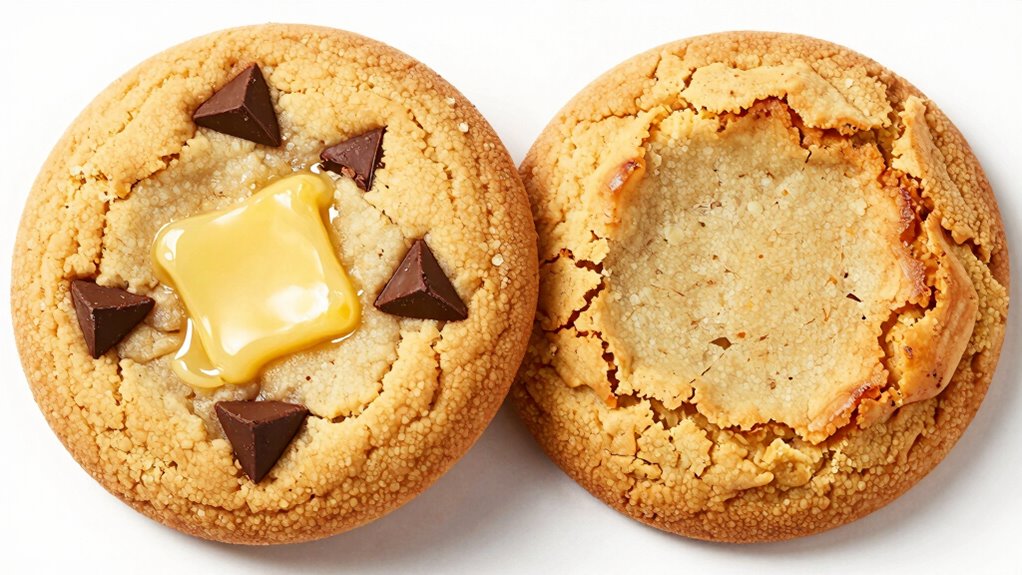

When you’re baking cookies, the ingredient ratios are your secret weapon for achieving chewy or crispy textures. Use more brown sugar for chewiness, thanks to its moisture and molasses. For crispiness, lean on white sugar and add extra flour. Melted butter creates density, while room temperature butter helps incorporate air for a lighter bite. Adjust your baking times—underbake for soft centers or bake longer for that golden crunch. There’s even more to explore on how to perfect your cookie game!

Get kitchen gear delivered free with Prime
- Fast, free delivery on millions of items
- Prime Video, Amazon Music and more included
- Member-only deals all year
Key Takeaways
- Higher brown sugar ratios create moisture, leading to chewy cookies, while more white sugar promotes crispiness.
- Using melted butter results in denser, chewier cookies; room temperature butter adds air for a lighter, crispier texture.
- Increased flour contributes to structure, allowing crispy cookies to spread and become brittle during baking.
- Chilling dough prevents excessive spread, enhancing chewiness, while longer baking times drive moisture evaporation for crunchiness.
- Experimenting with ingredient ratios and baking techniques can help achieve desired cookie textures, like chewy centers and crispy edges.
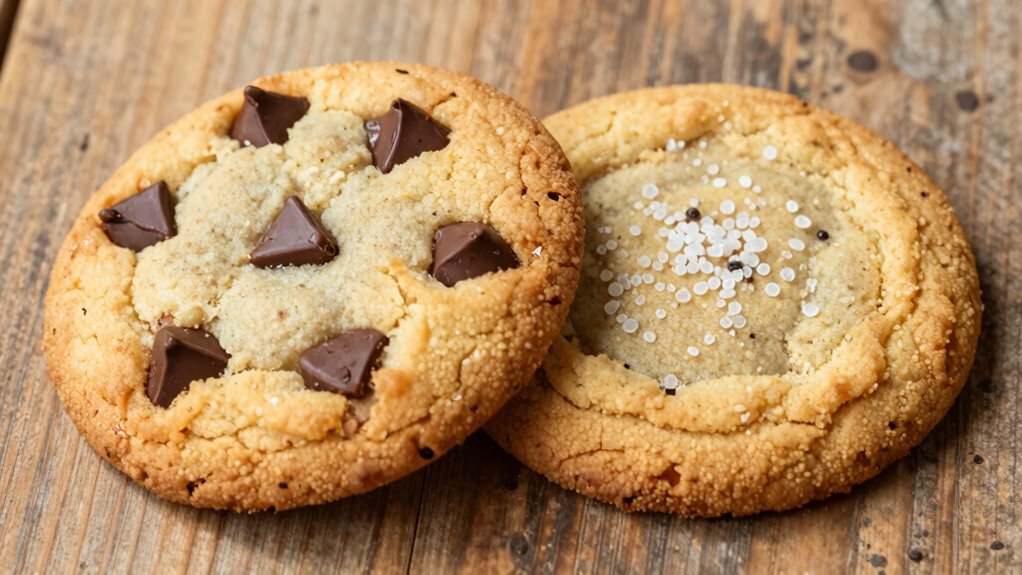
When it comes to cookies, the debate between chewy and crispy can feel as intense as choosing between chocolate chip and oatmeal raisin. You might find yourself in a passionate discussion about which texture reigns supreme. The truth is, the difference often boils down to a few key baking techniques and ingredient ratios. Understanding these factors can help you create the perfect cookie tailored to your taste.
If you want a chewy cookie, you’ll typically use higher ratios of brown sugar to white sugar. Brown sugar contains molasses, which adds moisture and promotes that soft texture you love. You also want to take into account the fat. Using melted butter instead of softened butter can enhance chewiness, as it creates a denser dough. Don’t forget to chill your dough for at least an hour before baking; this step helps the cookies spread less and retain that chewy quality. Additionally, ingredient ratios play a crucial role in achieving the desired texture. Incorporating baking techniques such as gentle mixing can also prevent the dough from becoming too airy, which promotes chewier cookies. Moreover, understanding baking science can give you better control over the final result.
For chewy cookies, favor brown sugar, use melted butter, and chill your dough to achieve that perfect soft texture.
On the flip side, if crispy cookies are your goal, you’ll want to adjust your ingredient ratios accordingly. Opt for more white sugar than brown sugar, as white sugar contributes to a crisper texture. Incorporating more flour can also help; it gives the cookies structure, allowing them to spread out and become more brittle as they bake. Additionally, you might want to use room temperature butter instead of melted butter. This technique promotes air incorporation, leading to a lighter and crunchier cookie.
The baking time and temperature also play an important role. For chewy cookies, you might pull them out of the oven just before they look fully baked; this keeps them soft and gooey inside. However, for crispy cookies, let them bake a little longer until they’re golden brown. The longer they bake, the more moisture evaporates, resulting in that delightful crunch.
Experimenting with these ingredient ratios and baking techniques can be a fun way to discover your ideal cookie type. You could even try combining elements from both styles. For instance, a cookie with a chewy center and a slightly crispy edge can offer the best of both worlds.
In the end, whether you prefer chewy or crispy, knowing how to manipulate your ingredients makes all the difference. So, roll up your sleeves, grab your mixing bowl, and let the cookie experiments begin! Understanding ingredient ratios is key to mastering cookie textures.
As an affiliate, we earn on qualifying purchases.
Frequently Asked Questions
Can I Substitute Gluten-Free Flour for Regular Flour?
Yes, you can substitute gluten-free flour for regular flour, but expect some texture variations. Gluten properties in regular flour contribute to chewiness and structure, so adjust your baking techniques accordingly. You might need to add binders like xanthan gum or adjust hydration levels for best results. Experimenting with different flour types can help you achieve the desired texture. Just remember, gluten-free cookies might turn out a bit different than what you’re used to!
How Do Different Sugars Affect Cookie Texture?
Different sugars create distinct texture differences in your cookies. For example, using brown sugar instead of granulated sugar can result in a softer, chewier cookie due to its higher moisture content. A statistic to evaluate: cookies with a 1:1 ratio of brown to granulated sugar often strike a perfect balance between chewy and crispy. Adjusting these sugar ratios allows you to customize your cookie’s texture to your liking, giving you delicious results every time.
What Role Does Baking Soda Play in Cookies?
Baking soda’s a key player in your cookie-making. It triggers reactions with acids, producing carbon dioxide that helps your cookies rise and spread. When you use baking soda, you’ll notice a softer texture and increased spread during baking. If you want thicker cookies, consider reducing the baking soda. Balancing it with other ingredients can help you achieve the perfect cookie texture, whether you prefer chewy or crispy results!
Can I Freeze Cookie Dough for Later Use?
Absolutely, you can freeze cookie dough for later use—it’s like having a delicious time bomb waiting to explode! For ideal cookie dough storage, scoop the dough into individual portions and wrap them tightly in plastic wrap or place them in airtight containers. Dough freezing tips include labeling with the date and type of cookie. When you’re ready to bake, just thaw the dough in the fridge overnight, and you’re good to go!
How Do Eggs Impact Cookie Chewiness or Crispiness?
Eggs play an essential role in your cookie’s texture. If you use whole eggs, their moisture content adds chewiness, while egg whites can create a drier, crispier result. Using just yolks increases richness and softness, enhancing chewiness even further. If you want chewier cookies, opt for more yolks; for crispier ones, consider using egg whites or reducing the number of eggs. Experiment with different egg types to find your perfect balance!
As an affiliate, we earn on qualifying purchases.
Conclusion
In the battle between chewy and crispy cookies, it all comes down to the ingredients you choose. Did you know that adding an extra egg yolk can boost chewiness by 20%? Whether you crave that soft, gooey center or a satisfying crunch, knowing how to adjust your ingredients gives you the power to create your perfect cookie. So, next time you’re baking, remember: a few tweaks can turn an average cookie into a delightful treat!
As an affiliate, we earn on qualifying purchases.
As an affiliate, we earn on qualifying purchases.
Halloween Picks
halloween
As an affiliate, we earn on qualifying purchases.