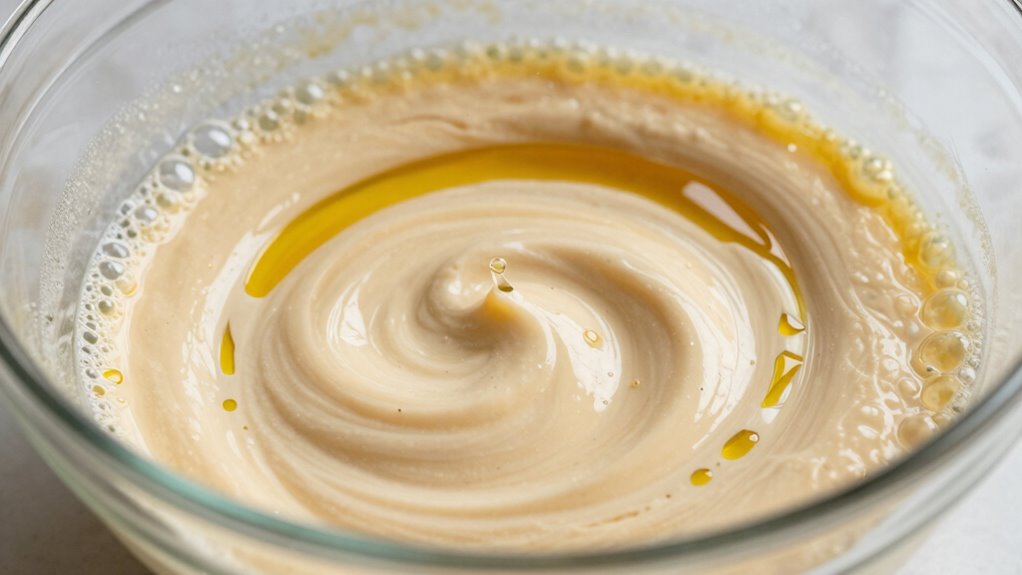

As a baker, you’ll find that batter splitting often happens when ingredients like oil and water don’t blend properly or when temp changes disrupt the emulsion. Using incorrect fats, substitutions, or cold ingredients can cause separation. To fix this, gently whisk in natural emulsifiers like egg yolk or lecithin, and keep ingredients at the right temperature. Understanding these tips helps maintain stable batters—continue exploring to master your baking results.

Get kitchen gear delivered free — and shop member deals
- Fast, free delivery on millions of items
- Access to Prime Big Deal Days deals on October 6–7
- Prime Video, Amazon Music and more included
Key Takeaways
- Proper emulsification ensures oil and water components stay combined, preventing batter splitting.
- Ingredient mismatches or substitutions can disrupt emulsion stability, causing separation.
- Using emulsifiers like egg yolk or lecithin helps re-stabilize split batters.
- Temperature control during mixing, with warm ingredients aiding stability, is essential.
- Gentle mixing and correct ingredient pairing maintain emulsion integrity for consistent results.
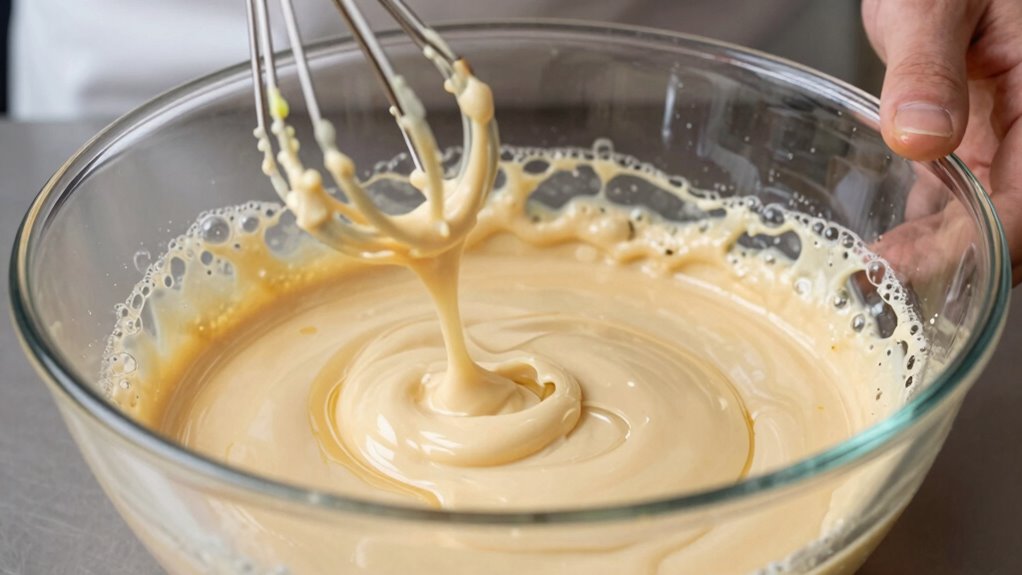
Have you ever wondered how bakers achieve that perfectly smooth and stable texture in their baked goods? It all comes down to understanding emulsions and how they work within your batter. When you’re mixing ingredients like oil and water, they naturally want to separate, which can cause your batter to split or become unstable. This is where emulsions become essential—they help blend these incompatible ingredients into a cohesive, stable mixture. A good emulsion ensures your batter maintains its smooth texture during mixing and baking, resulting in tender, uniform baked goods.
One common reason for batter splitting is improper flavor pairing and ingredient substitutions. For example, when you swap out fats or liquids without considering how they interact, you risk disrupting the emulsion. Using a different type of oil or dairy can alter the emulsion’s stability, leading to separation. To prevent this, you need to understand how different ingredients work together. Think about how certain fats, like butter or vegetable oil, complement other ingredients. Butter adds flavor and richness, while oils can contribute moisture and stability. When making substitutions, choose ingredients that match the original’s properties to preserve emulsion stability.
Proper ingredient pairing and substitutions are key to maintaining emulsion stability in your batter.
If your batter is splitting, a quick fix is to gently whisk in a small amount of an emulsifier, such as egg yolk or lecithin. These components contain natural emulsifying agents that help re-stabilize the mixture. Incorporating ingredients that naturally promote emulsification can save your batter from disaster. Also, ensure your ingredients are at the right temperature—cold ingredients can cause fats to solidify and disrupt the emulsion, while warm ingredients can help maintain a smooth, cohesive mixture. Additionally, understanding the role of emulsifiers in stabilizing mixtures can help you troubleshoot and prevent splitting more effectively. Recognizing how ingredient interactions influence emulsion stability is crucial for successful baking.
Furthermore, being mindful of temperature control during mixing can significantly impact the stability of your emulsion and overall batter quality.
As an affiliate, we earn on qualifying purchases.
Frequently Asked Questions
Can I Reuse Broken Emulsions in Baking?
You can sometimes reuse broken emulsions in baking by attempting emulsion restoration. To do this, slowly add fresh baking emulsions or a small amount of water while whisking vigorously. Keep in mind, the success depends on how badly the emulsion has split. If it’s too far gone, it’s best to start fresh, as using compromised emulsions can affect your baked goods’ texture and stability.
What Are Common Causes of Emulsion Failure?
Sometimes, your emulsion might not stay happily together, and that’s often due to ingredient compatibility or choosing the wrong emulsifier types. When fats and liquids don’t blend well, or if the emulsifier isn’t suited for your ingredients, failure can occur. Overmixing or sudden temperature shifts also upset the balance. To prevent this, guarantee ingredient compatibility and select the appropriate emulsifier types, maintaining steady mixing and consistent temperatures.
How Does Temperature Affect Emulsion Stability?
Temperature fluctuations can considerably impact your emulsion consistency, making it less stable and more prone to splitting. When the temperature rises, fats melt and can break the emulsion, while cooling can cause ingredients to solidify unevenly. To keep your emulsion stable, maintain a consistent temperature throughout mixing. Proper temperature control ensures your batter remains smooth, cohesive, and prevents splitting, resulting in better baked goods.
Are There Natural Alternatives to Commercial Emulsifiers?
Yes, you can use natural stabilizers and plant-based emulsifiers as alternatives to commercial ones. Ingredients like lecithin from soy or sunflower, aquafaba (chickpea water), and flaxseed gel act as natural emulsifiers, helping to keep batters stable. These options are healthier and eco-friendly, making them ideal for bakers seeking natural solutions. Incorporating these plant-based emulsifiers improves batter consistency without relying on synthetic additives.
How Long Can an Emulsion Be Stored Before It Spoils?
Coincidentally, your emulsion can last about 1 to 2 weeks if stored properly. Its shelf life depends on ingredients and storage conditions. Keep an eye out for spoilage indicators like a sour smell, separation, or discoloration. If you notice these signs, discard it. Typically, maintaining airtight containers in the fridge slows spoilage, giving you a little extra time before the emulsion becomes unsafe to use.
lecithin for batter stabilization
As an affiliate, we earn on qualifying purchases.
As an affiliate, we earn on qualifying purchases.
Conclusion
Think of your batter as a delicate dance partner—when emulsions split, it’s like the music stops, and the dance falls apart. I once watched a baker save a split batter by gently whisking in a splash of hot water, like coaxing a shy guest onto the dance floor. Remember, with patience and the right technique, you can bring harmony back to your batter. Emulsions may falter, but your skill keeps the rhythm going.
As an affiliate, we earn on qualifying purchases.
temperature control baking ingredients
As an affiliate, we earn on qualifying purchases.
As an affiliate, we earn on qualifying purchases.
Halloween Picks
halloween
As an affiliate, we earn on qualifying purchases.