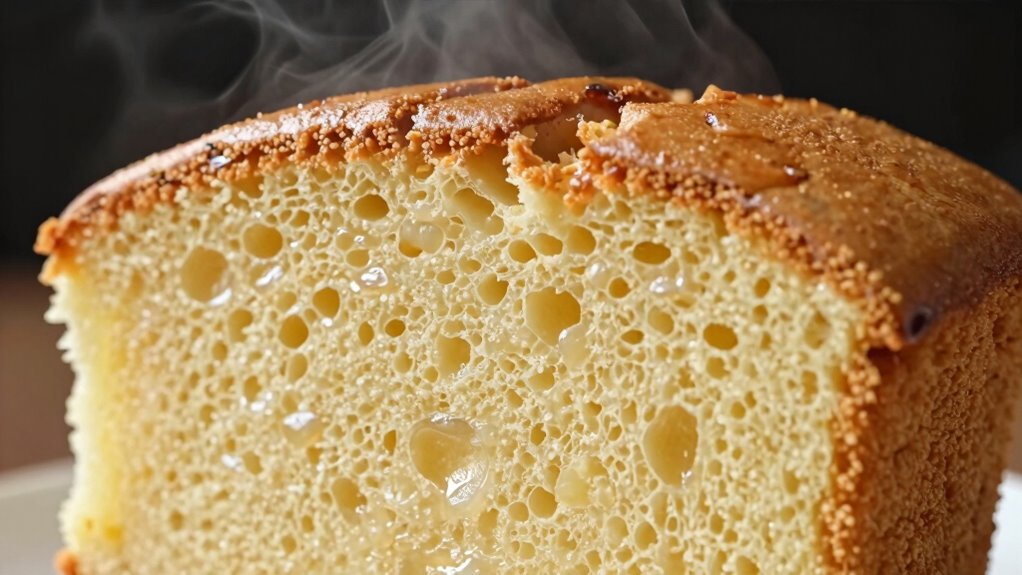

When baking a cake, starch gelatinization happens when heat causes the starch molecules, mainly amylose and amylopectin, to absorb water and swell. This process creates a thick, stable gel that sets the cake’s structure. The temperature and cooking time are key in controlling how much gelatinization occurs, helping your cake become firm yet tender. If you want to understand the precise mechanics behind this, there’s more to uncover about how starch interacts during baking.

Get kitchen gear delivered free with Prime
- Fast, free delivery on millions of items
- Prime Video, Amazon Music and more included
- Member-only deals all year
Key Takeaways
- Starch gelatinization occurs when heat causes starch molecules to absorb water and swell, forming a stable gel network.
- During baking, heat triggers starch granules to burst, releasing amylose that thickens and sets the cake’s structure.
- Proper gelatinization ensures the cake’s interior becomes firm and holds its shape as it cools.
- Over- or under-gelatinization can lead to cakes that are too dense or too crumbly.
- Controlling temperature and baking time optimizes starch gelatinization for the desired cake texture.
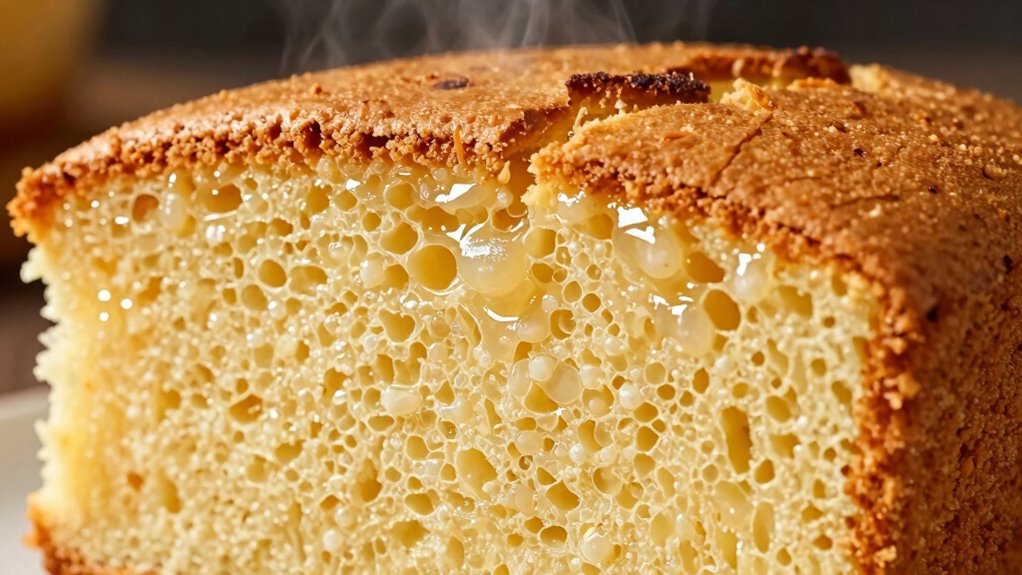
Have you ever wondered what happens when starch is heated in water? When you cook pasta or make a sauce, you’re witnessing starch gelatinization in action. Starch is a carbohydrate composed of two types of molecules: amylose and amylopectin. When heated in water, these molecules absorb moisture and swell, transforming the mixture’s texture. This process is vital for creating the desired pasta texture—firm yet tender—and for thickening various dishes. You might notice that when you cook pasta, it becomes soft and cohesive, but it’s the starch’s behavior during heating that leads to this perfect balance. Starch acts as a natural thickening agent, giving sauces and fillings their necessary consistency.
Starch absorbs water and swells, thickening dishes and creating the perfect pasta texture.
As your mixture heats, the water molecules penetrate the starch granules, causing them to swell. Initially, the mixture becomes more viscous, as the starch molecules start binding water, creating a gel-like structure. This is the core of gelatinization. Once the temperature reaches a certain point—usually around 60 to 70°C (140 to 158°F)—the starch granules burst, releasing amylose and amylopectin into the surrounding liquid. The amylose molecules, which are linear, tend to leach out more readily, forming a network that thickens the mixture further. This gives your dish that desirable, smooth, and cohesive consistency, whether it’s a creamy sauce or the perfect al dente pasta.
Understanding the gelatinization process is essential because it influences how well a dish sets and maintains its structure. The process of gelatinization is fundamental because it determines how well your dish sets and holds together. Without it, sauces would remain thin and runny, and pasta wouldn’t have that satisfying bite. When you heat starch-containing products, you’re practically activating these thickening agents naturally present in ingredients like flour, cornstarch, or potatoes. This activation is what transforms a watery mixture into a stable, viscous sauce or the tender, structured texture of cooked pasta. Recognizing how starch molecules interact during heating can help you better control the final consistency of your recipes. Additionally, understanding the temperature at which gelatinization occurs can help you fine-tune your cooking process to achieve optimal results.
As cooling occurs after heating, the gel network formed by the starch molecules stabilizes, preserving the texture and preventing the dish from becoming overly runny. This stabilization process is crucial for dishes like custards and puddings, where setting is vital for proper presentation and mouthfeel. It is also interesting to note that the degree of starch gelatinization can vary based on factors such as the type of starch and cooking duration, influencing the final texture of your dish. Understanding this process helps you better control the consistency of your recipes. Whether you’re making a gravy, pudding, or pasta, recognizing how starch gelatinizes allows you to adjust cooking times and temperatures to achieve just the right set. This natural thickening mechanism is fundamental in cooking, ensuring your dishes not only look appealing but also have the texture you desire. In essence, starch gelatinization is the secret behind why cakes set when they do and how sauces thicken to perfection, providing structure and mouthfeel that elevate your culinary creations.
starch gelatinization thermometer
As an affiliate, we earn on qualifying purchases.
As an affiliate, we earn on qualifying purchases.
Frequently Asked Questions
How Does Starch Gelatinization Affect Cake Texture?
Starch gelatinization impacts your cake’s texture by making it tender and moist. When you bake, heat causes starch properties to change, thickening and setting the batter. This process traps air and moisture, giving your cake structure and softness. Using proper baking techniques guarantees ideal gelatinization, preventing a dense or crumbly texture. Understanding starch behavior helps you achieve a light, fluffy cake with a pleasing crumb.
Can Different Starches Gelatinize at Different Temperatures?
You might be surprised, but yes, different starch varieties have distinct gelatinization temperatures. As you bake, these variations influence how your cake sets and its final texture. When a starch reaches its specific gelatinization temperature, it absorbs water and thickens, creating that perfect crumb. Knowing these differences helps you choose the right starch variety for consistent results, making your baking experience more predictable and rewarding.
What Role Does Humidity Play in Gelatinization?
Humidity effects greatly influence starch gelatinization, as higher humidity introduces more moisture into the environment, which helps facilitate starch granule swelling and gelatinization. Conversely, low humidity can hinder the process by causing moisture loss, leading to uneven setting or dryness. Proper moisture control during baking ensures consistent gelatinization, resulting in well-structured cakes. So, maintaining ideal humidity levels is key to achieving the perfect texture and proper setting of your baked goods.
How Does Over-Gelatinization Impact Cake Quality?
Over-gelatinization affects your cake by making it dense, dry, and tough, undermining its delicate crumb. It can cause sugar crystallization, leading to a gritty texture, and hinder flavor development, resulting in a bland taste. Overly gelatinized starches also lose their ability to retain moisture, making your cake less tender. To avoid these issues, monitor your batter carefully, ensuring proper mixing and baking times for ideal texture and flavor.
Are There Alternatives to Starch for Setting Cakes?
Yes, you can use alternative thickeners like gelatin, agar-agar, or cornstarch for setting cakes, especially if you’re making dietary adjustments. Gelatin and agar-agar work well for gluten-free or vegan options, providing stability without traditional starch. Cornstarch is a common substitute that thickens batter effectively. These options help tailor recipes to dietary needs while ensuring your cake sets properly, maintaining texture and structure.
cornstarch for thickening sauces
As an affiliate, we earn on qualifying purchases.
As an affiliate, we earn on qualifying purchases.
Conclusion
Understanding starch gelatinization helps you perfect baked goods, ensuring your cakes set just right. When starch granules absorb heat and moisture, they swell and create a stable structure, giving your cake its signature texture. Remarkably, over 50% of the dry weight of a typical cake batter is starch, highlighting its essential role. Mastering this process means you can confidently troubleshoot and refine your baking skills, consistently achieving delicious, well-structured cakes every time.
baking starch gelatinization tools
As an affiliate, we earn on qualifying purchases.
As an affiliate, we earn on qualifying purchases.
As an affiliate, we earn on qualifying purchases.
Columbus Day / Indigenous Peoples' Day Picks
long weekend sales
As an affiliate, we earn on qualifying purchases.