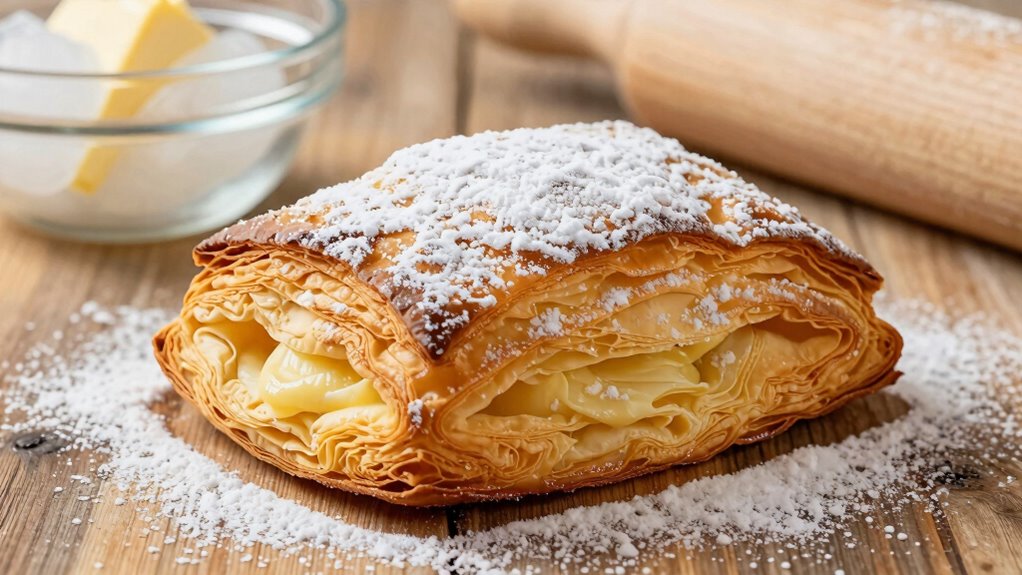

To make perfect puff pastry at home, you must follow the “cold” rule—keeping all ingredients and dough ice-cold throughout the process. Use fresh, cold butter, unbleached flour, and work on a chilled surface, avoiding warmth that softens the butter. Proper temperature control creates distinct flaky layers. If your butter softens, return everything to the fridge. Want to find out how to master this technique flawlessly? Keep going to learn more.
Key Takeaways
- Keep all ingredients, especially butter and flour, cold to prevent melting and ensure flaky layers.
- Chill the dough regularly during rolling and folding to maintain temperature and layer integrity.
- Use cold water sparingly to avoid softening the dough and butter mixture.
- Work in a cool environment and on a chilled surface to prevent butter from softening.
- Rest the dough in the refrigerator before baking to relax gluten and preserve flakiness.

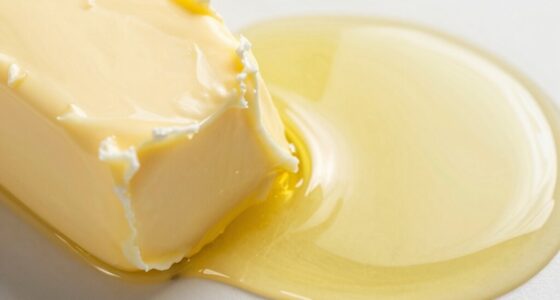
Have you ever wondered how to make flaky, buttery puff pastry right in your own kitchen? The secret lies in mastering the “cold” rule, which is essential for achieving that perfect, crisp layers. The first step in making puff pastry at home is dough preparation, and it all begins with paying close attention to ingredient quality. Using fresh, high-quality butter and flour makes a significant difference. The butter should be cold and firm, not soft or melted, because it creates steam inside the dough during baking, which forms the delicate layers. Similarly, the flour should be unbleached and preferably low in protein, as this helps keep the dough tender and easy to work with.
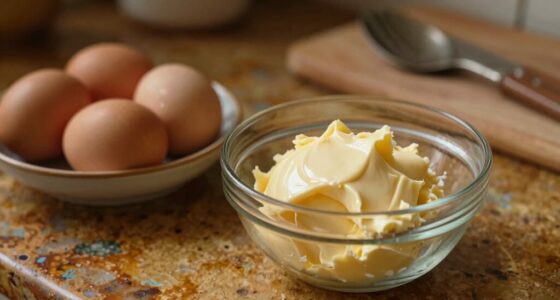
When preparing the dough, you want to combine the ingredients quickly and efficiently to prevent the butter from warming up. Start by sifting the flour into a cool mixing bowl, then add a pinch of salt for flavor. Cut the cold butter into small, even cubes and incorporate it into the flour using a pastry cutter or your fingertips, working swiftly to keep everything cold. The goal is to create a crumbly mixture with pea-sized butter pieces dispersed throughout. This texture is crucial because, during rolling and folding, those bits of butter will melt and create steam, forming flaky layers. Maintaining consistent temperature control during each step can also help ensure the layers stay distinct and crisp. Additionally, using a chilled work surface can assist in maintaining the ideal temperature throughout the process. For best results, consider working in a cool, draft-free environment to prevent any unintended warming of your ingredients.
Next, add just enough cold water to bring the dough together, mixing gently but thoroughly. Be careful not to overwork it, as this can develop gluten and result in a tougher pastry. Once the dough is combined, shape it into a flat rectangle, wrap it tightly in plastic, and refrigerate it for at least 30 minutes. Cold dough is much easier to roll out and helps maintain the integrity of those butter layers. During this resting period, the gluten relaxes, preventing the dough from shrinking when you roll it out again. Proper resting time is vital as it allows the gluten to relax and enhances the dough’s workability.
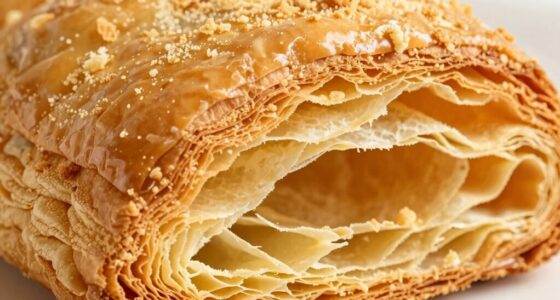
Throughout the process, always keep your ingredients and dough cold. This “cold” rule is non-negotiable if you want the signature flakiness of homemade puff pastry. If your butter starts to soften or the dough warms up, pop it back into the fridge for a few minutes. This step ensures your layers remain distinct and crisp after baking. Paying attention to temperature control during the process is key to achieving the perfect flaky texture. In the end, the quality of your ingredients and strict adherence to keeping everything cold will reward you with a beautifully layered, buttery puff pastry that rivals store-bought versions.
As an affiliate, we earn on qualifying purchases.
Frequently Asked Questions
How Long Can Homemade Puff Pastry Be Stored?
You can store homemade puff pastry for up to two days in the fridge, wrapped tightly to maintain its puff pastry flavor and texture. For longer storage, freeze it for up to one month, ensuring it’s well-wrapped to avoid freezer burn. When baking, remember to adjust the baking temperature accordingly, and always keep the pastry cold until it hits the oven, as proper chilling is key to achieving flaky layers.
Can I Freeze Puff Pastry Dough?
Yes, you can freeze puff pastry dough. Freezing prevents gluten development, keeping the dough tender and flaky. Wrap it tightly in plastic wrap and place it in an airtight container or freezer bag. This method preserves flavor enhancement and extends shelf life. When you’re ready to use it, thaw in the fridge overnight. Proper freezing helps maintain the dough’s texture and taste, making it convenient for future baking needs.
What’s the Best Type of Fat to Use?
Did you know butter makes up about 80% of traditional puff pastry fat? For the best flaky layers, butter is ideal because it creates steam when baking. However, if you’re exploring healthier options, butter alternatives like margarine or shortening work, but may affect flakiness and flavor. Consider health factors, but for authentic puff pastry, butter remains the top choice for rich taste and perfect texture.
How Do I Prevent Butter From Melting During Rolling?
To prevent butter from melting during rolling, keep your butter consistency cold and firm. Chill your butter and dough beforehand, and work quickly to minimize heat transfer. Use gentle, even rolling techniques, turning the dough frequently to maintain coolness. Lightly flour your surface to reduce sticking without warming the dough. If butter softens, chill the dough briefly before continuing. Maintaining cold conditions throughout guarantees your puff pastry stays flaky and perfect.
Can I Make Puff Pastry Ahead of Time?
Think of puff pastry like a well-choreographed dance—making it ahead of time still lets you enjoy the performance. You can prepare it a day in advance, wrap it tightly, and store in the fridge. When ready, add flavor variations or gluten-free options to customize your treat. Just remember, keeping it cold preserves its flaky layers, so avoid leaving it out too long before baking.
puff pastry rolling pin with chilled surface
As an affiliate, we earn on qualifying purchases.
As an affiliate, we earn on qualifying purchases.
Conclusion
Mastering puff pastry at home might seem intimidating, but if you keep the cold rule in mind, you’ll find it’s totally doable. Just imagine pulling a flaky, golden crust straight from your oven—crispy layers melting in your mouth. Don’t worry if it takes a bit of patience; the final product is worth every chill and fold. Once you get the hang of it, you’ll never want store-bought again. Happy baking!
high-quality unbleached flour for baking
As an affiliate, we earn on qualifying purchases.
As an affiliate, we earn on qualifying purchases.
As an affiliate, we earn on qualifying purchases.